
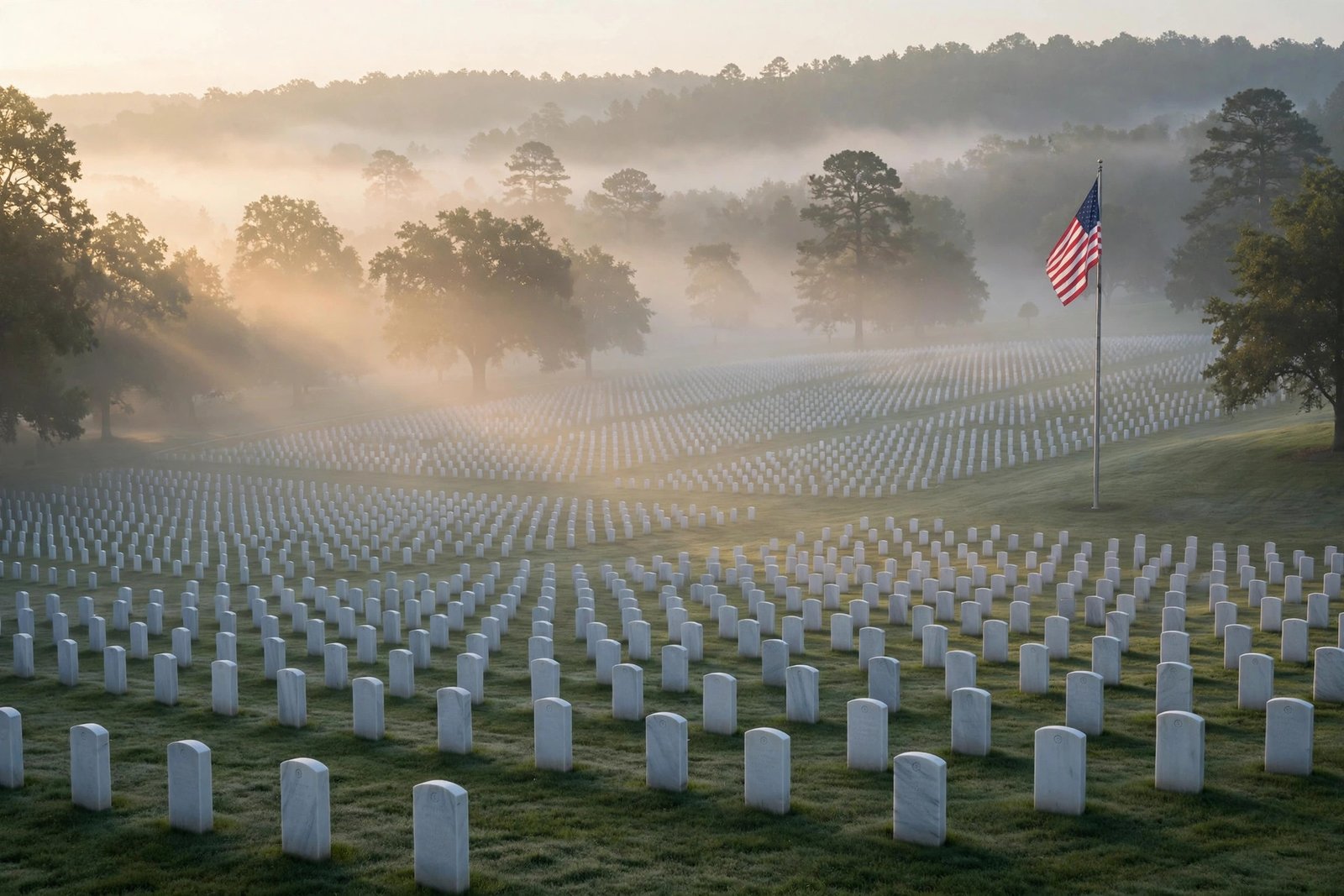
Medal of Honor stories remind us what ordinary people are capable of in extraordinary moments. The Medal of Honor is the highest military decoration in the United States, awarded for gallantry and intrepidity at the risk of life, above and beyond the call of duty. In more than 160 years, it has been presented fewer than 3,600 times. Behind every medal is a real person who chose courage when it cost the most. In this article, you will meet eight recipients whose actions, from the battlefields of World War I to the mountains of Afghanistan, continue to amaze America.
These are not myths. Every account below comes from the public military record: official citations, after-action reports, and service histories. No dialogue is invented and no detail is exaggerated. The truth needs no embellishment.
What Is the Medal of Honor?
The Medal of Honor was created during the Civil War, authorized for the Navy in 1861 and the Army in 1862, as a way for a young nation to recognize extraordinary battlefield heroism. Today there are three versions of the medal, one each for the Army, Navy, and Air Force, with Marines and Coast Guard members receiving the Navy version. It is presented by the President of the United States in the name of Congress, which is why it is sometimes called the Congressional Medal of Honor.
The standard for earning one is brutally simple and impossibly high: gallantry and intrepidity at the risk of life, above and beyond the call of duty. Recommendations pass through multiple levels of review, witnesses are interviewed, and the evidence is weighed for months or years. Many medals are awarded posthumously, because the recipient gave everything. In total, more than 3,500 Medals of Honor have been presented since the Civil War. Each citation is a matter of public record, which is why these stories can be told with confidence. They were witnessed, investigated, and confirmed.
8 Medal of Honor Stories That Define American Courage
From a teenage farm boy in France to a Navy SEAL in Afghanistan, these eight Medal of Honor stories span a century of American service. Each one is true.
1. Audie Murphy: One Man Against an Army (World War II)
Born into poverty in Texas in 1925, Audie Murphy was rejected by the Marines and the paratroopers for being too small. He stood about five foot five and weighed barely 110 pounds. The Army took him in 1942, and he went on to become the most decorated American soldier of World War II. On January 26, 1945, near Holtzwihr, France, his company was attacked by German infantry supported by tanks. Murphy ordered his men to fall back to the woods, then climbed onto a burning tank destroyer and manned its .50-caliber machine gun for nearly an hour, holding off the enemy single-handedly despite being wounded. He is credited with killing or wounding about 50 German soldiers that day. For this action he received the Medal of Honor, adding to a record that also included the Distinguished Service Cross, two Silver Stars, and two Bronze Stars. After the war he became a well-known film actor, starring in the movie version of his own autobiography, To Hell and Back.
2. Desmond Doss: The Medic Who Would Not Carry a Gun (World War II)
Desmond Doss grew up in Virginia as a Seventh-day Adventist, and his faith convinced him he could serve his country without taking a life. Drafted in 1942, he trained as a combat medic, a conscientious objector who refused to carry a weapon, a decision that drew ridicule from many fellow soldiers. Doss proved them wrong on Okinawa in May 1945. During the brutal fight for the Maeda Escarpment, his unit was forced to retreat under murderous fire. Doss stayed behind alone, moving across the open battlefield to reach the wounded. One by one, he dragged or carried an estimated 75 men to the edge of the escarpment and lowered each down by rope to safety. He was wounded several times and refused evacuation until the others had been treated first. In October 1945, President Harry Truman presented him the Medal of Honor, the first ever awarded to a conscientious objector.
3. Alvin York: The Sharpshooter of the Argonne (World War I)
Alvin York was a Tennessee farm boy who had once opposed war on religious grounds, but he concluded that service was his duty and became one of the most famous American soldiers of World War I. On October 8, 1918, during the Meuse-Argonne Offensive in France, Corporal York was part of a 17-man patrol sent to silence German machine guns. The patrol walked into an ambush. Nine Americans were killed or wounded, including the patrol’s leaders. York, an expert marksman from years of hunting in the Tennessee mountains, took charge. Advancing through open ground under fire, he picked off enemy gunners one after another, and when German soldiers charged him, he fought them off. When the fighting ended, York had killed about 25 enemy soldiers and, almost unbelievably, marched 132 German prisoners back to the American lines. He was promoted to sergeant and awarded the Medal of Honor in 1919, in a ceremony that made him a national hero.
4. Roy Benavidez: Six Hours in Hell (Vietnam War)
Roy Benavidez was a Green Beret whose Medal of Honor action was so secret that it took 13 years to be publicly recognized. On May 2, 1968, near Loc Ninh, Vietnam, a Special Forces patrol was surrounded and being overrun. Benavidez was not assigned to the mission, but he voluntarily boarded a rescue helicopter. Wounded in the leg as he jumped from the aircraft, he ran through enemy fire to reach the trapped men. Over the next six hours, despite being shot and struck by shrapnel multiple times, he carried and dragged wounded soldiers to the extraction helicopters, called in air support to hold off the enemy, and refused to leave until the last man was out. He saved at least eight lives that day. Because the mission details were classified, his heroism remained officially hidden until 1981, when President Ronald Reagan presented him the Medal of Honor.
5. Michael Murphy: The Call That Cost Everything (Afghanistan)
Navy SEAL Lieutenant Michael Murphy grew up in New York, known for his toughness and his devotion to the men under his command. On June 28, 2005, in the mountains of Kunar Province, Afghanistan, Murphy led a four-man SEAL reconnaissance team that was discovered and ambushed by a much larger Taliban force during Operation Red Wings. With his men wounded and their radio failing in the rugged terrain, Murphy made a deliberate choice. He moved out of cover into open ground, exposing himself to enemy fire, to get a satellite signal and call for help. He completed the call and fought his way back to his team, and was mortally wounded soon after. Three of the four SEALs died that day, along with 16 more Americans aboard a helicopter sent to rescue them. In 2007, Murphy’s parents received his Medal of Honor. He was the first member of the U.S. Navy to earn the medal since the Vietnam War.
6. Dakota Meyer: Into the Kill Zone, Five Times (Afghanistan)
On September 8, 2009, in the village of Ganjgal in Afghanistan’s Kunar Province, Marine Corporal Dakota Meyer was providing security overwatch when a combined patrol of American and Afghan troops walked into a devastating ambush. Ordered to hold his position, Meyer instead made the decision that would define his life. Climbing into a Humvee with another Marine driving, he went straight into the kill zone. He made five trips through withering enemy fire, evacuating wounded Afghan soldiers to safety. On his final run, he pushed in on foot and recovered the bodies of four fallen Americans, three Marines and a Navy corpsman, so they would not be left behind. In 2011, President Barack Obama presented Meyer the Medal of Honor, making him the first living Marine to receive it since the Vietnam War.
7. Salvatore Giunta: No One Left Behind (Afghanistan)
Army Staff Sergeant Salvatore Giunta was leading his squad through Afghanistan’s Korengal Valley on the night of October 25, 2007, when insurgents ambushed them from multiple directions in the darkness. When his squad leader was badly wounded, Giunta ran through open enemy fire to drag him to cover and give first aid. Moments later, he saw insurgents dragging away another wounded American soldier. Giunta charged after them, firing as he ran, and rescued his comrade before the enemy could carry him off into the night. His official citation credits him with saving the lives of his fellow soldiers through actions taken at extreme personal risk. In 2010, President Barack Obama presented Giunta the Medal of Honor, the first awarded to a living service member since the Vietnam War.
8. Kyle Carpenter: The Grenade and the Decision (Afghanistan)
Marine Lance Corporal Kyle Carpenter was 21 years old on November 21, 2010, holding a rooftop position in Marjah, in Afghanistan’s Helmand Province, alongside fellow Marine Nick Eufrazio. When an enemy grenade landed on the rooftop near them, there was no time to throw it back and nowhere to run. Carpenter made an instant, selfless decision. He threw himself onto the grenade, using his own body to shield his friend from the blast. The explosion inflicted catastrophic injuries, yet incredibly, both Marines survived. Carpenter endured dozens of surgeries and years of grueling recovery. In 2014, President Barack Obama presented him the Medal of Honor. At the time, he was the youngest living recipient of the medal, and his story remains one of the most powerful examples of sacrifice in modern American military history.
What Medal of Honor Stories Teach Us
Medal of Honor stories endure because they answer a question every generation quietly asks itself: what would I do? Audie Murphy, Desmond Doss, Alvin York, Roy Benavidez, Michael Murphy, Dakota Meyer, Salvatore Giunta, and Kyle Carpenter came from farms, cities, and small towns across America. None of them set out to become legends. In the hardest moments imaginable, they simply refused to abandon the people beside them. That is the thread that connects a Tennessee sharpshooter in 1918 to a young Marine in Afghanistan nearly a century later.
If these stories moved you, share this article with someone who should read them, and take a moment to learn the names on your local veterans memorial. Courage like this deserves to be remembered. For more accounts of American bravery, explore our collection of incredible true stories of US soldiers, and discover the forgotten moments of American history that shaped the nation these heroes served.