
Every country thinks its way of life is normal — until a visitor from abroad raises an eyebrow. America is no exception. To the roughly 330 million people who live there, tipping 20 percent, driving three hours for lunch, and cheering for a college football team are just… Tuesday. To the rest of the world, they're baffling, fascinating, and sometimes downright hilarious.
Part of the surprise is that America feels familiar before you ever visit. You've seen it in a thousand movies and TV shows — the diners, the highways, the Friday night lights. But the screen doesn't prepare you for the scale of it, or for how deeply normal it all feels to the people living it. Here are fifteen things about everyday American life that consistently surprise people from other countries.
1. Tipping Isn't Optional — It's the System
In most countries, a tip is a small bonus for great service. In America, it's how servers get paid. Restaurant workers in many states earn a base wage well below the standard minimum, with tips expected to make up the difference — so 15 to 20 percent is the social norm, and regulars often tip more.
Visitors find this stressful because the rules are unwritten and the stakes feel high. Americans don't think twice about it, but the whole system is genuinely unusual: few other countries have built their entire restaurant economy on voluntary payments.
2. The Road Trip Is a Way of Life
America is enormous — nearly 3,000 miles coast to coast — and Americans treat long drives the way other people treat train rides. A "short trip" might be four hours. Families think nothing of driving twelve hours for a long weekend.
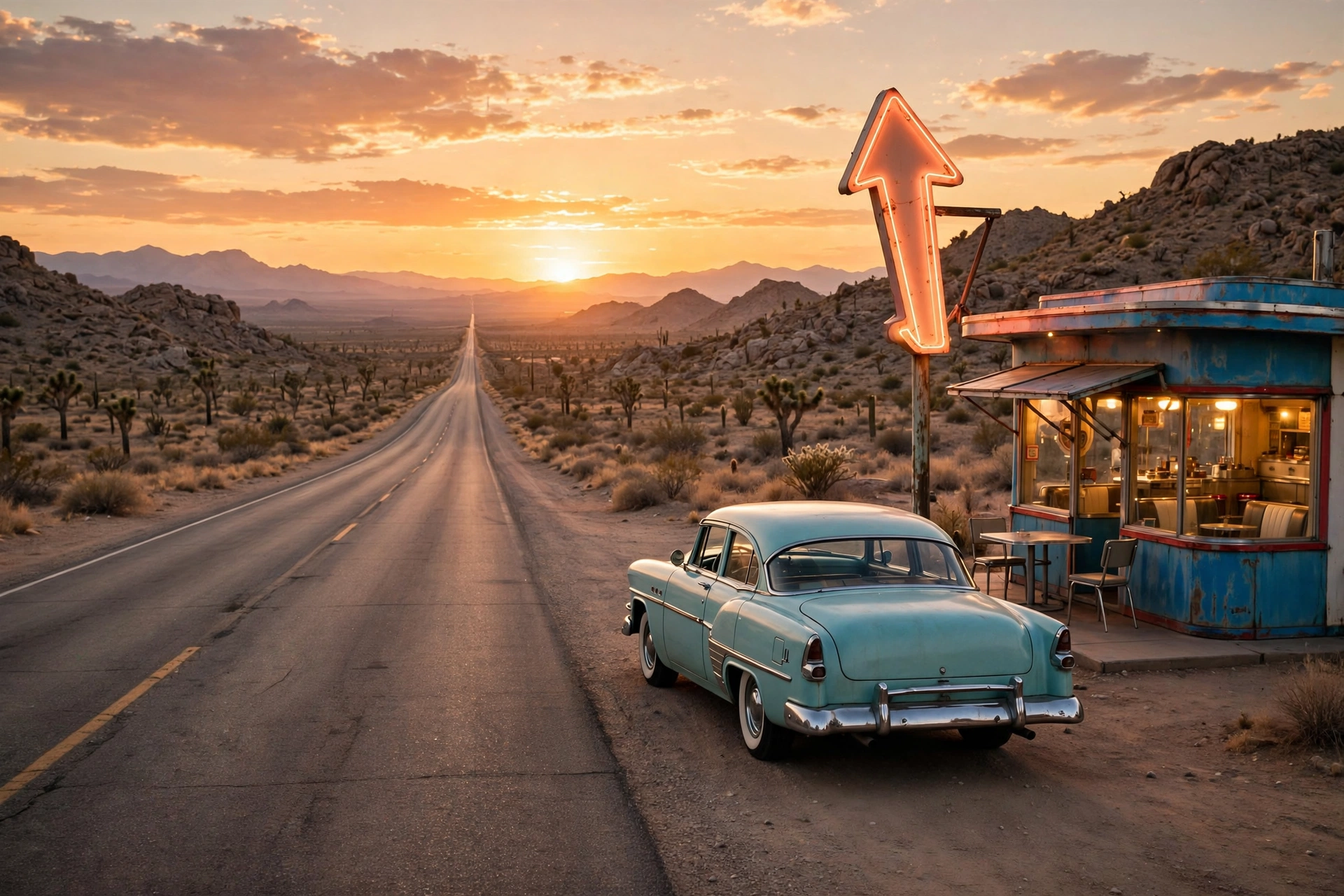
This car culture was built deliberately: the interstate highway system made cross-country driving fast and cheap, and the romance of the open road — Route 66, desert highways, coastal drives — is baked into American music and movies. To visitors from countries where high-speed rail shrinks distances, the American willingness to just… drive is astonishing.
3. National Parks Are a National Obsession
The United States invented the national park — Yellowstone became the world's first in 1872 — and today the country has 63 of them, from the Grand Canyon to the Everglades to Denali in Alaska.
What surprises foreigners is how deeply Americans love them. "Doing the parks" is a classic family vacation; rangers give talks to packed amphitheaters; people plan entire summers around park road trips. In many countries, nature is scenery. In America, it's a destination with its own passport-stamp program and gift shops.
4. College Sports Are Bigger Than Pro Sports (in Some Places)
In most of the world, university sports are a minor affair. In America, college football stadiums seat over 100,000 people, and the annual March Madness basketball tournament grips the nation every spring.
Entire towns shut down on Saturdays in the fall. Alumni who graduated decades ago still plan their lives around the team's schedule. Coaches at big programs are among the highest-paid public employees in their states. Visitors from countries where nobody watches university athletics find the scale genuinely hard to believe.
5. Portions Are Enormous
American restaurant portions are famously large — and it's not a stereotype. A "small" coffee can be what counts as large elsewhere. Doggy bags (taking leftovers home) are completely normal and expected.
This comes from a history of abundance and a food culture built on value. What surprises visitors most isn't just the size, though — it's that Americans treat it as normal while also being one of the most fitness-obsessed cultures on earth. The gym-and-drive-through combo is peak America.
6. Free Refills Are Everywhere
Order a soda at an American restaurant and you can usually drink as much as you want — the server just keeps bringing more, free. Coffee refills at diners are a sacred tradition.
To visitors from countries where every glass is metered and charged, this feels like madness from a business perspective. But in America, the refill is part of the hospitality contract: the restaurant is selling you an experience, not a beverage, and unlimited refills keep you in your seat ordering food.
7. You Can Do Everything From Your Car
Drive-through banking. Drive-through pharmacies. Drive-through coffee, dry cleaning, and in some places, even wedding chapels in Las Vegas. America has spent decades optimizing life so you never have to turn off the engine.
Foreigners find this both hilarious and slightly dystopian. But it makes sense in a country built around the car: when everything is spread out and parking lots are the size of small towns, the drive-through is just efficiency.
8. The Price Tag Lies (Sales Tax Comes Later)
In most countries, the price on the shelf is the price you pay. In America, sales tax is added at the register — so a $9.99 item might cost $10.79 depending on the state and city.
This confuses every first-time visitor. The reason is structural: sales taxes are set by states and localities, not the federal government, so a national price tag can't include them. Americans do the mental math automatically. Everyone else stands at the register wondering why the total is wrong.
9. The Super Bowl Is Basically a Holiday
The Super Bowl — the championship game of American football — draws over 100 million viewers in the US alone. Offices run betting pools, grocery stores sell out of chicken wings, and the halftime show is a bigger cultural event than most award shows.
What surprises the world is that this happens for a sport almost nobody outside America plays. Soccer's World Cup final is global; the Super Bowl is a purely American phenomenon with American-sized spectacle — and Americans wouldn't have it any other way.
10. Trucks Are Absurdly Large
The best-selling vehicles in America aren't small sedans — they're full-size pickup trucks, some of them the size of small tanks. Visitors from Europe and Asia, where streets are narrow and fuel is expensive, stare at them in disbelief.
Cheap fuel, wide roads, and a culture that prizes capability over compactness explain it. For many Americans, the truck isn't a fashion statement — it's a tool for work, towing, and hauling. But the sheer scale of a modern American pickup still shocks everyone who grew up with a hatchback.
11. Pharmacies Sell Everything
Walk into an American pharmacy — a CVS or Walgreens — and you'll find prescriptions in the back, but the front of the store is basically a general store: snacks, cosmetics, toys, greeting cards, photo printing, and seasonal decorations.
In most countries, a pharmacy sells medicine. In America, the big chains figured out that foot traffic for prescriptions could be converted into foot traffic for everything else. Foreigners find the wall of candy between the entrance and the pharmacist deeply strange — and then they buy the candy.
12. Air Conditioning Is Non-Negotiable
American buildings are kept cold. Restaurants, malls, offices, and movie theaters in summer often feel like refrigerators, and visitors from abroad routinely find themselves shivering in July.
The US embraced air conditioning earlier and more completely than anywhere else, and it reshaped the country — making the hot South and Southwest habitable for millions and enabling the Sun Belt boom. The cultural result: Americans consider 72 degrees Fahrenheit (about 22 Celsius) a human right, indoors, year-round.
13. Halloween Is a Major Production
Many countries acknowledge Halloween. America weaponizes it. Entire neighborhoods compete for the best decorations, adults throw costume parties with genuine effort, and Americans spend billions of dollars on costumes, candy, and pumpkins every year.
What surprises visitors is that it's not really a kids' holiday anymore — it's a full adult cultural event, complete with horror-movie marathons, haunted houses as professional attractions, and office costume contests. No other country does Halloween at this scale.
14. Small Talk With Strangers Is Normal
Americans will chat with you in elevators, in line at the grocery store, and at the next table in a restaurant. "How's it going?" isn't really a question — it's a greeting, and the expected answer is "good, you?"
Visitors from more reserved cultures find this either delightful or exhausting, sometimes both. But it's a real feature of American social life, rooted in a culture of openness and a country built by strangers who had to get along. The friendliness is genuine, even if the conversation is thirty seconds long.
15. Convenience Is King
Late-night diners, 24-hour stores, same-day delivery, drive-through everything — American life is engineered around the idea that you should be able to get what you want, when you want it, with minimal friction.
This surprises visitors most in contrast with countries where shops close on Sundays or lunch breaks are sacred. America largely skipped that tradition — the land of opportunity turned out to also be the land of the 24-hour drive-through. The trade-off is real — someone has to work those late shifts — but the expectation of total convenience is one of the most distinctly American things about American life.