
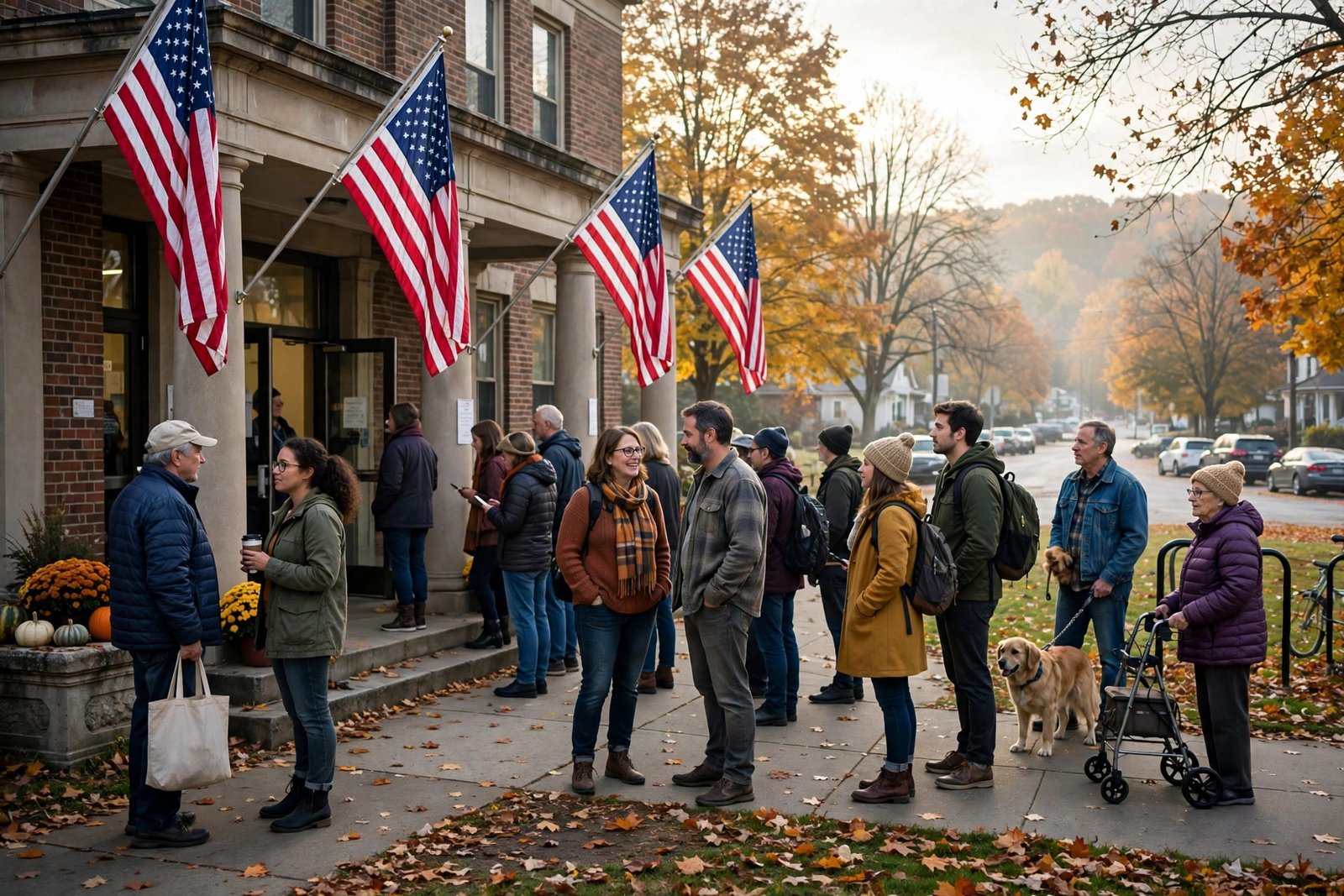
Today, November 3, 2026, is Election Day for the US midterm elections 2026, when millions of Americans across the country will cast ballots that will shape Congress, state governments, and local offices for years to come. If you are voting today, this guide explains what is on the ballot, how midterms work, and how to find your polling place and hours, so you can head to the polls with confidence.
Midterm elections get their name because they fall in the middle of a presidential term. Unlike presidential elections, no presidential race is on the ballot this year. Instead, voters are choosing members of Congress, governors, state legislators, and a long list of local officials. These offices make decisions that touch daily life, from roads and schools to taxes and public safety, which is why midterms matter even without a presidential contest at the top of the ticket.
What Is on the Ballot in the US Midterm Elections 2026
The biggest races in the US midterm elections 2026 are for Congress. All 435 seats in the US House of Representatives are up for election, since House members serve two-year terms. In the Senate, 35 of the 100 seats are contested this year. Senators serve six-year terms on a staggered schedule, so only about a third of the chamber faces voters in any given election cycle.
Governors are also on the ballot in a big way. Voters in 36 states will elect governors this year. Governors lead state governments, sign or veto state laws, and oversee state budgets, agencies, and emergency responses. In many states, voters will also decide races for state legislators, attorneys general, secretaries of state, and other statewide offices.
Below the statewide level, ballots typically include county and city offices, school boards, judges in some states, and local ballot measures on taxes, bonds, or policy questions. Because ballots vary by address, two voters in the same state can see different local races. Your sample ballot, available from your local election office, shows exactly what you will vote on.
How the US Midterm Elections 2026 Work
The United States holds federal elections on the Tuesday after the first Monday in November in even-numbered years. Midterm elections take place in even-numbered years when there is no presidential election. Every House seat is contested in every midterm, which is why control of the House can shift in these elections.
The Senate’s staggered terms are designed for continuity. With only 35 seats contested this year, most senators are not on the ballot, and the chamber changes more gradually than the House. Together, the two chambers make up Congress, which writes federal laws, approves budgets, and provides oversight of the executive branch.
Voting itself is run at the state and local level, not by the federal government. That means polling hours, early voting rules, voter ID requirements, and mail ballot deadlines differ from state to state. The rules that apply to you are set by your state and carried out by your county or city election office, so always check your local source rather than relying on a national summary.
Early Voting Set a Record Before Election Day
Many Americans did not wait for Tuesday. A record 54 million people had already cast early ballots as of Sunday, November 2, according to news coverage of the election. Early voting, including in-person early voting and mail ballots, has grown in recent years as states have expanded the ways voters can cast a ballot before Election Day. That early turnout is part of what makes the US midterm elections 2026 one of the most closely watched elections in recent years, with voters deciding the balance of Congress and the leadership of more than two-thirds of the states.
If you already voted early or by mail, you generally do not need to visit a polling place today. If you requested a mail ballot but have not returned it, check your state election office’s rules for drop-off locations and deadlines, since some states require mail ballots to arrive by Election Day while others accept ballots postmarked by Election Day. When in doubt, contact your local election office directly.
How to Find Your Polling Place and Hours
Before you head out, confirm three things: where you vote, when polls open and close, and what, if anything, you need to bring. Polling places can change from one election to the next, so do not assume your location is the same as last time.
- Check your polling place through your state election office website or your county election office. The federal site Vote.gov can point you to your state’s official election website.
- Confirm your state’s poll hours. Closing times vary by state, and voters who are in line when polls close are generally allowed to cast a ballot, but the exact rules are set by each state.
- Review your state’s voter ID rules in advance. Some states ask voters to show a photo ID, others accept non-photo documents, and some do not require ID at the polls. Your state election office lists what is accepted.
- Look up your sample ballot before you go, so you can research the candidates and measures on your ballot at your own pace.
- If you need assistance at the polls, help is available. Voters with disabilities can request accessible voting equipment, and voters who need language assistance may bring someone to help, subject to state rules.
If you run into a problem at your polling place, such as not appearing on the voter rolls, ask the poll worker about your options, which may include casting a provisional ballot. You can also call your local election office or the national Election Protection hotline for guidance.
What the Polls Showed Heading Into Election Day
Heading into Election Day, a Reuters/Ipsos poll conducted October 29 through November 2 surveyed 1,765 US adults and put presidential approval at 32 percent. Polls are snapshots of opinion at the time they are taken, and different polls can show different results depending on their methods, sample, and timing. Approval ratings are one of many indicators analysts watch, but they are not votes, and they do not decide the outcome of any race.
It is worth remembering that polls describe what respondents said before the election, not what will happen. Turnout, late-deciding voters, and differences between states and districts all shape the final result. The only count that decides an election is the official count of ballots cast.
What Happens After Polls Close
When polls close, election workers begin counting ballots. Some states count mail ballots as they arrive, while others wait until Election Day, so the speed of results varies. In close races, the winner may not be known on election night, and that is a normal part of the process. Official results are certified by state and local authorities after all valid ballots are counted, including mail ballots that arrive by the state’s deadline and any ballots that require review.
News organizations may project winners based on partial returns and exit data, but a projection is not an official result. The certified count, released by election officials, is the final word. If a race is extremely close, some states conduct recounts under their own laws.
Once results are certified, newly elected House members take office when the new Congress convenes in January, and newly elected governors and state officials take office on dates set by their state constitutions. Until then, current officeholders remain in their roles.
Why Midterms Shape Everyday Life
Midterms may not feature a presidential race, but the offices on the ballot make decisions that reach into daily routines. Congress sets federal tax and spending policy. Governors and state legislators shape education funding, health care programs, transportation, and criminal justice policy. Local officials oversee schools, roads, water systems, and emergency services.
That local reach is why voter guides often urge people to research the full ballot, not just the top races. A school board or county commission decision can affect your neighborhood as directly as a law passed in Washington. Taking a few minutes to review your sample ballot before voting is one of the simplest ways to make your vote count across every race. In the US midterm elections 2026, that full-ballot habit matters more than ever, because so many levels of government are on the same ballot at the same time, from Congress down to city hall.
For more on the places and stories that make America what it is, explore our guide to Yellowstone National Park facts, our look at where to see bald eagles in the USA, and our best fall foliage destinations in the USA.
Conclusion: Make Your Plan to Vote Today
Election Day only comes once, and today’s ballot covers the full sweep of American government, from all 435 House seats and 35 Senate seats to governors in 36 states and the local offices closest to home. With a record 54 million early ballots already cast before today, millions more voters will join them at the polls.
Check your polling place and hours with your state or local election office, bring anything your state requires, and review your sample ballot before you go. Then cast your vote, and share this guide with a friend or family member who still needs to make their plan. Voting is how Americans choose the direction of their communities and their country, and today is the day to be part of it.