
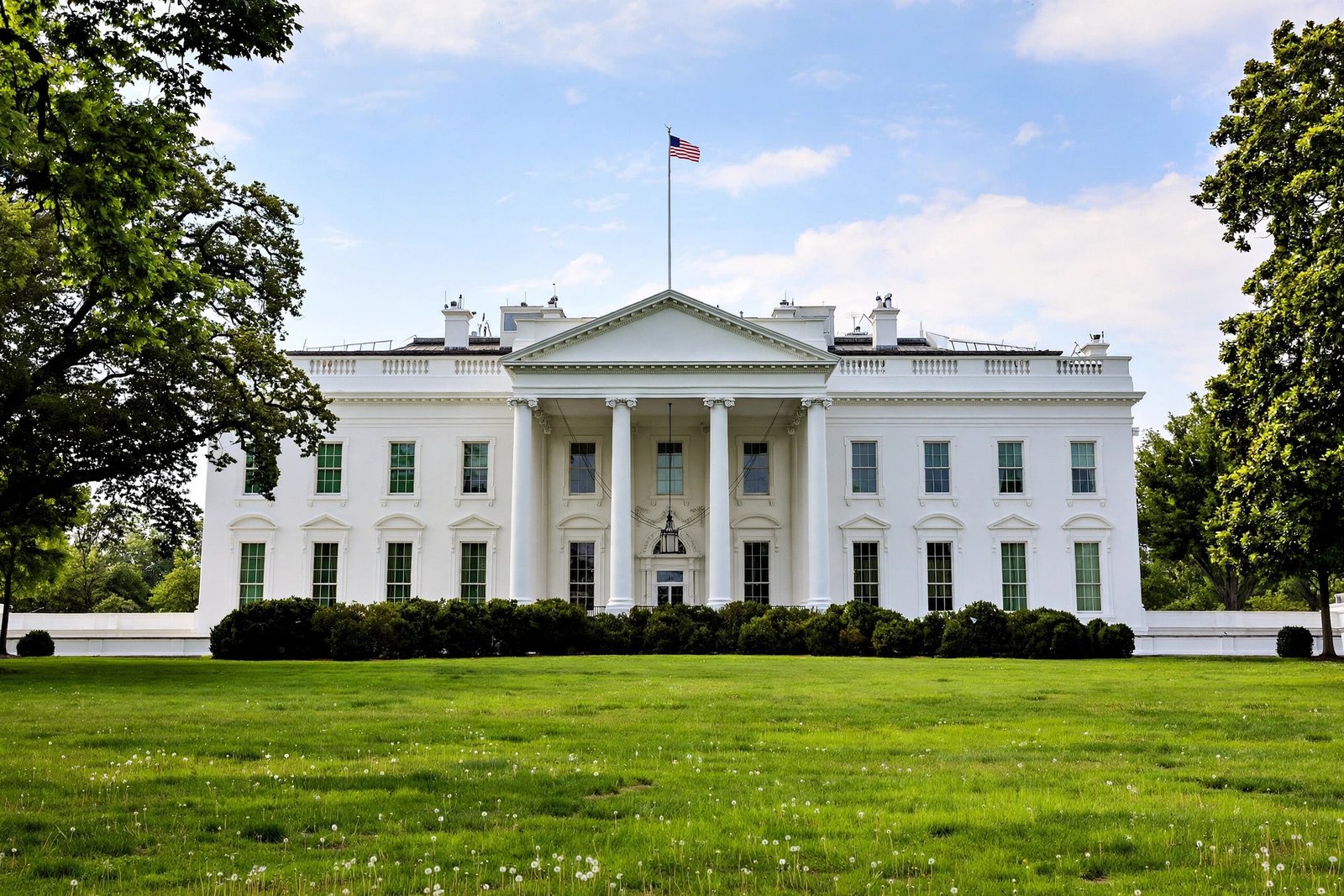
Every American recognizes the White House from photos, news broadcasts, and history books, yet the building itself still holds plenty of surprises. These White House facts reveal a home that has been burned, rebuilt, expanded, gutted, and modernized, all while remaining one of the most famous addresses on earth. Behind its calm white facade sits a working office, a family home, a museum, and a symbol of the presidency, all under one roof.
If you have ever wondered how many rooms it has, why it is painted white, or which president moved in first, you are in the right place. This guide walks through the design, the name, the rooms, the grounds, and the everyday life inside 1600 Pennsylvania Avenue NW in Washington, D.C. By the end, you will see the Executive Mansion in a completely different way, and you will have plenty of stories to share the next time the White House appears on your screen.
White House Facts That Start With Its Design
Construction of the White House began in 1792, when the young nation needed a permanent home for its president. President George Washington chose the site, and Irish-born architect James Hoban won a design competition with a plan inspired by grand Georgian country houses. Workers laid the cornerstone on October 13, 1792, and the sandstone walls rose slowly over the next eight years. Enslaved laborers, free Black workers, European immigrants, and local craftsmen all contributed to the construction, a part of the story the White House Historical Association and other historians have worked to document more fully.
One of the most surprising White House facts is that the building was not finished when its first resident moved in. President John Adams and his wife Abigail moved into the still-unfinished house in November 1800. Plaster was still drying, staircases were incomplete, and the grounds were rough and muddy. Abigail Adams famously hung laundry to dry in the large East Room because there was no better place. The house that looks so polished today began as a construction site with a presidential family camping inside it.
The White House is built from Aquia Creek sandstone, a pale stone quarried in Virginia. The stone was painted white to protect it from moisture and cracking, and the color stuck. Over the years the building has been repainted many times, and the bright white exterior has become part of its identity. The main house, often called the Executive Residence, is flanked today by the East Wing and the West Wing, which were added much later as the work of the presidency grew.
Size is another area where the White House surprises people. The residence contains 132 rooms, 35 bathrooms, and six levels. It has 412 doors, 147 windows, 28 fireplaces, eight staircases, and three elevators. The floor area is about 55,000 square feet. Those numbers describe the residence and its wings, and they help explain why a full-time staff is needed to keep the building running. The grounds cover about 18 acres, including lawns, gardens, walkways, and security areas that most visitors never see.
How the White House Got Its Name and Color
For much of its early history, the building was formally called the Executive Mansion, and people also called it the President’s House or the President’s Palace. The name White House was already in popular use in the early 1800s, partly because of the white-painted stone and partly to distinguish it from other government buildings. President Theodore Roosevelt made it official in 1901 when he ordered that White House appear on official stationery. From that point on, the nickname became the formal name.
The burning of the White House is one of the best-known chapters in its story. During the War of 1812, British troops entered Washington in August 1814 and set fire to the Executive Mansion, the Capitol, and other public buildings. The fire gutted the interior and left only the blackened outer walls standing. President James Madison and his wife Dolley had fled the city, and Dolley Madison is credited with helping save important items, including a well-known portrait of George Washington, before leaving. James Hoban returned to supervise the rebuilding, and President James Monroe moved back into a restored house in 1817.
The white paint also has a practical origin that is easy to forget. Painting the porous sandstone sealed it against rain and freezing weather, which helped the walls survive winters. The color became so closely tied to the building that even after the stone was rebuilt and repaired, the white finish remained. Today the exterior is repainted on a regular schedule, and the crisp white color is maintained as part of the building’s historic character.
If you want to place the White House in the wider story of the nation, it helps to read about the founding documents that shaped the presidency itself. You can explore fascinating facts about the U.S. Constitution to see how the office the White House serves was designed. The building and the Constitution grew up together, and each one helps explain the other.
Inside the White House: Rooms, Floors, and Hidden Spaces
The public rooms on the State Floor are where much of the official life of the White House happens. The East Room is the largest room in the residence and has hosted receptions, concerts, bill signings, press conferences, and memorial services. The State Dining Room can seat about 140 guests for a formal dinner. The Green Room, Blue Room, and Red Room each have their own color schemes and histories, and they are used for receptions and small gatherings. The Blue Room, with its oval shape, is often where the official White House Christmas tree stands.
Upstairs, the private quarters occupy the second and third floors. The second floor includes the family living rooms, bedrooms, and the Treaty Room, which has served as a presidential study. The third floor includes a solarium with views over the grounds, a game room, and additional bedrooms. First families are free to decorate the private quarters to suit their tastes, while the historic State Floor rooms are preserved with the help of curators and the White House Historical Association.
Below the public floors, the White House has working spaces that most people never see. There is a large kitchen, a chocolate shop, a flower shop, a carpenter shop, and offices for household staff. The White House kitchen can prepare dinner for about 140 guests and hors d’oeuvres for more than 1,000 guests at a reception. A movie theater, a bowling alley, a tennis court, and a swimming pool have all been added at different times. President Franklin D. Roosevelt had an outdoor pool built in 1933, and President Gerald Ford later added an indoor pool. A jogging track, a basketball court, and a putting green have also appeared on the grounds over the years.
The West Wing is where the daily work of the presidency is centered. It includes the Oval Office, the Cabinet Room, the Roosevelt Room, and offices for senior staff. The West Wing was built in 1902 during Theodore Roosevelt’s presidency, and the Oval Office took its familiar form in 1909 under President William Howard Taft. The East Wing, completed in 1942, houses offices for the First Lady and her staff, as well as the entrance used for public tours. The famous colonnades connect the wings to the main residence and appear in countless photographs.
White House Facts About Presidents and Daily Life
Among the most human White House facts are the small details of daily life inside a building that is both a home and an office. Presidents and their families live upstairs while meetings, press briefings, and state visits unfold below. The family quarters have their own kitchen, and the residence staff includes ushers, chefs, housekeepers, and engineers who keep the building running around the clock. Moving day is famously fast: on Inauguration Day, staff have only a few hours to move one family out and the next family in.
Several presidents left lasting marks on the building. Thomas Jefferson added the colonnades and opened the house to public tours, believing citizens should be able to see the home of their president. Theodore Roosevelt built the West Wing to move offices out of the residence. Harry Truman ordered a major renovation from 1948 to 1952 after engineers found the building structurally unsafe. The interior was completely gutted, steel framing was installed, and the historic rooms were rebuilt inside the original walls. The Truman family lived across the street at Blair House during the work.
John Adams was the first president to live in the White House, and every president since then has lived there. George Washington never lived in it because it was not finished during his presidency, even though he chose the site and approved the design. The White House has also welcomed countless guests, from foreign heads of state to school groups. State visits include formal arrival ceremonies on the South Lawn, state dinners, and cultural performances, all carefully planned by the residence staff.
Pets have always been part of White House life as well. Dogs, cats, horses, birds, and even more unusual animals have lived there over the centuries. Theodore Roosevelt’s family kept a wide menagerie, and later presidents’ dogs often became famous in their own right. The tradition continues today, and presidential pets regularly appear in official photos and holiday events. It is a reminder that behind the ceremony, the White House is also a family home.
The Grounds, Security, and Public Access
The White House grounds are a living landscape with a long history. The South Lawn hosts the annual Easter Egg Roll, state arrival ceremonies, and the Marine One helicopter landing zone. The North Lawn faces Pennsylvania Avenue and is the view most visitors see first. The Jacqueline Kennedy Garden and the Rose Garden sit beside the West Wing and serve as settings for ceremonies, announcements, and quiet walks. The Rose Garden was redesigned in 1962 and has been updated several times since.
Gardens have played a practical role too. First Lady Michelle Obama planted a kitchen garden on the South Lawn in 2009, and earlier first families also kept gardens. The grounds include trees planted by presidents and visiting dignitaries, including historic magnolia trees associated with Andrew Jackson. Gardeners maintain the lawns, flower beds, and trees year-round, and the grounds are managed as both a park and a working landscape.
Security around the White House is managed by the U.S. Secret Service, which protects the president, the first family, and the building. Pennsylvania Avenue in front of the White House was closed to vehicle traffic in 1995, and the area is now a pedestrian plaza. Visitors can view the White House from Lafayette Square to the north and from the Ellipse to the south. Public tours of the interior are available by request through a member of Congress, and they typically include several of the historic State Floor rooms.
Another set of White House facts concerns how much of the building the public can actually see. Tours cover only a small portion of the 132 rooms, and the private quarters, the West Wing offices, and the working areas below ground are not part of the standard tour. The White House Visitor Center, located nearby, offers exhibits, models, and films that help fill in the gaps. For many visitors, the combination of a tour and the visitor center gives the fullest picture of the house.
The White House is also a powerful national symbol. Its image appears on currency, stamps, souvenirs, and in films and television shows. For more stories about the symbols and places that define the country, read our guide to Statue of Liberty history and facts and our collection of interesting facts about the USA. Together, these landmarks tell the story of how America presents itself to the world.
What Most Visitors Miss
One detail many visitors miss is how much the White House has changed over time. The building you see today is not the building John Adams moved into, and it is not even the building Abraham Lincoln knew. Each generation has added wings, rebuilt interiors, installed new technology, and reshaped the grounds. The Truman renovation alone replaced the entire interior structure. The White House survives because it keeps changing while holding on to its familiar outward appearance.
Another overlooked detail is the role of the people who work there. The residence staff, including the chief usher, the executive chef, the florist, and the engineers, often serve across multiple presidencies. Their knowledge keeps the building running through transitions, state visits, and holidays. The calligraphers who address invitations, the carpenters who repair historic furniture, and the gardeners who tend the Rose Garden all contribute to a house that must be both historic and ready for daily use.
Visitors also miss the layers of art and history inside the rooms. The White House collection includes portraits of presidents and first ladies, historic furniture, china, glassware, and silver. Many pieces were chosen or donated over the centuries, and curators rotate items to match the stories each room tells. The Vermeil Room, the Library, and the China Room each hold collections that reflect different eras of American life. A short tour only scratches the surface of what the collection contains.
Finally, many people do not realize how close the White House sits to the rest of Washington. The National Mall, the Washington Monument, the Lincoln Memorial, and the Capitol are all within walking distance. The White House anchors one end of a landscape of monuments and museums that together tell the American story. A visit to the neighborhood rewards anyone who slows down and explores beyond the fence line.
Conclusion: Why the White House Still Fascinates Us
These White House facts show a building that is at once grand and practical, historic and alive. It has survived fire, war, renovation, and the daily pressures of modern government. It has hosted state dinners and family movie nights, treaty signings and birthday parties. It is a museum, an office, and a home, all in one white-painted mansion on Pennsylvania Avenue.
The next time you see the White House on the news, look past the familiar facade. Think of the sandstone walls that survived the fire of 1814, the craftsmen who rebuilt them, the families who lived upstairs, and the staff who keep the house running today. That is the real story of the White House, and it is still being written. Plan a visit to Washington, request a tour through your member of Congress, and see this remarkable home for yourself. Share this guide with someone who loves American history, and explore more stories about the places that make the USA unforgettable.