
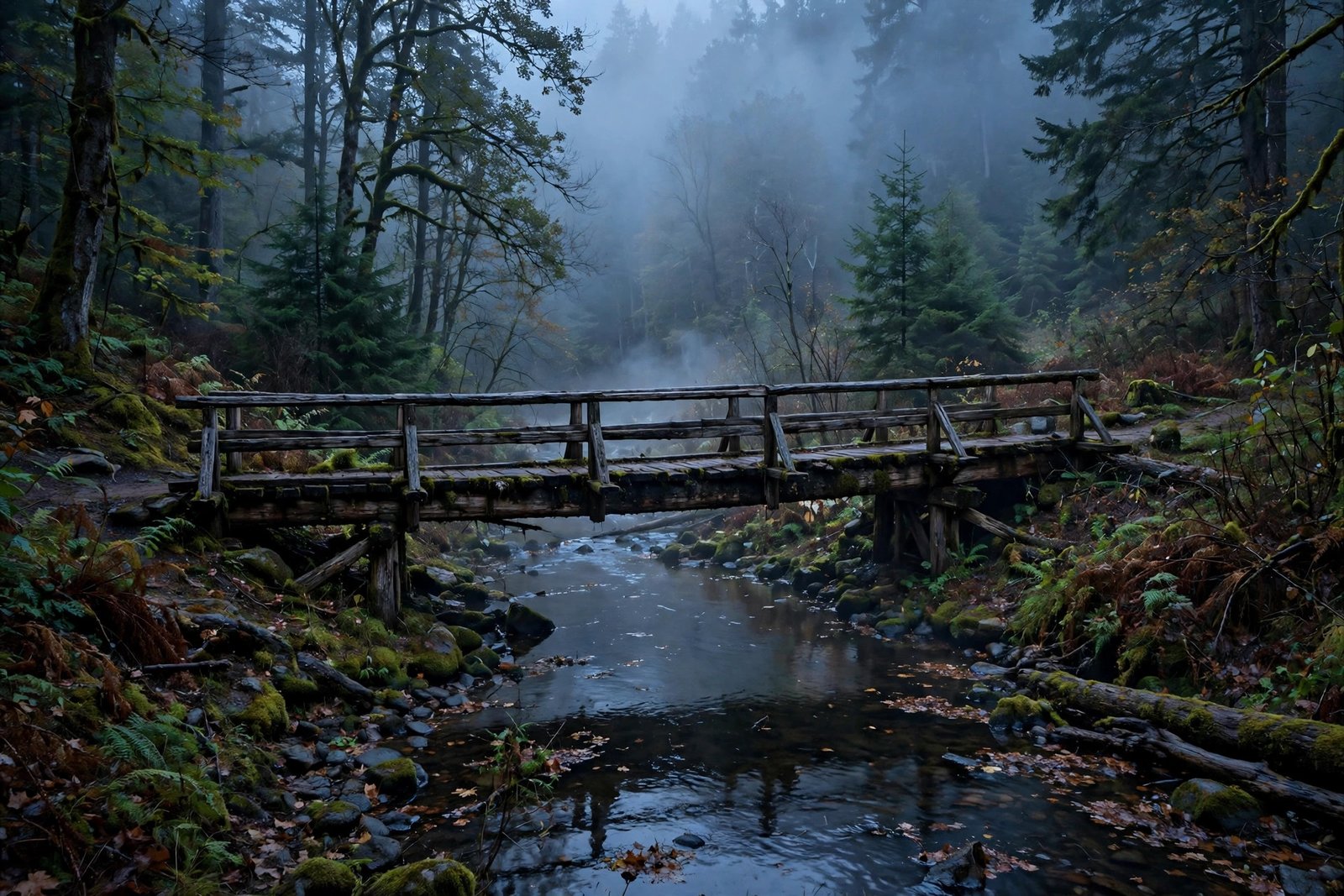
On a quiet road outside town, an old bridge crosses a dark creek, and local storytellers will tell you to roll down your window and listen. That is how the Crybaby Bridge legend usually begins — not with a history book, but with a whisper passed from one teenager to another, from one road trip to the next. If you have ever heard a friend say that a baby can be heard crying near a lonely bridge at night, you have already met this American folktale, even if you did not know its name.
The Crybaby Bridge legend is one of those stories that feels both familiar and impossible to pin down. It is told in many different places, with many different details, and that is part of its power. It is not a single documented event. It is a pattern of storytelling, a shared campfire tale that changes shape every time a new town claims it as its own. In this guide, we separate the folklore from the facts, explore why the story keeps spreading, and explain how to enjoy a legendary bridge visit safely and respectfully.
What Is the Crybaby Bridge Legend?
At its core, the Crybaby Bridge legend is a ghost story built around a bridge and the sound of a crying baby. In most versions, something sad is said to have happened near the bridge long ago, and visitors who stop there at night claim to hear crying when no baby is present. Some versions add the sound of splashing water, a faint voice calling out, or a feeling of sadness in the air. Others describe car troubles, flickering lights, or an unexplained chill.
The details change from place to place. In one telling, the story involves a family travelling in a car. In another, it involves a young parent walking home. In yet another, the bridge itself is described as lonely, overgrown, or long abandoned. What stays the same is the emotional centre of the tale: a small, helpless cry in a dark, lonely place, and the idea that the past has not quite let go of that spot.
That is why the story is so effective. It does not rely on monsters or elaborate special effects. It relies on something deeply human — our instinct to respond to a baby crying. A cry suggests someone needs help, and a cry with no visible source feels deeply unsettling. Add darkness, running water, and an isolated bridge, and you have all the ingredients for a legend that lingers long after the story ends.
Origins of the Crybaby Bridge Legend
Tracing the exact origins of the Crybaby Bridge legend is difficult, and that difficulty tells us something important. Folklorists who study American ghost stories often find that so-called crybaby bridges are not one story at all, but a family of similar stories that grew up independently in different communities. A bridge is a natural setting for a sad tale: it is a crossing point, a place between one side and another, and it often stands over water that can be dangerous after rain or in the dark.
Over time, local storytellers borrowed the most memorable elements from each other. A detail that worked well in one town — a car stalling on the bridge, a handprint on a window, a cry heard only when the engine is off — would travel by word of mouth, by schoolyard retelling, and later by internet forums and videos. The result is a legend that feels ancient and local at the same time, even when no written record supports the specific tragedy described in a given version.
It is important to be clear here: the Crybaby Bridge legend should be understood as folklore, not as verified history. The stories are real in the sense that people genuinely tell them, enjoy them, and sometimes genuinely feel frightened by them. They are not reliable evidence that a particular event happened at a particular bridge on a particular date. When a version names a specific person, year, or incident, treat that as part of the storytelling tradition unless you can find independent historical documentation — and in most cases, that documentation does not exist.
Why So Many Bridges Share the Same Name
If you search for crybaby bridges in the United States, you will find that many states claim one. That is not because the same event happened everywhere. It is because the name itself is catchy, descriptive, and easy to attach to any lonely bridge with a spooky reputation. Once a bridge earns the nickname, the nickname invites the story, and the story reinforces the nickname.
Bridges also share physical traits that make them good settings for ghost stories. Many older rural bridges are narrow, made of steel or concrete, and set away from streetlights and houses. At night, the soundscape changes: tyres on metal grating, wind through trees, water moving below, and animals calling in the dark can all sound strange when you are already expecting something strange. Our brains are very good at pattern-matching, especially when we are nervous. A distant animal cry, a creaking board, or the rush of water can be heard, quite honestly, as something else entirely.
Teenagers and road-trippers have also played a big role in keeping these bridges famous. A bridge with a legend becomes a destination: a place to test your courage, to tell stories with friends, and to post about afterwards. Each visit adds another layer to the legend, and each retelling makes the next visit feel a little more charged with expectation. That cycle is how folklore stays alive in the modern age.
Common Versions of the Tale
Although no single version is official, most retellings share a few familiar building blocks. The variations below are folklore motifs — storytelling patterns — not historical claims:
- The cry in the dark: Visitors stop on or near the bridge at night and report hearing a baby crying, even though the area appears empty.
- The troubled crossing: A vehicle is said to stall, hesitate, or behave strangely while crossing the bridge, adding to the sense that something is wrong.
- The sad backstory: A vague tragedy is attached to the bridge — often involving a family, a storm, or an accident near the water — but the specifics shift from telling to telling.
- The test of courage: Local custom says you must do something specific — park, turn off the lights, listen quietly, or walk to the middle — to hear the cry.
- The warning: Some versions end with a moral or a warning: be careful on dark roads, respect lonely places, or do not go alone at night.
Notice how flexible these elements are. A storyteller can swap one backstory for another, add a local road name, or change the time of night, and the story still works. That flexibility is a hallmark of oral folklore. It is also a useful clue for listeners: when the same core story appears in many places with contradictory details, you are almost certainly hearing a legend, not a news report.
Crybaby Bridges in American Storytelling
Crybaby bridges belong to a larger American tradition of roadside ghost stories. Like the vanishing hitchhiker, the haunted highway, and the phantom light on a country road, they turn ordinary infrastructure into a stage for mystery. America has thousands of miles of rural roads, small bridges, and creek crossings, and each one can become a landmark in local memory if a good story attaches to it.
These stories also serve a social purpose. Telling a ghost story is a way of bonding — friends huddle together, share a thrill, and laugh afterwards about who was most scared. For small towns, a legendary bridge can become part of local identity, something visitors ask about and residents proudly, if playfully, claim. That does not mean residents believe every detail literally. Many people enjoy the story precisely because it sits on the border between belief and entertainment.
If you enjoy this kind of American folklore, you will find similar stories across the country. For another famous ghostly figure from American legend, read our guide to the White Lady ghost legend, and for more eerie road-trip destinations, explore our collection of the best ghost towns in America and their stories. Both show how a place can become famous not only for what happened there, but for what people imagine happened there.
Legend Versus Fact: What We Actually Know
So what can we say with confidence about crybaby bridges? First, the nickname and the story pattern are genuinely widespread in American folklore. Second, many bridges that carry the name are real, physical structures that you can find on a map and drive across in daylight. Third, the specific tragedies described in most versions are not supported by verifiable historical records, and contradictory versions for different bridges cannot all be literally true at the same time.
That distinction matters, especially when a story involves children or a family tragedy. Repeating an unverified tragedy as if it were fact can be unfair to real families and real communities, and it can turn a fun ghost story into a misleading piece of local history. The respectful way to enjoy the legend is to enjoy it as legend: a story people tell, a tradition worth understanding, and a reminder of how communities make meaning out of lonely, beautiful, and sometimes dangerous places.
It is also worth remembering that real bridge safety is a serious subject. Older bridges, fast water, and dark rural roads deserve caution for entirely practical reasons, with no ghosts required. If you visit any old bridge, do so in daylight when possible, stay on public roads and paths, respect private property and posted signs, and never block traffic or trespass on railway or restricted structures.
How to Visit a Legendary Bridge Safely and Respectfully
If a crybaby bridge near you has captured your imagination, a daytime visit is often the most rewarding way to experience it. In daylight you can appreciate the landscape — the creek, the trees, the design of the bridge itself — without the risks of stopping on a dark road at night. Bring a friend, take photographs from public viewpoints, and learn about the area’s real history from local museums, libraries, or historical markers.
Here are a few practical tips for a respectful folklore road trip:
- Go in daylight first: You will see more, stay safer, and still enjoy the atmosphere that inspired the story.
- Stay legal and safe: Do not trespass, climb structures, block roads, or stop in dangerous places. Obey all signs.
- Respect residents: Many legendary bridges sit near homes. Keep noise down, do not shine lights into houses, and avoid late-night visits that disturb neighbours.
- Ask, do not assume: If a local person shares a version of the story, listen with interest, but remember that one retelling is not proof of history.
- Enjoy the story as story: The fun of folklore is in the telling. You do not need to believe every detail to appreciate why the tale endures.
For families, a crybaby bridge story can also be a gentle introduction to folklore itself: why do people tell scary stories, how do stories change as they travel, and how can we tell the difference between a legend and a documented fact? Those are questions worth asking on any road trip, and they make the journey richer than a simple scare.
Why the Story Endures
Legends endure when they touch something universal, and the crybaby bridge story touches several universal feelings at once: protectiveness toward children, fear of the dark, curiosity about the past, and the strange quiet of a lonely place at night. The bridge itself is a powerful symbol — a crossing, a threshold, a place where you are neither quite here nor quite there. Water below adds another layer of mystery, because water hides what is beneath it and carries sound in deceptive ways.
The story also endures because it is participatory. Unlike a story you only read in a book, a bridge legend invites you to go and listen for yourself. That invitation is hard to resist, especially for young people on a first road trip with friends. Even visitors who hear nothing at all come away with a story to tell: we went, we listened, and this is what happened. In folklore, even a quiet visit becomes part of the tradition.
Finally, the legend endures because it is adaptable. Each generation retells it in its own language, on its own platforms, with its own local details. The bridge may change, the car may change, and the way the story spreads may change, but the cry in the dark remains. That adaptability is the real secret of the tale — and the reason you will probably hear a version of it again, on another road, near another bridge, told by someone who swears their town is the original.
Whether you are a folklore fan, a road-trip planner, or simply someone who loves a good American ghost story, the Crybaby Bridge legend is worth knowing — not as a verified event, but as a living piece of American storytelling. Visit in daylight, respect the place and its neighbours, and enjoy the tale for what it is: a whisper from the past that was never really about a single bridge at all, but about all of us, listening in the dark.
Have you heard a version of this legend in your town? Share it — as a story, with its variations and uncertainties intact — and help keep American folklore honest, respectful, and wonderfully spooky for the next generation of listeners.