
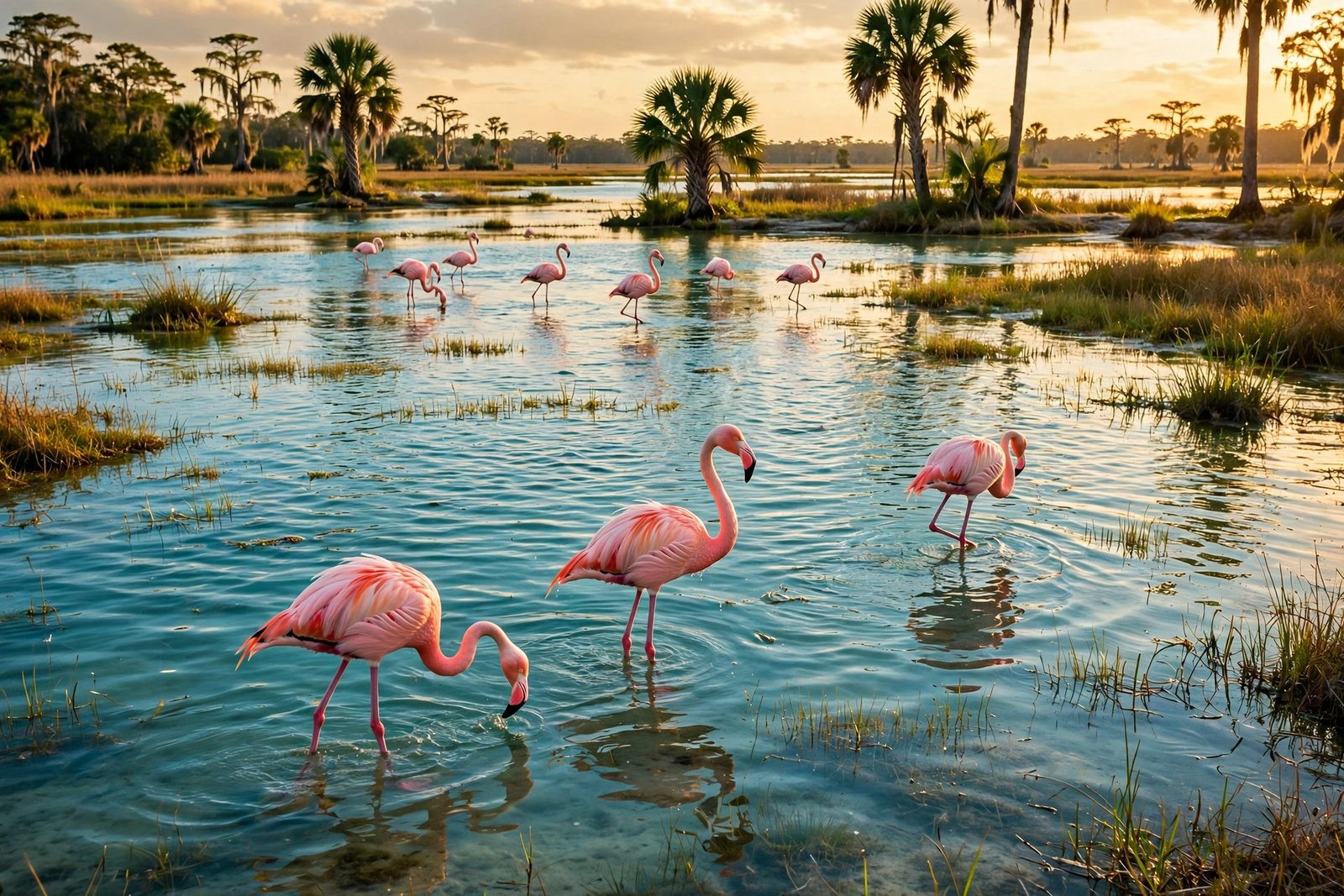
There is nothing quite like the moment you spot a flamingo in the wild — a flash of pink against blue water, a long neck curved like a question mark, a bird that looks almost too colourful to be real. If you are wondering where to see flamingos in USA, the good news is that you have more options than you might think, from wild wetlands in Florida to Gulf Coast shores and excellent zoos and sanctuaries across the country.
Flamingos are famous for their pink feathers, long legs, and unusual feeding style, standing on one leg in shallow water and sweeping their bills through the mud for tiny food. In the United States, wild flamingos are most closely associated with South Florida, but escapes, wanderers, and reintroduced birds also appear along the Gulf Coast from time to time, and captive flamingos can be seen reliably in zoos, aquariums, and wildlife parks in many states. This guide covers the best places to look, the best times to try, and how to watch these birds responsibly.
Where to See Flamingos in USA in the Wild
For wild sightings, South Florida is the place to start. The shallow bays, mudflats, and mangrove-fringed waters around Florida Bay and the Everglades provide the kind of habitat flamingos favour: warm, shallow, salty or brackish water with plenty of space to feed and rest. Birdwatchers have long reported flamingos in this region, and the area remains the most likely part of the mainland United States for a genuine wild sighting.
The Florida Keys and the southern tip of the peninsula are also worth exploring. Flamingos are strong fliers and can move between feeding areas, so a bird seen in one bay today may be somewhere else tomorrow. That unpredictability is part of wild birdwatching. No responsible guide can promise a sighting on a given day, but visiting the right habitat at the right time of year gives you the best chance.
Beyond Florida, the Gulf Coast is the next region to watch. Texas, Louisiana, and neighbouring Gulf states have extensive coastal wetlands, lagoons, and barrier islands that attract a wide variety of wading birds. Flamingos appear here less regularly than in South Florida, and sightings are often of individual wanderers rather than large flocks, but patient birdwatchers do report them from time to time. If you are already birding on the Gulf Coast, keep an eye on shallow lagoons, tidal flats, and protected bays.
It is also worth understanding why wild flamingos are uncommon in most of the United States. Flamingos thrive in warm climates with specific wetland conditions, and much of the country is simply too cold or lacks the right shallow, food-rich waters for them year-round. That scarcity is what makes a wild sighting so exciting — and why the reliable, ethical alternative is so valuable for most travellers.
Where to See Flamingos in USA at Zoos and Sanctuaries
If you want a near-certain flamingo encounter, zoos, aquariums, and wildlife sanctuaries are your best bet. Many well-known zoos across the United States keep flamingos in large, open exhibits designed to mimic wetland habitat, often with shallow pools, sandy islands, and space for the birds to feed, preen, and socialise in flocks. Watching a flock at close range lets you see behaviours that are hard to catch in the wild: the synchronised feeding, the noisy social calls, and the famous one-legged resting pose.
Florida is again a strong choice, with several major zoos and wildlife attractions featuring flamingos, but you do not need to travel to Florida to see them. Large zoos in many regions of the country — from California to the Midwest to the Northeast — commonly include flamingos among their bird collections. Before you travel, check the zoo or sanctuary website for current exhibits, opening hours, and any keeper talks or feeding demonstrations, which can turn a quick look into a memorable learning experience.
Sanctuaries and bird parks offer a different kind of experience. Some focus on native and exotic waterbirds, rehabilitation, or conservation education, and their keepers can explain how flamingos get their pink colour from their diet, why they stand on one leg, and what threats wetland birds face in the wild. For families, these visits are often more rewarding than a distant wild sighting, because children can watch the birds for as long as they like and ask questions.
When choosing a zoo or sanctuary, look for accredited facilities with a clear focus on animal welfare and conservation. Good exhibits give flamingos room to move, clean water, appropriate food, and shelter from extreme weather. A visit to a responsible facility supports conservation work and helps fund research and habitat protection, which benefits wild birds too.
Best Places to See Flamingos in Florida
Florida deserves its own closer look, because it combines the best wild chances with the best captive viewing in one state. Here are the kinds of places to prioritise on a Florida flamingo trip:
- Everglades and Florida Bay: Vast, shallow wetlands where wading birds gather. Take a guided boat or kayak tour with a reputable operator who knows the area and respects wildlife distances.
- Florida Keys: Coastal flats, backcountry waters, and wildlife refuges offer birdwatching in a relaxed island setting. Bring binoculars and scan mudflats at low tide.
- South Florida wetlands and parks: State parks, national wildlife refuges, and coastal preserves are excellent for general birdwatching, even on days when flamingos do not appear.
- Major Florida zoos and attractions: Reliable flamingo exhibits, keeper talks, and family-friendly facilities make these ideal if you are travelling with children or want a guaranteed sighting.
When people ask where to see flamingos in USA, Florida is usually the first answer for good reason. A smart Florida itinerary mixes both approaches: spend a morning birdwatching in a natural wetland, then visit a zoo or sanctuary in the afternoon. That way, even if the wild birds are elsewhere that day, you still enjoy a close flamingo encounter, and you learn more about the species from keepers and guides along the way.
Flamingos on the Gulf Coast and Beyond
The Gulf Coast rewards patient, well-prepared birdwatchers. Coastal Texas in particular is famous among birders for its sheer variety of species, and its lagoons and wetlands attract herons, egrets, spoonbills, pelicans, and many other wading birds. Flamingos are a rare bonus here rather than a regular feature, so treat any sighting as a lucky highlight, not a guarantee.
If you are researching where to see flamingos in USA beyond Florida, the Gulf Coast is the natural second stop. When birding the Gulf Coast, focus on protected coastal areas, national wildlife refuges, and state parks with shallow water and limited disturbance. Early morning is usually best, when birds are actively feeding and light is soft for photography. A spotting scope or good binoculars makes a real difference, because flamingos often feed far from shore.
Elsewhere in the United States, your best flamingo chances will almost always be at a zoo, aquarium, or bird park. That is not a lesser experience. Captive flamingos are often active, vocal, and easy to photograph, and many facilities run breeding and conservation programmes that help protect flamingo species in their native ranges around the world. If you love American wildlife generally, you may also enjoy learning about other iconic wetland species — for example, our guide on where to see manatees in the USA covers another gentle, water-loving animal that shares much of Florida’s coastal habitat.
When Is the Best Time to See Flamingos?
Timing depends on whether you are seeking wild or captive birds. Captive flamingos can be seen year-round, though they may be most active in mild weather and during feeding times. Check with the facility about the best time of day to visit, and plan around keeper talks if you want extra insight.
For wild flamingos in South Florida, the cooler, drier months are often popular with birdwatchers, because birds concentrate in remaining shallow waters and viewing conditions are comfortable. Summer brings heat, humidity, and afternoon storms, which can make field birding more challenging, though birds are still present. In general, early morning and late afternoon offer the best light, the most bird activity, and the most pleasant temperatures.
Migration and movement patterns also matter. Flamingos are mobile birds, and wild individuals may shift between feeding sites with water levels, food availability, and weather. Local birding reports, refuge visitor centres, and guided tours can help you understand recent sightings in a given area, but remember that wildlife is never on a fixed schedule. Flexibility and patience are part of the adventure.
Tips for Watching Flamingos Responsibly
Flamingos, like all wild birds, deserve space and quiet. Whether you are watching them in a wetland or in a zoo exhibit, a few simple habits make the experience better for you and safer for the birds:
- Keep your distance: In the wild, use binoculars or a zoom lens instead of approaching. If birds become alert, move away, or fly off, you are too close.
- Stay on paths and boardwalks: Wetlands are fragile. Trampling vegetation or wading into feeding areas can disturb birds and damage habitat.
- Be quiet and patient: Loud voices, sudden movements, and drones can flush birds. Sit still, watch, and let the birds come to you.
- Never feed wild flamingos: Human food can harm birds and change their natural behaviour. In zoos, only use food provided by staff, if feeding is offered at all.
- Leave no trace: Take your litter with you, respect refuge rules, and avoid flash photography that may startle birds.
Responsible viewing also means being honest about what you saw. If you are unsure whether a distant pink bird was a flamingo or a spoonbill, say so. Birdwatching is more fun — and more useful for conservation — when reports are accurate. Over time, careful observation sharpens your eye, and you will start to recognise flamingos by their shape, posture, and flight even at a distance.
What to Bring for a Flamingo Trip
A little preparation goes a long way on a flamingo-watching trip. Pack binoculars or a spotting scope, sunscreen, a hat, insect repellent, and plenty of water, especially in Florida and Gulf Coast heat. Wear comfortable walking shoes that can handle boardwalks, sandy paths, and muddy edges, and bring a light rain jacket if afternoon showers are forecast.
For photography, a telephoto or zoom lens helps enormously, because flamingos often feed well away from viewing areas. A tripod or monopod can steady long lenses, but check refuge and zoo rules before bringing large equipment. Most importantly, bring patience. The best wildlife moments often come after a quiet wait, when birds relax and resume their natural behaviour.
If you are travelling with children, turn the trip into a game: who can spot the first pink bird, who can count how many flamingos are standing on one leg, or who can describe the funniest feeding pose. Children remember these moments, and a successful flamingo trip can spark a lifelong interest in birds and wetlands.
Planning Your Flamingo Adventure
Anyone planning where to see flamingos in USA should start by deciding what kind of experience you want. If a guaranteed, close-up encounter matters most — for example, for a family holiday or a photography project — choose a reputable zoo or sanctuary and build your trip around it. If the thrill of a wild sighting matters most, plan a birdwatching trip to South Florida, allow several days, and combine flamingo searching with the many other spectacular birds the region offers.
Book guided tours where available. Local guides know the tides, the access points, and the recent bird movements, and they can help you find birds while minimising disturbance. They can also explain the ecology of the wetlands — why shallow water matters, how mangroves protect the coast, and why conserving these habitats benefits far more than flamingos alone.
Finally, remember that a flamingo trip is about more than one species. The wetlands that host flamingos also host pelicans, herons, ibis, spoonbills, and countless smaller birds, plus manatees, dolphins, and alligators in Florida waters. Even on a day when flamingos stay hidden, a wetland outing in the American South is rarely wasted. Keep your eyes open, enjoy the whole ecosystem, and let the flamingo be the pink highlight of a much larger natural show.
So, where will you go first? Whether you choose the wild bays of South Florida, a Gulf Coast refuge, or a wonderful zoo close to home, flamingos reward the traveller who plans well, watches patiently, and respects the birds and their habitat. Pack your binoculars, check local conditions, and go and meet one of America’s most unforgettable birds.
For more USA wildlife adventures, explore our guide on where to see manatees in the USA, and start planning your next wetland escape today.