
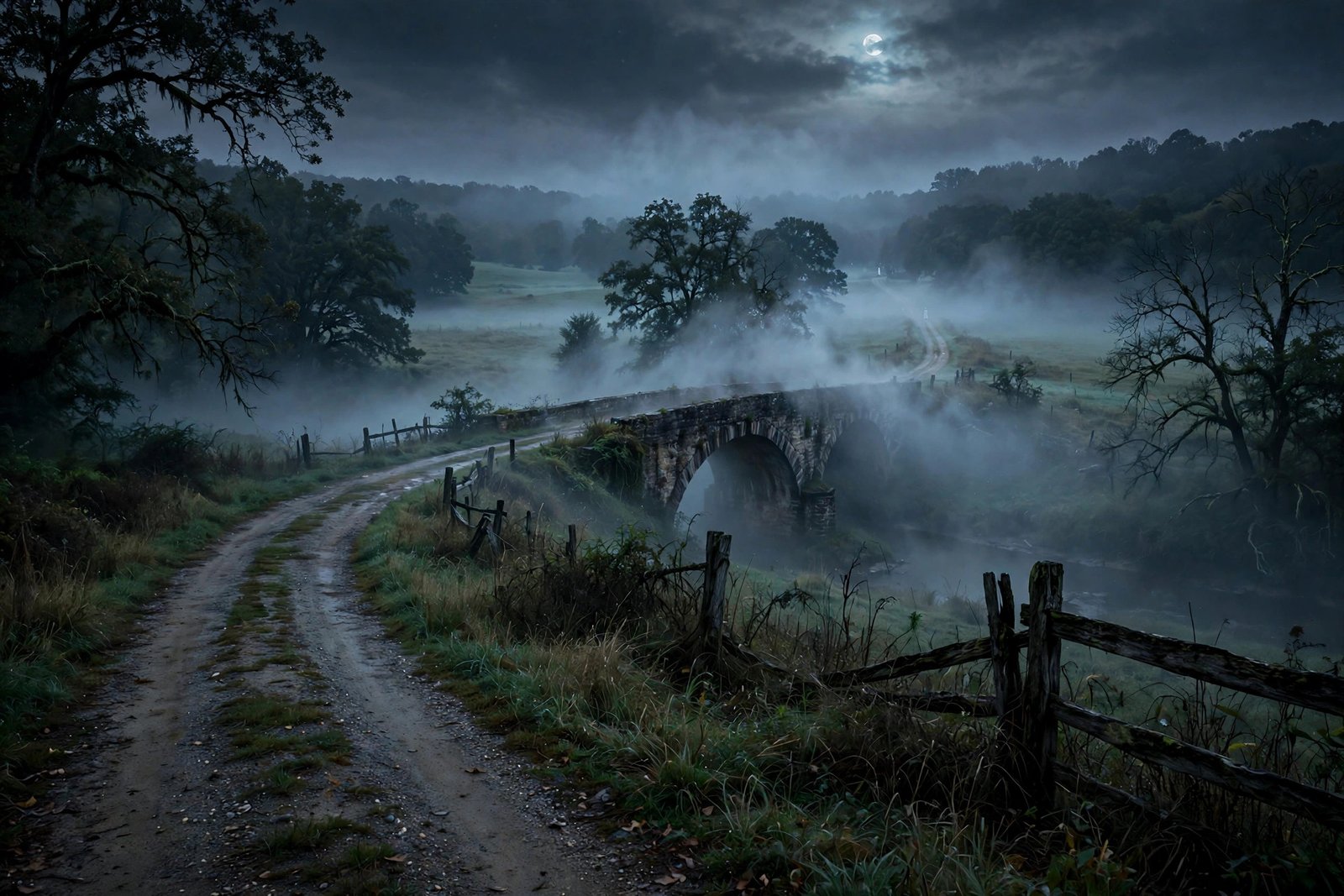
On a foggy road late at night, drivers sometimes report the same chilling sight: a woman in white standing at the edge of the pavement, waiting. She does not wave them down. She does not speak. And when they look again, she is gone. The White Lady ghost legend is one of America’s most enduring ghost stories, told in small towns and big cities alike, from old cemeteries in New England to lakeside parks in New York. Nobody can prove she is real, and that is exactly why the story never dies.
This article treats the White Lady as what she is: folklore. The tales below are legends passed down by communities, not verified facts. Still, they reveal a great deal about how Americans process grief, mystery, and the places that give them goosebumps. Read on for the most famous versions of the story, the patterns they share, and how to visit the places tied to them respectfully.
What Is the White Lady Ghost Legend?
At its core, the White Lady is a ghost story about a woman dressed in white who appears near roads, cemeteries, lakes, bridges, or old houses. In most versions, she died tragically, often young, and her spirit is said to linger near the place where she lost her life or lost someone she loved. Some versions say she is searching for a missing child. Others say she waits for a lover who never came home. A few say she warns travelers of danger ahead.
What makes the White Lady unusual is how consistent she is. Ghost stories usually vary wildly from town to town, but the White Lady keeps the same shape almost everywhere she appears: female, pale, silent, and dressed in white. Folklorists believe this consistency is part of the story’s power. The image is simple enough for anyone to picture, and flexible enough for every community to make it their own. A town with an old cemetery gets a White Lady in the graveyard. A town with a lonely lakeside road gets a White Lady on the shoulder.
It is worth stating plainly: there is no verified evidence that any White Lady ghost exists. No photograph has ever been confirmed, and no investigation has produced proof. The stories survive because they are told well and because they touch something real: the human habit of sensing a presence in lonely places, and the comfort of giving grief a face and a name.
Famous White Lady Ghost Legend Stories Across America
Nearly every region of the United States has its own White Lady. Here are some of the most talked-about versions, each told as local legend.
Durand Eastman Park, Rochester, New York. Local lore says a woman in white appears near the Lake Ontario shoreline in this large lakeside park. In the most common telling, she is a mother searching for a lost daughter, and her figure is seen drifting through the fog near the water. Park visitors and local storytellers have repeated the tale for generations, and it has become one of upstate New York’s best-known ghost stories. The park itself is a real and popular place for hiking, swimming, and picnics by day, which only makes the nighttime legend feel stranger.
Union Cemetery, Easton, Connecticut. This small cemetery is one of the most famous White Lady sites in New England. According to local legend, a woman in white drifts among the headstones, sometimes appearing near the road that passes the cemetery gates. The story has been featured in books and television programs about American hauntings, and the cemetery draws curious visitors from across the region. Town officials and cemetery caretakers ask visitors to be respectful: this is an active burial ground, not a haunted-house attraction.
Gettysburg, Pennsylvania. In a town defined by one of the bloodiest battles in American history, it is no surprise that White Lady stories took root. Local lore connects a lady in white with the grief that followed the Battle of Gettysburg, when the town’s homes, churches, and fields became field hospitals. Storytellers say she appears near old houses and battlefield roads, a figure of mourning in a place that knew more mourning than almost any other in the country. Gettysburg’s many guided ghost tours keep these stories alive, and they are told as legend, not as history.
The vanishing hitchhiker. Perhaps the most widespread version of all is the vanishing hitchhiker, in which a driver stops for a young woman in white on a lonely road. She climbs into the back seat, gives an address, and then, when the driver reaches the destination, the seat is empty. In some tellings, the driver knocks on the door of the address and is told by a resident that the young woman died years ago. Folklorists have collected versions of this story from nearly every state, which shows how the White Lady adapts to the age of the automobile.
La Llorona and the White Lady. In the American Southwest and Mexico, the legend of La Llorona, the Weeping Woman, is sometimes confused with the White Lady. The two share themes of a grieving woman near water, but they are distinct traditions. La Llorona belongs to Mexican and Mexican-American folklore, and her story carries its own moral weight. Treating the two as the same legend flattens both, so storytellers should keep them separate and respect each tradition on its own terms.
Similar White Lady figures appear around the world, from Britain’s manor-house ghosts to the White Lady of Balete Drive in the Philippines. The fact that so many cultures independently imagine a woman in white suggests the image taps into something universal: grief made visible, standing quietly at the edge of the road.
Why White Ladies Wear White
In nearly every version of the White Lady ghost legend, the color white does heavy symbolic work. In Western culture, white has long been linked to purity, innocence, and bridal dress, and also to mourning. Victorian-era mourning customs, white burial shrouds, and the pale glow of moonlight all feed the image. A woman in white is easy to picture and easy to spot in a story, which helps the tale spread.
There is also a practical storytelling reason. A ghost story told at night needs an image the listener can see in the dark. A pale figure in white stands out against a black road, a foggy cemetery, or a moonlit lake. The detail is vivid enough to frighten and simple enough to remember, which is exactly what an oral legend needs to survive from one generation to the next.
Some versions dress the White Lady in a wedding gown, which adds a layer of heartbreak: a bride who never married, or a wife who lost her husband. Others dress her in a nightgown, suggesting someone who died suddenly in the night. The clothing changes, but the meaning stays close to grief, loss, and love that outlasted death.
Common Patterns in White Lady Sightings
Read enough White Lady stories and the patterns jump out. The sightings almost always happen at night, often in fog or rain, when visibility is poor and the imagination runs ahead of the eyes. The figure appears near a road, a bridge, a cemetery, or a body of water, places that already feel lonely after dark. She is usually silent. She rarely chases anyone. Most often, she simply stands, watches, or walks away, and vanishes when approached.
Another pattern is the searching mother or waiting lover. The White Lady is almost never described as angry or vengeful. She is sad. That sadness is a big part of why the stories endure: people are far more willing to repeat a story about a grieving spirit than one about a monster. The White Lady ghost legend follows a recognizable script, and that script makes the story feel true even when the listener knows it is folklore.
Finally, the stories are almost always local. The White Lady belongs to a specific road, a specific cemetery, a specific stretch of lakeshore. That local anchor matters. A ghost story about a faraway castle is entertainment. A ghost story about the road you drive home every night is something else entirely.
The Psychology Behind the Legend
Part of why the White Lady ghost legend endures is that it gives shape to real human experiences. Grief is one of them. When a community loses someone young or in tragic circumstances, stories can become a way of keeping that person’s memory present. A ghost story is not the healthiest form of remembrance, but it is a very human one.
Fear plays a role too. Many White Lady stories function as cautionary tales, especially for young drivers. A tale about a phantom on a dangerous curve or a foggy bridge is a memorable way to say: slow down, pay attention, be careful on this road at night. Parents and older siblings have used ghost stories this way for generations, and the White Lady is a perfect messenger because she appears exactly where danger lives.
Then there is the way the human brain works in low light. Fog, headlights, shadows, and fatigue can turn an ordinary roadside object, a signpost, a mailbox, a patch of mist, into a figure that seems to stand and watch. Psychologists call this kind of misperception pareidolia, the tendency to see faces and figures in vague shapes. None of this proves that every White Lady sighting is a trick of the light, but it explains why so many sightings happen in exactly the conditions where the eyes are least reliable.
Community bonding matters as well. Telling ghost stories is a social ritual. It gives neighbors something to share, gives teenagers a reason to gather, and gives towns a piece of identity. A town with a White Lady has a story that belongs to it alone, and that is worth more than the fright itself.
Visiting Places Tied to the Legend
If the stories make you curious, many White Lady locations are real public places you can visit, with a few ground rules. First, go during open hours. Parks close at night for good reasons, and cemeteries are not nighttime attractions. Second, respect the dead. Do not sit on headstones, leave trash, or stage fake seances on someone’s grave. Third, stay on public paths and obey posted signs. A legend never justifies trespassing.
Guided ghost tours are often the best way to experience these stories. In Gettysburg, for example, licensed guides tell the town’s legends in context, with real history alongside the folklore, and they know which sites welcome visitors. Look for tours that clearly separate legend from fact: the honest ones are both more respectful and more interesting.
Daytime visits can be surprisingly rewarding. The cemeteries, parks, and old roads tied to White Lady stories are often beautiful in their own right, full of local history and quiet scenery. You can enjoy the place, learn its real story, and save the ghost tale for the drive home. If you want more American legends, the Legend of Sleepy Hollow is another classic tale where folklore and history blur, and the Jersey Devil legend shows how a different kind of monster story takes root in the Pine Barrens.
The White Lady in Pop Culture
The White Lady has drifted from campfires into books, television shows, podcasts, and local haunted attractions. Writers love her because she is instantly recognizable: a single image, a woman in white, carries the whole story. Television programs about hauntings have featured White Lady locations, and podcasters retell local versions with their own twists.
Her influence also shows up in the broader horror genre. The pale woman in white has become a visual shorthand for grief and unfinished business, appearing in films and stories that never mention the legend by name. When a modern horror movie shows a silent woman standing at the end of a hallway, it is borrowing from a tradition the White Lady helped build.
That popularity comes with a responsibility for storytellers. The best retellings label the White Lady as legend, keep the real history of each place straight, and never present a local tragedy as a proven ghost story. Folklore is at its strongest when the audience knows it is folklore and chooses to enjoy the shiver anyway.
Conclusion
So is the White Lady real? There is no verified evidence, and there probably never will be. But that has never been the point. The White Lady ghost legend will keep being told because it does what the best legends do: it gives grief a face, danger a warning, and lonely roads a story worth whispering about. The next time you drive a foggy road at night and catch a pale shape at the edge of your headlights, you will probably know it is mist or a signpost. You might still slow down just a little. And that is the legend doing its work.
Have a White Lady story from your own town? Share it in the comments, and explore more American legends here on Beauty of USA. The next tale might be waiting on a road you already know.
[…] the American landscape. If you enjoy tales of restless spirits, you may also like the story of the White Lady ghost legend, another weeping figure said to haunt roads and waterways. Fans of classic American horror may […]