
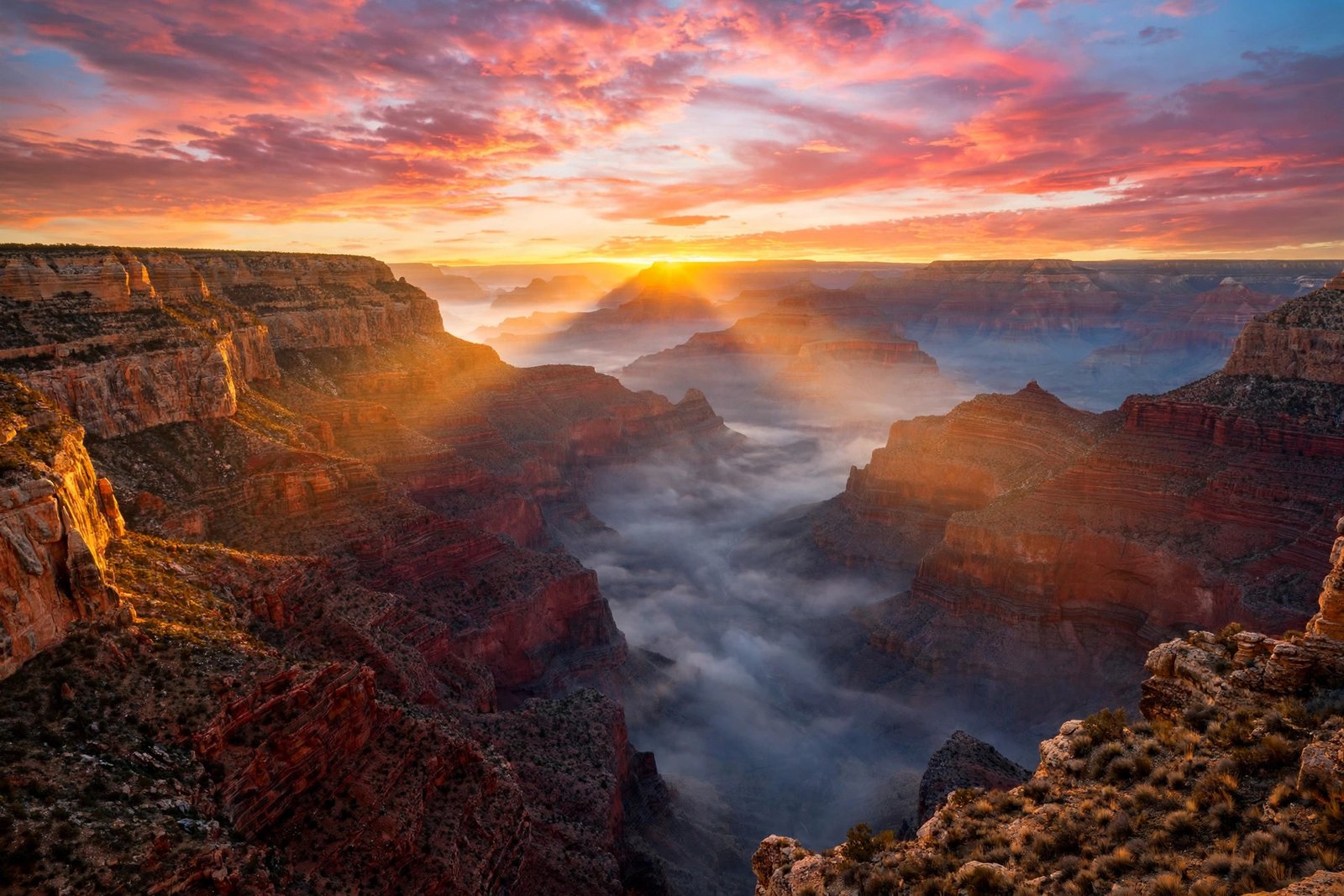
There is something quietly powerful about watching the first light of day break over America. Long before the crowds arrive and the day gets busy, the sky shifts from deep blue to gold, and for a few minutes the whole landscape seems to hold its breath. If you are planning a trip around that feeling, this guide to the best sunrise spots in USA will help you choose where to go, when to arrive, and what to expect at each viewpoint.
From the rocky Atlantic coast of Maine to the volcanic summit of Maui, the United States offers an extraordinary range of sunrises. Some are dramatic and wide open, with desert canyons glowing orange. Others are soft and misty, with fog drifting over mountain valleys and lakes. The places below were chosen for their views, their accessibility, and the quality of the early-morning light, and each one rewards an early alarm in a different way.
Why the Best Sunrise Spots in USA Are Worth the Early Alarm
Waking up before dawn is never easy, especially on vacation. Yet sunrise travelers consistently say the effort is worth it, and there are good reasons why. First, the light itself is different. In the first hour after sunrise, sunlight travels through more of the atmosphere, which softens shadows and warms colors in a way that midday light rarely matches. Photographers call this golden hour for a reason, and it flatters mountains, water, and city skylines alike.
Second, sunrise viewpoints are usually much quieter than the same spots later in the day. At popular national parks, the difference can be striking. You may share a canyon overlook with a handful of people at dawn, then return at noon to find tour buses and long lines. That quiet also changes how a place feels. Without noise and crowds, it is easier to notice birdsong, wind, and the slow movement of light across the land.
Third, sunrise gives structure to a travel day. An early start means you can enjoy a viewpoint, have breakfast, and still have the whole day ahead for hiking, sightseeing, or driving to the next stop. Many travelers plan their hardest hikes or longest drives for after sunrise, when visibility is best and the air is still cool.
How to Choose Among the Best Sunrise Spots in USA
Not every great sunrise suits every traveler, so it helps to think about what kind of morning you want. Do you prefer an easy drive-up viewpoint, or are you happy to hike in the dark with a headlamp? Do you want ocean, mountains, desert, or a city skyline? Are you traveling with children, older relatives, or friends who prefer a short walk?
Consider the season as well. In summer, sunrise comes very early in the northern United States, sometimes before 5 a.m., while winter sunrises are later and often easier to catch. In desert parks, summer mornings can already be warm by 8 a.m., so an early start also helps you avoid heat. In coastal areas, fog and clouds can hide the sun entirely, so check the forecast and be ready to try again the next morning if needed.
Finally, check practical details before you go. Some parks require reservations, entrance passes, or timed entry, and rules can change by season. Road closures, construction, and weather can also affect access. The official National Park Service website is the best place to confirm current conditions, and state tourism sites are useful for viewpoints outside national parks. A little planning makes the early morning far less stressful.
Acadia National Park, Maine
Acadia National Park, on the coast of Maine, holds a special place in American sunrise lore. From roughly early October through early March, Cadillac Mountain is traditionally described as one of the first places in the United States to see the sunrise, because of its eastern location and elevation. Even outside those months, the view is superb: the sun rises over the Atlantic, lighting Frenchman Bay, the Porcupine Islands, and the pink granite coastline.
The summit road makes this an accessible sunrise. You can drive to the top, walk a short distance to a viewpoint, and watch the light spread across the water. In summer, arrive early, because the summit parking area fills quickly. Bring a warm layer even in July, since the wind at the top can be chilly before dawn. After sunrise, the park’s carriage roads and coastal trails offer excellent walks, and the town of Bar Harbor is close by for breakfast.
Grand Canyon South Rim, Arizona
Few views in the world match a Grand Canyon sunrise. As the sun climbs, light moves slowly down the canyon walls, turning layers of red, orange, and gold rock into a shifting panorama. The South Rim is open year-round and offers several excellent viewpoints, including Mather Point near the visitor center, Yavapai Point, and Hopi Point along Hermit Road.
Mather Point is the easiest choice for a first visit, with paved paths and nearby parking, while Hopi Point is known for wide, sweeping views. Arrive at least 30 minutes before sunrise, and bring a flashlight for the walk from the parking area. The rim can be cold and windy before dawn, even when the afternoon will be hot. Stay behind safety barriers at all times, since the rim has steep drops and no guardrails in many places.
Haleakala National Park, Maui, Hawaii
Watching sunrise from the summit of Haleakala, a dormant volcano on Maui, feels like standing above the clouds. At more than 10,000 feet above sea level, the summit often sits above a sea of clouds, and the sun rises through brilliant bands of color. The crater landscape below, with its cinder cones and silvery plants, adds a strange and beautiful foreground.
Sunrise visits to Haleakala require advance reservations through the National Park Service, and visitors should book as early as allowed, because sunrise reservations are popular and limited. The drive to the summit takes about an hour from the coast, with many curves, so leave plenty of time. Temperatures at the summit can be near freezing before dawn, even when the beach below is warm, so bring jackets, long pants, and closed shoes.
Badlands National Park, South Dakota
The Badlands are a sunrise photographer’s dream. Eroded buttes, pinnacles, and spires stretch across the South Dakota prairie, and early light gives their striped rock layers a warm glow. The park’s Badlands Loop Road offers several pullouts where you can watch the sun rise over the formations without a long hike.
Door Trail, Window Trail, and the nearby overlooks are easy, short walks that work well in low light, though a headlamp is still useful before dawn. Wildlife is often active in the morning, so watch for bison, prairie dogs, and birds along the road. Because the Badlands are relatively remote, fill up on fuel and water before you arrive, and check road conditions if you are visiting in winter.
Great Smoky Mountains National Park, Tennessee and North Carolina
In the Great Smoky Mountains, sunrise often arrives with layers of mist in the valleys and soft light on the ridges. Clingmans Dome, the highest point in the park, offers a panoramic observation tower, while Newfound Gap and Oconaluftee Valley are also popular morning viewpoints. The park is known for its blue-hazed mountains, a effect created by moisture and natural compounds released by the trees.
Clingmans Dome requires a steep half-mile walk from the parking area to the tower, so allow extra time and wear sturdy shoes. In autumn, the fall color makes sunrise even more rewarding, but roads and parking areas are also busier. If you prefer a quieter morning, choose a weekday and arrive well before sunrise. Afterward, the park’s historic cabins, waterfalls, and wildlife viewing make a full day easy to fill.
Joshua Tree National Park, California
Joshua Tree offers a desert sunrise unlike any other. Silhouetted Joshua trees stand against a wide sky, and the granite boulders of the park catch warm light as the sun rises. Keys View, a high overlook in the park, gives a sweeping look across the Coachella Valley, while the Cholla Cactus Garden glows beautifully in early light.
Desert mornings are cool and calm, which makes them ideal for walking among the rock formations before the heat builds. Bring water even for a short sunrise visit, and watch your footing on uneven ground in the dark. Joshua Tree is also famous for its dark night skies, so a sunrise trip can follow a night of stargazing if you camp in the park or stay nearby.
Olympic National Park, Washington
Olympic National Park, on Washington’s Olympic Peninsula, offers sunrise options from beaches to mountain ridges. At Hurricane Ridge, the sun rises over peaks and valleys, while on the Pacific coast, places like Ruby Beach and Rialto Beach offer dramatic sea stacks and driftwood in the early light. Fog is common, so a cloudy sunrise can still be beautiful, with soft light and moody atmosphere.
Hurricane Ridge is reached by a winding mountain road, so check conditions and allow extra driving time. Beach sunrises require attention to tides, since some beaches are harder to access at high tide. Wear waterproof shoes if you plan to walk on wet sand and rocks, and be cautious around logs and waves. The park’s rainforests, waterfalls, and lakes make it easy to turn a sunrise into a full day of exploring.
Monument Valley, Arizona and Utah
Monument Valley, on the Navajo Nation along the Arizona-Utah border, is one of the most iconic landscapes in the American West. Towering buttes rise from a flat desert plain, and sunrise light turns them from dark silhouettes into deep red and orange. The classic view from the visitor center area is easy to reach, and guided tours can take visitors deeper into the valley.
Because Monument Valley is on tribal land, visitors should respect local rules, stay on designated routes, and follow guidance from Navajo guides where required. The main viewpoint is accessible by car, but the valley drive itself is rough and best done with a high-clearance vehicle or a guided tour. Sunrise here pairs naturally with a visit to nearby desert parks and historic Route 66 towns.
Key West, Florida
Key West is famous for its sunsets, but its sunrises deserve just as much attention. The eastern side of the island, including the area near Fort Zachary Taylor Historic State Park and the Southernmost Point area at different times of year, offers calm water, palm trees, and pastel skies. Because Key West is small and flat, sunrise is easy to enjoy with a short walk and a coffee in hand.
For a relaxed morning, choose a waterfront spot, arrive a few minutes before sunrise, and stay for the hour afterward as the light brightens and the town wakes up. Key West is also a good sunrise choice for travelers who prefer warm weather and an easy pace, with no hiking or mountain driving required. Combine it with a bike ride, a historic walking tour, or a boat trip later in the day.
Shenandoah National Park, Virginia
Skyline Drive, which runs the length of Shenandoah National Park in Virginia, offers dozens of overlooks where sunrise lights up the Blue Ridge Mountains. In autumn, the foliage adds reds and golds to the view, while in spring, wildflowers and fresh green leaves soften the ridges. The park is an easy drive from Washington, D.C., which makes it a popular weekend sunrise trip.
Choose an east-facing overlook for the best sunrise view, and arrive early in peak foliage season, when parking areas fill quickly. The park has lodges, campgrounds, and hiking trails, so a sunrise can be the start of a longer stay. Short trails to waterfalls and viewpoints are good morning options after the sun is up.
Sunrise Tips for Every Destination
A few simple habits will improve almost any sunrise trip. First, check the exact sunrise time for your location and date, since it changes daily and varies widely by latitude and season. Second, arrive early, not on time. The most colorful sky often appears 20 to 30 minutes before the sun itself rises, and arriving early also gives you time to find parking and a safe viewpoint.
- Check sunrise time, weather, road conditions, and any reservation rules the day before.
- Pack warm layers, water, a flashlight, and sturdy shoes, even for short viewpoints.
- Stay on marked paths and behind barriers at canyon, cliff, and coastal viewpoints.
- Charge your camera and phone the night before, and bring a tripod if you want steady photos.
- Have a backup plan: if clouds hide the sun, enjoy the soft light and try again the next morning.
For photography, avoid relying only on automatic settings. A tripod helps in low light, and taking a few test shots before sunrise lets you adjust exposure as the light changes. Most importantly, put the camera down for a few minutes and simply watch. The best sunrise memories are often the ones you experience fully, not just the ones you photograph.
Planning Your Sunrise Trip
If you want to see several of these places in one journey, group them by region. A Southwest road trip can combine the Grand Canyon, Monument Valley, and Joshua Tree, while an East Coast trip can link Acadia, Shenandoah, and the Great Smoky Mountains. A Pacific trip can pair Olympic National Park with California desert parks, and Hawaii’s Haleakala works well with other Maui sights.
For more ideas, see our guides to sunset viewpoints across the country and the most beautiful places in America. If you love quieter destinations, our list of hidden gems in the USA is a good next read. You can also explore official park information through the National Park Service and state tourism sites before you travel.
Conclusion: Start Your Day With America’s Best Light
The best sunrise spots in USA share one thing: they reward travelers who are willing to get up early and be present for a fleeting moment. Whether you choose a mountain summit, a desert canyon, a coastal overlook, or a quiet beach, the experience is about more than a photo. It is about starting the day with wonder, calm, and a sense of place.
Pick one destination from this list, set your alarm, and give yourself the gift of an early morning. Check conditions, pack layers, arrive before dawn, and let the light do the rest. Then tell us in the comments which sunrise moved you most, and share this guide with a friend who would love an early-morning adventure.