
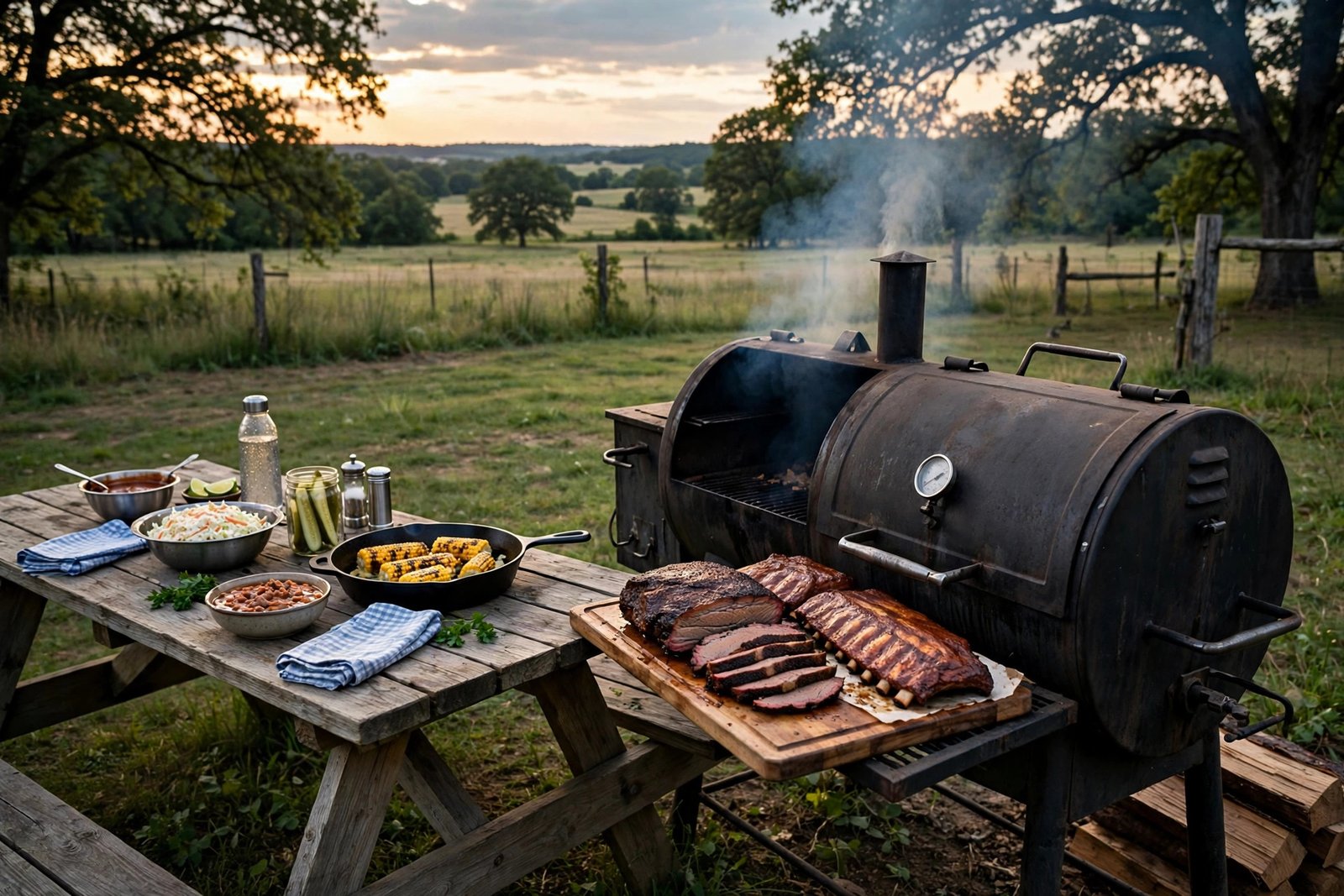
There is a smell that means summer in America: wood smoke drifting over a backyard, a slow-cooked brisket resting on a cutting board, and neighbors wandering over to ask when dinner will be ready. That smell is the heart of American BBQ culture, a tradition built on patience, fire, and gathering people around a table. It is not fast food. It is food that takes all day, and that is exactly the point.
Barbecue in the United States is far more than a cooking method. It is a regional identity, a weekend ritual, a competitive sport, and a reason for families to come together. From Texas brisket to Carolina whole hog, every region has its own rules, its own sauce, and its own fierce pride. This guide explores where it all came from, how the regions differ, and how you can bring a little of that smoky magic to your own backyard.
The Roots of American BBQ Culture
The roots of American BBQ culture stretch back centuries. The word barbecue itself comes from barbacoa, a term used in the Caribbean for a wooden framework used to cook meat slowly over fire. Spanish explorers encountered this method, and it traveled into the American South, where it met African, European, and Native American cooking traditions.
In the early American South, whole animals were cooked slowly over pits, often for community gatherings, celebrations, and harvest events. Because slow cooking could turn tougher, cheaper cuts of meat into something tender and flavorful, barbecue became a practical way to feed a crowd. Over time, it also became a social event: the pitmaster tended the fire for hours, and the meal became a reason for the whole community to gather.
By the 19th and early 20th centuries, barbecue stands and restaurants began appearing across the South and Midwest. After World War II, backyard grilling boomed as suburban families bought grills and gathered on weekends. Yet true barbecue remained distinct from grilling: grilling cooks food quickly over high, direct heat, while barbecue cooks low and slow, using indirect heat and wood smoke over many hours.
Regional Styles in American BBQ Culture
Ask a pitmaster in Texas and a pitmaster in North Carolina to describe barbecue, and you may get two completely different answers. That is part of the fun. Here are the most famous regional styles:
- Texas: Beef brisket is king, seasoned simply, often with just salt and pepper, and smoked over oak or mesquite. Central Texas style serves meat with little or no sauce, letting the smoke and beef speak for themselves.
- Kansas City: Known for a wide variety of meats, including burnt ends, ribs, and pulled pork, plus a thick, sweet, tomato-based sauce. Kansas City is also home to major barbecue competitions.
- Memphis: Famous for pork ribs, served either dry (with a spice rub only) or wet (with sauce). Memphis also claims its own style of pulled pork sandwich, often topped with coleslaw.
- Carolinas: North Carolina focuses on whole hog pork with a vinegar-based sauce, while South Carolina is known for its mustard-based gold sauce. Eastern and western North Carolina even disagree on the sauce recipe, a friendly rivalry that has lasted for generations.
- Alabama: Known for smoked chicken served with a tangy white sauce made from mayonnaise, vinegar, and pepper, a style that surprises first-time visitors and wins many converts.
These styles are not just recipes. They reflect local history, available livestock, and the wood that grew nearby. Oak in Texas, hickory in the Carolinas and Tennessee, and fruitwoods in other regions each give meat a different character. That is why barbecue tastes like a place: the flavor carries the landscape with it.
The Pitmasters and the Craft
Great barbecue starts with three things: meat, fire, and time. The pitmaster chooses the cut, trims it, applies a rub of salt, pepper, and spices, and then tends a smoker for hours, keeping the temperature low and steady, usually between 225 and 275 degrees Fahrenheit. Brisket can take 12 hours or more. Pork shoulder takes nearly as long. Ribs take several hours. There are no shortcuts that produce the same result.
Wood choice matters as much as temperature. Oak gives a medium, steady smoke. Hickory is stronger and bacon-like. Mesquite burns hot and bold, and is popular in Texas. Fruitwoods such as apple and cherry give a milder, sweeter smoke that pairs well with pork and chicken. Most pitmasters avoid softwoods such as pine, which can give food an unpleasant flavor.
Sauce is the great debate. Some regions serve sauce on the side, some mop it on during cooking, and some skip it entirely. Rubs, marinades, and brines also vary widely. The one rule most pitmasters agree on is this: good barbecue does not need to hide behind sauce. If the meat is smoked well, the sauce is a bonus, not a rescue.
BBQ Beyond the Plate: Competitions and Cookouts
Barbecue is also a competitive sport. Events such as the American Royal World Series of Barbecue in Kansas City and Memphis in May draw teams from across the country, and sometimes from around the world. Teams cook through the night, guarding their smokers and perfecting their recipes, and judges score entries on appearance, taste, and tenderness. Winning a major contest can turn a small team into a nationally known name.
For most Americans, though, barbecue is simpler: it is the backyard cookout. It is the Fourth of July, the tailgate before the big game, the birthday party with a smoker running since dawn. It is the reason neighbors know each other and the reason family reunions have a schedule built around when the pork will be ready. In that sense, barbecue is less about the food and more about the gathering.
Barbecue also sits at the center of American food culture alongside other beloved traditions. If you enjoy exploring how Americans eat and celebrate, you may also like our guides to American pizza culture, classic American diners, and American county fair culture, each a different flavor of the same love of gathering around food.
How to Host Your Own BBQ
You do not need a professional smoker to enjoy barbecue at home. A basic charcoal grill, a kettle smoker, or an entry-level pellet smoker can all produce excellent results. Here are a few tips for beginners:
- Start with pork shoulder or chicken, which are more forgiving than brisket.
- Use a meat thermometer and cook to tenderness, not just to a clock.
- Let the meat rest after cooking so the juices settle before slicing.
- Keep the smoker temperature steady, and resist the urge to open the lid too often.
- Serve classic sides: coleslaw, baked beans, cornbread, potato salad, and pickles.
Plan ahead, because barbecue rewards patience. Start early, invite people to arrive later, and let the food set the schedule. Some of the best barbecue memories come from the waiting itself: the stories told around the smoker, the smell building through the afternoon, and the moment the lid finally comes off.
Sides, Drinks, and the Full BBQ Spread
No barbecue is complete without its supporting cast. Coleslaw adds crunch and a cool contrast to rich pork, while baked beans, often cooked with a little bacon and brown sugar, bring sweetness and depth. Cornbread, soft in the middle with a crisp edge, is the classic tool for scooping up sauce, and potato salad, whether creamy or vinegar-based, is a cookout staple in nearly every region. Pickles and pickled onions cut through the fat of smoked meat and refresh the palate between bites, which is why they appear on so many barbecue trays.
Drinks and desserts matter too. Sweet tea and lemonade are the traditional companions to a long afternoon at the smoker, and many gatherings finish with banana pudding, peach cobbler, or ice cream. These dishes are not afterthoughts; they are part of what makes American BBQ culture feel like a celebration rather than just a meal. When the sides, the drinks, and the desserts all come together around the smoked meat, the table tells the same story as the pit: that someone took the time to do this properly, and that everyone present is worth the effort. Even a simple spread feels generous when it is shared outdoors, with paper plates, cold drinks, and no rush to leave the table.
Conclusion: Fire, Food, and Togetherness
From Caribbean barbacoa to Texas brisket, from Carolina vinegar sauce to Kansas City burnt ends, American BBQ culture is a story of many regions, many traditions, and one shared idea: good food takes time, and time spent together is never wasted. It is a tradition that welcomes beginners, rewards patience, and brings out the best in a neighborhood.
This weekend, try it for yourself. Pick a cut, light the fire, invite your people, and let the smoke do its slow work. Then share this guide with a friend who loves to grill, and tell us your favorite barbecue style. After all, in American BBQ culture, the best argument is the one you can taste.