
On a cold November evening in 1775, inside a Philadelphia tavern, a new kind of American fighting force was born. The men who signed up there could not have known that their story would still be told nearly 250 years later. Yet some of the most enduring US Marine Corps true stories begin in that humble tavern, and they continue through every major conflict in American history, from the Revolution to the present day.
What makes these stories last is not just battlefield drama. It is the character behind them: ordinary Americans who volunteered for one of the hardest jobs in the military, who trained to fight on land and sea, and who refused to leave their fellow Marines behind. In this guide, we walk through the real, documented history of the United States Marine Corps, the moments that defined it, and why these stories still matter to Americans today.
US Marine Corps True Stories from the Revolutionary Era
The Continental Congress authorized two battalions of Marines on November 10, 1775. According to Marine Corps tradition, the first recruits were enlisted at Tun Tavern in Philadelphia, a popular meeting place that also served as a recruiting station. Captain Samuel Nicholas, the first commandant, is credited with leading those early recruiting efforts.
Those first Marines served aboard naval vessels and fought in landing operations, a role that would define the Corps for centuries. In March 1776, Marines took part in the raid on Nassau in the Bahamas, one of the first amphibious operations in American history. The force captured military supplies and returned to the American coast, proving that Marines could project power from the sea onto land.
During the Revolutionary War, Marines served on ships, guarded naval officers, and fought in small landing parties. They were not yet the large force we know today, but the pattern was set: Marines went where the Navy went, and they fought wherever they landed. That ship-to-shore identity remains at the heart of the Corps.
The Few, the Proud: What the Motto Means
The Marine Corps motto is Semper Fidelis, Latin for Always Faithful. It was adopted in 1883 and has guided the Corps ever since. It speaks to loyalty to country, to fellow Marines, and to the mission, even when the mission is hard and the odds are long.
The Eagle, Globe, and Anchor emblem, adopted in 1868, tells the same story in symbols. The eagle represents the nation the Marines serve, the globe represents their worldwide service, and the anchor represents their naval heritage. Together, they sum up a force designed to go anywhere, by sea, and fight on arrival.
Marines are also known by the nickname Leathernecks, a reference to the leather stock once worn around the neck as part of the uniform. Another famous nickname, Devil Dogs, is traditionally linked to German soldiers in World War I, though historians note the exact origin is debated. What is not debated is the reputation behind the names: Marines earned a name for toughness in France in 1918, especially at the Battle of Belleau Wood, where they helped stop a German advance in brutal close fighting.
US Marine Corps True Stories from World War II
World War II turned the Marine Corps into a major amphibious force. The Pacific island-hopping campaign depended on Marines landing on defended beaches, often under heavy fire, and fighting inland against deeply entrenched defenders. Battles at Guadalcanal, Tarawa, Saipan, and Peleliu each added to the record, and each came at a terrible cost.
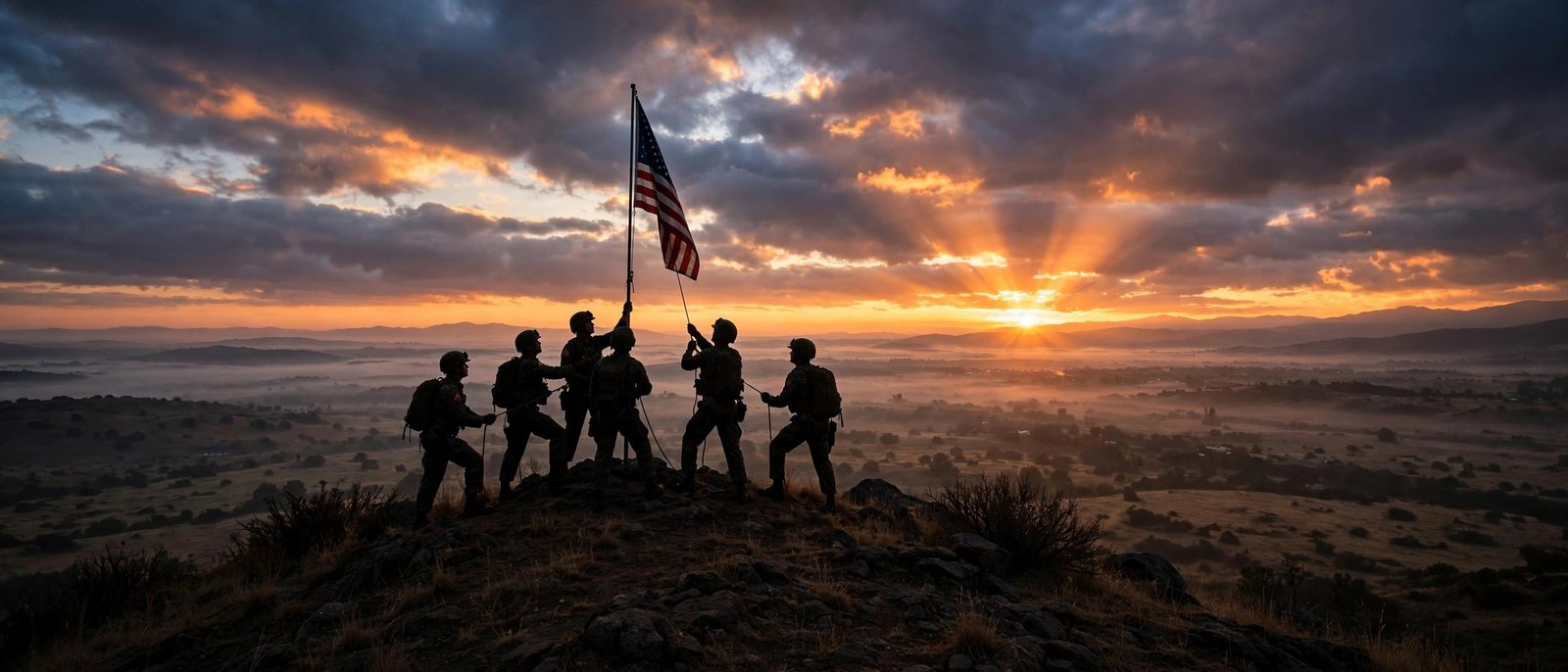
The most famous image of the war, and one of the most famous US Marine Corps true stories of all, came at Iwo Jima. On February 23, 1945, five days after the landing, a group of Marines raised the American flag atop Mount Suribachi. Associated Press photographer Joe Rosenthal captured the second flag raising that day, and the photograph became one of the most reproduced images in history. The flag raisers included Marines who had already survived days of fighting, and several of them were killed before the battle ended. The battle for Iwo Jima lasted more than a month, and the island’s airfields proved vital for American bombers.
Another powerful chapter came earlier in the war at Guadalcanal, where Marines landed in August 1942 in the first major American offensive of the Pacific war. They held Henderson Field against repeated Japanese counterattacks, fighting through jungle, disease, and shortages. Their stand helped turn the momentum of the Pacific war.
For readers who enjoy documented military history, the Marine story pairs well with other true-service accounts on this site, including Buffalo Soldiers true stories and Green Berets true stories, which show how different American units each built their own proud traditions.
Frozen Chosin and the Korean War
If Iwo Jima gave the Corps its most famous image, the Chosin Reservoir campaign gave it one of its most quoted moments. In late November 1950, the 1st Marine Division found itself surrounded by large Chinese forces in the mountains of North Korea, in temperatures far below freezing. Rather than collapse, the division fought its way south to the sea at Hungnam, bringing its wounded and much of its equipment with it.
Major General Oliver P. Smith, the division commander, is widely reported to have said, when asked about a retreat, that the Marines were not retreating but attacking in another direction. The exact wording is debated by historians, but the spirit of the remark matches the record: the division conducted a fighting withdrawal in brutal conditions and remained a combat-effective force. The campaign became known as the Frozen Chosin, and it remains a defining chapter in Marine history.
The Korean War also showed the Corps in another role: rapid response. Marines were among the first American ground forces committed in the summer of 1950, landing at Pusan and later at Inchon, where an amphibious landing behind enemy lines helped reverse the early course of the war.
From Vietnam to the Modern Era
In Vietnam, Marines fought some of the war’s hardest battles, including the 1968 Battle of Hue City during the Tet Offensive, where house-to-house fighting lasted for weeks. They also served in the northern provinces near the demilitarized zone, at places like Khe Sanh, where a besieged combat base held out against a long siege in early 1968.
In more recent decades, Marines have served in the Gulf War, in Iraq, and in Afghanistan, often as the first conventional ground forces to arrive in a crisis. Their expeditionary role means they train to deploy quickly, operate with limited support, and adapt to missions ranging from combat to disaster relief. After the 2010 earthquake in Haiti, for example, Marines helped deliver aid and support recovery efforts, showing the humanitarian side of the same expeditionary skill set.
Today, the Marine Corps continues to emphasize amphibious readiness, small-unit leadership, and physical toughness. Boot camp at Parris Island, South Carolina, and San Diego, California, remains famously demanding, and graduation earns the title of United States Marine, a title Marines carry for life.
Memoirs, oral histories, and documentaries keep US Marine Corps true stories alive for new generations. Veterans share their experiences at schools, reunions, and memorial events, and their accounts are preserved by museums and historical organizations. These firsthand US Marine Corps true stories remind readers that history is not just dates and battles, but the lived experience of people who served. When a veteran describes a landing, a long march, or a quiet act of kindness in wartime, the story becomes personal, and that personal connection is what keeps the history meaningful decades later. Reading these accounts is one of the best ways for civilians to understand what service truly meant to the men and women who lived it.
Why These Stories Still Matter
The reason these stories endure is simple: they are about people, not just battles. Behind every famous photograph or quoted remark were young men and women who volunteered, trained hard, and looked out for one another. The Marine Corps birthday, celebrated every November 10, is still marked by Marines around the world, including the traditional cake-cutting ceremony, in which the oldest and youngest Marines present share the first pieces.
For visitors who want to explore this history in person, the National Museum of the Marine Corps near Quantico, Virginia, tells the story from Tun Tavern to the present day through exhibits and artifacts. Memorials in Washington, D.C., including the Marine Corps War Memorial depicting the Iwo Jima flag raising, also honor the service and sacrifice behind these stories.
These accounts also carry a lesson for civilians. Courage, loyalty, and perseverance are not abstract ideals in Marine history; they are habits built through training, tested under pressure, and remembered by the people who lived them. That is why parents still tell their children about Iwo Jima, why veterans still gather on November 10, and why new recruits still want to earn the title.
Conclusion: Carry the Story Forward
From a Philadelphia tavern in 1775 to frozen mountains in Korea and island beaches in the Pacific, the history of the United States Marine Corps is a story of ordinary Americans doing extraordinary things together. The facts alone are powerful enough: the founding date, the famous battles, the motto, and the traditions that survive to this day.
If this history moved you, take one simple step today. Share this article with a veteran or a military family, plan a visit to a Marine Corps museum or memorial, or simply thank a Marine you know for their service. And keep exploring the true stories of American service right here on Beauty of USA, where history is told honestly, with respect for the people who lived it.