
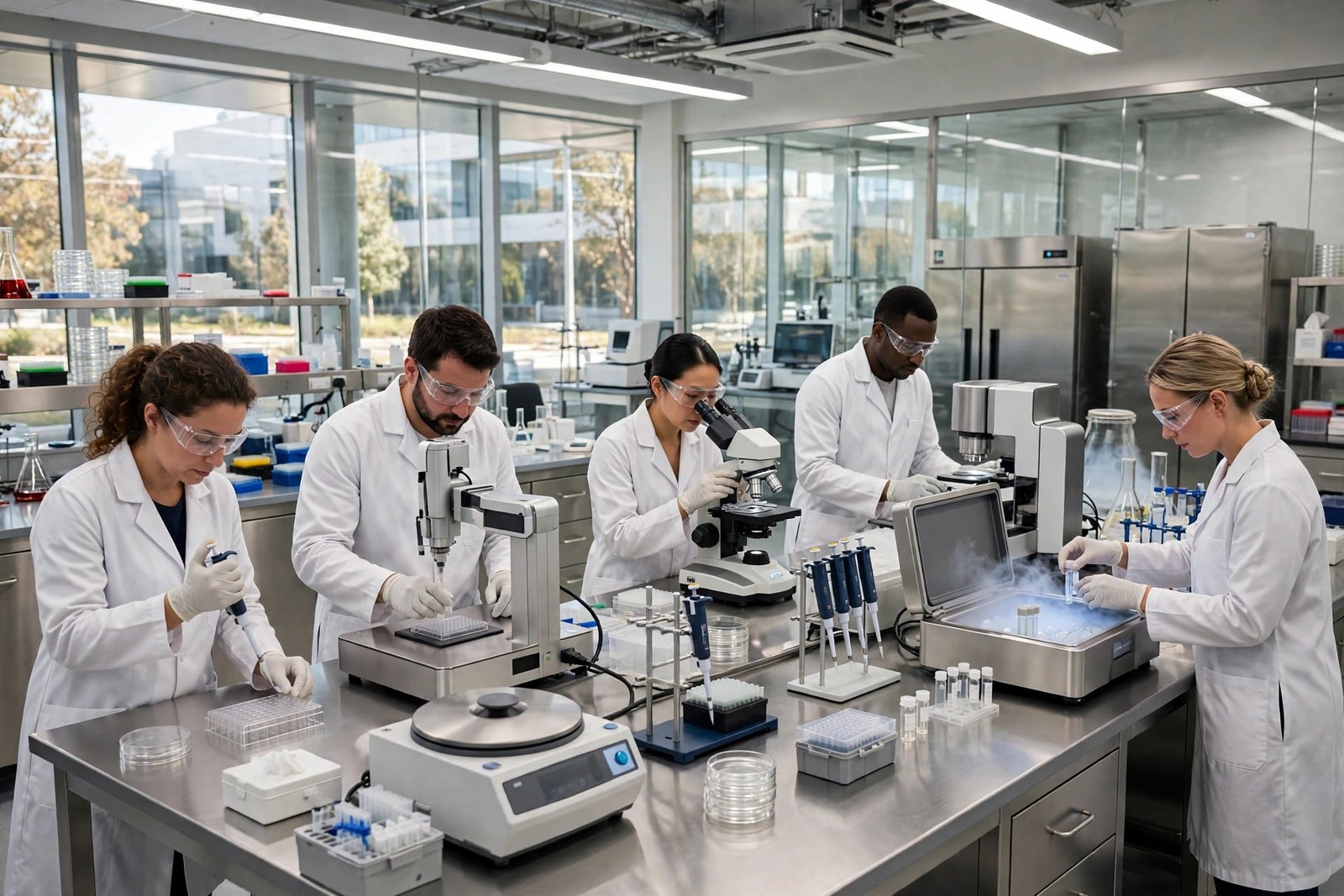
When a patient anywhere in the world receives a life-saving treatment that did not exist a decade ago, there is a strong chance that treatment was first imagined, tested, or perfected in the United States. From the first vaccines built on messenger RNA technology to robotic surgery systems that help surgeons operate with extraordinary precision, US medical innovation leadership has quietly reshaped what modern medicine can do. It is not a single invention or a single institution. It is an entire ecosystem of universities, hospitals, laboratories, startups, and public agencies working, sometimes in competition and sometimes together, toward the same goal: longer, healthier lives.
What makes this story worth telling is not just the scale of the breakthroughs, but how quickly they travel from a research bench to a hospital bedside. A discovery in a Boston laboratory can become a clinical trial in Houston, win regulatory approval, and then reach clinics on the other side of the world within a few short years. That pipeline, built over many decades, is why so many patients, doctors, and researchers look to America when they ask what comes next in medicine.
This article explores how that leadership was built, the institutions and ideas behind it, the breakthroughs that changed everyday care, and the challenges that still stand in the way. Whether you are a student, a patient, or simply curious about how progress happens, the story of American medicine offers lessons about curiosity, investment, and persistence.
US Medical Innovation Leadership in Research and Discovery
The foundation of US medical innovation leadership is basic research — the patient, curiosity-driven science that asks how the human body works before anyone knows whether the answer will lead to a drug. Much of this work is funded by the National Institutes of Health, the largest public funder of biomedical research in the world, and carried out at universities and medical centers across the country. Researchers in these labs study genes, cells, proteins, and the immune system, building the knowledge that later makes new treatments possible.
American universities have long been at the center of this work. Institutions such as Harvard, Johns Hopkins, Stanford, and the University of California system consistently produce influential medical research, and their teaching hospitals give scientists direct access to patients and clinical questions. This closeness between the laboratory and the clinic matters. A doctor who notices a pattern in patients can walk down the hall and describe it to a researcher, and a researcher with a promising idea can test it in a trial without waiting years for a distant partner.
Private companies play an equally important role. Biotechnology firms, many of them founded by university scientists, take early discoveries and turn them into candidate medicines. Pharmaceutical companies then run the large, expensive clinical trials needed to prove that a treatment is safe and effective. Venture capital and public markets supply much of the funding for this risky work, and while many candidate drugs fail, the successes have transformed the treatment of cancer, heart disease, diabetes, and rare genetic disorders.
The result is a research culture that tolerates failure and rewards bold ideas. A failed experiment is not treated as wasted effort if it teaches researchers something new, and a small startup with a good idea can attract the funding and talent it needs to test it. That culture, combined with steady public investment, is a major reason the United States continues to produce a large share of the world’s new medicines and medical devices.
How US Medical Innovation Leadership Reaches Patients
Discovery alone does not help a patient. A treatment must also be proven safe, approved by regulators, manufactured at scale, and delivered through hospitals and clinics. The United States has built a distinctive path for each of these steps, and understanding it helps explain why US medical innovation leadership shows up so quickly in real care.
The US Food and Drug Administration reviews new medicines and devices before they can be marketed, and its decisions are watched closely by regulators in other countries. The agency has created special programs that can speed up the review of treatments for serious conditions with few existing options, while still requiring evidence of safety and effectiveness. These pathways helped bring new cancer therapies, gene therapies, and vaccines to patients sooner than a traditional review timeline might have allowed.
Clinical trials are another key part of the pipeline. Teaching hospitals and research centers across the country enroll patients in studies of experimental treatments, giving people with difficult conditions access to options they would not otherwise have. Trial results are published and debated openly, which builds trust in the process and helps doctors everywhere decide which treatments are worth adopting.
Manufacturing and distribution complete the journey. American companies have developed the capacity to produce complex biological medicines, personalized cell therapies, and precision devices at scale. During the COVID-19 pandemic, this capacity was tested on a massive scale, as vaccines developed with mRNA technology moved from laboratory concept to widespread use in record time. That achievement, built on decades of earlier research into messenger RNA, remains one of the clearest examples of American medical science turning knowledge into protection for millions of people.
For readers interested in how American achievement extends beyond medicine, the story pairs naturally with the nation’s broader record of discovery, from inventions that changed the world to the exploration programs described in America’s space leadership.
The Institutions Behind the Breakthroughs
Behind every headline breakthrough stands an institution that gave researchers time, funding, and freedom. The National Institutes of Health supports tens of thousands of researchers, and its institutes focus on everything from cancer and heart disease to infectious disease and mental health. The Centers for Disease Control and Prevention tracks outbreaks and public health threats, turning data into guidance that hospitals and communities can act on.
Academic medical centers deserve special attention. Hospitals such as the Mayo Clinic, Cleveland Clinic, and Johns Hopkins Hospital combine patient care with research and teaching, so new knowledge flows in both directions. A surgeon who develops a better technique can teach it to residents the same week, and a research finding can change treatment protocols within the same building. This integration is one of the strengths of the American system, and patients from around the world travel to these centers for complex care.
Nonprofit organizations and patient advocacy groups also shape the field. Foundations dedicated to specific diseases fund research that might otherwise be overlooked, and patient groups push for faster trials and greater access to experimental treatments. Their advocacy has changed how trials are designed, making them more welcoming to participants and more responsive to what patients actually value.
Together, these institutions create a network rather than a single hierarchy. Ideas can come from a government lab, a university, a startup, or a hospital, and each part of the network helps the others. That openness is a quiet advantage: it means good ideas are less likely to be trapped in one place and more likely to find the support they need.
Breakthroughs That Changed Everyday Care
The clearest way to see US medical innovation leadership is to look at treatments that ordinary people now take for granted. Consider these examples:
- Cancer immunotherapy: Treatments that help the body’s own immune system recognize and attack cancer cells grew out of decades of American research into immunology, and they have changed the outlook for several cancers that were once considered untreatable.
- Robotic-assisted surgery: Surgical systems developed in the United States allow surgeons to perform delicate operations through small incisions, often with faster recovery times for patients.
- Gene therapies: For some rare inherited conditions, therapies that address the underlying genetic cause have moved from theory to approved treatment, offering hope to families who previously had none.
- mRNA vaccines: Decades of research into messenger RNA made it possible to design and produce effective vaccines with remarkable speed, a capability that proved vital during the pandemic.
- Advanced imaging: Improvements in MRI, CT, and other imaging technologies help doctors see disease earlier and plan treatment more precisely.
- Diabetes technology: Continuous glucose monitors and insulin pumps, refined through years of American engineering and clinical testing, have given people with diabetes far more control over their daily lives.
None of these breakthroughs arrived overnight. Each one rests on years of earlier work, much of it unglamorous and uncertain at the time. The lesson is that leadership in medicine is not about a single dramatic moment. It is about sustaining the conditions for discovery over decades, so that when a crisis or an opportunity arrives, the knowledge and tools are already waiting.
American strength in medicine also connects to the country’s broader capacity to organize large, complex efforts, much like the national strength described in why America’s military is considered the strongest in the world — different field, same talent for logistics, technology, and scale.
Challenges That Still Need Answers
Honest discussion of American medicine must include its weaknesses. The United States spends more on health care than other wealthy countries, yet many Americans struggle to afford care, and outcomes vary sharply by income, race, and geography. A treatment that exists in a leading hospital may be out of reach for a patient in a rural town or without insurance. Innovation that does not reach everyone is incomplete, and closing that gap is one of the great tasks for the next generation of American medicine.
Other challenges are scientific. Antibiotic resistance threatens to blunt some of our most reliable tools. Chronic diseases such as obesity, diabetes, and heart disease continue to rise, driven by diet, activity, and environment as much as by biology. Mental health conditions affect millions, and effective, accessible treatments remain urgently needed. Researchers are working on all of these fronts, but progress requires patience and sustained funding, not just headline moments.
There is also the question of trust. New treatments, especially those built on unfamiliar technologies, can raise understandable questions among patients. Clear communication, honest discussion of risks and benefits, and respect for patient choice are essential if innovation is to earn public confidence. The most successful medical advances have always been those that patients understand and trust.
None of this diminishes the achievements described above. It simply points to where the next chapter of American medicine must go: making breakthroughs more affordable, more accessible, and more evenly shared, while continuing to invest in the research that produces them.
What the Future May Hold
Looking ahead, several frontiers seem especially promising. Artificial intelligence is helping researchers analyze vast amounts of medical data, identify promising drug candidates, and spot patterns in scans that human eyes might miss. Personalized medicine, which tailors treatment to a patient’s genetic makeup, is moving from research into routine care for some conditions. Advances in regenerative medicine aim to repair damaged tissue rather than merely manage symptoms.
None of these frontiers is guaranteed to succeed, and each will require the same combination of curiosity, funding, and careful testing that produced past breakthroughs. But if history is a guide, the American research ecosystem is well positioned to lead in many of them, precisely because it brings together universities, companies, hospitals, and public agencies in a way few other countries can match.
For young people considering a career in science or medicine, that ecosystem offers an encouraging message: the next breakthrough may come from a student asking a simple question in a classroom today. The pipeline of American medicine depends on new generations of curious minds, and it rewards those willing to work on hard problems for a long time.
Conclusion: A Leadership Worth Living Up To
US medical innovation leadership is not a slogan. It is a record built over generations: public investment in basic science, universities that blend teaching and discovery, companies willing to take risks, hospitals that turn knowledge into care, and patients who volunteer for trials that may help strangers as much as themselves. That record has given the world vaccines, cancer therapies, surgical advances, and tools that millions of people rely on every day.
The work is far from finished. Making care affordable and accessible, tackling chronic disease, and earning public trust are challenges that will define the next era of American medicine. But the same qualities that built this leadership — curiosity, persistence, and collaboration — are the qualities that can meet those challenges.
If this story inspired you, share it with someone who might be considering a career in medicine or science, explore more stories of American achievement on Beauty of USA, and keep asking questions about how progress happens. The next chapter of medicine is being written right now, in laboratories and hospitals across the country, and it belongs to all of us.