
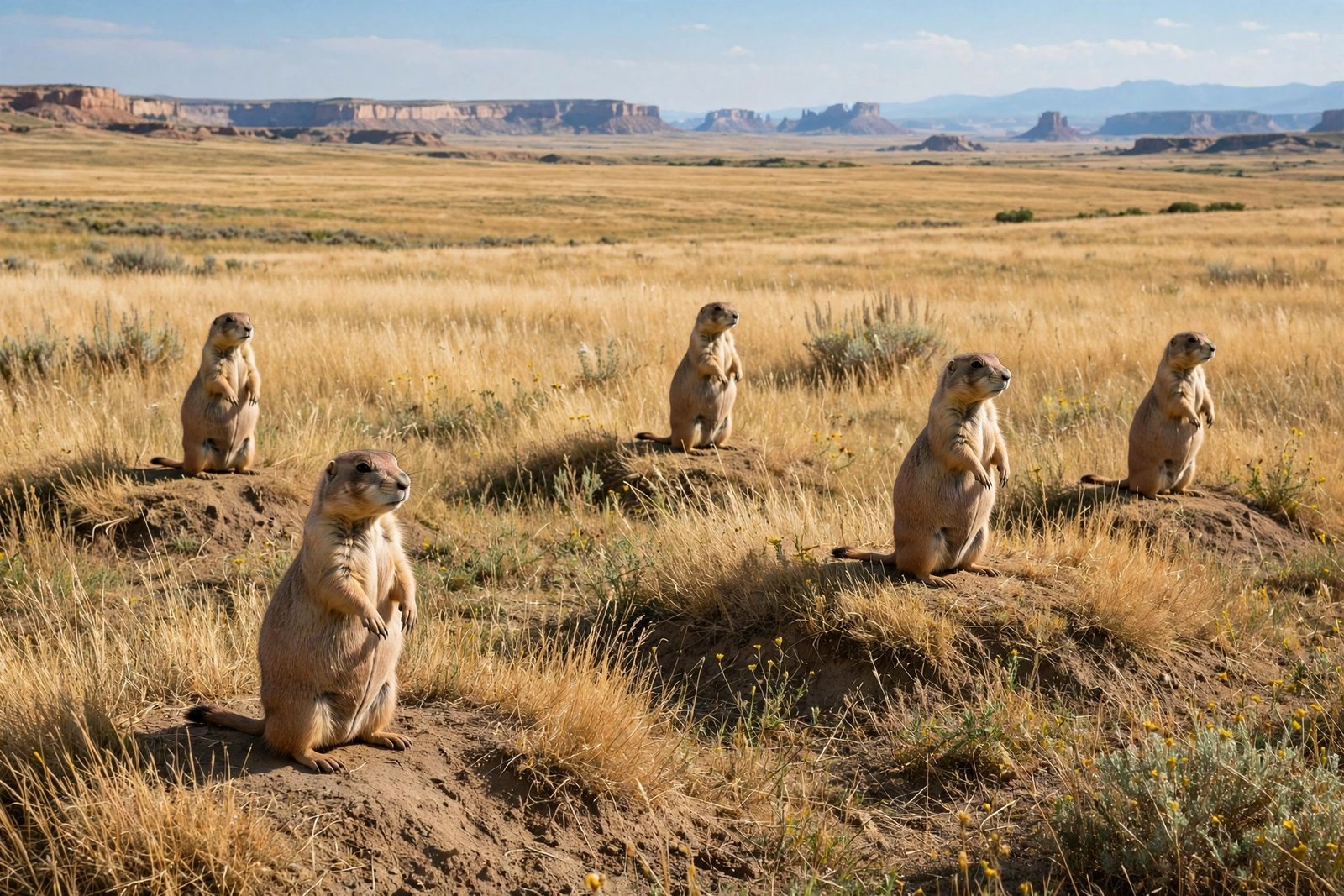
If you have ever wondered where to see prairie dogs in the wild, the American West has the answer. These small, social rodents live in sprawling underground colonies called towns, and on a quiet morning you can watch dozens of them pop up from their burrows, chirp warnings to one another, and scamper between mounds of freshly dug earth. It is one of the most entertaining wildlife shows in the United States — and it is surprisingly easy to find.
Prairie dogs once ranged across the Great Plains in enormous numbers, and while their range is smaller today, healthy colonies still thrive in national parks, national grasslands, state parks, and wildlife refuges across the West. This guide covers the best places to see prairie dogs, the right time to go, and how to watch them responsibly, so your trip is rewarding for you and safe for the animals.
Where to See Prairie Dogs in the Wild
The best places to see prairie dogs are the wide-open grasslands of the western United States, from South Dakota and North Dakota down through Montana, Wyoming, Colorado, and beyond. Black-tailed prairie dogs, the most commonly seen species, live in colonies that can stretch for acres, with burrow entrances marked by cone-shaped mounds of dirt. The animals are diurnal, meaning they are active during the day, which makes them far easier to spot than many other prairie animals.
A prairie dog town is a busy place. Lookouts stand upright on their mounds and scan for predators while others forage for grasses and seeds. Prairie dogs are famously chatty: researchers have documented a complex system of calls that warn the colony about hawks, coyotes, badgers, and other threats. Bring binoculars, keep your voice low, and give the colony time — the longer you sit quietly, the more natural behavior you will see, from playful wrestling between pups to the famous “jump-yip” display, where a prairie dog throws its head back and calls out, sometimes setting off a wave of calls across the town.
Best National Parks to See Prairie Dogs
National parks offer some of the most reliable prairie dog viewing in the country, because the colonies are protected and easy to reach by road. These are the standouts:
- Badlands National Park, South Dakota: The Sage Creek Rim Road area is one of the most famous prairie dog viewing spots in America, with large, roadside colonies that are active through much of the year. Pair it with a bison-spotting drive — our guide on where to see bison in the USA covers the same park.
- Theodore Roosevelt National Park, North Dakota: Both the South Unit near Medora and the North Unit hold prairie dog towns, and the park’s rugged badlands scenery makes the visit worthwhile even beyond the wildlife.
- Wind Cave National Park, South Dakota: The mixed-grass prairie above the cave system supports prairie dog colonies along the park roads, and the park is a stronghold for bison and pronghorn as well.
- Devils Tower National Monument, Wyoming: A prairie dog town sits right near the entrance road, so you can watch the animals with the famous rock tower rising behind them — a classic photo opportunity.
If you are planning a wider national park trip, our guide to the best national parks to visit in the USA can help you build an itinerary that combines prairie dog towns with other wildlife highlights.
Where to See Prairie Dogs Beyond the National Parks
You do not need a national park to find prairie dogs. National grasslands across the Plains, such as the Buffalo Gap National Grassland in South Dakota and the Thunder Basin National Grassland in Wyoming, contain extensive colonies on public land. Many state parks and wildlife refuges in the West also protect prairie dog towns, and some towns and cities near grassland habitat have roadside colonies that are visible from public roads.
Another great option is a wildlife refuge or a ranch-based wildlife tour. Several refuges and conservation areas manage prairie dog colonies as part of broader grassland restoration, since prairie dogs are a keystone species: their burrows shelter burrowing owls, their grazing shapes the plant community, and they are prey for the endangered black-footed ferret. Visiting a colony is therefore about more than one cute animal — it is a window into an entire prairie ecosystem. Ask at visitor centers about current colony locations, because towns can shift or shrink from year to year depending on weather, disease, and land management.
When Is the Best Time to See Prairie Dogs?
Prairie dogs are easiest to see from spring through early fall, when the weather is warm and the colonies are at their busiest. If you are choosing where to see prairie dogs for the first time, a spring visit is hard to beat. Spring is a special time: young pups typically emerge from their burrows in spring and early summer, and watching the small, clumsy pups explore the world above ground is a delight. Mornings and late afternoons are the best times of day, when the animals are most active and the light is best for photography. Midday heat often sends them underground for a rest.
Winter viewing is more limited. Some species, like the white-tailed prairie dog, hibernate through the cold months, while black-tailed prairie dogs may stay active on milder winter days but spend long stretches below ground. If you visit in winter, choose a sunny, calm day and be patient. For most visitors, a spring or summer morning trip offers the best odds of a lively, memorable encounter.
Tips for Watching Prairie Dogs Responsibly
Prairie dogs are wild animals, and a little care goes a long way. Follow these simple guidelines:
- Keep a respectful distance and use binoculars or a zoom lens instead of approaching the burrows.
- Never feed prairie dogs. Human food harms their health and teaches them to approach people and roads.
- Do not try to touch or handle prairie dogs. Like all wild rodents, they can carry diseases, and handling them is stressful for the animal and risky for you.
- Keep pets leashed and away from colonies, and stay out of burrow areas to avoid collapsing tunnels.
- Stay on designated roads, trails, and viewing areas, especially in national parks and refuges.
- Bring water, sun protection, and patience — the best wildlife moments reward visitors who wait quietly.
The same respectful approach applies to other large mammals you may meet on a prairie trip. If bears are on your wildlife wish list, read our guide on where to see bears in the USA before you go, and always follow park guidance on food storage and viewing distance.
Where to See Prairie Dogs on a Western Road Trip
If you are planning a driving holiday through the West, it is easy to build prairie dog viewing into your route. A classic loop runs from South Dakota’s Badlands through Wyoming’s Devils Tower and on toward the grasslands of Montana, with a prairie dog town waiting at nearly every stop. Because the animals live in colonies near roads and visitor areas, you rarely need a long hike or a special permit to see them — just a car, a pair of binoculars, and a little patience.
When deciding where to see prairie dogs on a road trip, think about what else you want to see along the way. Badlands pairs naturally with Mount Rushmore and the Black Hills, while a Wyoming route can combine Devils Tower with Yellowstone’s wildlife. Many travelers find that the prairie dog towns become an unexpected highlight of the trip: after hours of big scenery, the small, busy world of a colony — with its lookouts, chatter, and playful pups — is a welcome and memorable change of pace.
Road-trippers should also keep a few practical points in mind. Fuel stations can be far apart on grassland routes, so fill up when you can. Cell service is patchy in remote areas, so download offline maps before you leave. And remember that the best viewing happens when you slow down: pull safely off the road, switch off the engine, and give the colony ten or fifteen quiet minutes to return to its normal routine after your arrival.
Conclusion: Plan Your Prairie Dog Adventure
From the roadside towns of Badlands National Park to the quiet grasslands of Wyoming, prairie dogs offer one of the most accessible and joyful wildlife experiences in the United States. They are easy to find, active during the day, and endlessly entertaining to watch — proof that you do not need a rare or dangerous animal to have a great wildlife encounter.
Pick a park, pack your binoculars, and head out on a spring or summer morning. Whether you go for an hour or a whole weekend, the experience is a reminder of how much life thrives in America’s open grasslands. Watch for the lookout standing tall on its mound, listen for the chorus of chirps, and enjoy a small but unforgettable piece of the American West. Then come back to Beauty of USA for more wildlife guides, and share this article with a friend who would love a prairie dog road trip of their own.