
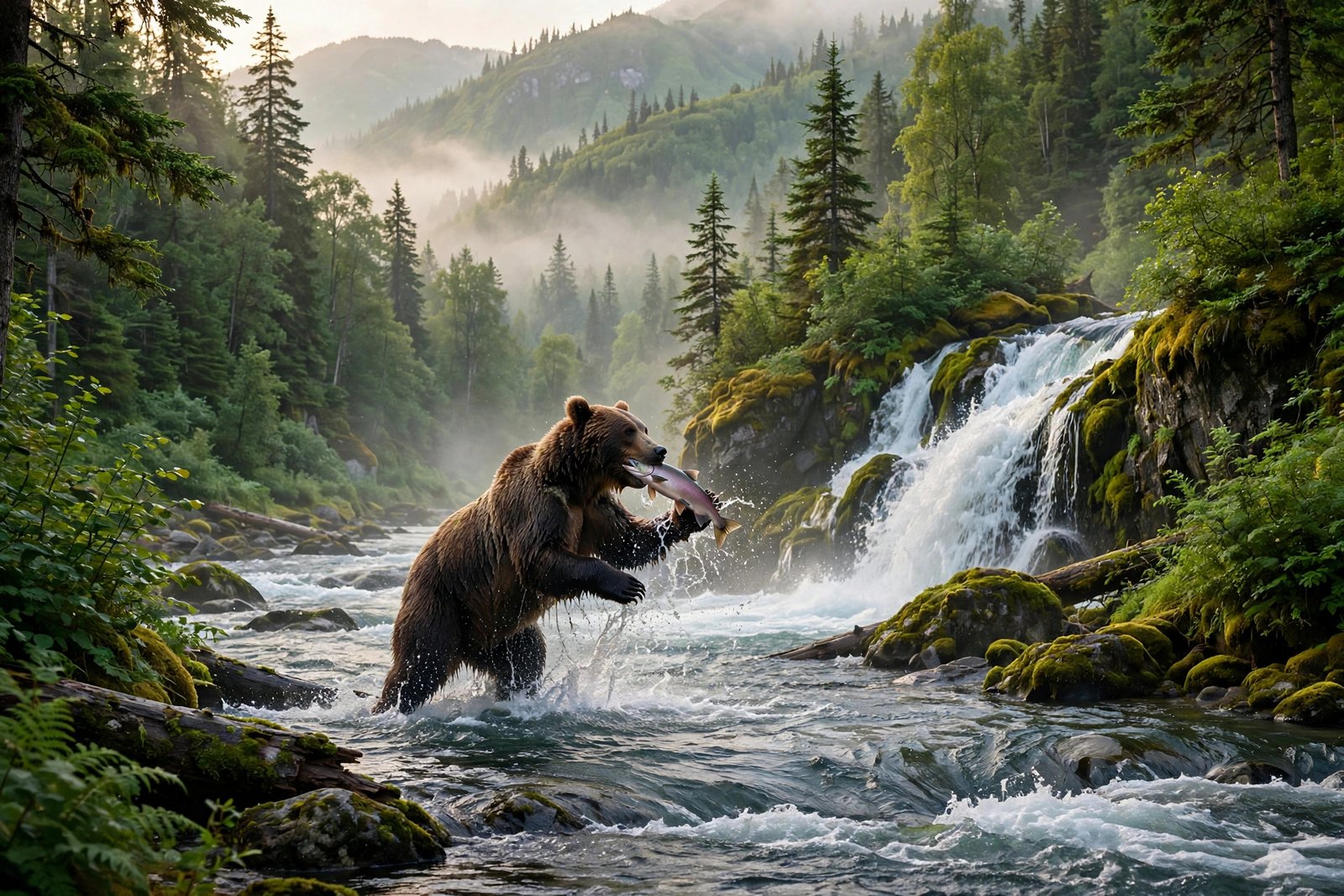
Few wildlife encounters rival the thrill of seeing a bear in the wild — a massive brown bear snatching salmon mid-leap, or a black bear sow leading her cubs across a mountain meadow. If you’re wondering where to see bears in the USA, the good news is that America offers some of the best bear viewing on the planet, from Alaska’s salmon-packed rivers to the misty forests of the Appalachians.
The United States is home to three bear species: the American black bear (the most widespread, found in at least 40 states), the brown bear — including the famous grizzly — and the polar bear of Arctic Alaska. Each has its own habitat, season, and best viewing spots. This guide covers the 10 best places to see bears in America, with honest advice on timing, safety, and what to realistically expect.
A quick note on honesty: bear sightings are never guaranteed. These are wild animals, not attractions. But the locations below are where your odds are genuinely the best in the country.
Where to See Bears in the USA: What to Know Before You Go
Before diving into the list, a few essentials apply everywhere. The best bear viewing season is generally late spring through early fall, when bears are active and feeding. In Alaska, peak salmon runs in July and September draw the biggest concentrations. Always keep a respectful distance — wildlife agencies recommend staying at least 100 yards from bears — carry bear spray in grizzly country, store food properly, and never feed a wild bear.
Guided viewing, especially in Alaska, dramatically improves both your odds and your safety. Now, here are the top spots.
1. Katmai National Park, Alaska — Brooks Falls
If there is one answer to where to see bears in the USA, it is Katmai. Brooks Falls in Katmai National Park is the most famous bear-viewing location in the world. Every summer, dozens of brown bears gather at the falls to catch sockeye salmon leaping upstream — the spectacle has been broadcast live on wildlife webcams watched by millions.
Peak viewing runs from late June through July for the early salmon run, with another strong window in September when bears gorge before denning. Access is by floatplane from King Salmon, and the National Park Service manages viewing from raised platforms to keep both bears and people safe. Day trips and multi-day lodge stays are available, and demand is high — book well ahead.
2. Yellowstone National Park, Wyoming/Montana/Idaho
Yellowstone is one of the most accessible places to see both grizzly bears and black bears in the lower 48 states. The Lamar Valley and Hayden Valley are prime viewing areas, especially in spring when bears emerge from dens and in early summer when mothers lead cubs through the meadows.
Dawn and dusk offer the best chances. Bring binoculars or a spotting scope — many sightings happen at a distance across the valleys. The park’s bear management program is a genuine conservation success story: grizzlies, once dwindling, have rebounded strongly under decades of protection. Pair your trip with our guide on where to see bald eagles, another Yellowstone-area wildlife highlight.
3. Great Smoky Mountains National Park, Tennessee/North Carolina
The Smokies are home to one of the densest black bear populations in the eastern United States, with roughly 1,900 bears living in the park according to the National Park Service. Cades Cove, a scenic valley loop in Tennessee, is the single best spot — bears are frequently seen foraging in the meadows, especially in the early morning and late evening.
Spring brings mothers with new cubs; late summer and fall bring bears fattening up on acorns and berries. The park is free to enter (though a parking tag is required), making this one of the most affordable bear-viewing destinations in America. Stay in your vehicle during roadside sightings and never approach.
4. Denali National Park, Alaska
Denali’s vast tundra is prime grizzly country. The park road — traveled by bus beyond the first stretch — crosses prime bear habitat, and sightings of grizzlies digging for roots or hunting ground squirrels are common on a full-day bus trip into the park.
Denali offers something Katmai doesn’t: the chance to see bears against the backdrop of North America’s tallest peak, with caribou, moose, wolves, and Dall sheep possibly in the same day. Late May through mid-September is the viewing season, with June offering long daylight and active wildlife.
5. Glacier National Park, Montana
Glacier is one of the few places in the lower 48 where grizzly bears and black bears both roam in significant numbers. The Many Glacier area on the park’s east side is legendary among wildlife watchers — bears frequent the meadows and berry patches around Swiftcurrent and Iceberg Lake trails.
Hiking here demands serious bear awareness: travel in groups, make noise, and carry bear spray. But for the prepared visitor, Glacier delivers some of the most dramatic bear country in America, with jagged peaks towering over every sighting.
6. Admiralty Island, Alaska — “Fortress of the Bears”
Admiralty Island in Southeast Alaska is home to one of the highest densities of brown bears anywhere on Earth — the Tlingit name for the island translates roughly to “Fortress of the Bears.” The Pack Creek Bear Sanctuary on the island’s northeast shore offers permitted, ranger-led viewing in summer, with bears fishing for salmon just yards from the viewing areas.
Permits are limited and required, which keeps crowds small and encounters intimate. This is a true wilderness experience: you arrive by floatplane or boat from Juneau, and the bears very much own the place.
7. Lake Clark National Park, Alaska
Lake Clark is Katmai’s quieter neighbor — and many guides consider it just as good for bear viewing, with far fewer visitors. Coastal meadows like those at Chinitna Bay and Crescent Lake draw brown bears grazing on sedges in spring and fishing for salmon in summer.
Guided day trips from Anchorage, Homer, and Kenai bring you in by small plane, landing on beaches where bears may be grazing nearby. The scenery — volcanoes rising behind the meadows — is among the most spectacular in Alaska. If Katmai is booked out, Lake Clark is the insider’s alternative.
8. Anan Creek, Tongass National Forest, Alaska
For black bears specifically, Anan Creek near Wrangell in Southeast Alaska is extraordinary. The creek hosts one of the largest seasonal gatherings of black bears anywhere, drawn by pink salmon runs in July and August. An observatory with a viewing platform and a photo blind lets visitors watch bears fishing at close range.
Both black and brown bears fish here — a rare place where you can compare the two species side by side. Access is by boat from Wrangell, and Forest Service permits manage visitor numbers.
9. Kodiak Island, Alaska
Kodiak is home to the Kodiak brown bear, the largest subspecies of brown bear in the world. The Kodiak National Wildlife Refuge covers much of the island, and guided bear-viewing trips — often by floatplane from Kodiak city — visit salmon streams where these enormous bears feed in summer.
Seeing a full-grown Kodiak boar, which can stand over 10 feet tall, is a humbling experience. Like much of Alaska bear country, access requires a guide and a plane, but the payoff is one of the wildest bear encounters available anywhere.
10. Alligator River National Wildlife Refuge, North Carolina
You don’t have to go west to see bears. Alligator River National Wildlife Refuge on North Carolina’s Outer Banks region is one of the best places in the eastern USA to see black bears — including some of the largest black bears on record, fattened on abundant crops and natural foods.
The refuge’s wildlife drive is open to vehicles, and bears are commonly seen in the fields at dawn and dusk, particularly in summer. The refuge is also famous for its red wolves, making it a two-for-one wildlife destination. For more surprising American wildlife, check out our feature on American animals you won’t believe are real.
Where to See Bears in the USA Safely: Essential Viewing Tips
Knowing where to see bears in the USA is only half the equation — doing it safely is the other half. Follow these rules on every trip:
- Keep your distance: stay at least 100 yards (about a football field) from bears. Use binoculars and zoom lenses instead of moving closer.
- Carry bear spray in grizzly country (Alaska, Yellowstone, Glacier) and know how to use it before you need it.
- Never feed bears — a fed bear is a dead bear, as wildlife managers say. Feeding habituates bears to people and leads to dangerous encounters.
- Store food properly: use bear boxes, canisters, or hang food where required. A clean camp is a safe camp.
- Make noise on trails in dense brush — most negative encounters happen when a bear is surprised at close range.
- Travel in groups when hiking in grizzly country; groups are noisier and more intimidating to bears.
- Go with a guide in Alaska’s remote bear country — local knowledge is the single biggest factor in both sightings and safety.
Timing matters too. Spring offers mothers with cubs and hungry post-den bears; mid-summer brings salmon runs in Alaska; fall brings hyperphagia, when bears feed intensively before winter. Each season tells a different story.
Plan Your Bear-Viewing Adventure
From the salmon-choked rivers of Katmai to the misty coves of the Smokies, America offers bear viewing to match every travel style and budget. The Smokies and Yellowstone are easy, affordable starting points; Alaska’s floatplane-accessed sanctuaries are the trip of a lifetime.
Whichever you choose, go prepared, go respectfully, and give these magnificent animals the space they deserve. Few experiences connect you to wild America like locking eyes with a bear — from a safe, sensible distance — in its own kingdom.
Ready to explore more wild America? Discover the most beautiful places in America to plan your next national park adventure, and see where to see bald eagles for another unforgettable wildlife encounter. Share this guide with a fellow wildlife lover and start planning your bear-viewing trip today!
[…] more wildlife safety wisdom, check out our guides to where to see bears in the USA and where to see wolves in the USA — many of the same principles apply, and the viewing spots […]
[…] If you are planning a trip here, read up on the animals you might meet, including our guide on where to see bears in the USA, so you can enjoy the wilderness safely. The nearby Gila Cliff Dwellings, built by the Mogollon […]