
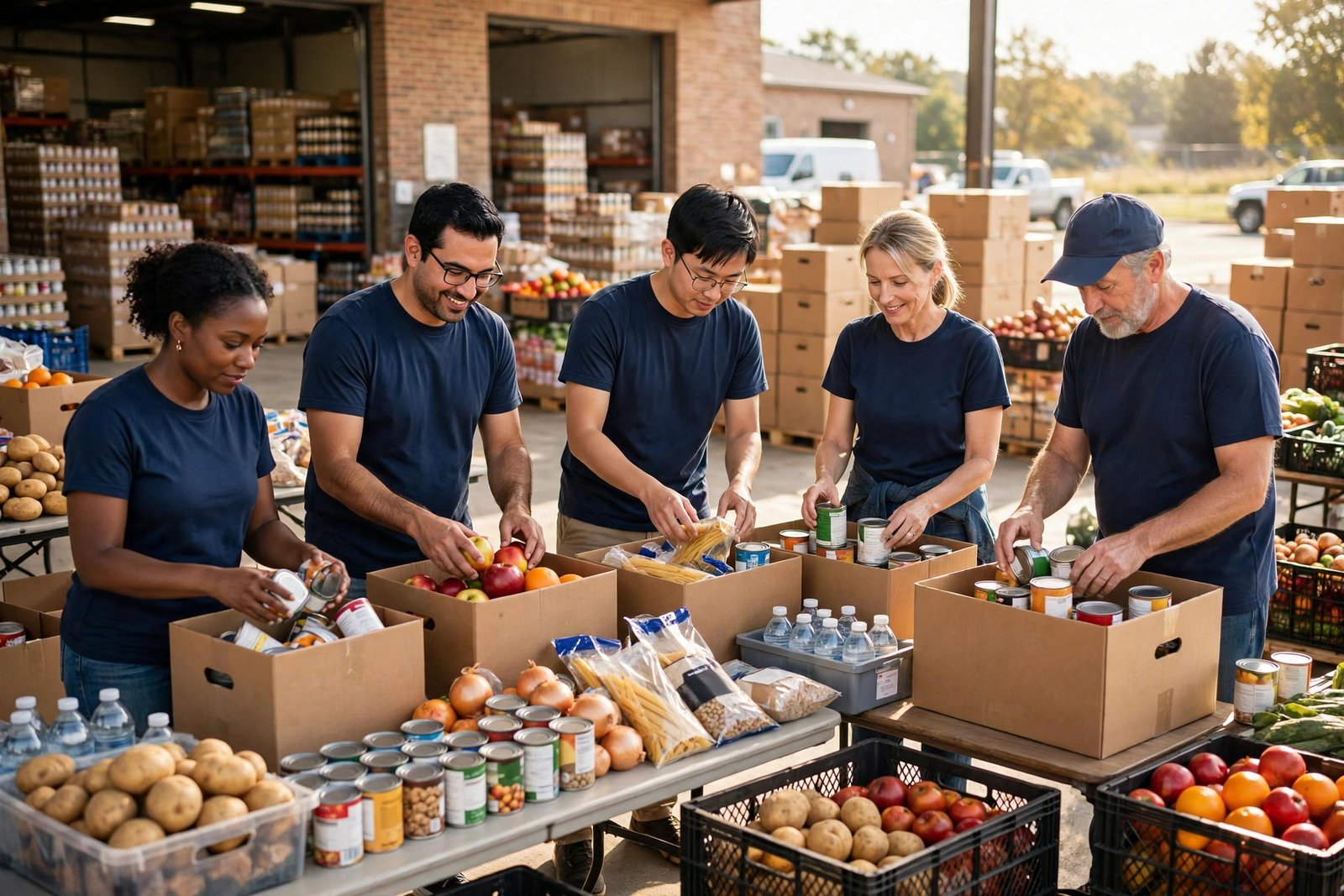
American volunteer culture is one of the most distinctive features of life in the United States. It is the habit of ordinary people stepping forward, without pay and without being asked by the government, to help neighbors, strengthen communities, and solve problems close to home. From serving meals at a food pantry to coaching a youth team, from cleaning up a local park to mentoring a student, volunteering is woven into how Americans understand citizenship, community, and responsibility.
Visitors to the United States are often surprised by how much of American life runs on volunteer effort. Churches, schools, sports leagues, libraries, hospitals, museums, animal shelters, and disaster response teams all depend heavily on people who give their time freely. This is not a recent trend or a passing fashion. It is a long-standing pattern that observers have noted since the early days of the republic, and it continues to shape American communities today.
What Is American Volunteer Culture?
At its simplest, volunteering in America is the shared expectation that citizens will contribute time and effort to the common good, not only through taxes or voting, but through direct personal action. Volunteering can take many forms. Some people volunteer regularly, week after week, for a single organization. Others volunteer episodically, showing up for a school fundraiser, a holiday food drive, or a neighborhood cleanup. Some volunteer through formal organizations, while others simply help a neighbor in need without any organization at all.
The range of volunteer work in America is enormous. Volunteers staff food banks and homeless shelters, tutor children, visit elderly people who live alone, build homes, fight wildfires as volunteer firefighters, serve on school boards and library boards, run charity races, and respond after hurricanes, floods, and wildfires. In small towns, volunteers may be the backbone of the local fire department and the youth sports league. In large cities, volunteers power museums, theaters, hospitals, and countless nonprofit organizations.
What unites these different activities is a spirit of self-organization. Americans have long tended to form associations to address shared concerns, rather than waiting for government alone to act. When a problem appears, the instinct is often to gather neighbors, start a group, raise funds, and get to work. That instinct, repeated millions of times in communities across the country, is the heart of volunteering in America.
- Formal volunteering: regular service through a nonprofit, school, hospital, or faith group.
- Informal volunteering: helping neighbors, friends, and family members directly.
- Civic volunteering: serving on boards, in local government, or in community organizations.
- Emergency volunteering: helping during disasters, from sandbagging to shelter work.
The Roots of American Volunteer Culture
The roots of volunteering in America run deep in the country’s history. In the colonial period, communities relied on mutual aid because formal government services were limited. Neighbors helped raise barns, care for the sick, and support widows and orphans. Churches and fraternal organizations provided much of the social safety net, and that tradition of community care carried into the new republic.
In the 1830s, the French observer Alexis de Tocqueville famously noted Americans’ remarkable tendency to form associations for almost every purpose. He saw that Americans, unlike citizens of more centralized societies, routinely joined together to build churches, schools, hospitals, and civic groups. That observation has become a classic description of volunteering in America, and historians still quote it because it captures something that remains true: Americans like to organize, and they like to do things themselves.
Over the nineteenth and twentieth centuries, volunteering became more organized and more diverse. Women’s clubs, settlement houses, the Red Cross, the Boy Scouts and Girl Scouts, Rotary and Lions clubs, and countless local charities gave volunteering a formal structure. Churches, synagogues, mosques, and other faith communities remained central, providing both motivation and meeting places for service. Labor unions, veterans’ groups, and civil rights organizations also relied on volunteer energy to advance their causes.
The federal government eventually created national service programs that built on this tradition. The Peace Corps, founded in 1961, sends American volunteers abroad to work on education, health, agriculture, and community development. AmeriCorps, created in the 1990s, engages Americans in intensive service at home, in schools, disaster response, environmental projects, and antipoverty programs. These programs are government-supported, but they draw their strength from the same volunteer spirit that animates local food pantries and youth leagues.
Volunteering in Everyday American Life
To see volunteering in America in action, you do not need to look at national programs. You need only look at an ordinary week in an ordinary American town. On a Saturday morning, volunteers might be coaching soccer games, running a farmers market, staffing a library book sale, or serving breakfast at a shelter. On a Sunday, volunteers might be singing in a choir, teaching a class, or delivering meals to homebound neighbors. During the week, volunteers might be tutoring after school, walking dogs at an animal shelter, or sorting donations at a thrift store.
Schools are a major center of volunteering. Parents volunteer in classrooms, on field trips, and in parent-teacher organizations. They organize fundraisers, chaperone dances, and help with school plays and sports teams. This involvement is so common that many Americans consider it a normal part of parenting, not an extra activity. Similarly, youth sports in America would scarcely exist without volunteer coaches, referees, team parents, and league organizers.
Faith communities are another major center. Many Americans volunteer through their place of worship, whether by serving meals, visiting the sick, teaching religious classes, or organizing charity drives. Faith-based volunteering often extends beyond the congregation itself, reaching into the wider community through food banks, shelters, and disaster relief. For many volunteers, service is an expression of faith as much as it is a civic duty.
Workplaces have also embraced volunteering. Many companies now offer paid volunteer days or organize team service projects, and employees often form groups to support a local cause. This corporate volunteering has introduced new people to service and has helped nonprofits gain skilled help, from accounting and marketing to construction and technology.
That everyday rhythm of community life, from diners and Main Streets to school gyms and church halls, is part of what makes American towns feel alive. Our guide to small town life in America shows how volunteer effort helps hold those communities together.
Why Do Americans Volunteer?
People volunteer for many reasons, and most volunteers would name more than one. Some are motivated by faith or moral conviction. Some want to give back to a community that helped them. Some volunteer to meet people, learn new skills, or stay active after retirement. Young people often volunteer to gain experience, explore careers, and strengthen college or job applications. Newcomers to a town often volunteer as a way to make friends and put down roots.
Research and everyday experience both suggest that volunteering benefits the volunteer as well as the community. Volunteers often report a stronger sense of purpose, wider social networks, and greater connection to their neighborhoods. Retirees who volunteer often stay more active and socially connected. Students who volunteer often develop confidence, leadership skills, and a clearer sense of what they care about. None of this means volunteering is selfish. It means that service, at its best, is mutually enriching.
American volunteer culture also reflects a particular view of citizenship. In this view, being a good citizen means more than obeying laws and voting. It means taking responsibility for the place where you live. If the park is littered, you help clean it. If children need mentors, you show up. If a neighbor is struggling, you offer help. That attitude, repeated across millions of people, creates communities that are more resilient and more humane.
- Faith and values motivate many volunteers to serve others.
- Community ties grow when people work side by side for a shared cause.
- Skills and confidence develop through hands-on service.
- Newcomers and retirees alike find belonging through volunteering.
Volunteering After Disasters and in Hard Times
Volunteering in America becomes especially visible after disasters. When hurricanes strike the Gulf Coast, when wildfires burn in California, when floods hit the Midwest, or when tornadoes tear through small towns, volunteers arrive from near and far. Some are trained disaster responders. Many are simply neighbors with chainsaws, boats, trucks, and a willingness to help. They clear debris, distribute supplies, cook meals, and comfort people who have lost everything.
Organizations such as the American Red Cross, founded in the nineteenth century and long powered by volunteers, coordinate much of this response. Faith-based disaster groups, community foundations, and spontaneous volunteer efforts also play major roles. In recent years, social media has made it easier for volunteers to organize quickly, although it has also created new challenges, such as managing large numbers of well-meaning but untrained helpers in dangerous areas.
Volunteering also surges in hard economic times and during public health crises. Food banks rely on volunteers to sort and distribute food when demand rises. Mutual aid groups, in which neighbors share food, supplies, and support directly, have grown in many cities. These efforts show that volunteering is not only about charity from the comfortable to the needy. It is also about solidarity among neighbors facing shared hardship.
Challenges Facing Volunteering Today
Despite its strength, volunteering faces real challenges. Many organizations report difficulty recruiting and retaining volunteers, especially for long-term commitments. Busy work schedules, long commutes, caregiving responsibilities, and the pressures of modern life make it harder for people to give regular time. Younger Americans, who move more often and change jobs more frequently, may find it harder to put down roots in a single organization.
Volunteering has also become more episodic. Many people prefer short-term projects, such as a single day of service, over open-ended commitments. Nonprofits have adapted by creating flexible opportunities, virtual volunteering options, and skills-based projects that can be completed remotely. Virtual volunteering, in which people tutor online, translate documents, or help nonprofits with technology, has expanded access for people who cannot easily travel to a service site.
Another challenge is ensuring that volunteering is inclusive. Historically, some volunteer organizations excluded people on the basis of race, gender, or background. Today, most major organizations strive to be open to all, but barriers remain, including transportation, childcare, and the cost of participating. Organizations that address these barriers, by offering flexible hours, family-friendly projects, and welcoming environments, tend to attract more diverse volunteers.
Declining participation in some traditional associations, from service clubs to religious congregations, has also raised concerns among scholars and civic leaders. They worry that if Americans volunteer less and join fewer groups, communities will become less connected and less able to solve problems together. At the same time, new forms of volunteering, from online organizing to mutual aid networks, suggest that the impulse to serve is adapting rather than disappearing.
How to Get Involved as a Volunteer
For anyone who wants to experience volunteering firsthand, getting started is easier than it may seem. The best first step is to think about what you care about and what you enjoy doing. If you love animals, an animal shelter may be a good fit. If you enjoy working with children, tutoring or mentoring may suit you. If you like the outdoors, trail maintenance or park cleanups may appeal to you. Matching your interests to the opportunity makes volunteering sustainable and enjoyable.
Local volunteer centers, community foundations, and websites that list opportunities can help you find a good match. Schools, libraries, hospitals, and faith communities often welcome new volunteers and provide training. National programs such as AmeriCorps and the Peace Corps offer more intensive commitments for those who want to devote months or years to service. Short-term options, such as serving at a food bank for a morning or joining a neighborhood cleanup, are also valuable and can be a good way to try volunteering without a long commitment.
Visitors to the United States can also participate, within the rules of their visa and the policies of the host organization. Many tourist destinations have volunteer opportunities, from beach cleanups to museum docent programs, although visitors should always check eligibility and safety requirements in advance. Even a small act of service while traveling can deepen your understanding of a place and its people.
American community life has many gathering places where volunteer spirit shows up, from church suppers to Friday night football games. Another beloved example is the classic diner, a community hub in its own right, explored in our article on American diner culture.
Conclusion: The Spirit That Holds America Together
American volunteer culture is more than a collection of good deeds. It is a way of life that says communities are built by the people who live in them. It is the coach who stays late after practice, the neighbor who checks on an elderly resident, the retiree who tutors reading, and the teenager who spends a Saturday cleaning a riverbank. None of these acts makes headlines on its own, but together they form the fabric of American life.
That fabric has been woven over centuries, from barn raisings and church socials to modern food banks and disaster response teams. It has adapted to new challenges, new technologies, and new generations, and it continues to evolve. As long as Americans keep showing up for one another, volunteer culture will remain one of the country’s greatest strengths.
If you live in the United States, consider finding one volunteer opportunity this month, even for a single morning. If you are visiting, take time to notice the volunteers who make parks, museums, and community events possible. And wherever you are, share this guide with someone who might be inspired to give back. American volunteer culture thrives because ordinary people choose, again and again, to be part of something larger than themselves.