
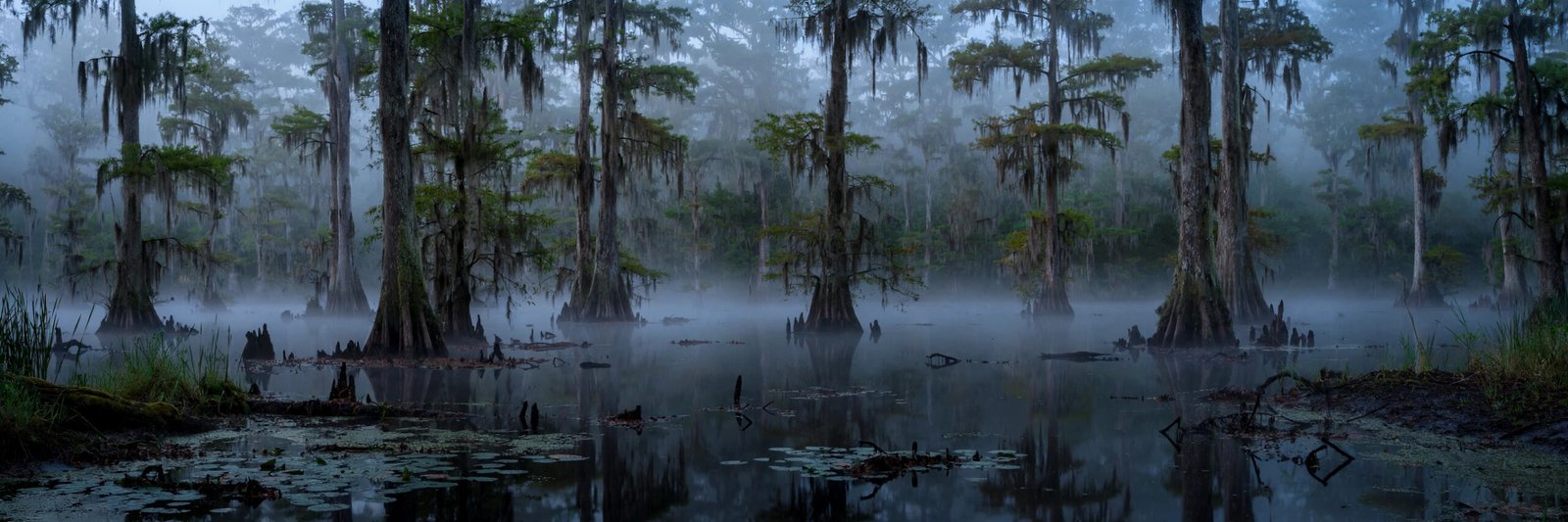
Deep in the pine forests of southwest Arkansas, near the Texas border, a small town holds one of America’s most enduring monster stories. The Fouke Monster legend begins with whispered tales of a tall, hairy, ape-like creature said to roam the swampy bottomlands around Boggy Creek. For decades, the story has drawn curious travelers, filmmakers, and monster hunters to a quiet town that fully embraces its spooky claim to fame. But what is the truth behind the tale, and why does it still fascinate us more than fifty years later?
Before we go further, one important point must be made clearly: the Fouke Monster is an unverified local legend, not a confirmed animal. No scientific evidence has ever proven that such a creature exists. The story lives on through eyewitness accounts, local folklore, and popular culture, not through biology. That distinction matters, and it is also part of what makes the legend so much fun to explore.
What Is the Fouke Monster Legend?
The Fouke Monster legend describes a large, bipedal creature covered in dark hair, often reported as standing around seven feet tall. Witnesses have described it as moving quickly through the woods, leaving behind large footprints and a strong, unpleasant odor. The creature is said to live near Boggy Creek, a slow-moving waterway that winds through the forests and bottomlands around Fouke, Arkansas.
Like many American cryptid stories, the Fouke Monster legend blends older regional folklore with more modern sighting reports. Tales of wild, hairy creatures in the southern woods existed long before the 1970s, passed along in hunting camps and small-town storytelling. What set Fouke apart was a sudden burst of reported sightings that brought national attention to a town of only a few hundred people.
Descriptions of the creature vary from one account to another, which is typical of folklore. Some witnesses described it as ape-like, others as more human in shape. Some reports mention glowing eyes at night, while others focus on its size and smell. These inconsistencies are worth noting honestly: they are exactly what researchers expect from stories built on brief, startling encounters in dark, wooded places, where imagination and fear can fill in the gaps.
The 1971 Sightings That Made the Fouke Monster Legend Famous
The legend became nationally known in 1971, when a series of reported sightings around Fouke drew newspaper coverage and curious visitors. In May of that year, a local family reported that a large, hairy creature had approached their home at night, frightening them and damaging property. Soon after, other residents came forward with their own stories of strange tracks, odd sounds, and fleeting glimpses of something large moving through the trees.
The reports spread quickly. Journalists arrived, hunters organized searches, and the small town suddenly found itself at the center of a monster mystery. People came from across the region hoping to catch a glimpse of the creature or find its tracks. The excitement fed on itself: each new headline encouraged more people to look, and each new story added another layer to the legend.
It is worth stating plainly that none of these reports produced physical proof. No body, no clear photograph, and no verified biological sample has ever been linked to the creature. Footprints and plaster casts were discussed at the time, but they do not meet the standard of scientific evidence. The 1971 sightings remain eyewitness stories, and eyewitness stories, however sincere, are not confirmation.
The Fouke Monster Legend in Film and Pop Culture
The story might have faded if not for a low-budget film that turned it into a cultural phenomenon. In 1972, filmmaker Charles B. Pierce released The Legend of Boggy Creek, a docudrama-style movie that dramatized the Fouke sightings. Made on a tiny budget, the film became a surprise hit in drive-in theaters across the South and introduced the creature to audiences far beyond Arkansas.
The film’s success cemented the legend in American pop culture. It also set a template for later cryptid movies and television shows: a quiet rural town, a mysterious creature, and a mix of interviews and reenactments that blurred the line between fact and storytelling. Sequels and remakes followed over the years, and the creature has been referenced in documentaries, podcasts, and monster-hunting television programs ever since.
This is a good example of how folklore grows. A local story becomes a film, the film brings tourists, and tourism keeps the story alive for the next generation. In Fouke, the legend is now part of the town’s identity, celebrated rather than hidden. That cycle is common in American legend towns, and it explains why the creature still appears on T-shirts, signs, and festival banners today.
What the Evidence Actually Shows
When the legend is examined with a critical eye, the evidence falls into a familiar pattern for cryptid stories:
- Eyewitness accounts: Numerous people have reported seeing something unusual, but human memory is unreliable, especially at night and in stressful moments. A bear standing on its hind legs, a large hog, or even a person in dark clothing can look very different in a forest at dusk.
- Footprints: Large tracks were reported around Fouke, but tracks can be misread, exaggerated, or, in some cases, faked. No track has ever been verified as belonging to an unknown animal.
- Photographs and film: Despite decades of interest, no clear, verified image of the creature exists. Blurry photos and distant footage prove only that something was photographed, not what it was.
- Scientific investigation: No wildlife agency or research institution has confirmed the existence of a large, unknown primate in Arkansas. The animals known to live in the area, including black bears, explain most sightings plausibly.
None of this means that the people who reported sightings were lying. Many were likely sincere, describing something that genuinely frightened them. But sincerity is not the same as proof, and the honest conclusion is that the Fouke Monster remains a legend: a story rooted in real local experience, shaped by retelling, and kept alive by popular culture.
Visiting Fouke, Arkansas Today
Today, Fouke welcomes visitors who come to explore the legend for themselves. The town’s Monster Mart, a convenience store and local landmark, is famous for its monster-themed displays and memorabilia. The town also hosts the annual Fouke Monster Festival, where fans gather for speakers, vendors, and guided looks at the area’s folklore and history.
For travelers, the real draw may be the landscape itself. The forests, creeks, and bottomlands around Fouke are beautiful in their own right, and they are home to genuine Arkansas wildlife. Visitors can enjoy hiking, fishing, and birdwatching in the region, and the nearby towns of the Ark-La-Tex area offer a taste of small-town southern life. If you visit, treat the legend as what it is: a fun story to enjoy, not a wildlife expedition with a guaranteed sighting.
A few practical tips for a legend-themed trip:
- Stop by Monster Mart for photos and local stories from residents who have lived with the legend for decades.
- Time your visit for the annual festival if you want the full community celebration.
- Bring bug spray and sturdy shoes if you plan to explore creek trails and wooded paths.
- Respect private property: many reported sighting areas are on private land, so stick to public roads and trails.
Fans of American monster lore may also enjoy reading about other regional legends, such as the Champ legend of Lake Champlain and the Wendigo legend, which show how different parts of the country tell their own versions of mysterious-creature stories.
Why the Fouke Monster Legend Endures
So why does the legend still matter more than fifty years after the 1971 sightings? Part of the answer is the film, which gave the story a permanent place in pop culture. Part of it is the town itself, which has kept the legend alive with humor and hospitality. And part of it is something deeper: humans love a good mystery, especially one set in a place we can actually visit.
Legends like this one also say something about the places they come from. Fouke’s story is tied to its forests, its creeks, and its history as a small, close-knit community where stories travel fast. The creature became a symbol of the wild, untamed corners of Arkansas, a reminder that even in a mapped and settled country, there are still dark woods where imagination can run free.
Wildlife lovers visiting the region can also explore the real animals of the American South, from the creatures of the swamps and forests to the places where you can see coyotes in the USA. The true wildlife of Arkansas is impressive enough without any monsters, and it is worth appreciating on its own terms.
Conclusion: A Legend Worth Knowing, A Mystery Worth Keeping Honest
The Fouke story is one of America’s great small-town tales: a burst of strange sightings, a surprise-hit movie, and a community that turned a mystery into a lasting tradition. It is best enjoyed with both enthusiasm and honesty. Enjoy the film, visit the town, and soak up the atmosphere of Boggy Creek. But keep the facts straight: the creature is a legend, not a confirmed animal, and no evidence has ever proven otherwise.
That honesty does not spoil the fun. If anything, it makes the story better, because it lets us appreciate what legends really are: shared stories that bind communities together and invite the rest of us to visit, wonder, and imagine. So plan a trip to Fouke, stop by Monster Mart, and decide for yourself what you believe. Then share this article with a friend who loves a good American mystery, and tell us in the comments: do you think there is something in those woods, or is the legend itself the real treasure?