
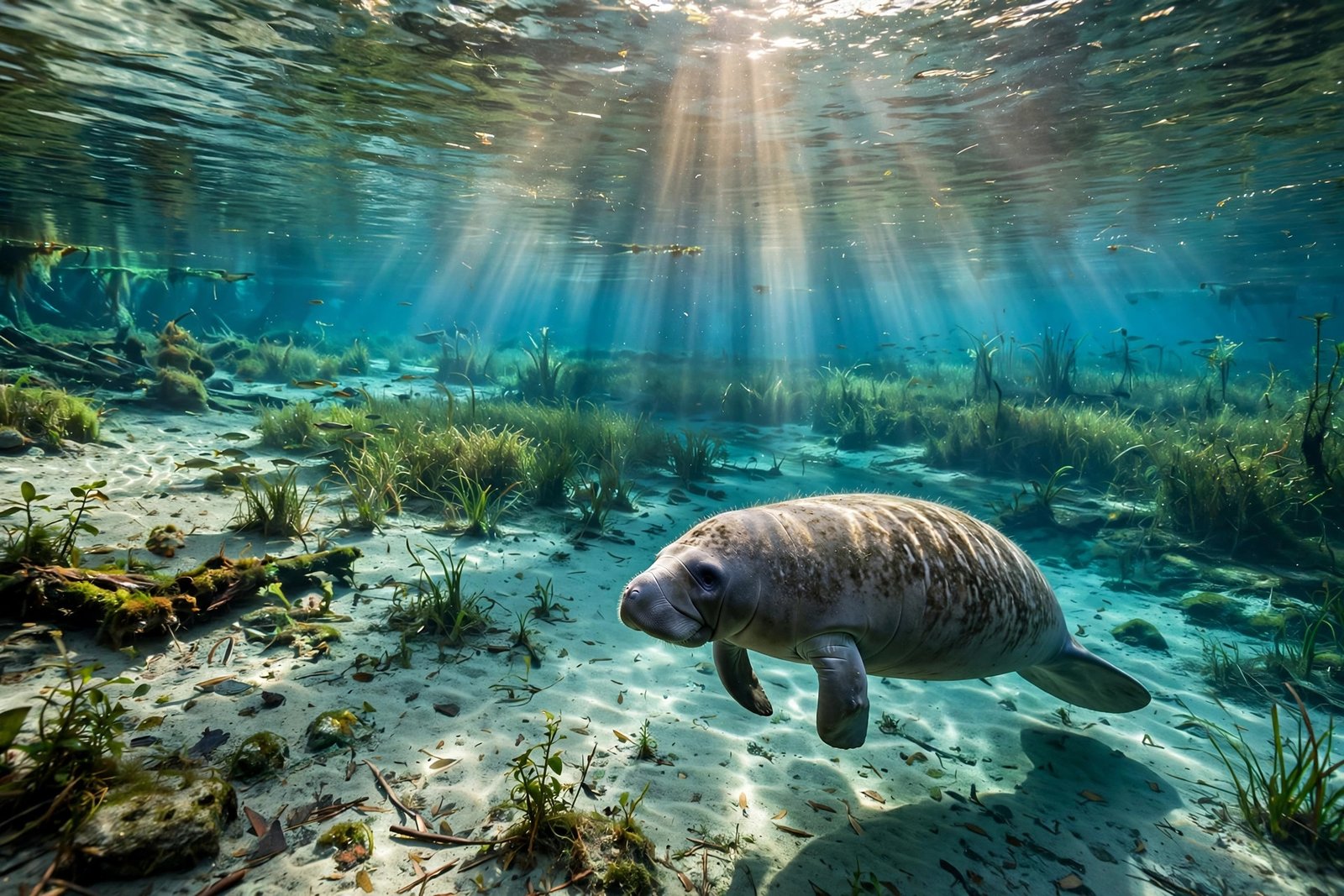
Few wildlife encounters in America are as gentle and unforgettable as watching a manatee glide through clear spring water. These slow-moving, whiskered giants, sometimes called sea cows, gather in Florida’s warm springs and coastal waters each winter, and seeing one in the wild is a bucket-list experience for nature lovers. If you are wondering where to see manatees in Florida, the good news is that the Sunshine State offers several outstanding, reliable places to find them, from famous springs where hundreds gather to a power-plant viewing center that draws crowds every winter. This guide covers the best spots, the best season, and how to watch manatees responsibly.
When Is the Best Time to See Manatees in Florida?
Timing is everything when it comes to manatees. Florida manatees are sensitive to cold water and seek out warm refuges when temperatures drop. The prime manatee season runs roughly from November through March, when manatees gather in natural springs that stay around 72 degrees Fahrenheit year-round and in warm-water outflows from power plants. During cold snaps, the gatherings can be spectacular, with hundreds of manatees crowded into a single spring run.
In the warmer months, from April through October, manatees disperse into rivers, bays, and coastal waters across Florida, which makes them harder to predict, though they can still be spotted by boaters and kayakers. If your trip is built around manatees, plan it for winter. Knowing where to see manatees in Florida also means knowing when to go, and winter is when the animals come to you. If you are visiting in summer, choose a spring or a guided tour, and treat any sighting as a happy bonus rather than a guarantee.
Where to See Manatees in Florida: Crystal River and Three Sisters Springs
Crystal River, on Florida’s Gulf Coast about 90 minutes north of Tampa, is the most famous place in the world to see manatees, and for good reason. The area’s springs pour out water at a constant 72 degrees, and hundreds of manatees migrate into Kings Bay and the surrounding springs each winter. Three Sisters Springs, a stunning complex of three spring pools connected to Kings Bay, is the crown jewel of the area, with boardwalk viewing on land and crystal-clear water for kayaking and guided swimming tours.
Crystal River is also one of the few places in the United States where swimming with manatees is legally permitted, under strict rules designed to protect the animals. Visitors must go with a licensed guide or follow the refuge’s rules, practice passive observation, and never chase, touch, or ride a manatee. Guided tours are the best choice for first-timers: local captains know where the manatees are on a given day and how to approach them without causing stress. If you prefer to stay dry, the boardwalk at Three Sisters Springs offers excellent viewing, especially on cold mornings when manatees pack into the springs.
Plan ahead for Crystal River. Winter weekends are busy, parking can be tight, and access rules for Three Sisters Springs can change with the season and with manatee protection measures, so check current conditions before you go. Bring a wetsuit if you plan to swim, even in Florida: spring water at 72 degrees feels chilly after a while, and tour operators usually provide wetsuits.
Blue Spring State Park: A Manatee Refuge on the St. Johns River
Blue Spring State Park, near Orange City in Central Florida, is one of the most reliable winter manatee viewing spots in the state. The park’s spring run is a designated manatee refuge during the winter months, and on cold days, the count of manatees in the run can reach into the hundreds. A boardwalk runs along the spring run, giving visitors clear, close-up views of manatees resting, surfacing to breathe, and nursing their calves.
During manatee season, swimming, diving, and paddling in the spring run are closed to protect the animals, which actually makes Blue Spring one of the best places for pure observation. For many visitors, Blue Spring is the simplest answer to the question of where to see manatees in Florida without getting in the water. The park also offers hiking trails, picnic areas, and boat tours on the St. Johns River, and it is an easy day trip from Orlando or Daytona Beach. Arrive early on cold mornings for the best viewing and the smallest crowds, and bring binoculars for a closer look at manatees resting near the surface.
Tampa Electric Manatee Viewing Center: Easy, Free, and Family-Friendly
For an easy and free manatee experience, head to the Tampa Electric Manatee Viewing Center in Apollo Beach, just south of Tampa. Manatees gather in the warm-water discharge canal of the Big Bend Power Station during the cooler months, and the center’s observation decks and boardwalks put visitors right above the action. The viewing center typically operates from November through mid-April, and admission is free.
This is an ideal stop for families and for travelers who want a guaranteed, low-effort sighting. If you want a simple answer to where to see manatees in Florida with kids in tow, this is it. The center includes a tidal walk, butterfly gardens, and educational exhibits about manatees and the local ecosystem, and a café serves visitors. The best days to visit are cold ones, when the most manatees crowd into the warm canal. On warm winter days, fewer manatees may be present, so check the center’s manatee count updates if you can before heading out.
More Great Places to See Manatees in Florida
Beyond the big three, several other Florida locations offer excellent manatee watching:
- Homosassa Springs Wildlife State Park: This park near Crystal River is home to resident manatees in its spring and offers an underwater observatory, plus native Florida wildlife exhibits.
- Weeki Wachee Springs State Park: Manatees visit this famous spring on Florida’s Gulf Coast, and kayaking the Weeki Wachee River is a lovely way to look for them in the wild.
- Merritt Island National Wildlife Refuge: Near Cape Canaveral, the refuge’s Haulover Canal is a known manatee gathering spot in winter, and the refuge is also superb for birdwatching.
- Tampa Bay and the Gulf Coast: In warmer months, manatees roam Tampa Bay, Sarasota Bay, and other Gulf Coast waters, and boaters and paddleboarders often spot them near seagrass beds.
- Fort Myers and Southwest Florida: The Caloosahatchee River and nearby canals attract manatees in winter, and local eco-tours offer guided viewing trips.
- Silver Springs State Park: Manatees sometimes visit this historic spring near Ocala, and the park’s glass-bottom boat tours offer a unique way to explore the spring.
Wherever you go, remember that manatees are wild animals on their own schedule. A guided tour with a local operator greatly improves your odds, and patient, quiet observation is rewarded more often than a rushed visit. If you love planning wildlife trips, you may also enjoy our guides to where to see dolphins in the USA and where to see sea turtles in the USA, which cover other unforgettable encounters in Florida and beyond.
Manatee Etiquette: How to Watch Without Harming Them
Manatees are protected by law in the United States, including the Marine Mammal Protection Act and Florida’s Manatee Sanctuary Act, and responsible viewing is both a legal obligation and a matter of respect. The core principle is passive observation: look, but do not disturb. That means:
- Never touch, chase, ride, or feed a manatee, and do not try to give it water from a hose.
- Keep your distance and let manatees approach you if they choose; if one swims toward you, stay still and enjoy the moment.
- If you are kayaking or paddleboarding, paddle slowly and quietly around manatees, and never corner one against a bank or dock.
- Boaters should obey posted manatee speed zones, wear polarized sunglasses to spot manatees near the surface, and slow down in shallow water and near seagrass beds.
- Do not separate a mother manatee from her calf, and give resting manatees plenty of space, especially in cold weather when they are conserving energy.
- Follow all rules at refuges and parks, including seasonal closures of spring runs during manatee season.
These rules matter because manatees face real threats. Boat strikes are a leading cause of manatee injury and death, and cold stress, habitat loss, and seagrass declines have all put pressure on the population. The Florida manatee was reclassified from endangered to threatened in 2017, but it remains protected, and every careful visitor helps keep it that way.
Planning Your Trip: Where to See Manatees in Florida
A little planning turns a good manatee trip into a great one. First, pick your season: November through March for the most reliable gatherings. Second, pick your base: Crystal River for swimming tours and the full experience, Blue Spring for easy boardwalk viewing, or Apollo Beach for a free, family-friendly stop. Third, book guided tours in advance during peak winter weeks, when popular operators fill up.
Pack for the water and the weather. Winter mornings in Florida can be cool, so bring layers, and if you plan to swim, bring or rent a wetsuit. Polarized sunglasses help you spot manatees just below the surface, and a waterproof camera or phone case lets you capture the moment without risking your gear. Sunscreen and water are still essentials, even in winter, and a dry bag keeps valuables safe on kayaks.
Finally, build in time for the rest of Florida’s natural beauty. The springs region is also home to stunning state parks, clear rivers, and charming small towns, and our guide to where to see manatees across the USA can help you plan a wider wildlife itinerary. Manatees are the star, but the whole landscape is worth exploring.
Conclusion: A Gentle Giant Worth the Trip
Few animals inspire the affection that manatees do. They are enormous, slow, and completely harmless, and watching one rise gently to breathe in a sunlit spring is a moment that stays with you. Florida is the best place in the world to see them, and whether you choose Crystal River, Blue Spring, the Tampa Electric viewing center, or a quiet kayak trip on a Gulf Coast river, you are in for something special.
Now that you know where to see manatees in Florida, plan your winter trip, book a reputable guide, follow the etiquette that keeps manatees safe, and share your experience with friends who love wildlife. The manatees will be waiting in the warm springs, just as they have for thousands of years, and your visit helps support the parks, refuges, and conservation work that protect them. Start planning, pack your sense of wonder, and go meet Florida’s gentlest giants.