
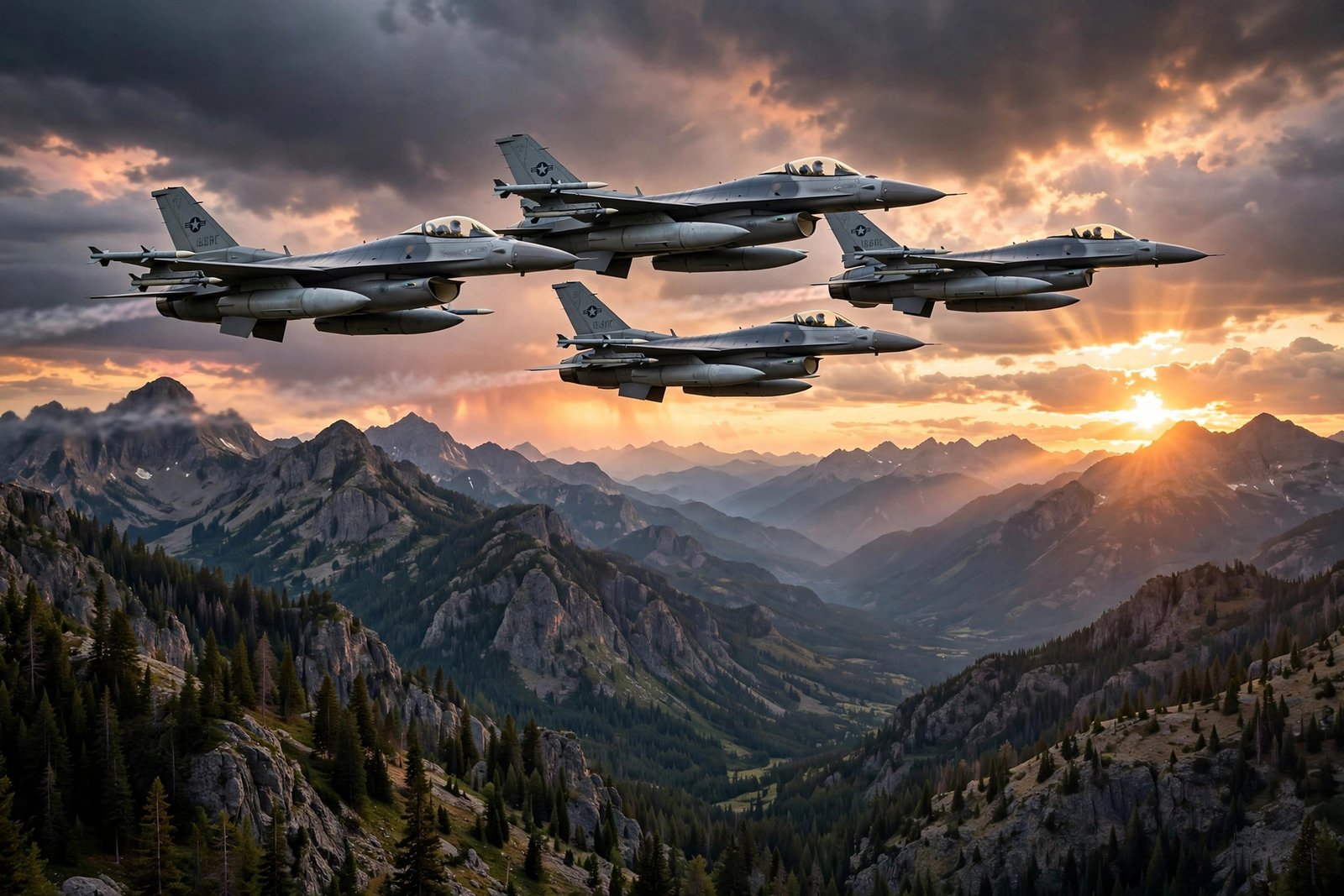
Look up on a clear day near an American air base and you may see it before you hear it: a jet climbing fast and leaving a thin white trail across a wide blue sky. That sight is a small, everyday reminder of US Air Force power, the reach, speed, and skill that lets America respond to trouble almost anywhere on Earth within hours. It is easy to take that ability for granted, yet it was built over more than a century of flying, learning, and sacrifice, and it still shapes how the United States protects itself and supports its friends around the world.
Airpower is not only about fighter jets. It is about the tanker crews who refuel planes in midair, the transport crews who carry food and medicine into disaster zones, the mechanics who keep old and new aircraft flying safely, and the intelligence teams who watch over vast stretches of land and sea. Together, these people and machines give American leaders options that no other tool can offer: the ability to see far, move fast, and act precisely, often without putting large numbers of troops on the ground.
In this guide, we explain what makes American airpower so strong, how it grew from fragile early airplanes into a separate military service, what kinds of aircraft and missions it covers today, and what the future may hold. Whether you are a military history fan, a student, or simply curious about how America defends itself, this is the story of how the nation learned to rule the skies.
What US Air Force Power Really Means
When experts talk about airpower, they usually mean more than the number of planes in a fleet. Real strength comes from a combination of things working together. First, there is range: American aircraft can cross oceans with the help of aerial refueling and bases around the world. Second, there is speed: a jet can reach a crisis zone in hours, while a ship might take days or weeks. Third, there is precision: modern sensors and guided weapons allow pilots to strike a specific target while working hard to avoid harm to nearby civilians.
There is also a quieter kind of strength that rarely makes headlines. Transport aircraft move troops, equipment, and humanitarian aid. Reconnaissance aircraft gather information that helps leaders make better decisions. Communications and navigation satellites, many operated in partnership with the Space Force, help pilots, ships, and ground forces stay connected. When all of these pieces work together, the result is a force that can deter conflict, reassure allies, and respond quickly when disaster strikes.
That is why airpower matters even in peacetime. A visible, ready air force can discourage an aggressor from testing American resolve. At the same time, the same aircraft that train for combat also deliver relief supplies after hurricanes, wildfires, and earthquakes. Strength, in this sense, is not only about fighting wars. It is about preventing them and helping people when they need it most.
- Reach: aircraft and tankers that can operate across oceans and continents.
- Speed: jets and transports that can respond to a crisis within hours.
- Precision: sensors and guided weapons designed to hit a chosen target.
- Flexibility: one fleet that can fight, rescue, deliver aid, and gather information.
- Partnership: close work with allies, the Army, Navy, Marines, and Space Force.
From Army Air Corps to an Independent Force
American military flying began humbly. The Wright brothers made their first powered flight in 1903 at Kitty Hawk, North Carolina, and within a few years the Army began experimenting with airplanes for scouting and messaging. During World War I, American pilots flew combat missions over Europe, learning hard lessons about training, tactics, and the importance of controlling the sky above the battlefield.
By World War II, airpower had become central to warfare. American bomber crews flew long, dangerous missions over Europe and the Pacific, while fighter pilots protected them and attacked enemy aircraft. Transport planes carried paratroopers and supplies. The scale of the effort convinced many leaders that airpower deserved its own service, equal to the Army and Navy, rather than remaining a branch inside the Army.
That change came with the National Security Act of 1947, which created the United States Air Force as an independent service on September 18, 1947. The new service inherited the traditions of the Army Air Forces but gained its own leadership, uniforms, and mission. Soon after, during the Berlin Airlift of 1948 and 1949, American and allied transport planes carried food, fuel, and supplies into a blockaded city, proving that airpower could win a standoff without firing a shot.
The decades that followed brought the Korean War, the Vietnam War, and the long standoff of the Cold War. Each conflict taught new lessons. Jet engines replaced propellers. Missiles changed air combat. Satellites and radar transformed how wars were watched and fought. Through it all, the Air Force kept adapting, retiring old aircraft, testing new designs, and training a new generation of pilots, engineers, and maintainers. Readers who enjoy these true stories of service can explore more tales of courage in our collection of US Air Force pilots true stories.
How US Air Force Power Is Built
Today’s Air Force is organized around several kinds of aircraft, each with a different job. Fighter jets, such as the F-16, F-22, and F-35, are built for speed, agility, and air-to-air combat, as well as strikes against ground targets. Bombers, including the long-serving B-52 and the stealthy B-2, can carry heavy loads over very long distances. Together, fighters and bombers form the sharp end of American airpower.
Behind them sits a vast support fleet that makes combat possible. Tanker aircraft refuel other planes in midair, extending their range far beyond what a single tank of fuel would allow. Transport planes like the C-130 and C-17 move troops, vehicles, and cargo to rough or remote airfields. Reconnaissance and surveillance aircraft watch borders, coastlines, and battlefields, giving commanders a clearer picture of what is happening on the ground.
Training ties the whole system together. Pilots spend years learning to fly, first in training aircraft and simulators, then in their assigned jets. Maintainers train to repair engines, electronics, and airframes to exacting standards. Air traffic controllers, weather forecasters, security forces, and medical teams all play essential roles. An aircraft is only as good as the team that prepares it, flies it, and brings it home safely.
Bases matter too. The United States operates air bases at home and abroad, and American aircraft regularly train and operate alongside allied air forces. This network means help is rarely far away, whether the mission is defending an ally, patrolling busy sea lanes, or delivering aid after a natural disaster. To understand how this global footprint fits together, see our guide to US military bases worldwide.
The People Behind the Planes
It is tempting to focus on the machines, but the real story of American airpower is the people. A single fighter sortie can involve dozens of professionals: the pilot, the crew chief who inspected the jet, the weapons team that loaded it, the fuel team that filled it, and the controllers who guided it safely into the sky. Each person must do their job perfectly, because at high speed and high altitude there is little room for error.
Air Force careers cover far more than flying. There are engineers who design and test new systems, doctors and nurses who care for airmen and their families, chaplains who offer support in hard times, and cyber specialists who defend networks against attack. Many airmen serve for a few years and then bring their discipline and technical skills into civilian life, becoming airline pilots, engineers, teachers, and business owners.
The service also has a proud tradition of breaking barriers. The Tuskegee Airmen, a group of African American pilots and support personnel who served during World War II, proved their skill in combat despite facing segregation at home, and their legacy helped open the door to a more inclusive military. Women now serve in nearly every Air Force role, including as fighter pilots and senior commanders. Their stories remind us that airpower has always depended on talent from every part of American life.
Airpower at Work Around the World
Most Americans never see the Air Force at war, but they may have seen it in action in other ways. When a hurricane floods a coastal city, transport planes can bring in rescue teams, food, and water. When an earthquake strikes overseas, American airlift can deliver field hospitals and supplies within days. When wildfires rage in the West, specially equipped aircraft help firefighters by dropping water and retardant on the flames.
In times of tension, airpower also sends a message without words. A joint exercise with allied jets over Europe or the Pacific shows that America stands with its partners. A patrol over international waters demonstrates a commitment to keeping sea lanes open. These missions are designed to reassure friends and discourage rivals, and they often succeed precisely because no shots are fired.
Airpower also inspires at home. The Thunderbirds, the Air Force’s precision demonstration team, perform breathtaking routines at air shows across the country, drawing huge crowds and inspiring young people to consider careers in aviation and engineering. Museums, memorials, and air shows keep the history alive, connecting new generations with the pilots and crews who came before them.
What Comes Next for American Airpower
The skies of the future will look different from those of the past. Uncrewed aircraft, often called drones, already handle surveillance and some strike missions, keeping pilots out of danger in high-risk areas. Artificial intelligence is helping analysts sort through vast amounts of sensor data more quickly. New aircraft designs focus on stealth, longer range, and the ability to work as a team, with crewed jets flying alongside uncrewed partners.
The Air Force is also developing a new long-range bomber, known as the B-21, which is designed to replace aging bombers over time. At the same time, the service is investing in cyber defense, space partnerships, and faster, more resilient communications, because modern warfare depends as much on information as on firepower. The goal is the same as it has always been: to stay ahead of any potential adversary so that conflict can be deterred rather than fought.
Challenges remain. Aircraft are expensive, and maintaining an aging fleet while developing new technology requires difficult choices. Recruiting skilled people in a competitive job market is another ongoing task. Yet the history of American airpower suggests that the service will keep adapting, just as it adapted from propellers to jets, and from jets to stealth and space.
For a broader look at how air, sea, and land power fit together, read our explainer on why the USA has the strongest military in the world. It puts the Air Force’s role in context alongside the other services and explains why America’s combined strength is so hard to match.
In the end, American airpower endures because it rests on more than technology. It rests on training, teamwork, and a tradition of service that stretches back to the earliest days of flight. The next time you hear a jet overhead, remember the long chain of people behind that sound, and the century of innovation that made it possible. Share this article with a friend who loves aviation, explore more stories on Beauty of USA, and let us know in the comments which aircraft you would most like to see up close.