
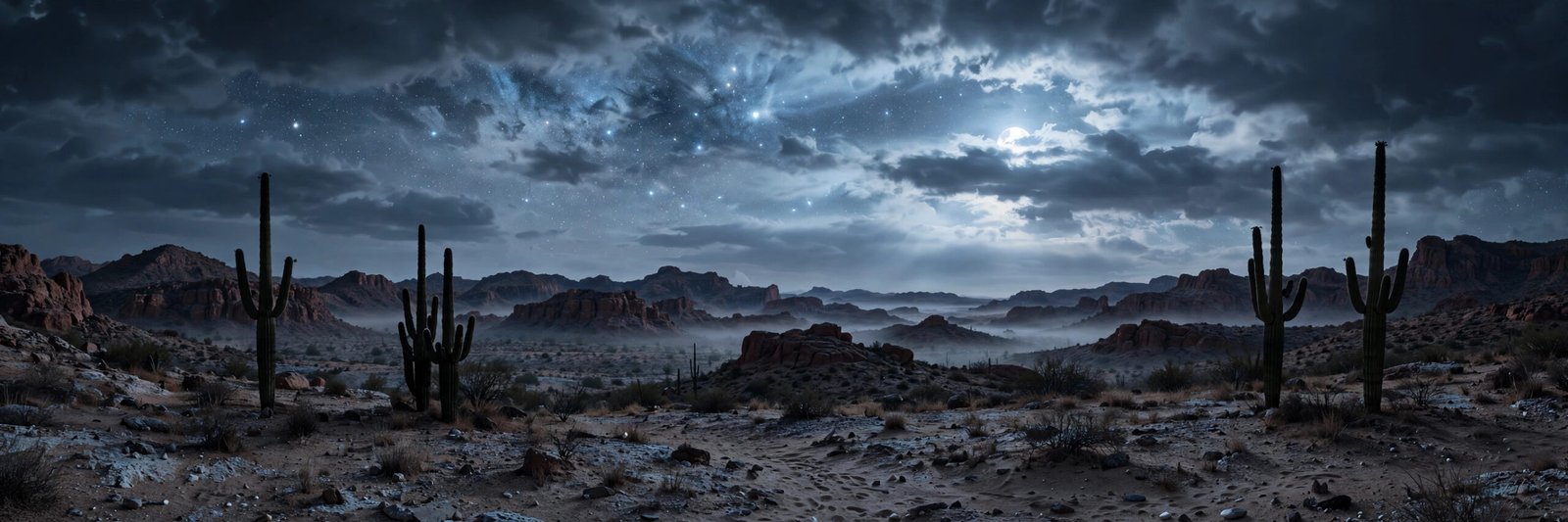
In the mid-1990s, farmers in Puerto Rico began waking up to a terrifying scene: goats and chickens dead in their pens, their bodies strangely drained of blood, with small puncture wounds on their necks. No predator had broken in. No tracks led away. Within months, a name was on everyone’s lips, and the Chupacabra legend was born. The creature, whose name means “goat-sucker” in Spanish, became one of the most famous monsters of the modern Americas, reported from Puerto Rico to Mexico to Texas and beyond. But what really happened? Was there ever a real animal behind the stories, or is the Chupacabra purely a product of fear, folklore, and misidentified wildlife? This guide separates the legend from the verified facts.
The Chupacabra Legend Begins in Puerto Rico
The first widely reported wave of Chupacabra sightings began in Puerto Rico in 1995. Farmers in the town of Canóvanas and other communities reported livestock deaths, and local newspapers picked up the story. The most famous early eyewitness was Madelyne Tolentino, a resident of Canóvanas, who described seeing a strange bipedal creature standing about four feet tall, with large dark eyes, a row of spines down its back, and long, thin arms. Her description shaped how the creature would be drawn and described for decades.
It is important to note what the early Puerto Rican reports actually contained. The livestock deaths were real, and farmers were genuinely frightened and losing animals. But the link between those deaths and a single unknown creature was never proven. Ordinary predators, disease, and even stray dogs can kill penned livestock, and in the atmosphere of fear that followed the first reports, many different kinds of animal deaths were attributed to the same monster. The legend grew faster than any investigation could keep up with.
What People Said They Saw
Descriptions of the Chupacabra have never been consistent, which is itself a clue about the legend. In Puerto Rico, witnesses usually described a small, upright, almost alien-looking creature with spiky protrusions along its spine. In Mexico and the southwestern United States, the creature was more often described as a hairless, dog-like animal that moved on four legs, with leathery gray skin, a long snout, and a hunched back. These two versions look so different that they may not describe the same thing at all.
Common elements across many reports include:
- Livestock, especially goats, found dead with small puncture wounds
- Claims that the animals had been drained of blood
- Sightings at night, often near farms or rural roads
- An animal that looked sickly, hairless, or otherwise unnatural
- No clear photographs or physical remains of a new species
That last point matters. Despite decades of reports across two continents, no scientist has ever recovered a body, skeleton, or DNA sample belonging to an unknown species that could be the Chupacabra. Every carcass put forward as a possible Chupacabra and subjected to testing has turned out to be a known animal.
Why the Chupacabra Legend Spread So Fast
The Chupacabra arrived at exactly the right moment to go viral before “going viral” was a phrase. The mid-1990s saw the rapid growth of the internet, tabloid television, and Spanish-language media networks that could carry a sensational story across borders in days. A frightening monster story from Puerto Rico was soon being retold in Mexico, the Dominican Republic, Chile, and the United States, with each retelling adding new details.
Folklore also played a role. Latin American and Caribbean cultures have long traditions of stories about supernatural beings that prey on livestock or punish the unwary, and the Chupacabra fit neatly into that tradition. The creature also echoed an older American pattern: whenever rural communities face unexplained livestock losses, a monster is often blamed. Readers who enjoy American monster lore will find the same pattern in our guides to the Bigfoot legend and the Mothman legend, where real anxiety meets storytelling.
Skeptical investigator Benjamin Radford, who researched the Chupacabra extensively, has argued that the original Puerto Rican eyewitness description may have been influenced by the 1995 science-fiction film Species, which featured a creature with a similar appearance and had been released shortly before the sightings. This is a hypothesis, not a proven fact, but it illustrates how popular culture and eyewitness memory can blend. Human memory is reconstructive: people do not record events like a camera, and a frightening, ambiguous experience can be reshaped by images already in the mind.
The Texas Carcasses and the Mange Explanation
In the 2000s, the Chupacabra story shifted from Puerto Rico to Texas, where several strange hairless animals were found dead or shot by ranchers. One of the most famous cases came from Elmendorf, Texas, in 2004, where a rancher found a hairless, blue-gray animal with an oversized head and long fangs. Photos of the carcass circulated widely, and many people declared it proof of the Chupacabra.
But DNA testing told a different story. The Elmendorf animal was identified as a coyote. Other so-called Chupacabra carcasses found in Texas and elsewhere have been identified as coyotes, dogs, or dog-coyote hybrids suffering from severe mange, a skin disease caused by mites. Mange causes dramatic hair loss, thickened and wrinkled skin, and a gaunt, almost unrecognizable appearance. A coyote in the advanced stages of mange looks nothing like a healthy coyote, which is exactly why so many people were convinced they had found something unknown.
Mange also explains some of the livestock deaths. A coyote weakened by mange still hunts, and it may target easier prey such as penned goats and chickens. The “blood-drained” detail, meanwhile, has a mundane explanation: when an animal dies and its body is examined later, blood settles and clots, and scavengers or the examination itself can create a misleading impression. Veterinarians who examined alleged Chupacabra victims found no evidence of systematic blood extraction, which would be difficult for any animal to achieve through small puncture wounds in any case.
Legend vs Fact: What Science Actually Says
Here is where the Chupacabra legend stands when legend is separated from verified fact:
- Legend: A blood-sucking monster roams the Americas. Fact: No such animal has ever been documented by science.
- Legend: The creature drains its victims completely of blood. Fact: Examined carcasses showed no evidence of this.
- Legend: The Chupacabra is a single mysterious species. Fact: Reports describe at least two very different creatures, and tested carcasses were coyotes or dogs.
- Legend: Sightings prove the creature exists. Fact: Eyewitness reports are real experiences, but they are not the same as physical evidence, and many have mundane explanations.
- Fact: The livestock deaths and the fear in farming communities were genuine, and farmers suffered real losses.
- Fact: Severe mange can transform a coyote or dog into something that looks genuinely monstrous, even to experienced outdoorsmen.
None of this means the people who reported Chupacabras were lying. Eyewitnesses often sincerely describe what they believe they saw, and a sick, hairless coyote glimpsed at night in a frightened community is a genuinely startling sight. The honest conclusion is that the Chupacabra is best understood as folklore: a modern legend that reveals how fear, media, and misidentified wildlife can combine into a monster that feels real because the anxiety behind it is real.
The Chupacabra in Pop Culture
Whatever its origins, the Chupacabra has become a lasting cultural icon. It has appeared in television shows, video games, comic books, and movies, and it is a staple of Halloween costumes and roadside attractions across the Southwest. In Puerto Rico, the creature is a point of local pride and humor, featured on T-shirts, in festivals, and in art. In Texas, “Chupacabra” sightings remain a recurring local news story whenever a mangy coyote is found.
The legend also sits comfortably alongside other American cryptid tales. Florida has its own swamp monster, the Skunk Ape, explored in our guide to the Skunk Ape legend. Like the Chupacabra, the Skunk Ape is a story that says as much about the landscape and the people who tell it as it does about any animal. Legends endure because they give shape to the unknown corners of familiar places.
Visiting the Places Behind the Legend
For curious travelers, the Chupacabra trail is really a tour of beautiful and interesting places. Canóvanas and the surrounding countryside of Puerto Rico offer lush scenery, local food, and a warm welcome, and the island’s folklore is part of its cultural richness. In Texas, the rural counties where Chupacabra carcasses were found are working ranch country, where visitors can learn about real ranching life, coyote ecology, and the challenges farmers face from genuine predators.
If you go looking for the legend, go looking for the real story too. Talk to local people, visit small-town museums, and enjoy the landscape. You are very unlikely to meet a monster, but you are very likely to meet friendly people with a great story to tell, and that is what keeps legends alive.
Conclusion: Why the Legend Endures
The Chupacabra legend endures because it combines real ingredients: frightened farmers, real livestock losses, strange-looking animals, and a media environment hungry for a good story. It is a reminder that legends are not simply falsehoods to be debunked; they are stories people tell to make sense of things they cannot explain. The Chupacabra may never have existed as a species, but as a piece of American folklore, it is very real indeed.
Want to explore more of America’s strangest stories? Browse our Legends section for the tales behind Bigfoot, Mothman, the Jersey Devil, and more, and share this article with a friend who loves a good mystery. And if you ever spot a hairless animal on a country road at night, remember: it is almost certainly a coyote with mange, and it deserves sympathy, not fear, and a wide berth. Keep exploring, keep questioning, and keep enjoying the legends that make America fascinating.