
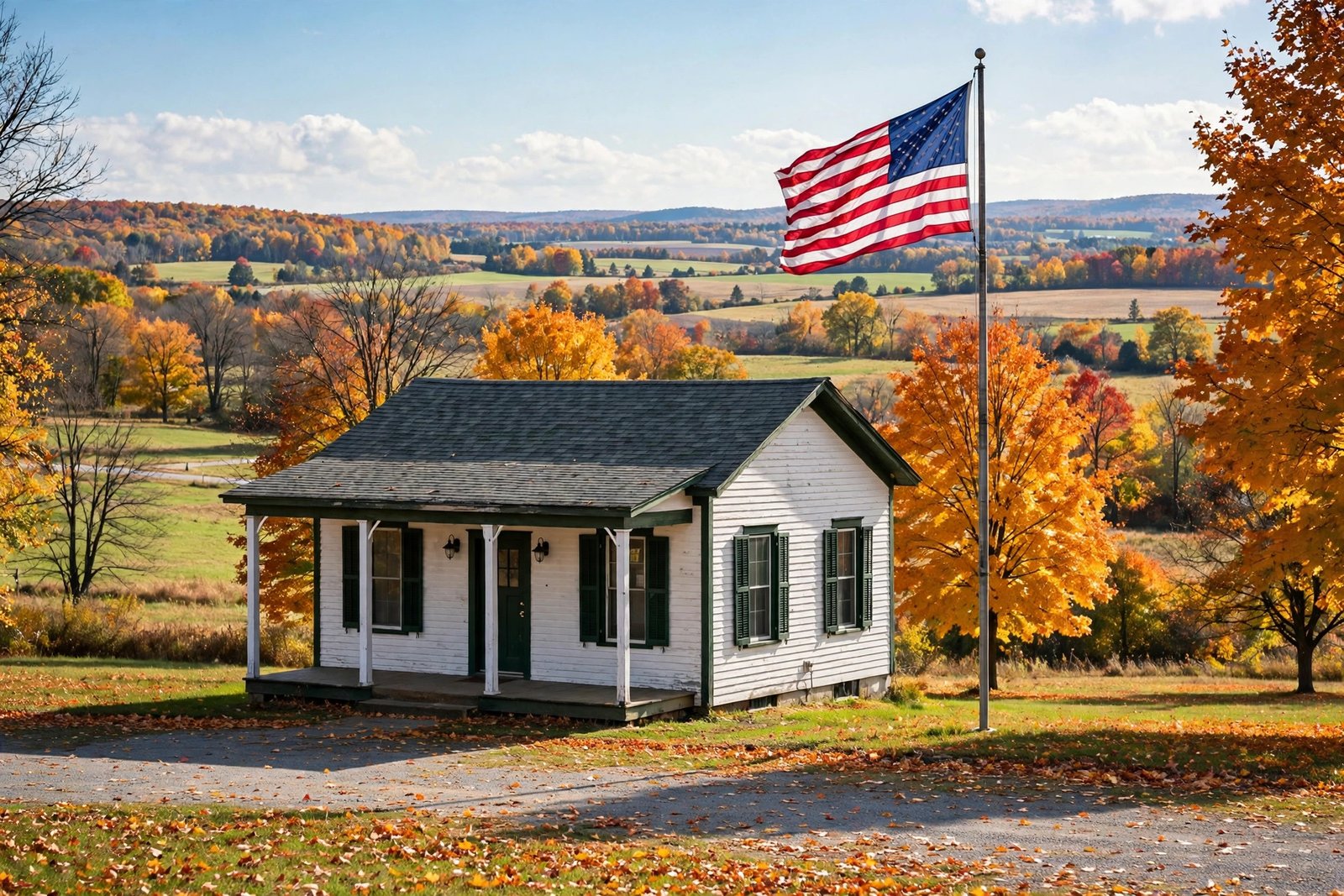
Election Day came and went yesterday, on November 3, 2026, and millions of Americans cast ballots in the midterm elections. If you stood in line at a school gym, a church hall, or a community center, you may have wondered about something simple: why Americans vote on Tuesdays. The answer is not found in the Constitution, which leaves the details of elections largely to the states. It comes from a law passed in 1845, from the rhythms of farm life in the 1800s, and from a set of practical choices that made sense for a young, spread-out nation.
Today, voting looks very different from the way it did nearly two centuries ago. Many states offer early voting in person, and many voters cast mail-in ballots weeks before Election Day. Yet the question of why Americans vote on Tuesdays still comes up every election cycle, and the Tuesday tradition has survived, and it still shapes how campaigns plan, how news outlets cover results, and how Americans think about election season. Understanding this history helps explain why a day that can feel inconvenient to modern workers is still the day the nation votes.
In this article, we trace the story from the early republic, when states voted on different days, to the uniform Election Day we know today. We explain the farming calendar, the role of Sunday worship, the horse-and-buggy journey to the polls, and the reasons the tradition has endured even as America changed around it. This article covers history, tradition, and process only, not election outcomes.
Why Americans Vote on Tuesdays: The 1845 Law
In the early years of the republic, there was no single national Election Day. The Constitution gave states the power to run elections, and each state chose its own voting day. That meant presidential elections could stretch across many days, with some states voting weeks before others. Early results from one state could influence voters in states that had not yet voted, and the long window created confusion and opportunities for mischief.
Congress addressed the problem in 1845 by passing a law that set a uniform day for choosing presidential electors: the Tuesday after the first Monday in November. The law applied to presidential elections, and over time the same Tuesday in November became the standard day for federal elections in general, including midterm elections like the one held on November 3, 2026. States still run their own elections, but they now share the same national rhythm.
The choice of November was practical. In an agricultural nation, the harvest was mostly finished by November, but harsh winter weather had not yet set in across much of the country. Farmers could travel to town to vote without abandoning crops in the field, and roads were still passable in most places. November was a window between the busy growing season and the deep cold of winter.
Farming, Horses, and the Sabbath
To understand Tuesday, it helps to picture travel in the 1840s. Most Americans lived on farms or in small towns, and the journey to the county seat to vote could take a full day by horse-drawn wagon over rough roads. A voter might need to leave home, travel to town, vote, and return, a trip that could easily stretch across two days. Lawmakers wanted a voting day that fit that journey.
Sunday was out of the question for most Americans of the time, because it was widely observed as a day of worship and rest. A Monday vote would have forced many people to travel on Sunday, which clashed with religious practice. Tuesday solved the problem: a voter could travel on Monday, vote on Tuesday, and be home in time for market day on Wednesday, when farmers sold their goods and bought supplies.
Wednesday mattered because it was often market day in rural communities. By voting on Tuesday, farmers lost as little working time as possible. They could combine the trip to town for voting with business they already needed to do. In a society where every working day counted, that efficiency mattered, and it helped make Tuesday a practical compromise rather than a random choice.
Why the First Monday Rule Matters
The law does not simply say the first Tuesday in November. It says the Tuesday after the first Monday in November, and that wording matters. If Election Day were always the first Tuesday, it could fall on November 1. Historians note two reasons lawmakers wanted to avoid that date. November 1 is All Saints Day, a holy day in the Catholic calendar, and it was also a day when merchants traditionally closed their books for the previous month, making it an inconvenient day for business.
The rule means Election Day always falls between November 2 and November 8. That narrow window keeps the election in early November, after the harvest and before winter, while avoiding the complications of the first day of the month. It is a small detail, but it shows how carefully the lawmakers of 1845 thought about the calendar, the church, and the marketplace.
For readers curious about how election season built up this year, our earlier piece on early voting surges before the US midterms 2026 explains how millions of voters cast ballots before Election Day itself. Early voting has changed the experience of election season, even though the official Tuesday date remains.
Why Americans Vote on Tuesdays in Modern America
Modern America is very different from the farm nation of 1845. Most Americans now work in offices, shops, factories, and hospitals, and many cannot easily take time off on a Tuesday. Critics of the tradition argue that a weekday vote makes participation harder, and they point to weekend voting in some other countries as an alternative. Supporters reply that the tradition brings consistency, that schools and public buildings are already set up as polling places, and that early voting and mail-in ballots now give voters far more flexibility than they had in the past.
In practice, Election Day today is the end of a longer voting season rather than a single moment. Many states open early in-person voting days or weeks ahead, and many voters receive mail-in ballots they can return by mail or drop box. Campaigns still build toward Tuesday, news coverage still focuses on election night, and results are still reported as they come in after polls close, but the Tuesday deadline now sits at the end of a much wider window.
Changing the day would also be complicated. Federal law sets the Tuesday date for presidential and congressional elections, and states have built their own calendars, polling-place arrangements, and school schedules around it. Moving Election Day to a weekend or making it a national holiday would require new legislation and coordination across fifty states, each with its own election system. That is one reason a tradition born for horse-drawn wagons has survived into the age of smartphones.
How Election Day Works Today
On Election Day, voting is run locally, even though the date is national. States and counties set polling-place hours, which vary from place to place, and local election workers staff the sites, check voters in, and help anyone who needs assistance. Voters typically cast ballots for federal offices, such as members of Congress in a midterm year, as well as state and local offices and ballot measures that depend on where they live.
The process is designed to be orderly and checkable. Voters sign in, receive a ballot, mark their choices in private, and submit the ballot for counting. After polls close, local officials count and report results, and states then certify the totals through their own procedures. Because each state runs its own system, the details differ, but the basic pattern of a shared national day with local administration has remained constant since the 1800s.
If you are new to the process, it helps to check your state or local election office website before you go. That site will list your polling place, its hours, what identification if any you should bring, and whether early or mail-in options are available where you live. Rules vary by state, so local sources are always the most reliable guide. For background on the document that frames American elections, see our guide to fascinating facts about the US Constitution.
Could Election Day Ever Move?
Ideas for changing Election Day come up regularly. Some proposals would move voting to the weekend, when more people are off work. Others would make Election Day a federal holiday, or expand early voting and mail-in voting so that the Tuesday date matters less. Still others argue for keeping Tuesday exactly as it is, pointing to tradition, stability, and the fact that early voting already solves much of the access problem.
So far, none of these proposals has replaced the Tuesday tradition at the federal level. Early voting and mail-in ballots have expanded in many states, which has softened the impact of a weekday vote without changing the official date. For now, the most likely future is evolution rather than revolution: the same Tuesday anchor, with a wider and more flexible voting window around it.
Whatever your views on the calendar, the story of why Americans vote on Tuesdays is worth knowing. A Tuesday in November was never meant to be a mystery or a trick. It was a practical answer to the problems of an agricultural society, shaped by the Sabbath, the harvest, the market, and the limits of horse-drawn travel. That it still governs elections in a nation of skyscrapers and smartphones says something about how durable American traditions can be.
If this story surprised you, share it with a friend who voted this week, and explore more of our election coverage, including our US midterm elections 2026 Election Day guide. Then tell us in the comments: did you vote early, by mail, or in person on Tuesday, and what was your polling-place experience like? Your story is part of the tradition, too.