
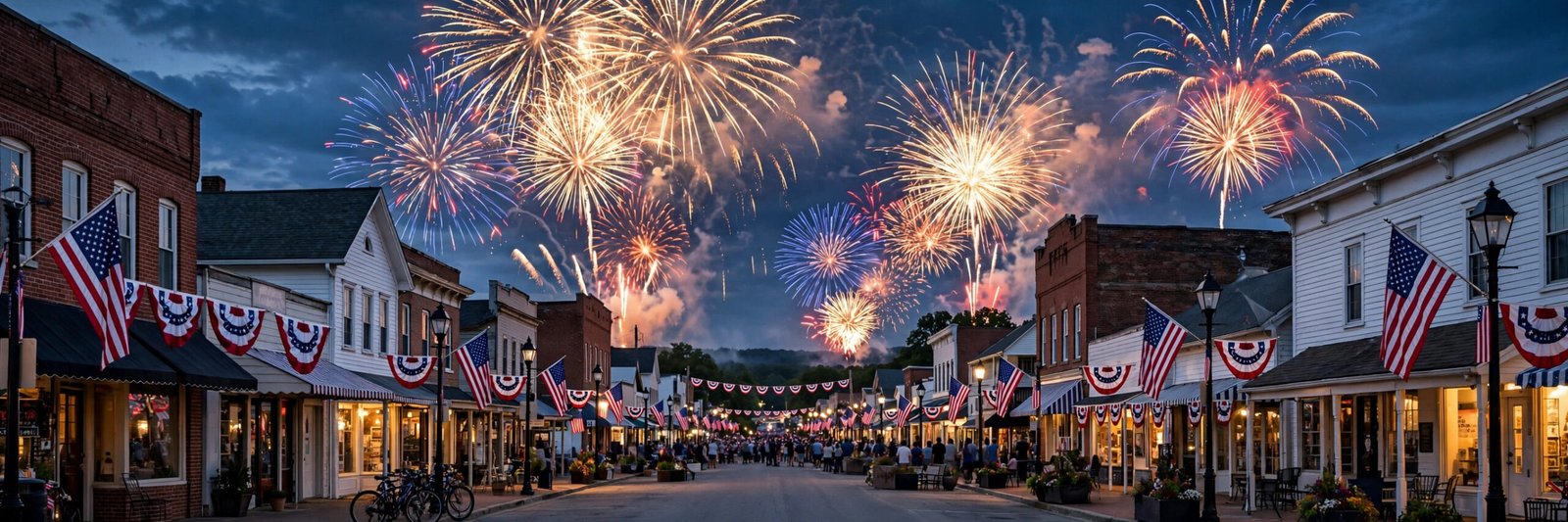
There is a moment every summer, just after sunset on the Fourth of July, when the sky above a hundred American towns erupts at once. Backyard grills are still warm, kids wave sparklers on the lawn, and for a few minutes the whole neighborhood stands together in the dark, faces turned upward. That shared hush is what Fourth of July traditions are really about. Long before the fireworks fade, these rituals remind Americans what they have in common, from coast to coast, on the nation’s birthday.
Holiday customs across America blend history, food, music, and community in ways no other celebration quite matches. Some go back to the earliest days of the republic, while others were born in the last century and spread through television and small-town pride. This guide walks through the most beloved Independence Day customs in the United States, explains where they came from, and shows how different regions put their own spin on the celebration.
The Most Beloved Holiday Customs in America
Ask Americans to name their favorite Independence Day customs and you will hear the same short list again and again: fireworks, parades, cookouts, and patriotic music. What makes these rituals endure is that they are participatory. Unlike watching a holiday on television, the Fourth of July asks you to do something: light the grill, march in the parade, raise the flag, or simply gather with the people you love.
At the center of it all is the reason for the holiday itself. On July 4, 1776, the Continental Congress adopted the Declaration of Independence, and the new nation began marking the anniversary almost immediately. The celebrations that followed were not somber state ceremonies. They were loud, public, joyful events, and that spirit has never really left American Independence Day celebrations.
Fireworks: The Heart of Fourth of July Traditions
If the Fourth of July has one defining sound, it is the crack and boom of fireworks. This tradition is also one of the oldest. In a letter to his wife Abigail on July 3, 1776, John Adams predicted that American independence would be celebrated with “illuminations from one end of this continent to the other,” and the young republic took him at his word. Philadelphia marked the first anniversary of independence in 1777 with a grand fireworks display, setting a pattern that has continued for nearly 250 years.
Today, Fourth of July fireworks range from small-town shows over a local lake to massive professional productions. One of the most famous is the Macy’s 4th of July Fireworks in New York City, among the largest annual fireworks displays in the country, launched from barges on the East River. Cities like Washington, D.C., Boston, and San Diego stage their own spectacular shows, while thousands of smaller communities host displays that draw entire counties.
Safety matters as much as spectacle. Consumer fireworks are legal in many states but restricted or banned in others, and every year fire departments remind the public to leave the big displays to professionals. Many families have made attending their town’s official show one of their most cherished holiday rituals, arriving hours early with blankets, picnic baskets, and patience.
Food and Cookouts: The Tastiest Holiday Traditions
No roundup of Independence Day customs would be complete without the food. The backyard cookout is practically a national institution on the Fourth: hamburgers and hot dogs on the grill, corn on the cob, coleslaw, potato salad, watermelon, and, for dessert, something red, white, and blue. Apple pie holds a special place of honor as the dessert most associated with the holiday.
The hot dog deserves its own paragraph in any discussion of the holiday’s food rituals. Americans eat an enormous number of hot dogs on the Fourth, and the annual hot dog eating contest held by Nathan’s Famous on Coney Island in Brooklyn has become a beloved, if quirky, televised ritual. Crowds gather on the boardwalk every July 4 to watch professional eaters compete, and the event has turned a simple food into a genuine piece of Americana.
Regional food traditions add flavor to the holiday. In New England, the clambake is a classic Fourth of July meal, with lobster, clams, and corn steamed together. In the South, slow-smoked barbecue takes center stage. In the Midwest, church picnics and potlucks fill town squares. Wherever you are, the rule is the same: the food should be simple, abundant, and shared, and if you are looking for more inspiration, our guide to American Thanksgiving traditions explores another holiday built around the table.
Parades and Small-Town Celebrations
The Fourth of July parade is one of the most charming traditions in the country, and the best ones are often the smallest. In thousands of towns, the parade route is the same main street it has always been: the high school marching band, the volunteer fire department, veterans’ groups, decorated bicycles, and floats built by local churches and businesses. Kids line the curb with bags ready for the candy the floats throw.
Bristol, Rhode Island, is home to the oldest continuously held Fourth of July celebration in the United States, a tradition that began in 1785 and continues to this day. The town’s parade draws visitors from across New England, and its weeks of patriotic events show how deeply patriotic rituals can be woven into a community’s identity.
Big cities do it bigger, with televised parades, military flyovers, and concerts on the National Mall. But ask most Americans where their favorite Fourth of July memories were made, and they will describe a small town, a familiar street, and a parade that felt like it belonged to them. That sense of ownership is what keeps the parade tradition alive generation after generation.
Flags, Anthems, and Patriotic Displays
The American flag is everywhere on the Fourth of July, and displaying it is one of the simplest and most widespread holiday traditions. Homes, porches, storefronts, and parade routes are draped in red, white, and blue. Flag etiquette matters to many Americans: the flag should be raised briskly, lowered ceremoniously, illuminated if flown at night, and never allowed to touch the ground.
Music is just as central. “The Star-Spangled Banner,” “America the Beautiful,” “God Bless America,” and “Yankee Doodle” are the soundtrack of the day, played by marching bands, sung by crowds, and performed at every major ceremony. Many towns host concerts in the park on the evening of the Fourth, ending just as the fireworks begin. To learn more about the symbol at the center of it all, see our article on the history of the American flag.
Reading the Declaration of Independence aloud is a quieter tradition that has seen a revival in recent years. Some towns hold public readings on the courthouse steps, while families read the famous opening lines at home. It is a powerful reminder that behind the cookouts and fireworks, the holiday honors a revolutionary idea: that ordinary people can govern themselves.
How Fourth of July Traditions Differ Across America
One of the joys of the holiday is how its customs change from region to region while keeping the same patriotic heart. In New England, the holiday often centers on historic town commons, colonial-era reenactments, and harbor fireworks reflected on the water. The South brings its legendary hospitality: all-day barbecues, sweet tea, and church homecomings that turn the Fourth into a family reunion.
In the Midwest, the Fourth of July is the peak of summer festival season, with county fairs, tractor pulls, and small-town carnivals running alongside the parades. Out West, beach parties, lake gatherings, and desert cookouts define the day, and in places like Alaska, where the sun barely sets in early July, celebrations can stretch late into the bright northern night.
The diversity of these celebrations is itself an American tradition. The country has never had a single official way to celebrate the Fourth, and that freedom to make the holiday your own is part of what the day is about. Whether your family’s tradition is a quiet backyard dinner or a front-row seat at the biggest show in the state, it counts.
Starting Your Own Family Traditions
Traditions do not have to be old to be meaningful. Many families build their own holiday rituals one summer at a time, and the best ones are often the simplest. Here are a few ideas that families across America swear by:
- Host a neighborhood potluck where every family brings a dish from their heritage, turning the cookout into a celebration of what America is.
- Start a family “freedom walk” each Fourth of July morning, ending at a local memorial or veterans’ monument.
- Read the Declaration of Independence aloud before dinner, even just the first two paragraphs.
- Let the kids decorate bikes, wagons, or scooters for a driveway parade before the town’s official one.
- End the night with sparklers and a round of everyone naming one thing they love about the country.
The key is repetition. Do it two or three years in a row and it stops being an idea and starts being a tradition. Your kids will remember it long after they forget what was on the grill, and one day they will carry it into their own homes.
Conclusion: Keep the Tradition Alive
These traditions endure because they do something no speech or textbook can quite do: they turn love of country into something you can taste, hear, and feel. The fireworks that John Adams imagined in 1776 still light up the sky. The parades still roll down the same main streets. The grills still fire up in backyards from Maine to Hawaii. And every year, new families add their own chapter to the story.
This Fourth of July, pick one tradition to keep and one to start. Raise the flag, fire up the grill, find your spot for the fireworks, and take a moment to remember why the day matters. Then tell us about your own fourth of july traditions in the comments, and explore more stories of American life here on Beauty of USA, from the best small towns in America to the holidays that bring us together.