
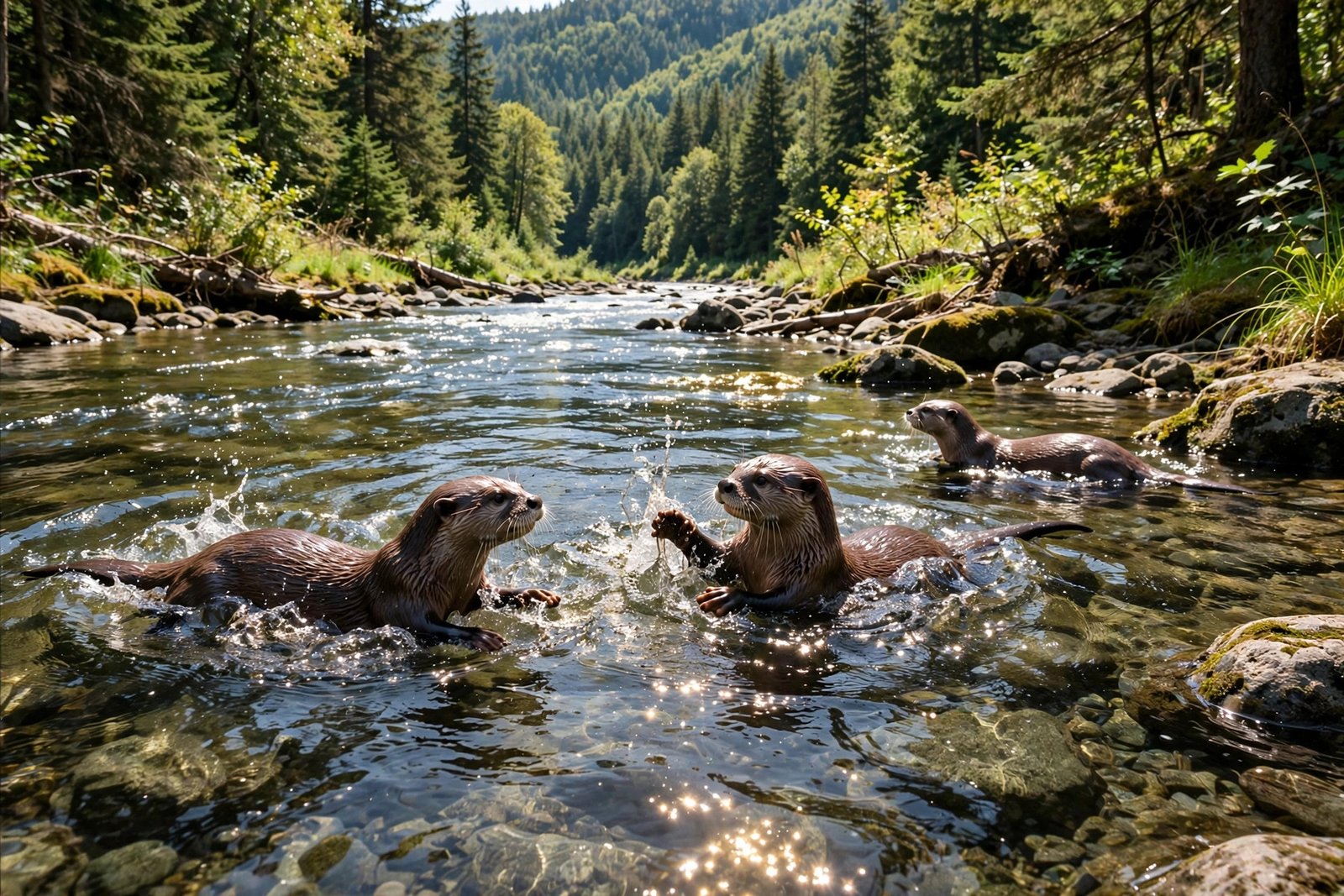
There is nothing quite like the moment you spot an otter in the wild. One second the water is empty, and the next a whiskered face pops up, looks straight at you, and vanishes again with a flick of its tail. If you have ever wondered where to see otters in USA waters, the good news is that you have plenty of choices. From sea otters floating in California kelp beds to river otters sliding down snowy banks in Minnesota, otters live in an impressive range of American habitats, and many of the best viewing spots are easy to reach.
The United States is home to two main kinds of otters: the sea otter of the Pacific coast and the North American river otter, which lives across much of the country. Sea otters spend nearly their entire lives in the ocean, floating on their backs, cracking shellfish on their bellies, and wrapping themselves in kelp so they do not drift away while they sleep. River otters are smaller, sleeker, and more widespread, living in rivers, lakes, marshes, and coastal estuaries. Both are playful, curious, and surprisingly good at hiding, which is why knowing where to look makes all the difference.
Where to See Otters in USA: Sea Otters on the Pacific Coast
The most reliable place to see wild sea otters in the United States is the central California coast. The southern sea otter population lives along the shoreline from roughly San Mateo County down to Santa Barbara County, with Monterey Bay as the heart of its range. In Monterey, you can often spot otters from shore at places like Point Lobos State Natural Reserve, Asilomar State Beach in Pacific Grove, and the rocky shoreline near Cannery Row. They float just beyond the surf, sometimes in groups called rafts, grooming their fur, eating, or resting in the kelp.
Another superb California spot is Elkhorn Slough, a tidal estuary near Moss Landing, just north of Monterey. Kayak tours and small boat trips on the slough regularly pass sea otters, along with harbor seals, sea lions, and dozens of bird species. Because the water is calm and sheltered, Elkhorn Slough is one of the best places in the country for close, relaxed otter watching. Farther south, Morro Bay also hosts sea otters, often visible from the waterfront or from a kayak near the harbor entrance.
Alaska is the other great sea otter destination, and it hosts the largest sea otter populations in the United States. In Kenai Fjords National Park near Seward, boat tours regularly spot sea otters floating among icebergs and kelp in Resurrection Bay. Glacier Bay National Park, Prince William Sound, and the Kodiak Archipelago also support large numbers of sea otters. Alaska’s otters are northern sea otters, a different population from California’s southern sea otters, and they thrive in cold, productive northern waters. If you are planning an Alaska trip, a day cruise is one of the most reliable ways to see them, along with whales, puffins, and sea lions.
Washington State offers a third Pacific option, though sightings are less predictable than in California or Alaska. Sea otters have returned to parts of the Olympic Peninsula coast, including areas around La Push and the outer coast of Olympic National Park. These animals are part of a population reintroduced in the late 1960s and early 1970s, and their numbers remain modest compared with Alaska. Still, lucky coastal hikers sometimes spot them from headlands, especially in calm weather. For a different kind of coastal wildlife experience, see where to see manatees in the USA, another gentle mammal that rewards patient watchers.
Where to See Otters in USA: River Otters Across the Country
North American river otters live in far more places than sea otters, but they are harder to predict. They are active, wide-ranging animals that travel along rivers and lakeshores, and they often move on before you notice them. The best strategy is to visit places with healthy waterways, quiet mornings, and a bit of patience. Dawn and dusk are prime times, when otters hunt and play along the banks.
Florida is one of the best states for river otter sightings. River otters live throughout the state’s rivers, springs, and wetlands, including the Everglades, the St. Johns River system, and the clear spring runs of central Florida. Blue Spring State Park, famous for its winter manatees, also hosts otters, and the spring-fed rivers of the region are excellent otter habitat. Kayaking a quiet Florida river at sunrise gives you a real chance of meeting an otter family, and you may also spot alligators, herons, and turtles along the way.
In the Pacific Northwest and the Rocky Mountains, river otters live in many rivers and lakes. Yellowstone National Park is a classic spot: otters hunt in the Yellowstone River, the Madison River, and lakes such as Yellowstone Lake, especially in spring and early summer. Grand Teton National Park, just to the south, is another strong possibility, with otters in the Snake River and its side channels. In Oregon and Washington, otters live in rivers and estuaries from the coast to the Cascades, and quiet riverside trails at dawn are worth trying.
The Midwest and East also offer good river otter watching. In Minnesota, the Boundary Waters Canoe Area Wilderness and Voyageurs National Park are prime otter country, with otters living in lakes and rivers throughout the region. Canoeists in the Boundary Waters often see otters, especially on calm mornings. In the Southeast, the Okefenokee Swamp on the Georgia-Florida border and the rivers of the Great Smoky Mountains region support otters too. Along the East Coast, otters live in coastal marshes and rivers from New England to the Chesapeake Bay, and places like Blackwater National Wildlife Refuge in Maryland are worth a quiet visit.
Even in the Northeast, river otters are making a comeback in places where water quality has improved. Lakes and rivers in New York, Vermont, and New Hampshire now support otters, and patient watchers on quiet lakes sometimes catch them fishing near shore. If you enjoy combining wildlife trips, pair an otter outing with a birding stop and read where to see bald eagles, since eagles and otters often share the same healthy rivers and lakes.
Best Times and Tips for Otter Watching
Timing matters more than luck when it comes to otters. Here are the tips that give you the best chance:
- Go early or late. Otters are most active at dawn and dusk, and quiet water at those hours makes them easier to spot.
- Choose calm water. On still mornings, ripples, bubbles, and a small dark head breaking the surface stand out clearly.
- Be quiet and still. Sit on a bank, a dock, or in a kayak, and wait. Otters notice noise and movement quickly.
- Scan the edges. Otters hunt along shorelines, around fallen trees, and near rocky points where fish gather.
- Look for signs. Otter tracks, slides on muddy banks, and piles of fish scales or shells can tell you otters use an area.
- Bring binoculars. A good pair helps you watch otters without getting close enough to disturb them.
- Visit in spring and summer. Otter families with pups are often more visible in warmer months, though otters are active year-round.
Guided tours can help enormously, especially for sea otters. Kayak guides in Elkhorn Slough, Monterey Bay, and Morro Bay know where otters rest and feed, and boat captains in Alaska know the bays where otters gather. A guide also helps you keep a respectful distance while still getting a great view. Local knowledge is often the difference between a quiet morning and a real sighting, which is why so many travelers research where to see otters in USA destinations before they pack their binoculars.
Otter Etiquette: Watching Without Disturbing Wildlife
Otters are wild animals, and the best otter watching puts their welfare first. Never feed otters, chase them, or try to touch them. Sea otters in particular depend on their dense fur to stay warm, and disturbance can force them to waste precious energy. Keep a good distance, at least fifty yards from sea otters where possible, and let them come and go on their own terms. If an otter changes its behavior because of you, such as diving repeatedly or moving away, you are too close.
The same rules apply to river otters. Do not block a river channel with your kayak, do not follow a family with pups, and avoid loud noises near dens or haul-out spots. Use a zoom lens or binoculars instead of approaching for a photo. Responsible watching protects otters and keeps these places enjoyable for other visitors too. It also keeps you safe: otters are strong, wild animals with sharp teeth, and they should always be admired from a distance.
Conservation is part of the otter story. Sea otters were hunted nearly to extinction for their fur in the 1700s and 1800s, and their recovery on the Pacific coast is one of America’s great wildlife comeback stories, though the California population remains small and protected. River otters also declined in many areas due to pollution, habitat loss, and trapping, but cleaner water and reintroduction programs have helped them return to many states. When you visit otter habitats, you are seeing the results of decades of protection work, and your respectful visit helps support the parks, refuges, and tour operators that keep that work going.
Top Otter-Watching Destinations at a Glance
If you are planning a trip around where to see otters in USA locations, these destinations offer the best combination of reliable sightings, beautiful scenery, and easy access:
- Monterey Bay, California, for shore-based sea otter viewing at Point Lobos and Asilomar.
- Elkhorn Slough, California, for calm-water kayak trips among sea otters.
- Morro Bay, California, for harbor-side sea otter sightings.
- Kenai Fjords National Park, Alaska, for boat-based sea otter viewing among glaciers and fjords.
- Glacier Bay and Prince William Sound, Alaska, for remote, abundant sea otter habitat.
- Yellowstone and Grand Teton National Parks, for river otters in mountain rivers and lakes.
- Boundary Waters and Voyageurs National Park, Minnesota, for wilderness river otter encounters by canoe.
- Everglades and central Florida springs, for river otters in warm, wildlife-rich wetlands.
- Olympic Peninsula coast, Washington, for a chance at sea otters in wild Pacific scenery.
Plan Your Otter Adventure
The joy of otter watching is that it fits any kind of trip. You can build a whole vacation around Alaska’s fjords, add a morning kayak trip to a California road trip, or simply spend a quiet dawn hour on a local river near home. Wherever you go, go early, go quietly, and bring patience. Otters reward watchers who slow down, and the moment a sleek head pops up beside your kayak or a raft of sea otters drifts past in the kelp is one you will not forget.
So pick a destination from this guide, check local conditions, book a guide if you want the best odds, and head to the water. Whether you meet a sea otter floating in the Pacific or a river otter sliding down a snowy bank, you will understand why these playful animals capture so many hearts. The answer to where to see otters in USA waters is wonderfully simple: find clean, quiet water, look at dawn and dusk, and keep watching. The otters are out there, and they are worth the wait.