
Every year, tens of millions of people pour into America’s most famous national parks, and the crowds at places like the Grand Canyon and Yellowstone keep growing. But there is another side to the National Park System: wild, spectacular places that see only a trickle of visitors. The least visited national parks USA are not lesser parks. In many cases, they are harder to reach, wilder, and more rewarding than their famous siblings.
Why do some parks stay quiet while others overflow? Usually it comes down to access. The least visited national parks in the USA tend to be far from major airports, reachable only by boat or small plane, or located in remote corners of Alaska and the Pacific. That remoteness is exactly what makes them special. When you finally arrive, you get something increasingly rare in American travel: true solitude in a landscape that feels untouched.
This guide to America’s least visited national parks will take you from Arctic tundra to tropical islands, from underground caves to thousand-year-old trees. These ten parks reward the extra effort many times over, and visiting them means experiencing America at its most wild and authentic. If you have already checked off the famous parks on our list of the best national parks in the USA to visit, these quiet giants should be next.
Why Visit the least visited national parks USA?
There is a particular magic to having a national park nearly to yourself. In the least visited national parks USA, you can watch wildlife without a crowd of tripods, hike trails where your footprints are the only fresh ones, and camp under some of the darkest night skies in the country. The experience feels personal in a way that a packed overlook never can.
These parks also protect some of the most extraordinary ecosystems in America: Arctic wilderness with no roads or trails, tropical coral reefs, ancient bristlecone pine forests, and island worlds that evolved in isolation. Many of them are places where nature still runs the show completely, and visiting them is a reminder of what the continent looked like before highways and hotels.
A word on planning: remoteness has a price. Trips to these parks often require advance reservations for ferries or bush planes, careful attention to seasonal access, and self-sufficiency in the backcountry. The effort is part of the adventure, and this guide will help you understand what each park demands and what it gives back.
America’s 10 Least Visited National Parks
These ten parks consistently rank among the least visited national parks in the USA, measured by annual visitors. Each one is a world unto itself.
1. Gates of the Arctic National Park, Alaska
Gates of the Arctic is the definition of wilderness. Located entirely above the Arctic Circle in Alaska’s Brooks Range, it is one of the largest national parks in the country and has no roads, no trails, no campgrounds, and no visitor facilities of any kind. The park is named for two mountains, Frigid Crags and Boreal Mountain, that frame the Koyukuk River valley like a gateway.
Getting here is an expedition in itself. Most visitors fly from Fairbanks to the small communities of Bettles or Anaktuvuk Pass, then take a bush plane into the backcountry. Once inside, you are on your own in true Arctic wilderness, home to caribou herds, grizzly bears, wolves, and Dall sheep. There are no rangers patrolling the backcountry and no rescue infrastructure, so this park is for experienced wilderness travelers only. For those with the skills, it offers one of the last truly wild experiences left in America: millions of acres of mountains, tundra, and rivers with no trace of the modern world.
2. Kobuk Valley National Park, Alaska
Kobuk Valley holds one of the strangest landscapes in the National Park System: the Great Kobuk Sand Dunes, a vast field of golden dunes rising up to a hundred feet high in the middle of Arctic Alaska. These dunes were formed by grinding glaciers and are still slowly migrating across the tundra today, surrounded by boreal forest and framed by distant mountains.
Like Gates of the Arctic, Kobuk Valley has no roads or facilities and is reached by bush plane, usually from the town of Kotzebue. The park is also famous as a migration corridor for the Western Arctic caribou herd, one of the largest caribou herds in the world, which crosses the Kobuk River in its seasonal movements. Visitors come for backcountry camping, river floating, and the surreal experience of climbing sand dunes while looking out over Arctic tundra. Onion Portage, an archaeological site within the park, has evidence of human activity stretching back thousands of years.
3. Isle Royale National Park, Michigan
Isle Royale is a rugged island wilderness in the middle of Lake Superior, closer to Canada than to the Michigan mainland. The park is accessible only by ferry, seaplane, or private boat, and it closes completely from November through mid-April, which naturally limits its visitor numbers. Those who make the journey find a landscape of dense forest, inland lakes, and rocky shoreline that feels like the far north.
The island is famous for its long-running study of the relationship between wolves and moose, one of the longest predator-prey studies in the world. Hiking is the main activity, with trails like the Greenstone Ridge Trail crossing the length of the island past old copper mines and scenic overlooks. Backpackers should be prepared for unpredictable Lake Superior weather and should reserve campsites and ferry spots well ahead. The reward is a quiet, moody wilderness where loons call across misty lakes at dawn.
4. Dry Tortugas National Park, Florida
Seventy miles west of Key West, surrounded by open ocean, Dry Tortugas National Park protects a cluster of small islands, coral reefs, and the massive brick fortress of Fort Jefferson. The fort is one of the largest brick structures in the Americas, built in the 1800s to guard the shipping lanes of the Gulf, and it was never fully completed. Its hexagonal walls rise straight out of turquoise water in one of the most striking scenes in the park system.
The park is reached only by ferry, seaplane, or private boat, and most visitors come for the day. Snorkeling here is exceptional, with coral heads, sea turtles, and tropical fish in clear shallow water right off the beach. Birders come for the spring migration, when exhausted songbirds land on the islands after crossing the Gulf. Camping is available on Garden Key for those who want sunset and sunrise without the day crowds, but you must bring everything, including fresh water, since the islands have no fresh water source.
5. Great Basin National Park, Nevada
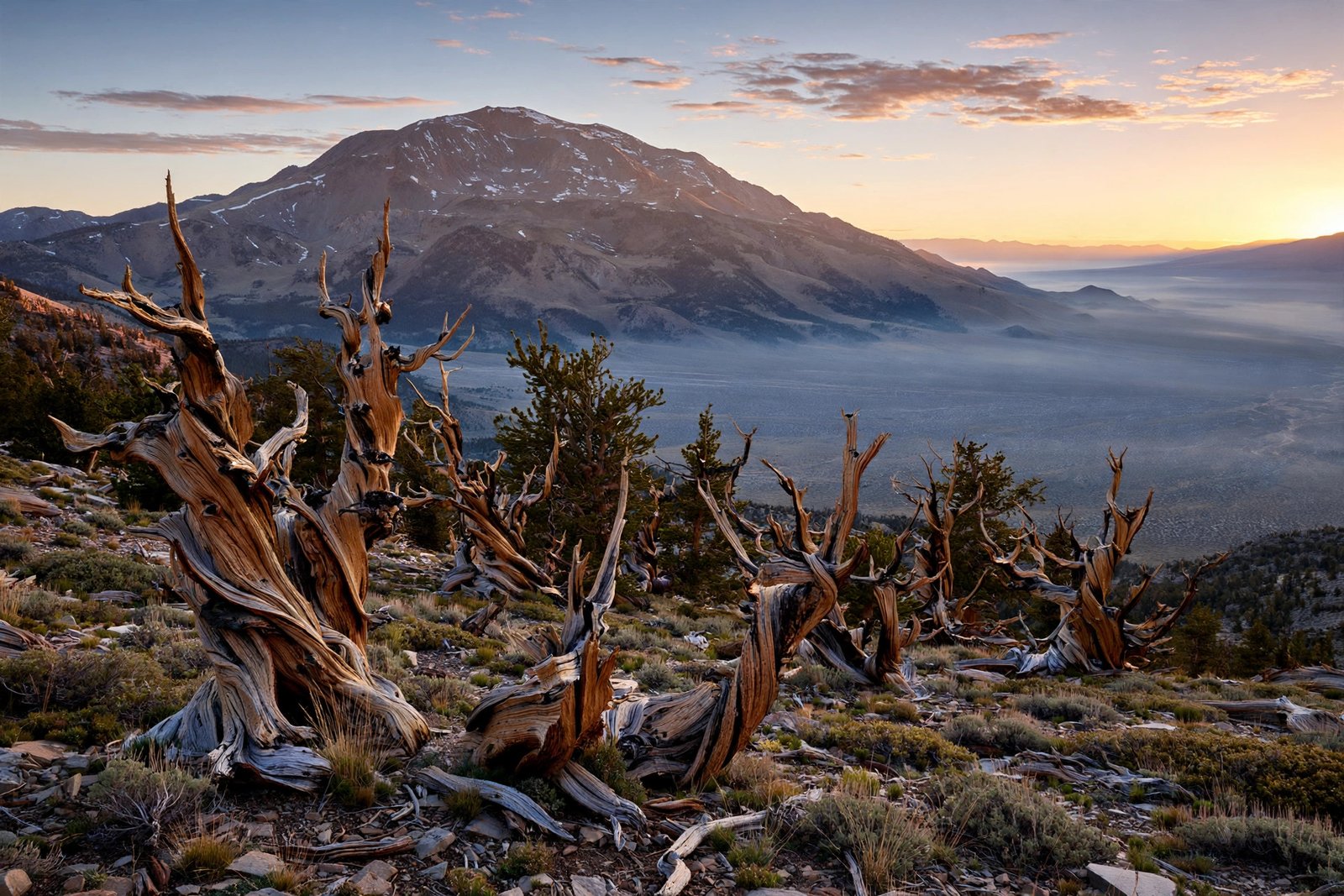
Great Basin is one of the most underrated parks in the entire system, a mountain island rising out of the Nevada desert. The park’s centerpiece is Wheeler Peak, a 13,000-foot summit with a permanent rock glacier, one of the southernmost glaciers in the country. On the mountain’s slopes grow ancient bristlecone pines, some of the oldest living trees on Earth, twisted into sculptural shapes by thousands of years of wind.
Below the peaks, Lehman Caves offers a completely different world: a decorated limestone cavern full of stalactites, stalagmites, and rare shield formations, visited only on ranger-guided tours. The park is also a designated International Dark Sky Park, and its stargazing programs are among the best in the country. Despite all of this, Great Basin sees a fraction of the visitors of better-known mountain parks, partly because it sits far from major cities along the lonely highways of eastern Nevada. If you love beautiful mountain lakes and alpine scenery without the crowds, this park is a revelation.
6. North Cascades National Park, Washington
North Cascades is often called the American Alps, and the nickname fits. This is a land of jagged granite peaks, more than 300 glaciers, deep forested valleys, and turquoise lakes fed by glacial melt. It is one of the wildest mountain landscapes in the lower 48 states, and yet it remains one of the least visited national parks in the USA, partly because it has no grand lodge, no scenic drive through its heart, and trailheads that demand real effort.
The park complex includes Ross Lake and Lake Chelan National Recreation Areas alongside the national park itself, and together they offer everything from roadside viewpoints along Highway 20 to serious backcountry mountaineering. Cascade Pass is the most accessible trailhead, leading to spectacular views of peaks and glaciers within a few miles. Experienced hikers can tackle multi-day routes through the Picket Range or along the Pacific Crest Trail, which passes through the park. Come prepared for rugged conditions and rapidly changing mountain weather.
7. Channel Islands National Park, California
Off the coast of Southern California lies an archipelago that feels like another planet. Channel Islands National Park protects five islands where unique species evolved in isolation, including the island fox, a tiny fox found nowhere else on Earth. The islands have no services, no cars, and in most places no water, which keeps visitation low despite their proximity to Los Angeles.
Each island has its own character. Anacapa is closest to the mainland and makes an easy day trip. Santa Cruz, the largest island, has sea caves, rugged coastline, and excellent hiking. Santa Rosa offers windswept beaches and rare Torrey pines. Access is by park-authorized boat concessionaires from Ventura or by private boat, and day trips should be booked in advance. Kayaking through the sea caves of Santa Cruz Island is one of the great California adventures, and on the boat ride over you may see dolphins, whales, and sea lions.
8. National Park of American Samoa
The only national park in the Southern Hemisphere, the National Park of American Samoa protects tropical rainforest, coral reefs, and white-sand beaches across three islands in the South Pacific. Getting here requires a long journey: most visitors fly through Honolulu to Pago Pago on the island of Tutuila, and the remoteness of the destination keeps visitor numbers among the lowest in the system.
Ofu Island, reached by a short flight from Tutuila, is home to one of the most beautiful beaches in the Pacific, with coral gardens just offshore that are perfect for snorkeling. On Tutuila, trails climb through lush rainforest to panoramic viewpoints over Pago Pago Harbor. The park is also a living cultural landscape, leased from local villages, and visitors are encouraged to learn about Samoan traditions and customs. This is a park for travelers who want their national park experience to include coral reefs, tropical birds, and genuine cultural connection.
9. Pinnacles National Park, California
Pinnacles was born from an ancient volcano: the park’s spires and crags are the eroded remains of a volcano that formed millions of years ago and was split in two by the San Andreas Fault, with half the volcano now sitting far to the south. The result is a wonderland of towering rock formations, narrow passages, and talus caves formed by massive boulders wedged into narrow canyons.
The caves at Pinnacles are a highlight. The Balconies and Bear Gulch caves can be explored with a flashlight, winding through dark passages between fallen boulders. Above ground, the park’s cliffs are home to California condors, the enormous birds brought back from the edge of extinction, and seeing one soar over the High Peaks is unforgettable. Spring brings wildflower displays, while summer can be extremely hot, so plan accordingly. Despite being within a few hours of the Bay Area, Pinnacles remains far quieter than California’s famous parks, and it pairs well with a visit to the underrated mountain towns of the central coast ranges.
10. Congaree National Park, South Carolina
Congaree protects the largest remaining tract of old-growth bottomland hardwood forest in the United States, a cathedral of towering trees in the floodplain of the Congaree River. Some of the park’s loblolly pines and bald cypresses are among the tallest trees in the eastern United States, and the forest canopy supports remarkable biodiversity, from river otters to pileated woodpeckers.
The best way to experience Congaree is on foot along the boardwalk loop, an easy elevated trail that winds through the heart of the old-growth forest, or by paddling the marked canoe trail through the floodplain. In late spring and early summer, the park hosts a famous display of synchronous fireflies, when thousands of fireflies flash in unison in the dark forest. The park floods periodically, which is a natural part of its ecology, so check conditions before visiting. Congaree is an easy drive from Columbia, South Carolina, yet it remains one of the quietest parks in the East.
How to Plan a Trip to the least visited national parks USA
Visiting the least visited national parks in the USA takes more planning than a typical park trip, but the logistics are part of what keeps these places wild. A few practical tips will make your journey smoother.
- Book transportation early. Ferries to Isle Royale and Dry Tortugas, bush planes to Gates of the Arctic and Kobuk Valley, and boat trips to the Channel Islands all have limited capacity and sell out in peak season. Reserve months ahead.
- Respect the seasons. Isle Royale closes in winter. Alaska parks are realistically accessible only from June through September. Desert parks like Pinnacles are best in spring and fall. Check each park’s website for current conditions.
- Be self-sufficient. Many of these parks have no stores, no restaurants, and no cell service. Bring all food, water, and emergency supplies, and carry a satellite communicator in true backcountry.
- Learn the cultural context. Parks like American Samoa and Kobuk Valley sit within living Indigenous cultures. Read up before you go, respect local customs, and support local guides and businesses.
- Leave no trace. Fragile ecosystems like Arctic tundra, island habitats, and old-growth forest recover slowly from damage. Stay on trails, pack out everything, and camp only in designated areas.
Why These Quiet Parks Deserve a Spot on Your List
The least visited national parks USA prove that the best travel experiences are not always the most popular ones. In these ten parks you can walk on Arctic sand dunes, snorkel a Civil War-era fort, sleep on a Lake Superior island, and stand beneath trees that were seedlings when Columbus sailed, often with hardly another visitor in sight.
So here is the challenge: pick one of these parks and start planning. Whether it is the tropical reefs of American Samoa, the dark skies of Great Basin, or the true wilderness of Gates of the Arctic, your reward will be an America that few travelers ever see. Share this guide with a friend who loves the road less traveled, and start checking off the quiet side of the National Park System. For a different kind of escape, our guide to hidden beaches in the USA offers more crowd-free inspiration.