
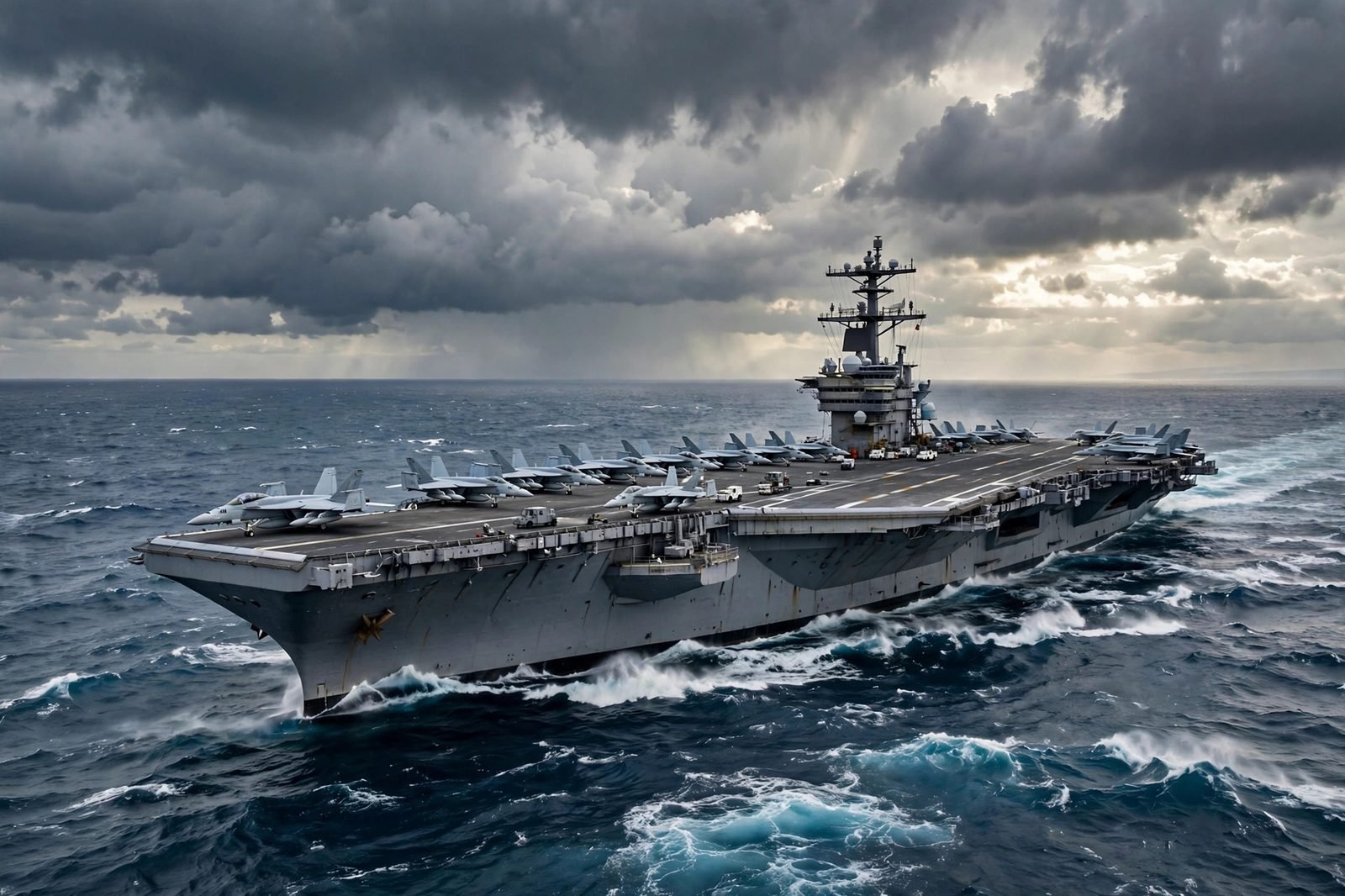
Few symbols of American strength are as recognizable as US Navy aircraft carriers. When one of these giant ships appears on the horizon, it sends a message that needs no translation: the United States can bring airpower, aid, and a full floating base to almost any coastline on Earth. For many Americans, the carrier is more than a warship. It is a reminder of industrial skill, disciplined crews, and a Navy that has operated across the world’s oceans for generations. This article explains what these ships do, how they work, why they matter, and what life is like for the thousands of sailors who serve aboard them.
The idea behind the carrier is simple and powerful. Instead of relying only on airfields on land, a carrier brings its own runway to sea. Jets can take off and land on its flight deck, which means American airpower is not limited to places where the United States already has bases. That flexibility is why carriers are often among the first American assets to arrive when a crisis unfolds, whether the mission is deterrence, a show of support for allies, or help after a natural disaster.
What Makes US Navy Aircraft Carriers So Powerful
The power of a carrier starts with its flight deck. From that long, flat deck, fighter jets and support aircraft can launch and recover around the clock. A carrier air wing typically includes fighters, early-warning aircraft, helicopters, and support planes that work together as a team. Fighters can patrol the skies, escort other aircraft, and respond quickly to changing situations. Early-warning aircraft extend what the ship can see far beyond the horizon. Helicopters move people and supplies, rescue crews at sea, and support missions close to shore. Together, this mix gives a carrier group options that few other military tools can match.
Another source of strength is endurance. Most American carriers are nuclear-powered, which means they can steam for long periods without refueling. That endurance lets them stay on station, cross oceans, and respond to distant events without waiting for fuel. US Navy aircraft carriers also carry large stores of food, spare parts, and aviation fuel, along with repair shops, medical facilities, and communications centers. In practical terms, each carrier is a small, self-contained city that can keep operating far from home for weeks at a time.
The ships are also built to work as part of a team. A carrier rarely sails alone. It usually travels with cruisers, destroyers, submarines, and supply ships that protect it, extend its sensors, and keep it supplied. This group, often called a carrier strike group, layers defenses in the air, on the surface, and under the sea. Each ship has a role, and together they make the whole group far more capable than any single vessel could be on its own.
- A mobile airfield: the flight deck lets jets operate far from land-based runways.
- A complete air wing: fighters, surveillance aircraft, and helicopters work as one team.
- Long endurance: nuclear power and large stores keep the ship at sea for extended periods.
- Layered protection: escort ships, submarines, and aircraft guard the group.
- Flexible missions: the same ship can deter conflict, reassure allies, or deliver disaster relief.
How US Navy Aircraft Carriers Project Power Around the World
To project power means to be able to act, and to be seen acting, in a place that matters. US Navy aircraft carriers do this in two ways: by what they can do, and by what their presence signals. When a carrier group arrives in a region, allies see a visible commitment and potential adversaries see a credible capability. That presence alone can calm tensions, discourage aggression, and give diplomats more room to negotiate. It is one of the clearest examples of how military strength can support peaceful outcomes without a shot being fired.
On a practical level, US Navy aircraft carriers give American leaders choices. Because the ship can move, it is not tied to one country or one base. If a situation changes, the carrier can reposition. If an ally needs reassurance, the ship can visit a port and conduct joint exercises. If a crisis grows, the air wing can fly patrols, gather information, and show that the United States is paying attention. This mobility is a major reason carriers remain central to American strategy even as other technologies change.
Carriers also play a quiet but important role in keeping sea lanes open. Much of the world’s trade travels by ship, and safe oceans matter to every American family that buys goods from abroad. By patrolling key waters, exercising with partner navies, and maintaining a steady presence, carrier groups help support the open, stable seas that global commerce depends on. Readers who want the bigger picture can explore why the US military is considered the strongest in the world and how sea power fits into that story.
Life Aboard a Floating City
Life aboard a carrier is busy, structured, and unlike almost any other job. Thousands of sailors live and work on the ship, and nearly every hour is planned. Flight deck crews wear color-coded shirts so everyone can tell at a glance who handles aircraft, fuel, ordnance, safety, or medical support. Below deck, cooks prepare thousands of meals a day, engineers keep power and water running, and technicians maintain aircraft, radars, and communications gear. The ship has its own post office, gym, medical clinic, and places of worship, because for the crew, the carrier is home for months at a time.
The flight deck is the most demanding workplace at sea. Jets land at high speed and are stopped by arresting wires, while other aircraft are launched by catapults. The noise is intense, the pace is fast, and safety rules are strict. Every movement is choreographed, and every crew member has a specific job. New sailors learn quickly that teamwork is not a slogan on a carrier. It is the only way a deck that busy can operate safely day after day.
Below the flight deck, the rhythm is different but no less intense. Sailors work in shifts so the ship never sleeps. Some stand watch on the bridge or in the combat information center, tracking contacts and keeping the ship safe. Others repair aircraft in the hangar bay, a vast space that feels like an indoor airport. Still others handle laundry, supplies, and paperwork that keep a small city running. The work is hard, the hours are long, and the pride sailors feel in keeping the ship moving is real and easy to understand.
The Air Wing: The Carrier’s Reaching Arm
If the carrier is the base, the air wing is its reaching arm. The air wing is the collection of squadrons and detachments that fly from the ship, and it is what turns a large hull into a complete military capability. Fighter squadrons provide air defense and strike capability. Early-warning squadrons act as eyes in the sky, tracking aircraft and ships over a wide area. Helicopter squadrons handle rescue, transport, and patrol duties. Electronic warfare and logistics aircraft fill in gaps that keep the whole team connected and supplied.
What makes the air wing special is how fast it can adapt. Missions can change from one day to the next, and the mix of aircraft, weapons, and fuel can be adjusted to match. One day the focus may be training with an allied navy. The next day it may be patrolling a busy strait. The air wing trains constantly for these shifts, practicing takeoffs and landings, refueling, and coordinated flights until the routines become second nature. That training is a big part of why carrier operations look so smooth from the outside, even though they are among the most complex tasks in all of military life.
- Fighters: patrol the skies and respond quickly to threats or tasking.
- Early-warning aircraft: extend the group’s view far beyond the ship’s own radar.
- Helicopters: rescue, transport, and patrol close to the ship and the shore.
- Support aircraft: handle logistics, communications, and electronic missions.
How Carriers Are Built and Maintained
Building a carrier is one of the most ambitious projects American industry undertakes. The ship is assembled from huge sections, each built with care and then joined together in a dry dock. Thousands of workers, engineers, and designers contribute, from steelworkers and electricians to software specialists and test pilots. The process takes years, and every system must be tested before the ship joins the fleet. The result is a vessel designed to serve for decades, with regular maintenance periods that keep it modern and ready.
Maintenance matters as much as construction. Carriers go through planned repair periods where equipment is inspected, upgraded, and replaced. Flight deck surfaces are renewed, radars are updated, and living spaces are improved. Aircraft are also maintained on a strict schedule, with inspections before and after every flight. This steady cycle of care is why a carrier can remain a front-line asset for a long service life, even as aircraft and threats evolve around it.
Modern carriers also reflect lessons learned over decades of operations. The two best-known classes in recent American service are the Nimitz class and the newer Ford class. Both are large, nuclear-powered designs built around the same core idea: a big flight deck, a powerful air wing, and the ability to operate far from home. The newer class introduces updated systems and design changes meant to improve sortie rates, reduce crew workload, and make maintenance easier. For readers interested in how American innovation shapes other fields, American inventions that changed the world shows the same spirit of engineering ambition at work on land, in the air, and in space.
Why Carriers Still Matter in a Changing World
Every few years, someone asks whether carriers are still relevant. New missiles, drones, and satellites have changed warfare, and the question is fair. The answer from the Navy’s long experience is that carriers matter because they are flexible. A carrier is not a single weapon. It is a platform that can carry different aircraft, change missions, and move to where it is needed. That adaptability is hard to replace with any single system that does only one job.
Carriers also matter because they can do more than fight. When a hurricane strikes a coastal region, a carrier can bring helicopters, fresh water, medical help, and a landing place for relief flights. When an earthquake damages ports and airfields, the ship can serve as a floating base for rescue teams. These humanitarian missions rarely make headlines the way combat operations do, but they are a real part of what carriers do, and they show a side of American power that is about helping people in their hardest moments.
Finally, carriers matter because alliances matter. The United States does not operate alone. Carrier groups train with partner navies, visit allied ports, and take part in multinational exercises that build trust and shared skill. Those exercises make it easier for different countries to work together when a real crisis arrives. They also signal that the United States keeps its commitments, which is a powerful message in a world where many nations watch American actions closely.
How to See a Carrier for Yourself
Many Americans first see a carrier in person at a port visit, a fleet week event, or a naval museum. Some retired carriers are preserved as museums, where visitors can walk the flight deck, see aircraft up close, and learn how the ship worked. These visits are a great way to appreciate the scale of the ship. Photos do not fully capture how large the flight deck feels, or how much equipment fits into the hangar bay below it.
If you get the chance to tour a carrier museum, take your time. Look at the arresting wires on the deck, the island where the bridge sits, and the cramped spaces where sailors lived and worked. Read the stories of the crews who served aboard. Each ship carries the history of the people who kept it running, and those stories are often more memorable than any list of specifications. For a wider look at how American reach extends beyond the seas, see how the USA leads in space exploration, another story of big machines, brave crews, and national ambition.
- Plan ahead: museum ships and fleet events often have timed entry and security checks.
- Wear comfortable shoes: carrier decks involve stairs, ladders, and long walks.
- Bring questions: docents and volunteers often served aboard and love to share stories.
- Respect the ship: stay in marked areas and follow crew instructions at all times.
Conclusion: A Floating Reminder of American Resolve
Carriers are expensive, complex, and demanding to operate, and that is exactly why they mean so much. Only a country with deep industrial strength, skilled sailors, and a global outlook can build and sustain them. When a carrier puts to sea, it carries more than jets and crew. It carries a promise that the United States will show up, stand with friends, and help keep the world’s oceans open and stable. That is the deeper meaning of sea power, and it is why these ships continue to capture the American imagination.
If this story sparked your curiosity, keep exploring the power and promise of America right here on Beauty of USA. Share this article with someone who loves military history, plan a visit to a naval museum, and come back for more stories about the people, places, and machines that make the United States a remarkable country to call home.