
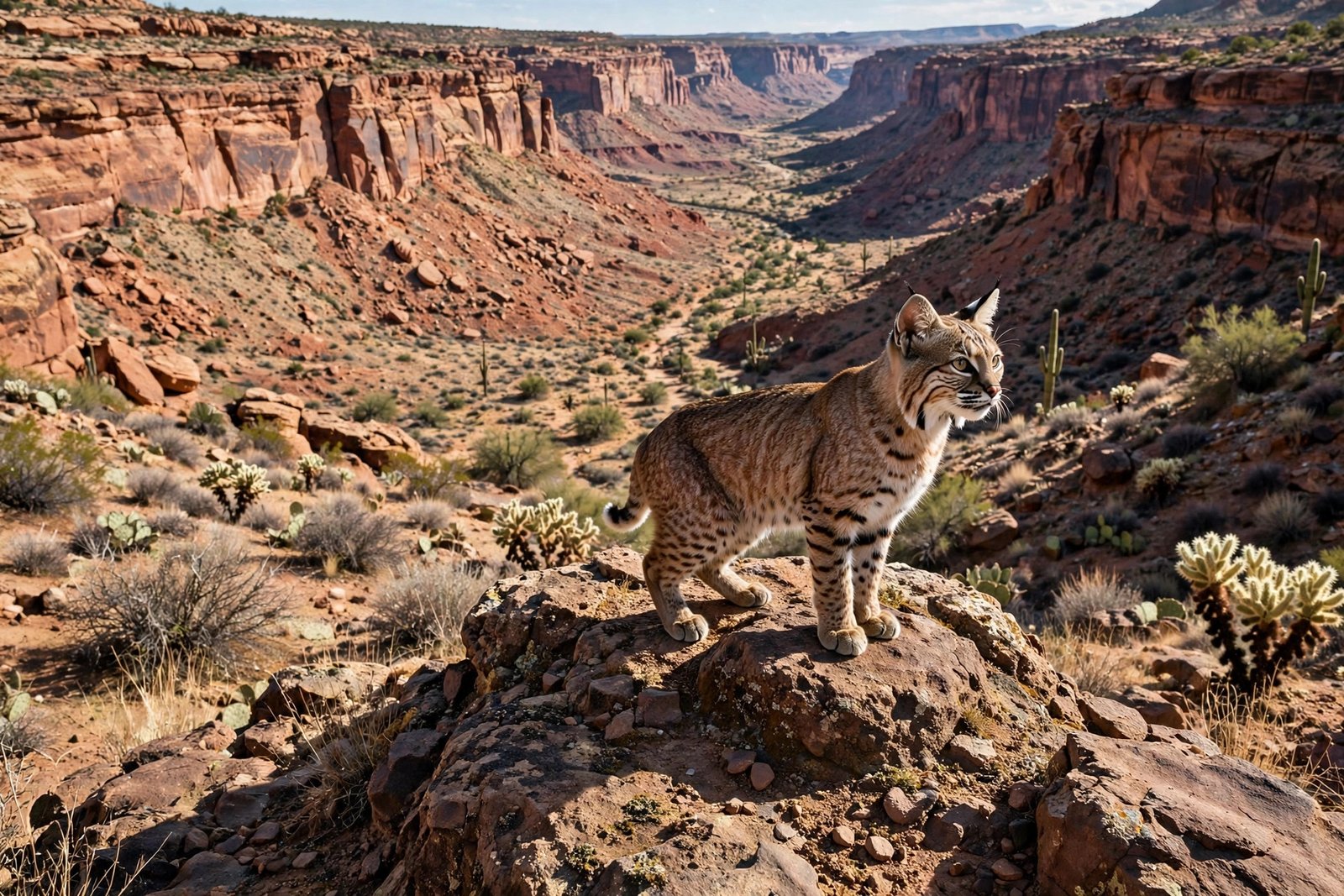
Bobcats are the most widespread wild cats in North America, yet most Americans have never seen one in the wild. That is part of their charm. They are shy, superbly camouflaged, and most active when people are not around, which makes a sighting feel like a genuine prize. This guide to where to see bobcats USA covers the best states, habitats, and seasons for a responsible sighting, plus the fieldcraft that gives you a real chance without disturbing the animals you hope to find.
Before we begin, set expectations honestly. Bobcats are not zoo animals waiting on a schedule. Even in excellent habitat, a sighting is never guaranteed, and that uncertainty is part of wildlife watching. What you can do is put yourself in the right places, at the right times, with the right habits, and greatly improve your odds. Along the way you will see plenty of other wildlife, beautiful landscapes, and the quiet corners of America where wild cats still roam.
Where to See Bobcats USA: Best States and Habitats
Bobcats live across much of the contiguous United States, from forests and swamps to deserts and mountain foothills. They adapt to many habitats, which is why they survive in so many regions, but they favour places with dense cover, abundant prey such as rabbits and rodents, and relatively little disturbance. Look for edges: where forest meets field, where brush meets water, and where rocky ground offers dens and viewpoints.
Some of the most rewarding states for bobcat watching include Texas, Florida, Arizona, California, and the southeastern states, where mild winters and rich prey keep cats active year-round. In Texas, ranches, state parks, and wildlife refuges in brush country offer good chances, especially at dawn and dusk. In Florida, wetlands, pine flatwoods, and preserves can reward patient watchers, and you may also spot otters, deer, and wading birds on the same outing.
In the West, Arizona and California offer desert washes, canyon country, and oak woodlands where bobcats hunt rabbits and rodents among rocks and cactus. The cats are well camouflaged against dry grass and stone, so slow scanning with binoculars matters more than walking fast. In the Southeast, from Georgia to the Carolinas, bottomland forests, swamps, and rural farmland edges are classic bobcat country, particularly where rabbits are plentiful and cover is thick.
Do not overlook the Midwest and Northeast when planning where to see bobcats USA. Bobcats live in many forested parts of these regions too, though they are often scarcer and harder to spot in dense northern woods. Here, winter can actually help: tracks in snow tell you where cats travel, and leafless trees open up views. State wildlife agencies and national wildlife refuges are excellent starting points for local advice, recent sightings patterns, and the rules for each area.
Best Habitats and Times of Day
Bobcats are crepuscular, meaning they are most active around dawn and dusk, though they can also be active at night and, in quiet areas, during the day. Plan your outings for the first two hours after sunrise and the last two hours before sunset. Those golden hours offer the best light for viewing and photography, cooler temperatures, and the highest chance of catching a cat moving between resting cover and hunting ground.
Season matters too. Winter and early spring are often productive because vegetation is thinner, prey is more visible, and tracks in mud or snow reveal travel routes. In summer, dense foliage makes spotting harder, but early mornings before the heat builds can still be excellent, especially near water. Autumn, when young animals disperse and cats range more widely, can also produce memorable encounters. Whatever the season, patience beats mileage: sitting quietly at a good vantage point for an hour often beats walking five miles noisily.
Look for sign as well as animals. Bobcat tracks are round, with no claw marks, and roughly the size of a large dog track but rounder in shape. Scat, scrapes on the ground, and scent posts on prominent rocks or logs can all indicate a cat uses an area. Learning to read sign, ideally with a good field guide, turns a walk into a detective story and helps you return to the most promising spots at the best times.
Top Places to Try
National wildlife refuges, state parks, and large conservation areas are among the best places to look, because they protect habitat and limit disturbance. In Florida, large wetland preserves and wildlife refuges are well known for bobcat sightings, especially along quiet roads and boardwalks at dawn. In Texas, state parks and wildlife management areas in brush and hill country reward early risers. In Arizona, desert parks and national forest land offer open views where a patient watcher can spot a cat crossing a wash or perched on a rock.
California offers a different flavour of bobcat watching, from coastal scrub and oak woodlands to foothill parks where cats hunt among chaparral. Urban-edge parks in the state are famous for occasional bobcat encounters, a reminder that these adaptable cats live surprisingly close to cities. Wherever you go, check local regulations first: some areas restrict off-trail travel, require permits, or close sensitive habitats during breeding seasons. Respecting those rules protects the cats and keeps areas open for everyone.
Guided wildlife tours can also help, particularly on a first trip. A local naturalist knows the terrain, the seasonal patterns, and the ethics of wildlife viewing, and can teach you to spot movement and sign you would otherwise miss. If you prefer to explore alone, start with visitor centres: rangers can suggest trails, viewing areas, and times of day that suit current conditions, and they can warn you about trail closures or safety issues.
- Choose large, quiet protected areas with dense cover and reliable prey.
- Visit at dawn or dusk, and stay still and silent at edges and viewpoints.
- Scan slowly with binoculars, watching for movement, ears, and tails.
- Check tracks, scat, and scrapes to confirm cats use the area.
- Ask rangers and local naturalists for current, area-specific advice.
When and Where to See Bobcats USA Safely
Safety and ethics come first, for you and for the cat. Bobcats are wild predators, not pets, and they should never be approached, fed, or cornered. Keep a generous distance, use binoculars or a long camera lens, and never try to call a cat closer with recorded sounds or food. If a bobcat notices you and moves away, let it go. A brief, distant glimpse is a successful sighting; a stressed animal is not.
Travel with a companion where possible, carry water, sun protection, and a charged phone, and tell someone your plans. In desert and mountain areas, check weather, trail conditions, and wildlife guidance before you set out. Keep dogs leashed where allowed, or leave them at home in sensitive wildlife areas, since dogs can disturb cats and other wildlife and may themselves be at risk. Store food properly when camping, and leave no trace of your visit.
Photography deserves special care. A long lens lets you photograph from far away without pressure on the animal. Avoid flash, avoid blocking a trail or water source, and never share the exact location of a den or a young animal online. Precise den locations can draw crowds that disturb a family group. General area information helps other watchers; exact den coordinates do not. Responsible sharing keeps wildlife watching sustainable.
What Bobcats Look Like and How They Behave
Bobcats are medium-sized cats, noticeably larger than a house cat, with a short bobbed tail, tufted ears, and spotted or barred coats that blend beautifully into dappled light. Their coats vary by region, from reddish-brown in warmer areas to greyer tones in colder climates, which helps them disappear into local vegetation. That camouflage is so effective that a bobcat can sit in plain sight, watching you, while you look straight past it.
They are solitary hunters for much of the year, stalking rabbits, rodents, and birds with patience and explosive bursts of speed. They also climb well and swim when needed, and they use dens in rock crevices, hollow logs, and thick brush for shelter and raising kittens. Mothers with kittens are especially sensitive to disturbance, so spring sightings call for extra distance and quiet. Watching a bobcat hunt or groom from afar is a privilege; the animal owes us nothing, and our job is to be unobtrusive guests in its home.
If you see one, stay calm and still. Avoid sudden movements, speak softly if you must, and enjoy the moment without chasing it. Most encounters last seconds, and that brevity is part of what makes them memorable. Note the time, habitat, and behaviour afterwards, and consider reporting your sighting to the local wildlife agency or refuge, since citizen reports help researchers understand distribution and seasonal patterns.
Bobcats vs Other American Wild Cats
New watchers sometimes confuse bobcats with other cats. Mountain lions are much larger, with long tails and uniform tawny coats, and they range more widely across the West. Lynx, found in northern forests, are close relatives with larger paws and longer ear tufts, adapted to deep snow. Domestic cats and feral cats are far smaller. Learning these differences before you go helps you identify what you see and avoids mistaken reports.
For a broader picture of American predators, readers often enjoy comparing notes with our guides to where to see bears in the USA and where to see mountain lions in the USA. Each species has different habitat, behaviour, and safety guidance, and understanding those differences makes you a better, safer wildlife watcher overall. The same patience and respect apply across all three.
Planning Your Bobcat Watching Trip
Start by choosing a region that fits your travel plans for where to see bobcats USA, then narrow it to two or three protected areas with good habitat. Contact visitor centres in advance, ask about recent activity in general terms, and plan two or three outings rather than one, since repeated visits multiply your chances. Book accommodation near your chosen area so you can reach trailheads before dawn without a long drive in the dark.
Pack light but well: binoculars, a field guide or wildlife app, water, snacks, sun and insect protection, sturdy footwear, and layers for cool mornings. A spotting scope can help in open country, while a camera with a telephoto lens is ideal for photography. Dress in muted colours, move slowly, and pause often to listen. Many sightings begin with a sound — a rustle, a bird alarm call — before the animal itself appears.
Finally, keep the experience in perspective. Even without a bobcat sighting, a dawn walk in good habitat delivers deer, birds, tracks, wildflowers, and quiet that is increasingly rare. Treat the bobcat as a bonus, not a guarantee, and you will enjoy every outing. And when you do see one — a flash of spotted coat at the edge of the trees, a pair of tufted ears turning toward you — you will understand why so many wildlife watchers put this shy American cat at the top of their wish list.
Conclusion: Your Best Chance at a Wild Cat Sighting
The honest answer to where to see bobcats USA is this: go where habitat, prey, and quiet meet, go at dawn or dusk, go often, and go respectfully. Texas brush country, Florida wetlands, Arizona deserts, California foothills, and southeastern forests all offer real opportunities, and local refuges and parks are the best places to start. Combine good planning with patience, learn to read tracks and sign, and keep your distance when luck delivers a sighting.
Ready to plan your trip? Pick one region from this guide, check the nearest national wildlife refuge or state park, and set your alarm for dawn. Bring binoculars, leave expectations behind, and enjoy the search. If you spot a bobcat, savour the moment, photograph responsibly from afar, and share your story in general terms to inspire other respectful watchers. The wild cats of America are still out there — quiet, beautiful, and well worth looking for.