
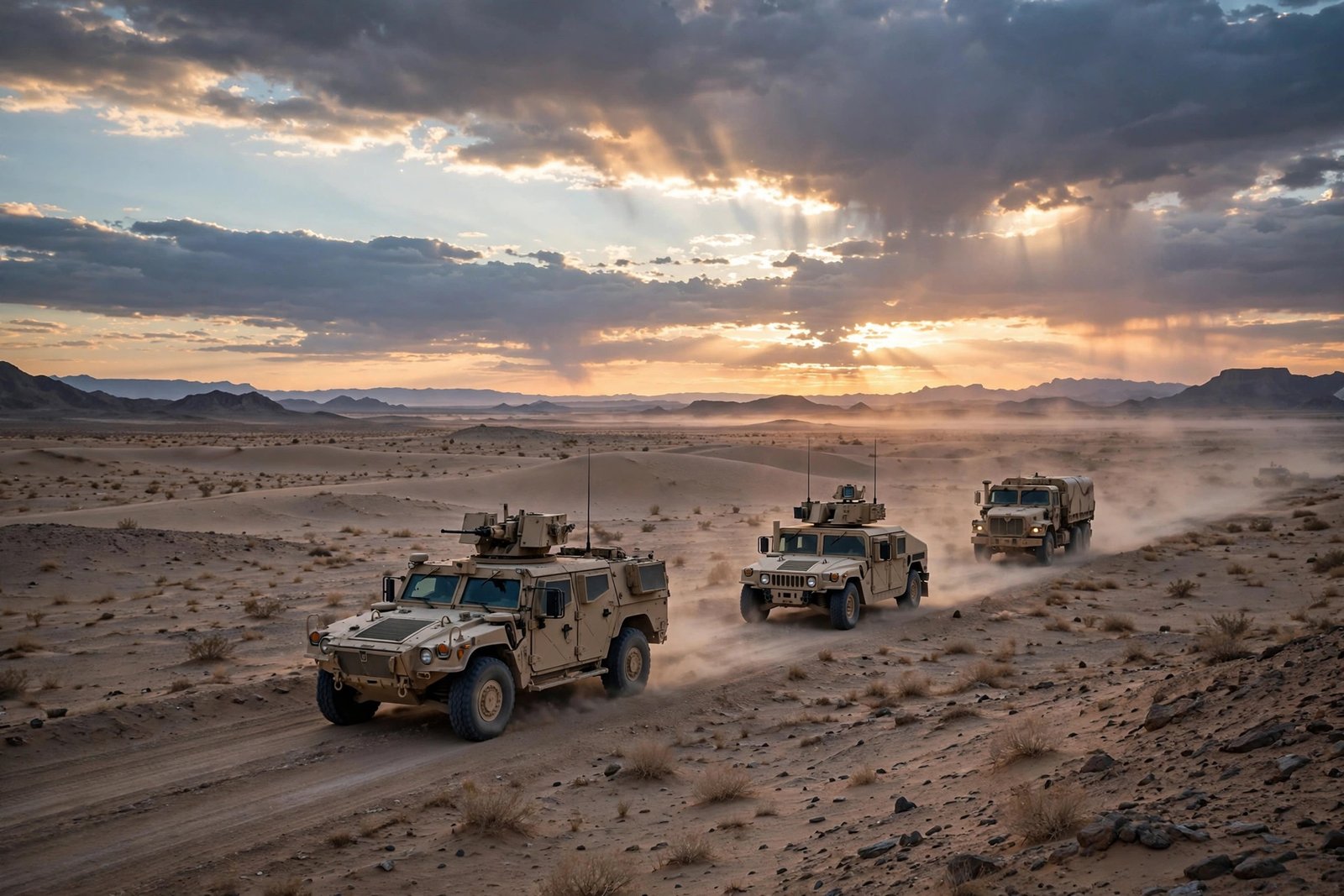
Before dawn on August 2, 1990, Iraqi tanks rolled across the border into Kuwait — and within hours, a small, oil-rich nation had been swallowed whole. The world watched in shock, and soon hundreds of thousands of young Americans found themselves shipping out to a desert halfway around the world. The desert storm true stories that came home with them are tales of courage, brotherhood, and a military campaign that unfolded at breathtaking speed. From the massive buildup of Operation Desert Shield to the thundering air war and the famous 100-hour ground offensive, the 1991 Gulf War became one of the most decisive American victories of the modern era. These are the true stories of the U.S. troops who fought it — the soldiers, Marines, airmen, and sailors who helped liberate Kuwait.
What makes these stories so powerful is how ordinary the heroes were. The men and women who deployed were teachers, mechanics, farmers, and students — members of the all-volunteer force and the National Guard and Reserves — who answered the call and found themselves in one of the largest and fastest military deployments in American history. This is their story.
Why the War Started: Iraq Invades Kuwait
In the summer of 1990, Iraq’s leader Saddam Hussein was drowning in debt from a long, ruinous war with Iran and locked in bitter disputes with Kuwait over oil production and money. On August 2, 1990, he ordered his army to invade. Kuwait’s small military was overwhelmed in hours, and Iraq declared the country its newest province. The invasion shocked the world: a sovereign nation had been erased from the map overnight.
The international response was swift. The United Nations Security Council condemned the invasion and demanded Iraq’s immediate withdrawal, then imposed sweeping economic sanctions. When Saddam refused to budge, the Security Council passed a resolution authorizing member nations to use “all necessary means” to free Kuwait if Iraq had not withdrawn by January 15, 1991. President George H. W. Bush began assembling a coalition of about 35 nations — and the United States would provide the backbone of the force.
Operation Desert Shield: The Great Buildup
Even before the shooting started, America launched one of the biggest deployments in its history. Beginning in August 1990, Operation Desert Shield rushed troops, tanks, aircraft, and ships to Saudi Arabia to defend the kingdom and prepare for the liberation of Kuwait. At its peak, nearly 700,000 American service members would serve in the Gulf War theater, alongside forces from across the coalition.
For the troops, those months of waiting were a test of endurance. They lived in tents and sandbagged positions under a brutal desert sun, enduring heat, sandstorms, and endless boredom punctuated by alarms warning of possible chemical attacks that thankfully never came. Mail from home became the most precious thing in the world — letters, care packages, and recorded messages that reminded exhausted young troops what they were fighting for. Families back home tied yellow ribbons around trees and waited, watching the news, as the January deadline approached.
What desert storm true stories Reveal About the Air Campaign
When the deadline passed with Iraqi forces still in Kuwait, the war began in the dark hours of January 17, 1991. In the opening minutes, Army Apache attack helicopters slipped across the border and destroyed Iraqi early-warning radar sites, punching a hole in the enemy’s air defenses. Then wave after wave of coalition aircraft — fighters, bombers, and support planes — struck command centers, airfields, and supply lines across Iraq and Kuwait.
The air campaign was relentless. Coalition aircraft flew tens of thousands of combat sorties over the next five weeks, systematically dismantling Iraq’s military infrastructure while precision-guided weapons destroyed targets with an accuracy the world had never seen. Iraqi pilots who dared to take off were quickly driven from the skies, and many Iraqi aircraft fled to Iran rather than face the coalition. Meanwhile, Iraq fired Scud ballistic missiles at Saudi Arabia and Israel, hoping to shatter the coalition — but American Patriot missile batteries intercepted many of them, and the alliance held firm.
The 100-Hour Ground War
After more than a month of bombing, the ground offensive — the phase every soldier had been waiting for — began on February 24, 1991. What happened next stunned military experts around the world. While Marines and Arab coalition forces pushed directly into Kuwait, the U.S. Army’s heavy armored corps swung in a vast flanking maneuver through the western desert — the famous “left hook” — cutting off the Iraqi army’s escape.
Iraqi resistance, pounded for weeks from the air, collapsed with astonishing speed. American tanks destroyed Iraqi armor in lopsided engagements, and tens of thousands of Iraqi soldiers surrendered — many of them hungry, exhausted conscripts who had no stomach for Saddam’s war. As Iraqi forces fled Kuwait City, they set fire to hundreds of Kuwaiti oil wells, turning the sky black with smoke that blotted out the sun. On the highway north of the city, retreating Iraqi military convoys were destroyed by coalition air power in what became known as the Highway of Death.
Just 100 hours after the ground war began, President Bush declared a ceasefire on February 28, 1991. Kuwait was free. It was one of the shortest major ground campaigns in modern military history — and one of the most decisive.
desert storm true stories of Courage and Sacrifice
Behind the sweeping arrows on the maps were individual Americans doing extraordinary things under fire. Combat engineers cleared paths through minefields so the armor could advance. Medics treated the wounded in makeshift aid stations as the battle raged around them. Supply convoys drove for days through the desert to keep fuel, food, and ammunition flowing to the front. Pilots flew mission after mission into some of the most heavily defended airspace on earth.
Tens of thousands of women served in the Gulf War — as pilots, medics, military police, truck drivers, and in dozens of other roles — proving under fire what many had long argued about women’s place in the armed forces. Their service is remembered among the great stories of female U.S. military heroes. The victory came at a real cost: fewer than 150 American service members were killed in battle, a remarkably low number for a war of this scale, but every one of those losses left a grieving family back home. Like the soldiers of earlier generations — from the beaches of D-Day to the elite units of the U.S. Army Rangers — the troops of Desert Storm wrote their chapter in the long story of American courage.
The Homecoming America Gave Its Troops
When the troops came home, America was waiting. After the painful divisions of the Vietnam era, the nation was determined to get this homecoming right. Yellow ribbons came down, and ticker-tape parades went up — New York City, Washington, and towns across the country threw celebrations for returning service members. Veterans who had shipped out as nervous young recruits came home to cheering crowds, flags, and the gratitude of a nation.
For many veterans, those parades were deeply emotional. They had done their duty, watched out for one another, and come home to a country proud of them. The Gulf War became a moment of national unity — a reminder that when Americans serve together, the country stands behind them.
Why These Stories Still Matter
More than three decades later, the desert storm true stories of 1991 still resonate. The Gulf War showed what a well-trained, well-equipped, all-volunteer military could accomplish, and it restored a sense of confidence in American arms after the long shadow of Vietnam. It also reminded the world that aggression against a small nation would not go unanswered — a principle that still shapes American foreign policy today.
But the deepest meaning of these stories is personal. They are about the medic who stayed calm under fire, the pilot who flew into danger night after night, the guardsman who left a civilian job to serve, and the families who kept the home fires burning. If these stories moved you, share them with someone who remembers — or someone who should learn. Explore more true tales of American courage here on Beauty of USA, and take a moment to thank a veteran. Their stories deserve to be remembered.
- War dates: January 17 – February 28, 1991
- Cause: Iraq’s invasion of Kuwait on August 2, 1990
- Buildup: Operation Desert Shield began August 1990
- U.S. troops: nearly 700,000 served in the Gulf War theater
- Coalition: about 35 nations under U.S. leadership
- Commander: General H. Norman Schwarzkopf Jr.
- Ground war: lasted just 100 hours
- U.S. battle deaths: fewer than 150