
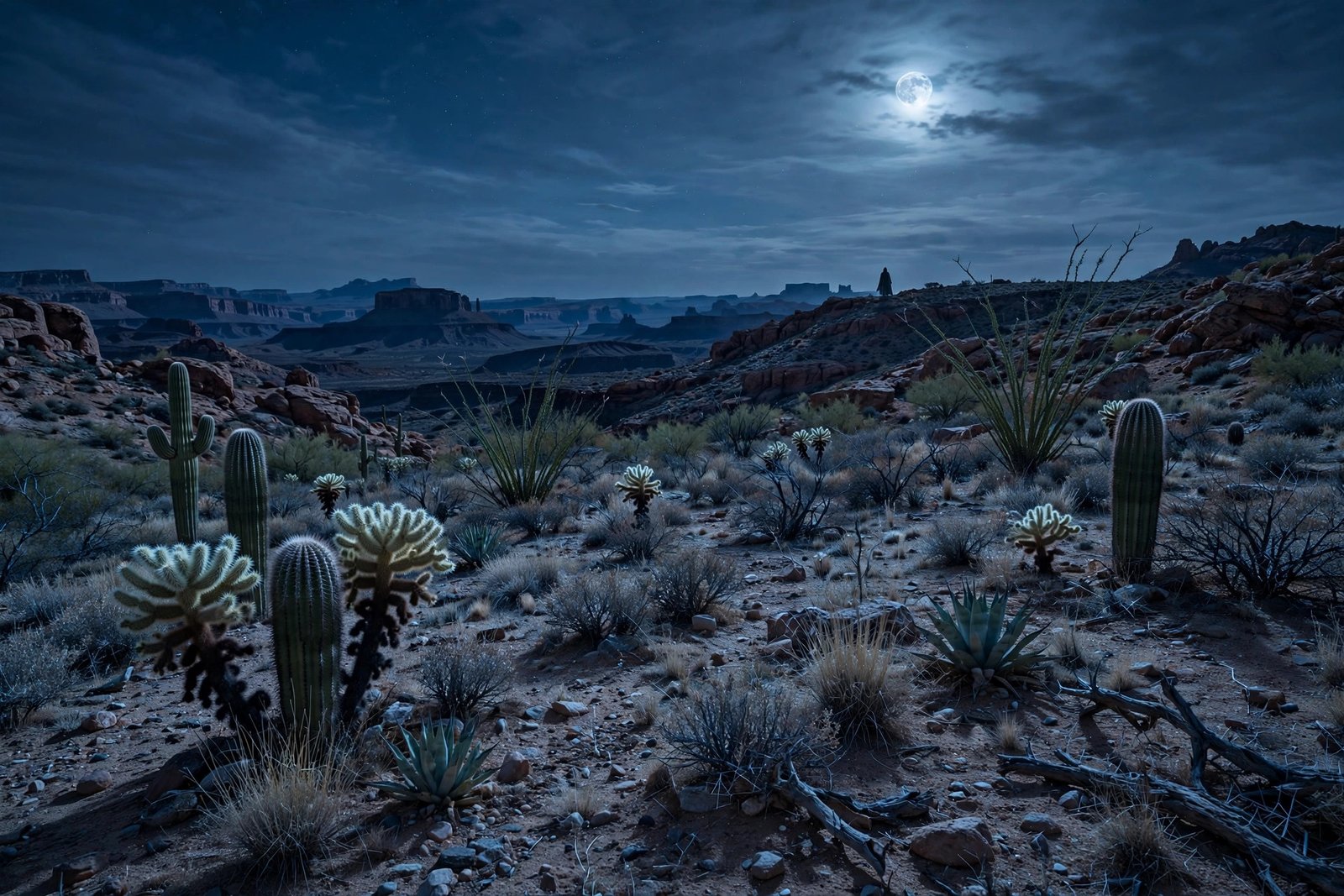
On a warm night in the Texas Hill Country, a rancher hears his goats bleating in a panic. He grabs a flashlight and runs to the pen — and finds several animals down, each with small puncture wounds on the neck. By morning, the neighbors are whispering the same word: chupacabra. For thirty years, the creature at the center of the chupacabra legend has been blamed for mysterious livestock deaths across the American Southwest, from the deserts of Arizona to the ranches of South Texas.
But here is the part the late-night documentaries usually skip: no one has ever produced a confirmed chupacabra. Not one specimen, not one clear photograph, not one DNA test pointing to an unknown animal. Every carcass that scientists have examined has turned out to be something entirely ordinary — usually a coyote or a dog suffering from a skin disease. That gap between legend and evidence is exactly what makes the story worth telling.
In this article, we trace the real history of the chupacabra legend — where it began, how it crossed into the United States, what scientists actually found, and why the story refuses to die. If you enjoy American mysteries, you will also love our guides to Bigfoot and the Mothman.
What Is the Chupacabra Legend?
The name says it all: chupacabra is Spanish for goat-sucker. In the classic telling, the creature sneaks onto farms at night, kills chickens, goats, and other livestock, and drains their blood through two small puncture wounds in the neck. But ask ten witnesses to describe the beast, and you will get ten different monsters.
In Puerto Rico, where the modern story began, witnesses described a reptilian creature about four to five feet tall, with huge dark eyes, sharp quills or spines running down its back, and powerful hind legs like a kangaroo. In the American Southwest, the description changed completely: there, the chupacabra is usually a hairless, grayish, dog-like animal with an arched back and oversized fangs. Descriptions of the chupacabra legend vary so wildly that folklorists treat the disagreement itself as a clue — this is what a story looks like, not what an animal looks like.
One thing all versions agree on: the chupacabra is a legend, not a confirmed species. No wildlife agency in any state recognizes it. The story lives in eyewitness accounts, blurry photos, and local news segments — never in a laboratory.
Puerto Rico, 1995: Where the Chupacabra Legend Began
The modern chupacabra was born in Puerto Rico in 1995. That spring, farmers around the town of Canóvanas began finding dead chickens and goats with strange puncture wounds. Witnesses claimed the animals had been drained of blood — although no laboratory analysis ever confirmed that detail, and later experts noted that ordinary predators and the natural changes after death can create misleading impressions.
The sightings escalated that summer. The most famous came from Madelyne Tolentino, a Canóvanas resident who reported seeing a bizarre creature with large eyes and spines down its back. Her description — repeated in countless retellings — became the template for the classic chupacabra: part reptile, part alien, part nightmare. The name itself, meaning goat-sucker, was reportedly coined by Puerto Rican comedian Silverio Pérez, and it stuck immediately.
Puerto Rican newspapers and television seized the story, and within months the chupacabra was an island-wide sensation. But for all the excitement, hard evidence never materialized. No creature was captured. No clear photograph was produced. No remains were examined by scientists. The chupacabra of 1995 existed entirely in stories — which, as we will see, did not stop it from traveling.
How the Legend Crossed Into the American Southwest
By the late 1990s, chupacabra reports were spreading through Mexico, carried by Spanish-language media and migrant communities. By the early 2000s, the legend had crossed the Rio Grande. Ranchers in South Texas began reporting strange, hairless animals prowling at night — and blaming them for dead livestock. This is where the American chapter of the story gets interesting, because Texas produced something Puerto Rico never did: actual carcasses.
In 2004, near Elmendorf, Texas, a rancher named Devin McAnally shot two hairless, blue-gray, dog-like animals on his property. The local media called them chupacabras. But when samples were examined, the DNA told a different story: they were coyotes — ordinary coyotes suffering from severe mange. Three years later, in Cuero, Texas, Phylis Canion found the remains of a strange hairless animal on her ranch and had them tested at Texas State University. Again the verdict came back: a coyote with mange, not a monster.
These Texas cases established a pattern that repeats to this day. The American chupacabra is almost always a hairless canid — a coyote, a dog, sometimes a raccoon — made strange-looking by sarcoptic mange, a parasitic skin disease that causes hair loss, thickened gray skin, and a gaunt, almost alien appearance. To a rancher glimpsing one at dusk, it looks like nothing in the field guide. To a biologist, it looks like a sick coyote.
What Scientists Say About the Chupacabra Legend
The scientific verdict on the chupacabra is about as unanimous as science gets: no confirmed specimen has ever been found, and every carcass put forward as a chupacabra has been identified as a known animal. Biologists who examined the Texas specimens point to sarcoptic mange as the explanation for the classic American description — the hairlessness, the gray-blue skin, the arched back, the gaunt face.
Mange-weakened animals also behave strangely, which helps explain the livestock attacks. A coyote ravaged by parasites is too weak to chase down healthy wild prey, so it turns to the easiest targets available: penned chickens and goats. The puncture wounds that witnesses find so sinister are consistent with ordinary predator bites — and the drained-of-blood detail, dramatic as it sounds, has never been verified in a laboratory. Blood pools and congeals after death in ways that can look like draining to an untrained eye.
Some researchers have also noted that vampire bats, which are native to Latin America, genuinely feed on livestock blood at night — a real, documented phenomenon that may have fed some of the earliest Puerto Rican stories. Whatever the mix of causes, the evidence for the chupacabra legend remains exactly what it was in 1995: eyewitness stories, unverified and unexplained, but never confirmed.
If you find this intersection of folklore and fact fascinating, our roundup of the true stories behind American legends separates myth from reality across a dozen famous tales.
The Chupacabra in Movies, TV, and Pop Culture
A legend this vivid was never going to stay in the barnyard. The chupacabra became a pop-culture star in the late 1990s, most famously in a 1997 episode of The X-Files titled El Mundo Gira, which brought the creature to millions of American viewers. It has since appeared in animated films, video games, horror movies, and countless documentaries — each retelling making the legend bigger, stranger, and harder to kill.
Pop culture loves the chupacabra because it is the perfect modern monster: rooted in real fears about livestock and the dark, just plausible enough to argue about, and never disproven by a boring specimen in a jar. Like Bigfoot and the Mothman, it thrives in the space between maybe and definitely — and every new movie or TV appearance plants the idea in a fresh generation of minds.
The irony is that the pop-culture chupacabra and the real-world reports barely resemble each other. Hollywood prefers the spiny Puerto Rican reptile; Texas ranchers report hairless dogs. Both are called chupacabra, and both are unconfirmed — but they are not even the same monster.
Why the Story Still Terrifies Us
So why, thirty years after Canóvanas, does the chupacabra still show up in local news and late-night conversations? Psychologists and folklorists point to a simple recipe. Start with something genuinely unsettling — dead livestock, a strange animal glimpsed at dusk. Add a catchy name and a vivid description. Stir in media coverage that repeats the scariest details and skips the boring lab results. The result is a legend with a life of its own.
The chupacabra also fills a very old human need. For centuries, people blamed mysterious livestock deaths on vampires, witches, and demons. The chupacabra is simply the modern, southwestern version of that ancient story — a name for the fear that something unseen is circling the farm at night. It is folklore doing what folklore has always done: turning uncertainty into a story we can tell.
And the story keeps adapting. Every few years, a new photo of a mangy coyote goes viral, a new rancher calls the local news, and the legend gets a fresh coat of paint. The chupacabra survives because we want it to — because a world with monsters in it is, in a strange way, more interesting than a world with only mange.
The Legend Lives On — What Do You Believe?
The chupacabra legend endures as one of America’s great modern mysteries: a story born in Puerto Rico in 1995, carried across the Southwest on a wave of sightings, and deflated — but never quite defeated — by science. No specimen has ever been confirmed, yet the legend outruns the evidence every time. That tension is the whole point.
So what do you believe: mangy coyote, or something stranger? Share your thoughts — and your own Southwest mystery stories — in the comments below. And keep exploring Beauty of USA, where every legend gets the honest treatment: the real history, the verified facts, and the mystery left exactly where it belongs.