
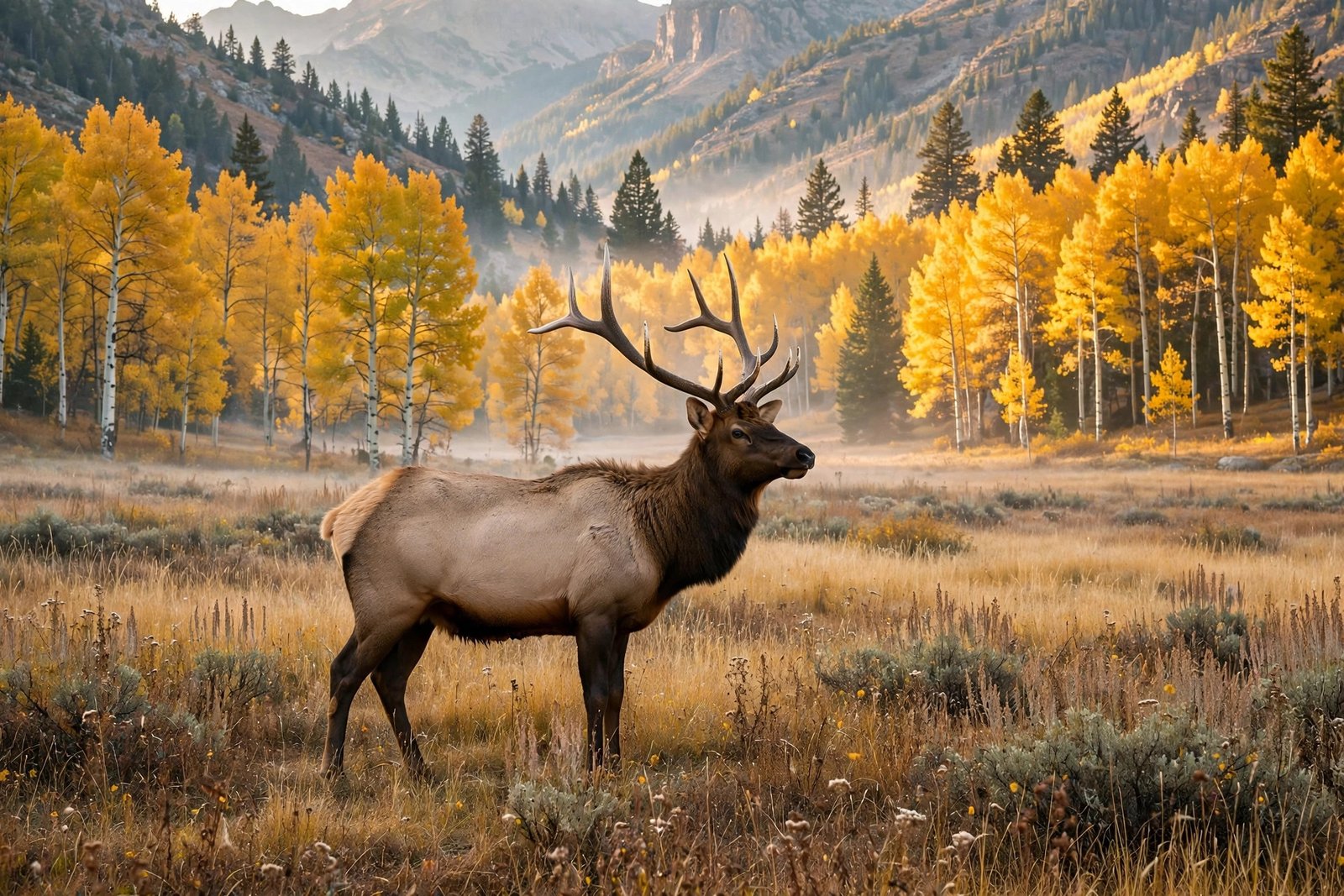
If you have ever heard a bull elk bugle — a high, haunting whistle that rolls across a mountain meadow at dawn — you know it is a sound you never forget. Elk are among North America’s most magnificent wild animals, and watching a herd graze at sunrise or listening to bulls spar during the fall rut is a bucket-list wildlife experience. But if you are wondering where to see elk in the USA, the good news is that you have plenty of options, from famous national parks to hidden valleys most travelers have never heard of.
Elk (Cervus canadensis) are the largest members of the deer family in North America, and bulls can weigh over 700 pounds and carry massive antlers with six or more points per side. Once driven to the brink by unregulated hunting — by the early 1900s only tens of thousands remained in the lower 48 states — elk have made one of America’s great conservation comebacks and now number over a million nationwide. Here is where to see elk in the USA, when to go, and how to watch them safely.
The Best Time to See Elk in the USA
Timing matters enormously when it comes to elk viewing. The single best season is the fall rut — the September-to-October mating season, when bull elk bugle to attract cows and challenge rivals. During the rut, elk are active, vocal, and visible, often out in open meadows at dawn and dusk. Males spar with locked antlers, herds gather in impressive numbers, and the bugling carries for a mile or more on a still morning. If you can only plan one elk trip, plan it for late September.
Spring and early summer bring calving season, when cows give birth and herds disperse into higher country — elk can be harder to find, and mothers with newborn calves should never be approached. Winter concentrates elk at lower elevations, which makes for reliable viewing in places like Wyoming’s National Elk Refuge, where thousands of elk gather on the valley floor. Year-round, the golden rule is dawn and dusk: elk feed in open areas in the low light of morning and evening and retreat to timber during the heat of the day.
Wherever you go, check with the local park or refuge for current herd locations — rangers track the animals daily and can point you to the best meadow on any given morning.
Where to See Elk in the USA: The 10 Best Spots
1. Rocky Mountain National Park, Colorado. This is America’s classic elk destination and arguably the most reliable place on Earth to watch wild elk. The meadows of Moraine Park and the Kawuneeche Valley host huge herds, and during the fall rut the bugling is almost constant. The town of Estes Park, just outside the park, is famous for elk that wander the streets, graze on golf courses, and bed down in front yards — a surreal and unforgettable sight. Arrive at dawn for the best action.
2. Yellowstone National Park, Wyoming/Montana/Idaho. Yellowstone’s northern range — around Mammoth Hot Springs, the Lamar Valley, and the Madison River — holds elk year-round, and the park’s herds are among the largest and most studied in the world. In winter, thousands of elk descend to lower elevations, making roadside viewing easy. Combine elk with bison, wolves, and bears for the ultimate American wildlife safari.
3. National Elk Refuge, Jackson, Wyoming. Established by Congress in 1912, this refuge protects critical winter range for one of the largest elk herds on Earth — thousands of elk pour into the Jackson Hole valley each winter. From mid-December through early April, visitors can take horse-drawn sleigh rides right through the herds, an experience found almost nowhere else. It is the single best winter elk destination in the country.
4. Great Smoky Mountains National Park, North Carolina/Tennessee. Elk were reintroduced to the Smokies in 2001 after an absence of more than a century, and the herd in Cataloochee Valley has become one of the East’s great wildlife success stories. The valley’s open meadows, historic farm buildings, and surrounding mountains make it a magical setting — and autumn here pairs bugling elk with peak fall color. Oconaluftee Valley on the North Carolina side is another reliable spot.
5. Pennsylvania Elk Country, Benezette, Pennsylvania. You do not have to go west to see elk. Pennsylvania’s north-central mountains hold the largest free-roaming elk herd in the eastern United States — around 1,400 animals descended from elk reintroduced beginning in 1913. The Elk Country Visitor Center in Benezette offers viewing areas, exhibits, and expert guidance, and the surrounding meadows and reclaimed lands are prime rut-watching country each fall. It is the easiest elk trip for anyone on the East Coast.
6. Ponca and Boxley Valley, Arkansas. This is the South’s best-kept elk secret. Several hundred elk roam the Buffalo National River area around Ponca and Boxley Valley, descendants of animals reintroduced in the 1980s. The valley’s pastures and the river’s bluffs create a stunning backdrop, and the fall rut coincides with beautiful Ozark foliage. The small town of Ponca has embraced its elk identity, with viewing pullouts and local guides.
7. Redwood National and State Parks, California. The towering redwoods get the fame, but the parks’ meadows hold Roosevelt elk — the largest of the four North American elk subspecies, named for Theodore Roosevelt. Herds graze the prairies of Prairie Creek Redwoods State Park and Gold Bluffs Beach, where massive bulls emerge from the fog-draped forest at dawn. Seeing the continent’s biggest elk beneath the world’s tallest trees is a double wonder.
8. Theodore Roosevelt National Park, North Dakota. The badlands of North Dakota are elk country, and the park’s South Unit — especially around Painted Canyon — offers excellent viewing against a backdrop of striped buttes and prairie dog towns. The park that honors America’s great conservation president also protects bison, wild horses, and pronghorn, making it one of the most underrated wildlife destinations in the national park system.
9. Valles Caldera National Preserve, New Mexico. This vast volcanic crater in the Jemez Mountains holds one of the largest elk herds on public land in New Mexico, and September is prime time — the high mountain meadows echo with bugling. The preserve’s sweeping grasslands, ringed by forested peaks, feel like a hidden Yellowstone. Access is managed, so check current conditions and any permit requirements before visiting.
10. Land Between the Lakes, Kentucky/Tennessee. Straddling the Kentucky-Tennessee border, this national recreation area reintroduced elk in the 1990s, and the herd now thrives in the 700-acre Elk & Bison Prairie enclosure and surrounding lands. A scenic driving loop winds through the prairie with frequent elk sightings, and the area’s mix of forest, prairie, and lakes makes for a full weekend of outdoor adventure within easy reach of Nashville and St. Louis.
Looking for more wildlife adventures? Check our guides on where to see bears in the USA and where to see wolves in the USA to plan the ultimate American wildlife road trip.
Where to See Elk in the USA in Winter
Winter is an underrated season for elk watching, because the animals move down to lower elevations where they are easier to find. The National Elk Refuge in Jackson, Wyoming, is the star of winter elk viewing: thousands of elk gather on the refuge flats from December through March, and the horse-drawn sleigh rides take you remarkably close to the herds. Yellowstone’s northern range is another winter standout, with large herds visible around Mammoth Hot Springs and the Lamar Valley against a backdrop of steam and snow. Even Rocky Mountain National Park offers good winter viewing in the lower valleys around Estes Park, where elk descend when the high country gets deep snow. Just remember that winter roads can be challenging — check park alerts, carry emergency gear, and give winter-stressed animals plenty of space.
Tips for Watching Elk Safely and Responsibly
Elk are wild animals — powerful, unpredictable, and surprisingly fast. Bull elk during the rut and cows with calves can be aggressive, and every year visitors are injured by getting too close. Follow these rules to keep yourself and the animals safe:
- Keep your distance. National parks recommend staying at least 25 yards (about 75 feet) from elk — and farther is better. Use binoculars or a telephoto lens for close-up views.
- Never approach during the rut or calving season. Bulls in September and October are focused, hormonal, and dangerous; cows with newborn calves in spring are fiercely protective. Give them extra space.
- Stay in your vehicle when elk are on the road. In places like Estes Park and Yellowstone, elk often wander near roads. Enjoy the view from inside the car and never try to move an animal along.
- Do not feed elk — ever. Feeding habituates animals to humans, spreads disease, and is illegal in parks and refuges. A fed elk is a dead elk.
- Store food properly. In elk and bear country, keep food in vehicles or bear-proof containers, especially when camping.
- Respect closures. Parks sometimes close meadows or trails to protect rutting or calving elk. Those closures exist for the animals’ welfare — honor them.
- Go at dawn and dusk. You will see more elk, get better light for photos, and avoid the midday crowds.
For a broader wildlife-watching itinerary, our guide to the best national parks for wildlife pairs perfectly with an elk-focused trip.
What Does a Bugling Elk Sound Like?
If you have never heard it, the bugle is hard to imagine from a description — it starts as a low grunt, rises into a high, clear whistle that can last several seconds, and often ends in a series of grunts. Hunters and naturalists compare it to a flute, a train whistle heard from far away, or something almost prehistoric. Bulls bugle to advertise their fitness to cows and to warn rival males, and on a crisp September morning in the Rockies, a chorus of bugles rolling across a valley is one of the great sounds of the American wilderness. Arrive before sunrise, find a meadow edge, stay quiet, and listen.
Conclusion: Start Planning Your Elk Adventure
From the bugling meadows of Rocky Mountain National Park to the winter sleigh rides of the National Elk Refuge, from Pennsylvania’s Elk Country to the foggy redwood prairies of California, there has never been a better time to see elk in the USA. A century of conservation has brought these magnificent animals back from the brink — and every sighting is a reminder of what American wildlife protection can achieve.
Pick your season, pick your spot, pack your binoculars, and go hear the bugle for yourself. Have you seen elk in the wild? Tell us your favorite spot in the comments — and share this guide with a friend who needs a wildlife adventure. For more American wildlife inspiration, explore our Wildlife section.