
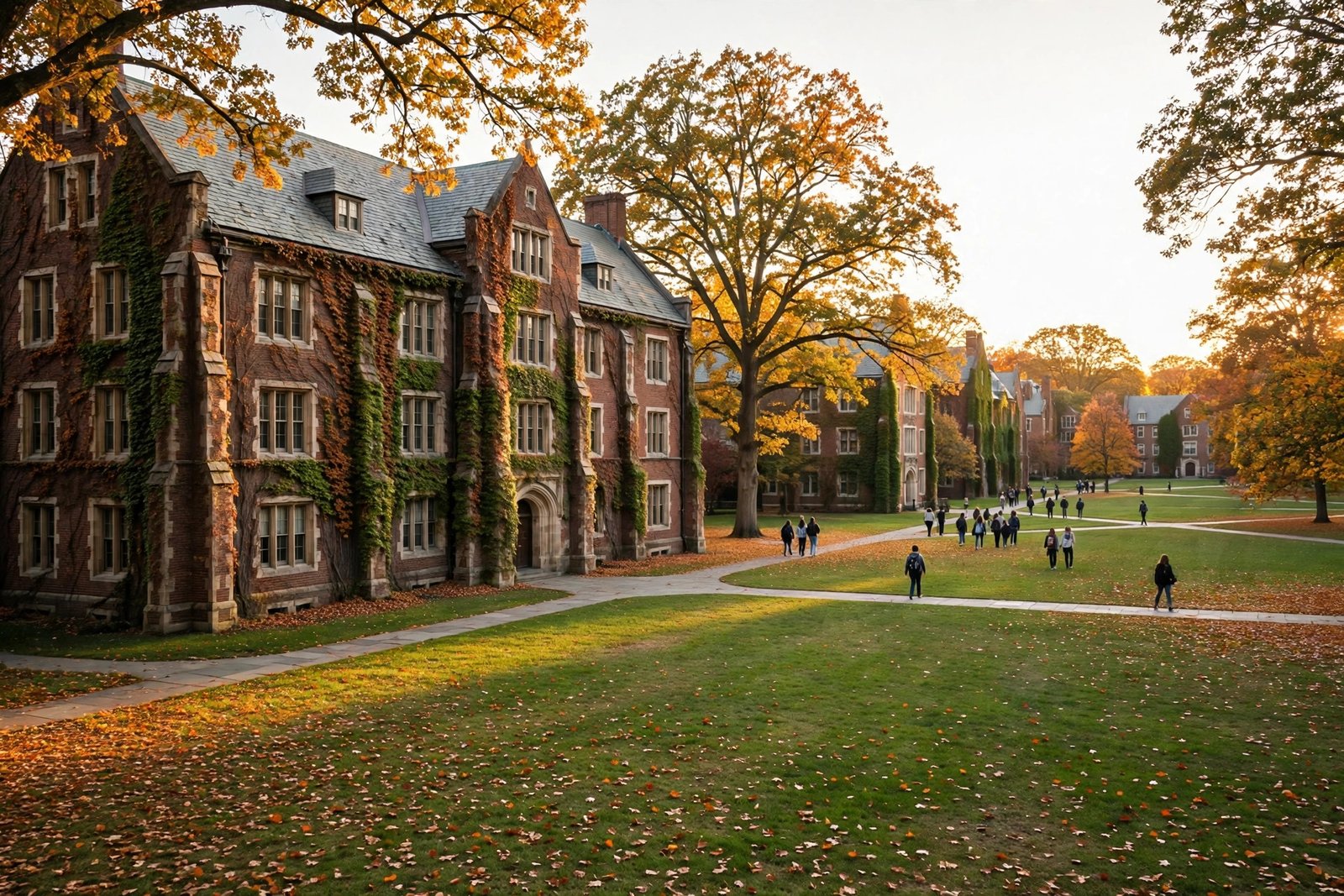
Picture a classroom where a future scientist sits beside a first-generation college student from a small town, while an exchange student from another continent takes notes nearby. That scene plays out every day on campuses across America, and it is a big reason the United States holds its place as the USA higher education world leader. Students do not just come here for a degree. They come for choice, for research, for the freedom to change direction, and for a credential that employers recognize on every continent.
In this guide, we look at what sits behind that reputation: the size and variety of the American system, its research power, its openness to international students, its links to industry, and the honest challenges it still faces. Whether you are a student weighing your options, a parent helping with the decision, or simply curious about American life, this is the story of how the United States built the most influential higher education system on earth.
Why the USA Higher Education World Leader Title Matters
A university system shapes far more than individual careers. It trains doctors, engineers, teachers, artists, and entrepreneurs. It produces the research that becomes new medicine, new technology, and new ways of understanding the world. When a country leads in higher education, its influence reaches into every part of modern life, from the phone in your pocket to the treatment a hospital can offer.
The American system earned its standing over more than a century. Harvard, founded in 1636, is the oldest institution of higher learning in the United States, and it was followed by a wave of colleges that grew alongside the young nation. Public land-grant universities, created in the 1800s, opened higher education to farming and working families rather than keeping it for a wealthy few. That democratic idea, that college should be open to talent wherever it is found, remains at the heart of the system today.
Today the United States is home to thousands of colleges and universities, ranging from small liberal arts colleges with a few hundred students to giant public research universities with tens of thousands. That sheer variety is itself a strength. A student who wants a quiet campus focused on literature, a cutting-edge engineering program, a faith-based college, or a low-cost community college pathway can find each of them inside one national system.
A System Built on Choice and Flexibility
One feature surprises many international students: American undergraduates usually do not have to commit to a single subject at age eighteen. Most spend their first year or two exploring different fields, taking general education courses in writing, science, history, and mathematics, before declaring a major. Changing majors is normal, not a failure. That flexibility means a student who arrives wanting to study biology can discover a passion for data science, design, or public policy without starting over.
The system also offers more than one route to a degree. Consider the options open to a typical student:
- Community colleges offer affordable two-year degrees and a transfer pathway into four-year universities, giving many students a lower-cost start.
- Public state universities combine large research programs with lower tuition for in-state residents.
- Private universities often provide smaller classes, generous financial aid, and specialized programs.
- Liberal arts colleges focus on broad undergraduate teaching, close faculty relationships, and critical thinking.
- Specialized schools serve fields such as art, music, engineering, and technology with deep, focused training.
Graduate education adds another layer. American master’s and doctoral programs attract students from around the world, and they combine coursework with hands-on research, teaching experience, and close mentoring from faculty. For many fields, a PhD from an American university remains one of the most respected credentials a scholar can earn.
Flexibility also extends to campus life. Students can join research labs as undergraduates, study abroad for a semester, complete internships with major companies, or launch a startup from a dorm room. That blend of classroom learning and real-world experience is one of the most copied features of American higher education, and it helps explain why so many graduates feel ready for work the day they leave campus.
Research Power Behind the USA Higher Education World Leader
If there is one engine at the center of American academic strength, it is research. American universities receive major funding from federal agencies, state governments, private foundations, and industry partners, and they turn that funding into discoveries that touch everyday life. From advances in medicine and computing to breakthroughs in agriculture and space exploration, university laboratories have been behind an extraordinary share of modern progress.
The model matters as much as the money. Professors are expected to both teach and research, and students, even undergraduates, are often invited into that work. A biology student might help sequence samples in a genetics lab. An engineering student might test materials for a new kind of battery. That early exposure to real research builds skills no textbook alone can teach, and it feeds a pipeline of talent into science, technology, and medicine.
Research universities also cluster near industry. The corridor around Stanford and the University of California, Berkeley helped seed Silicon Valley. Boston’s concentration of universities, hospitals, and biotech firms creates a similar ecosystem on the East Coast. These clusters let ideas move quickly from a laboratory bench to a startup company, and they give students internships and jobs close to campus. It is no coincidence that the story of why the USA leads the world in technology runs through its universities, or that American medical innovation so often begins in a university hospital.
The Global Classroom: Students From Everywhere
Walk across almost any major American campus and you will hear dozens of languages. International students come for the quality of the programs, the flexibility of the system, and the value of an American degree back home. They also come because American campuses actively welcome them, with international student offices, cultural organizations, and support services that help with everything from visas to homesickness.
That global mix benefits American students too. A classroom discussion about trade, climate, public health, or history becomes richer when the people in the room bring firsthand experience from different countries. Friendships formed in dormitories and laboratories turn into professional networks that span continents, and graduates carry those connections into careers in business, diplomacy, science, and the arts.
Many international graduates stay and contribute to the American economy, founding companies, joining research teams, and teaching the next generation. Others return home and carry American-trained expertise into their own countries, extending the influence of the system still further. Either way, the exchange strengthens the universities themselves, which is one reason they compete so hard to attract talented students from abroad.
From Campus to Career: Innovation and Entrepreneurship
American universities have long treated entrepreneurship as part of their mission. Campus incubators, business plan competitions, and technology transfer offices help students and professors turn ideas into companies. Some of the most famous companies in the world began as student projects, and while not every dorm-room idea becomes a household name, the culture of trying, failing, and trying again is deliberately taught.
Career services are another quiet strength. Universities maintain relationships with employers, run career fairs, and help students find internships that often lead to full-time offers. Alumni networks, famously loyal in the United States, open doors for new graduates in ways that matter enormously at the start of a career. A graduate who can call on alumni working in a target industry has an advantage that goes far beyond a grade transcript.
The link between universities and the wider economy also shows up in the long list of American inventions that changed the world, many of which trace back to campus research or to graduates carrying a university idea into the marketplace. That pipeline, from curiosity to classroom to company, is one of the clearest reasons the American model is studied and imitated around the globe.
The Challenges Facing American Higher Education
No honest account of the system can ignore its problems. Tuition at many institutions has risen faster than family incomes, leaving students worried about debt. The price gap between the most selective private universities and affordable public options is wide, and financial aid, while generous at some schools, does not reach every student who needs it.
Access is another challenge. Talented students from low-income backgrounds still enroll at lower rates than their wealthier peers, and completion rates vary sharply between institutions. A degree only changes a life if the student finishes it, so colleges are under growing pressure to support students through tutoring, advising, mental health services, and clearer pathways to graduation.
There are also debates about what college should teach. Some critics argue that programs focus too much on theory and too little on job-ready skills. Others worry that political pressures threaten academic freedom. These arguments are loud, and they matter, but they also reflect a system large and open enough to argue with itself in public, which is itself a sign of institutional health.
For the USA higher education world leader, the real test of the coming decade is whether it can widen access and control costs while protecting the research strength and flexibility that made it great. The universities that solve that puzzle will define the next chapter of American influence.
What Students Should Take Away
If you are considering studying in the United States, start with fit rather than fame. A famous name matters less than a program that matches your goals, a campus where you will thrive, and a financial plan you can sustain. Look beyond rankings and ask practical questions:
- Does the program offer undergraduate research, internships, or study abroad?
- What is the true cost after financial aid, not just the published tuition?
- How strong is the alumni network in the field you want to enter?
- What support exists for international students, first-generation students, or students changing majors?
- What do recent graduates actually do after they finish?
Visit campuses when you can, talk to current students, and read department pages rather than marketing brochures. The best choice is rarely the most famous one. It is the one where you will learn the most, finish your degree, and leave with skills, connections, and confidence.
Conclusion: A System Still Worth Watching
The United States did not become the USA higher education world leader by standing still. It built a system that welcomes new ideas, rewards research, tolerates experimentation, and opens its doors, imperfectly but genuinely, to talent from every background and every country. Its challenges are real, and its critics are vocal, but its core strengths, choice, research power, global openness, and a direct line from campus to career, remain unmatched in combination anywhere else in the world.
For students, that means opportunity. For the country, it means a lasting source of influence that no single election or economic cycle can easily undo. And for the rest of the world, it means the American campus will keep shaping the ideas, the leaders, and the discoveries of the decades ahead.
Ready to explore more of what makes America stand out? Browse the rest of Beauty of USA for stories on innovation, history, and the places that define the nation, and share this guide with a student who is weighing where to study next. For authoritative data on international enrollment, see the Institute of International Education and global university comparisons from Times Higher Education.