
Every American schoolchild has heard some version of it: a man so strong he could outwork a machine, swinging his hammer until his heart gave out, winning the race but losing his life. The legend of John Henry is one of the most powerful folk tales the United States has ever produced, a story about muscle, pride, and the moment human labor met the machine age. But how much of it really happened? That question has kept historians, folklorists, and musicians arguing for more than a century, and the answer is more interesting than a simple yes or no.
In this article, we separate the folklore from what historians actually know about the legend of John Henry, trace how the story spread across America, and explore why it still matters today. Whether you grew up hearing the ballad or you are discovering the tale for the first time, the journey from work song to national legend is worth taking.
The Legend of John Henry: The Story Everyone Knows
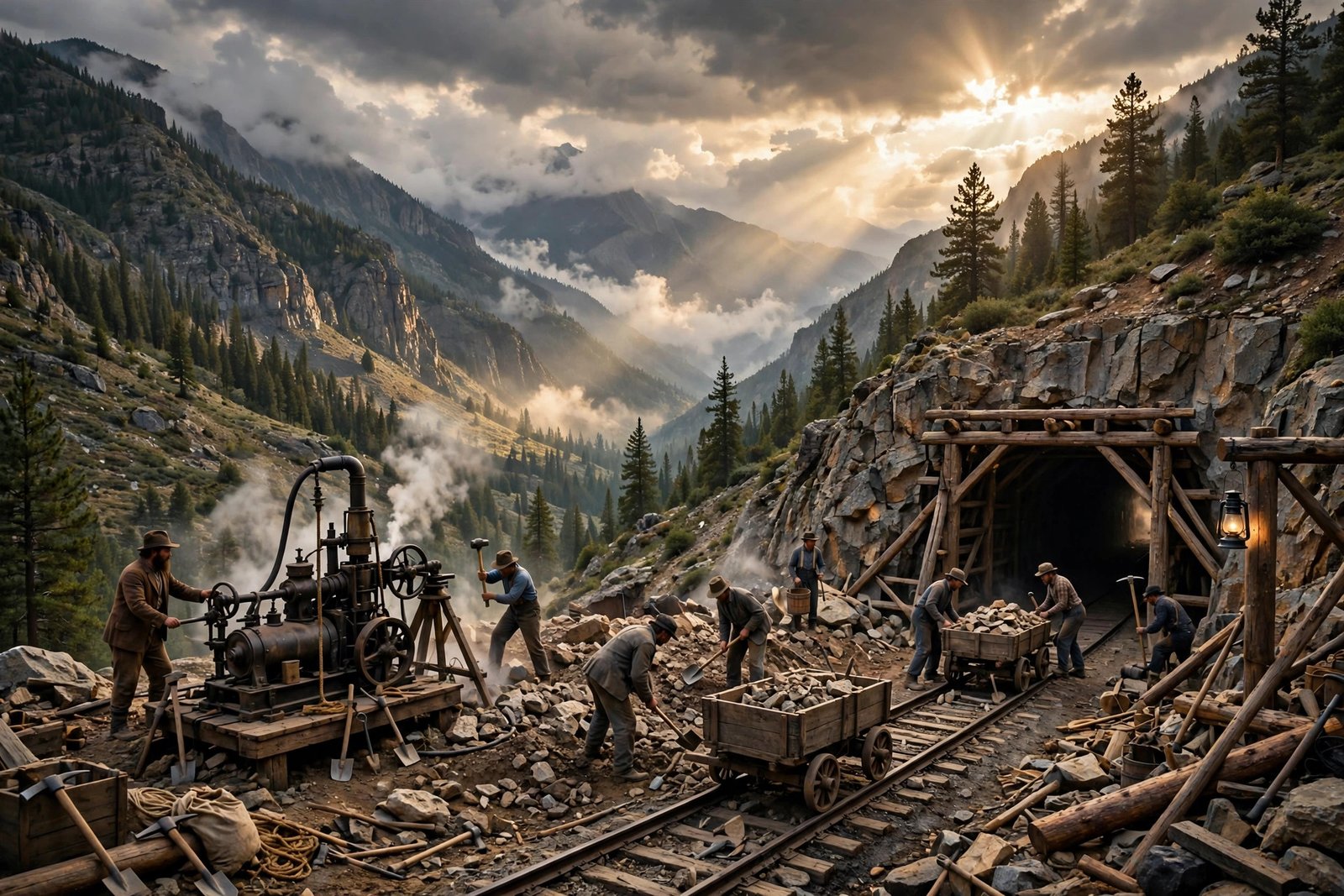
According to the legend, John Henry was a steel-driving man, one of the laborers who hammered steel drills into rock so that blasting powder could be packed in and tunnels carved through mountains. In the most popular version of the tale, railroad bosses brought in a steam-powered drill to test against the strongest man on the crew. John Henry accepted the challenge, raced the machine through the mountain, and won, only to collapse and die with his hammer in his hand.
The details change with every telling. In some versions, John Henry is a formerly enslaved man working on the railroads after the Civil War. In others, he is a giant of a man, born with a hammer already in his fist. Some songs say he beat the drill by a wide margin; others say the contest was close. Some versions name the tunnel, others do not. What stays constant is the core of the story: a man, a machine, a contest, and a victory that costs him everything.
That core is what made the legend of John Henry spread so far and so fast. It was not just a story about one worker. It was a story about every worker who feared being replaced by a machine, and about dignity in the face of impossible odds. The ballad became a work song, a protest song, and eventually a piece of American mythology.
Where the Legend of John Henry Came From
The legend of John Henry grew out of the world of railroad construction in the late nineteenth century, when tunnels were blasted through the Appalachian Mountains by crews of laborers working in brutal conditions. Steel drivers worked in teams, swinging heavy hammers in rhythm, and they sang to keep time. Songs were tools on the job as much as hammers were, and the ballad of John Henry likely began as one of those work songs.
Folklorists believe the song began circulating among railroad and tunnel workers in the 1870s and 1880s, passed from crew to crew by word of mouth. Because it traveled orally, no single original version exists. Each singer added verses, changed details, and shaped the hero to fit the audience. By the time the song was first written down and recorded in the early twentieth century, there were already many versions, and each claimed to tell the true story.
This is an important point about how folklore works. A folk hero does not need a single documented life to feel real. The legend of John Henry felt true to the men who sang it because it described their world: the noise, the danger, the pride in skilled labor, and the fear that machines would make that labor worthless. The song was their story, even if John Henry himself was partly or wholly invented.
What Historians Actually Know About John Henry
Here is where we must draw a clear line between folklore and verified fact. Historians have searched for decades for documentary proof of a real John Henry, and they have not found a conclusive answer. No payroll record, death certificate, or company report has been found that definitively identifies the man in the song. That does not mean no such man existed, but it does mean that the dramatic details of the legend cannot be confirmed as historical fact.
Several researchers have proposed candidates. One of the most discussed theories connects the legend to the construction of the Big Bend Tunnel in West Virginia, built for the Chesapeake and Ohio Railway in the early 1870s. Another theory points to tunnel work in Alabama. Other scholars argue that John Henry was a composite figure, built from the experiences of many steel drivers rather than one individual. Each theory has supporters, and none has produced the kind of evidence that would settle the question.
What historians can say with confidence is this: steel drivers were real, their work was real, and the arrival of steam-powered drills genuinely threatened their livelihoods. The contest at the heart of the legend reflects a real historical tension between human labor and mechanization. The legend of John Henry is historically truthful about the world it describes, even where its hero remains unverified.
The Big Bend Tunnel and the Search for Evidence
If you visit West Virginia today, you will find the Big Bend Tunnel presented as the likely site of John Henry’s famous contest, and the nearby town of Talcott has embraced the connection with a statue and an annual festival. This is a good example of how legend and local history blend. The tunnel is real, the railroad is real, and the work was done in the era the song describes. But visitors should understand the distinction: the tunnel’s existence is fact, while John Henry’s race inside it remains legend.
Researchers who favor the Big Bend theory point to the timing of the tunnel’s construction and to the documented use of steam drills in that period. Critics note that the evidence linking a specific worker named John Henry to that tunnel is circumstantial. The debate itself is part of the story’s appeal. Americans love a mystery, and the unresolved identity of John Henry keeps the legend alive in a way that a fully documented biography might not.
For travelers, the lesson is simple: enjoy the legend, honor the workers, and keep the two categories separate in your mind. The men who drilled those tunnels deserve to be remembered whether or not one of them was named John Henry. When you explore the rail history of Appalachia, you are walking through the real world that produced one of America’s greatest folk tales.
Why the Legend of John Henry Endures
Why has the legend of John Henry lasted when so many other work songs have faded? Part of the answer is timing. The story arrived at the exact moment America was wrestling with industrialization. Factories, railroads, and machines were transforming work, and people needed stories that made sense of the change. John Henry gave that change a human face and a heroic shape.
The story also endures because it refuses a simple moral. John Henry wins, but he dies. The machine loses, but machines eventually take over anyway. Is the tale a celebration of human strength, or a warning that even the strongest worker cannot hold back progress? Different generations have answered differently. During the labor movement, the song was a rallying cry for workers’ dignity. In later decades, it became a meditation on technology, automation, and what humans lose when machines do the work.
That flexibility is the mark of a great folk tale. Each era finds its own meaning in the legend of John Henry, and each retelling keeps the story relevant. Today, as artificial intelligence and automation raise the same questions the steam drill raised in the 1870s, John Henry’s hammer feels surprisingly modern.
John Henry in Music, Books, and Popular Culture
The legend of John Henry has been sung by an extraordinary range of artists, from early blues and folk musicians to modern rock and country performers. The ballad’s simple structure and driving rhythm make it endlessly adaptable, and each performer brings something new to it. Some versions are mournful, others defiant, and some are almost playful. Together, they form a living archive of American music.
Beyond music, John Henry has appeared in children’s books, novels, plays, cartoons, and public art. Statues and murals celebrate him in towns connected to the legend, and his image has been used to represent American perseverance in classrooms and museums. Writers have retold the story for young readers, often emphasizing courage and hard work, while adult retellings tend to linger on the tragedy and the cost of the victory.
This cultural afterlife matters because it shows how folklore grows. A song sung by tunnel crews became a national story, then a symbol, then a character that each generation reinvents. The legend of John Henry no longer belongs to any single place or performer. It belongs to American culture as a whole, which is exactly how folk heroes are made.
Visiting the World of John Henry Today
If the legend has sparked your curiosity, there are wonderful ways to explore it in person. The Appalachian railroad towns connected to the story offer museums, historic sites, and scenic drives through the mountains where the tunnels were built. A road trip through this region pairs beautifully with other classic American journeys, and you can plan a route that mixes history, music, and mountain scenery. For inspiration on planning a longer drive, check out our Route 66 road trip guide, which captures the same spirit of American highway adventure.
West Virginia’s railroad heritage sites are a natural starting point, and the state’s mountain landscapes are worth the trip on their own. If you love dramatic American scenery, our guide to the most beautiful lakes in the USA will give you plenty of ideas for pairing history with nature. And for another story of American grit and natural wonder, read our facts about the Grand Canyon, where human ambition met a landscape on a very different scale.
When you visit, remember to look for both layers of the story. Enjoy the festivals, statues, and songs that celebrate the legend, and take time to learn about the real railroad workers whose lives inspired it. The best way to honor John Henry, real or legendary, is to remember the people behind the myth.
Conclusion: The Man, the Myth, and the Hammer
So, was John Henry real? The honest answer is that we do not know, and we may never know for certain. What we do know is that the legend of John Henry tells a true story about American workers, about pride in skilled labor, and about the human cost of progress. The folklore is magnificent, and the history behind it is humbling. You do not have to choose between them. The legend is worth singing, and the real workers are worth remembering.
If this story moved you, share it with someone who loves American history or folk music, and tell us in the comments which version of the ballad you grew up hearing. Explore more American legends, landscapes, and hidden stories here on Beauty of USA, and keep digging into the tales that shaped this country. The hammer may have fallen silent, but the song plays on.