
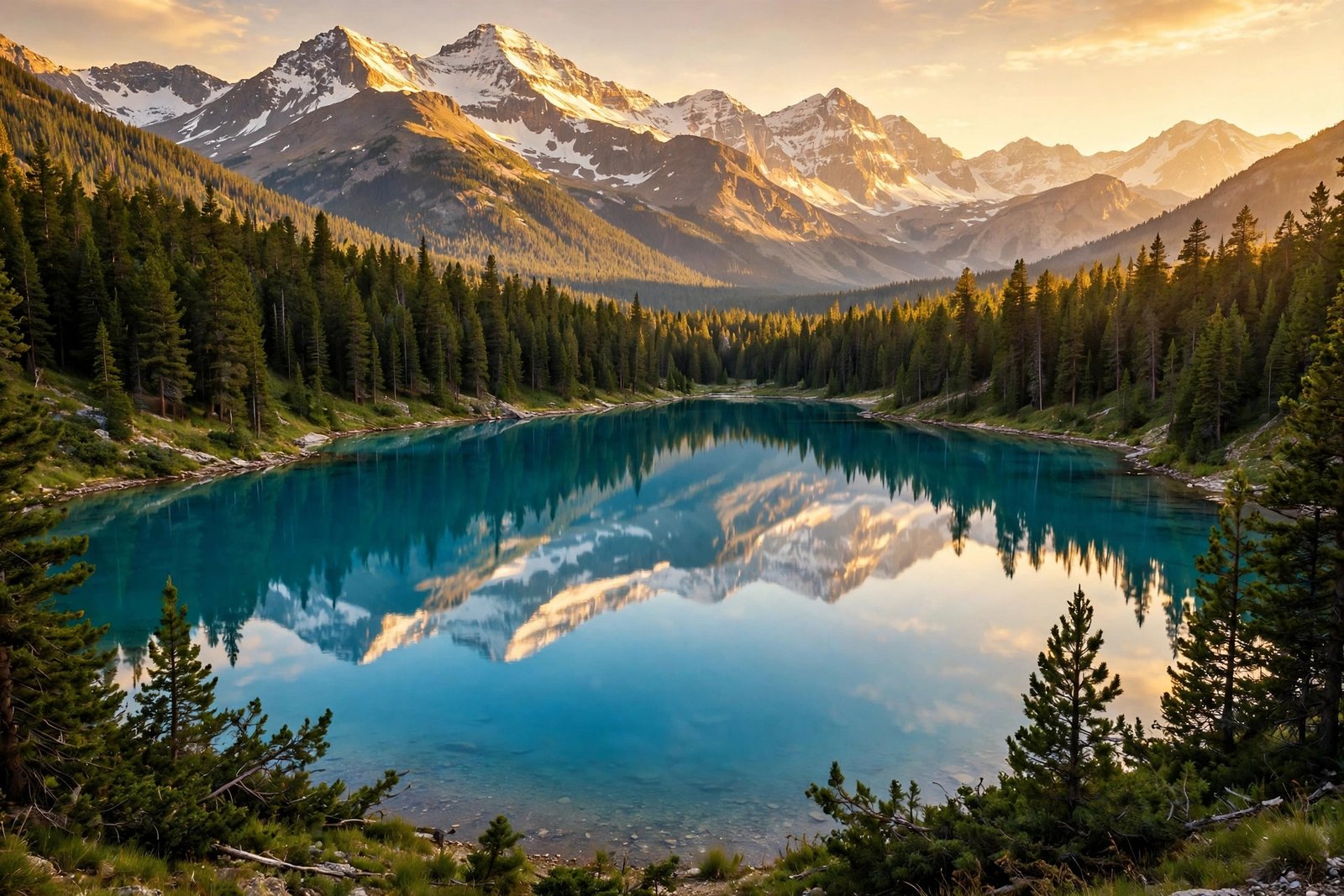
There is a moment every traveler remembers: the first time you stand on a lakeshore and the water is so clear, so impossibly blue, that it hardly looks real. America is full of those moments. From crater lakes born of volcanoes to alpine mirrors tucked beneath granite peaks, the most beautiful lakes in USA offer something no ocean beach can match: still water, mountain air, and scenery that changes with every hour of light. Whether you love swimming, kayaking, photography, or simply sitting on a quiet dock, this guide will help you find the lake that belongs on your next trip.
In this guide, we cover ten lakes across the country, from the Pacific Northwest to upstate New York. Each one earned its place for a different reason. Some are famous for color, some for depth, some for the wild country around them. All of them are worth the journey.
What Makes the Most Beautiful Lakes in USA So Special
America has more than 120 major lakes, along with thousands of smaller ones scattered through national parks, forests, and mountain ranges. What sets the most beautiful lakes in USA apart is the combination of water, light, and landscape. Glacial lakes glow turquoise because of rock flour, fine sediment ground by ancient ice. Volcanic lakes like Crater Lake are deep and intensely blue because their water is snowmelt, pure and nearly free of sediment. Desert lakes like Lake Powell reflect red rock cliffs, turning gold at sunset.
Many of these lakes sit inside protected places, which keeps the water clean and the shorelines wild. That is why a visit to a great lake often pairs naturally with a visit to one of the best national parks in the USA. Plan ahead, arrive early, and give yourself time to see the lake in morning light, when the water is calmest and the crowds are thinnest.
Crater Lake, Oregon
Crater Lake is the deepest lake in the United States, reaching about 1,943 feet at its lowest point. It formed when Mount Mazama erupted and collapsed thousands of years ago, leaving a caldera that slowly filled with snow and rain. There are no rivers flowing in or out, which is part of why the water is so pure and so deeply blue.
The best introduction is Rim Drive, a 33-mile road that circles the caldera with overlooks at every turn. Wizard Island, a small volcanic cone rising from the water, is a favorite subject for photographers. In summer, boat tours and the Cleetwood Cove Trail, the only trail to the water, let visitors get close to the surface. In winter, the rim is buried in snow, and the park becomes a quiet world of white. If you only visit one lake on this list, make it Crater Lake. It is one of the most beautiful places in America for a reason.
Lake Tahoe, California and Nevada
Lake Tahoe straddles the California-Nevada border in the Sierra Nevada mountains. It is the second-deepest lake in the United States, at about 1,645 feet, and one of the clearest large lakes in the world. On a calm day, you can see boulders dozens of feet below the surface.
Tahoe is a year-round destination. In summer, the beaches at Kings Beach, Sand Harbor, and Emerald Bay draw swimmers, paddleboarders, and kayakers. It is easy to see why Tahoe belongs on any list of the most beautiful lakes in USA. Emerald Bay, with its tiny Fannette Island and the stone Vikingsholm castle on the shore, is one of the most photographed corners of the lake. In winter, the surrounding resorts offer some of the best skiing in the West, and the lake itself takes on a steely blue-gray beauty.
- Best time to visit: June through September for warm water and full access to beaches and trails.
- Do not miss: Sand Harbor at sunrise, when the water glows turquoise over granite boulders.
- Getting there: Fly into Reno, Nevada, about an hour away, or Sacramento, California, about two hours away.
Lake Powell, Arizona and Utah
Lake Powell is unlike any other lake in America. It was created when the Glen Canyon Dam was built on the Colorado River, flooding a maze of red rock canyons. The result is nearly 2,000 miles of shoreline, more than the entire West Coast of the United States, winding through sandstone towers, slot canyons, and hidden coves.
The best way to experience Lake Powell is by boat. Rent a houseboat or a powerboat from Wahweap Marina near Page, Arizona, or Bullfrog Marina in Utah, and spend a few days exploring. Antelope Canyon, accessible by tour from Page, is a short slot canyon whose light beams are world famous. Rainbow Bridge, one of the largest natural bridges on Earth, can be reached by boat and a short walk. Even a single day on the water, watching the cliffs turn red and gold at sunset, is unforgettable.
Lake Superior, the Greatest of the Great Lakes
Lake Superior is the largest freshwater lake in the world by surface area, covering about 31,700 square miles along the shores of Minnesota, Wisconsin, Michigan, and Canada. It holds about 10 percent of the world’s surface fresh water. Standing on its shore feels more like standing on the edge of an ocean than a lake.
Superior’s beauty is wild and rugged. In Minnesota, the North Shore Scenic Drive runs from Duluth to the Canadian border, passing waterfalls, lighthouses, and state parks like Split Rock Lighthouse and Gooseberry Falls. In Michigan, Pictured Rocks National Lakeshore offers multicolored sandstone cliffs, sea caves, and beaches that glow at sunset. The water is cold, often in the 40s and 50s even in summer, so most visitors admire it from the shore, a kayak, or a tour boat rather than swimming.
Jenny Lake, Wyoming
Jenny Lake sits at the foot of the Teton Range in Grand Teton National Park, and it may be the most photographed lake in the American West. The peaks of the Tetons rise more than 7,000 feet above the water, and on a still morning, the mountains reflect perfectly on the surface. It shows why the most beautiful lakes in USA are so often the ones framed by great mountains.
The Jenny Lake Loop is a scenic trail around the water, with a popular shortcut by shuttle boat across the lake to the Cascade Canyon trailhead. From there, hikers can reach Hidden Falls and Inspiration Point, two of the park’s best short hikes. Kayakers and paddleboarders love the calm morning water. Go early, because the parking lot fills fast in summer, and the light is best before the afternoon wind picks up.
Lake McDonald, Montana
Lake McDonald is the largest lake in Glacier National Park, stretching about 10 miles along the Going-to-the-Sun Road. It is famous for its clear water and its colorful pebbles, smooth stones in shades of red, green, yellow, and purple that line the shallows. The colors come from iron-rich rock in the surrounding mountains.
At Apgar Village, at the lake’s western end, visitors can rent kayaks, take a historic boat tour, or simply sit on the beach and watch the light change over the mountains. The lake is a perfect base for exploring the park’s western side, including the Trail of the Cedars and Avalanche Lake. In the evening, the water often turns glassy, reflecting the peaks of the Lewis Range.
The Finger Lakes, New York
The Finger Lakes are eleven long, narrow lakes in central New York, carved by glaciers thousands of years ago. From above, they look like fingers pressed into the landscape, which is how they got their name. The two largest, Seneca and Cayuga, are deep and wide, while smaller lakes like Skaneateles and Keuka are known for clear water and charming villages.
What makes the Finger Lakes special is how much there is to do around the water. The region is New York’s largest wine-producing area, with more than a hundred wineries, many of them along the Seneca Lake Wine Trail. Watkins Glen State Park, at the southern tip of Seneca Lake, has a gorge trail past nineteen waterfalls. Taughannock Falls, near Ithaca, drops 215 feet, taller than Niagara Falls. Between the lakes, the gorges, and the small towns, a Finger Lakes trip can easily fill a week.
- Best base: Ithaca, at the south end of Cayuga Lake, puts you near gorges, waterfalls, and the lake itself.
- Best for wine lovers: Seneca Lake, home to the region’s oldest and most visited wine trail.
- Best for quiet beauty: Skaneateles Lake, whose name means “long lake” and whose village feels like a postcard.
Mono Lake, California
Mono Lake, east of Yosemite National Park, looks like a landscape from another planet. Its water is salty and alkaline, too harsh for fish, but it supports trillions of brine shrimp and alkali flies that feed millions of migratory birds. Rising from the water are tufa towers, strange calcium-carbonate spires formed where freshwater springs bubble into the alkaline lake.
The South Tufa Area is the easiest place to see the towers, with a short boardwalk trail along the shore. At sunrise and sunset, the tufa glow pink and gold against the Eastern Sierra. Mono Lake is one of the oldest lakes in North America, and visiting it feels like stepping back in time. Pair it with a trip to nearby Yosemite or the ghost town of Bodie for a classic Eastern Sierra road trip.
Lake Chelan, Washington
Lake Chelan is a 50-mile-long lake in north-central Washington, and one of the deepest lakes in the state at about 1,486 feet. Its upper reaches lie inside North Cascades National Park, where the mountains rise steeply from the water and the landscape feels untouched. The lower lake, around the town of Chelan, is sunnier and drier, with orchards, vineyards, and beaches.
The most adventurous way to see the lake is to take the Lady of the Lake ferry from Chelan to the remote village of Stehekin, at the lake’s northern end. Stehekin has no road access, only boat, floatplane, or trail. From there, hikers can explore the North Cascades, visit Rainbow Falls, or simply enjoy the quiet. It is a journey that feels like a real escape, and the scenery along the way is some of the best in Washington.
How to Plan a Trip to the Most Beautiful Lakes in USA
A little planning makes a lake trip much better. First, think about season. Summer brings warm water and full access, but also crowds. Late spring and early fall often offer the best balance: fewer people, good light, and comfortable hiking weather. For mountain lakes, check road and trail conditions before you go, since snow can linger into July at high elevations.
Second, think about how you want to experience the water. Swimming is best at lakes like Tahoe, Chelan, and the Finger Lakes. Boating is the star at Lake Powell and Lake Tahoe. Photography is rewarding everywhere, but especially at Crater Lake, Jenny Lake, and Mono Lake, where sunrise and sunset light transforms the scenery. If you are choosing between a lake trip and a coastal trip, our guide to the best beaches in the USA can help you compare.
Finally, protect the places you visit. Stay on trails, pack out all trash, and never wash soap or sunscreen directly into a lake. Many of these lakes are in national parks, where rangers can help you plan a safe and responsible visit. Book lodging early near popular lakes, because the best cabins and campsites go months ahead.
Conclusion: Find Your Lake
From the volcanic blue of Crater Lake to the red rock canyons of Lake Powell, America’s lakes offer a lifetime of exploring. You do not need to see all ten in one trip. Pick the lake that matches your style, whether that is a road trip, a hiking adventure, or a quiet week on the shore, and start planning. The water is waiting.
Which lake would you visit first? Tell us in the comments, share this guide with a friend who loves road trips, and keep exploring Beauty of USA for more destinations worth the drive.