
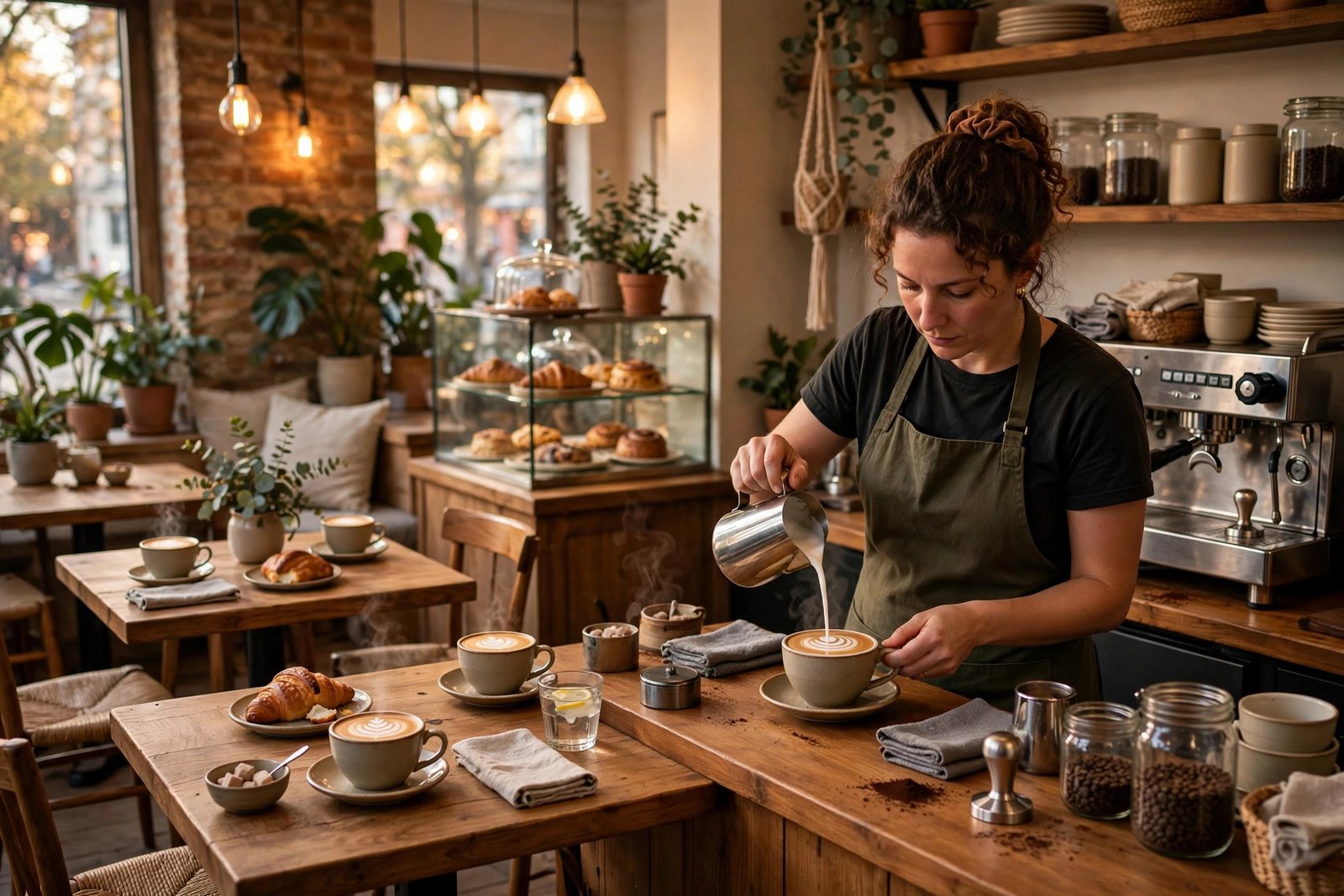
Before the alarm clock, before the commute, before the first email, there is the coffee maker. For millions of Americans, the day does not truly begin until that first cup is poured. American coffee culture is one of the most familiar parts of daily life in the United States, yet it is also one of the most interesting. It is a story of rebellion and routine, of diners and drive-thrus, of Italian espresso bars and Southern chicory, and of a simple hot drink that became a national ritual. In this guide, we explore how coffee became America’s drink, how it is brewed and enjoyed from coast to coast, and what your morning cup says about the country that drinks it.
From Tea to Coffee: How America Made the Switch
America’s love affair with coffee began with a political protest. In December 1773, colonists in Boston dumped chests of British tea into the harbor in the event known as the Boston Tea Party. Drinking tea suddenly felt like siding with the British crown, and coffee, which had been gaining ground in colonial port cities, became the patriotic alternative. Coffeehouses had already opened in Boston, New York, and Philadelphia, where merchants and writers gathered to talk business and politics over a cup. After the Revolution, coffee kept its new status as the American drink.
Through the 1800s, coffee traveled with the country as it expanded. Cowboys on cattle drives brewed strong coffee over open fires. Soldiers in the Civil War received coffee in their rations and brewed it whenever they could. By the early 1900s, coffee was a fixture of the American breakfast table, and brands like Maxwell House, with its famous ‘Good to the Last Drop’ slogan, made coffee a household name. When electric drip coffee makers became a kitchen staple in the 1970s, brewing a pot at home became one of the most ordinary rituals in American life. Coffee had gone from a colonial import to a daily necessity.
American Coffee Culture and the Rise of the Coffeehouse
The modern chapter of the American coffee story began in Seattle. In 1971, three friends opened a small shop called Starbucks in Seattle’s Pike Place Market, selling whole coffee beans and equipment. A few years later, a young salesman named Howard Schultz joined the company, and a business trip to Milan, Italy, in 1983 changed everything. In Milan, Schultz saw espresso bars on nearly every corner: lively neighborhood gathering places where people stopped for a quick espresso and conversation. He returned to Seattle convinced that Americans would love a coffeehouse of their own.
He was right. Starbucks began opening espresso bars, and the coffeehouse spread across the country. The coffeehouse became what sociologists call a ‘third place’: not home, not work, but a comfortable public space where people meet, study, work, and relax. Writers wrote novels in coffee shops. Students crammed for exams over lattes. Friends met for a catch-up that lasted three refills. The menu expanded too, with drinks like the caffe latte, the cappuccino, and the caramel macchiato becoming part of the American vocabulary.
Seattle was not the only city with a coffee story. Peet’s Coffee, founded in Berkeley, California, in 1966 by Dutch immigrant Alfred Peet, helped introduce Americans to darker roasts and high-quality beans years before the big chains took off. Many of the people who built the modern American coffee industry learned their craft at Peet’s. Today, coffeehouses of every size, from national chains to tiny neighborhood shops, are part of the landscape of nearly every American town.
The Diner Cup: Bottomless Coffee and Everyday Rituals
If the coffeehouse is the glamorous side of American coffee culture, the diner is its beating heart. In diners across the country, coffee arrives in a thick white mug, poured by a server who seems to know exactly when your cup is half empty. The bottomless cup, where refills keep coming, is one of the great American bargains: one price, as much coffee as you want, alongside eggs, pancakes, or pie.
The diner cup is tied to some of the most beloved rituals in American life. Truck drivers stop for coffee on long overnight hauls. Road-trippers fill up at highway diners on their way to the next state. Early risers gather at the same counter every morning, and the coffee is as much about the company as the caffeine. In many towns, the diner is where news travels, deals are made, and regulars are greeted by name. Coffee there is not fancy, and that is the point. It is hot, strong, and always there. If you love the comfort of classic American eating, our look at American diner culture pairs perfectly with this story.
The office coffee pot is another American institution. The workplace coffee break, a short pause in the morning and afternoon, became a standard part of American working life in the twentieth century. The break room pot, the shared mug, and the office coffee run are small rituals that shape the workday. Even in the era of remote work, many Americans still start their day the same way: coffee first, everything else second.
American Coffee Culture Goes Specialty
In the past two decades, American coffee culture has entered what coffee lovers call the third wave. The first wave made coffee a household staple. The second wave, led by the big coffeehouse chains, made espresso drinks mainstream. The third wave treats coffee like wine: a craft product with origins, flavors, and a story. Third-wave roasters buy single-origin beans from specific farms and regions, roast them in small batches, and brew them with careful methods like the pour-over, the French press, and the Chemex.
Cold brew is one of the biggest American coffee innovations of this era. Made by steeping coarse coffee grounds in cold water for many hours, cold brew is smooth, strong, and less acidic than hot coffee. It became a summer staple at cafes across the country, and nitro cold brew, infused with nitrogen gas for a creamy, cascading pour, turned it into a showpiece. The pumpkin spice latte, introduced by Starbucks in the fall of 2003, became a seasonal phenomenon of its own, announcing autumn for millions of fans.
At home, Americans have embraced the craft too. Pour-over cones, French presses, espresso machines, and single-serve brewers now sit side by side in kitchens across the country. Home baristas grind their own beans, experiment with brewing ratios, and chase the perfect cup. Coffee subscriptions deliver fresh beans from roasters in every state, and farmers markets often feature local roasters selling beans roasted just days before. For a taste of that local food scene, see our guide to farmers markets in America.
Regional Coffee Styles Across the USA
One of the joys of coffee in America is that it changes as you cross the country. In Seattle and Portland, espresso is king, and independent cafes compete on the quality of their roasts and the skill of their baristas. The Pacific Northwest is also famous for its drive-thru coffee stands, tiny kiosks where baristas in a hurry serve elaborate espresso drinks to commuters who never leave their cars.
In New Orleans, coffee has a flavor all its own. The city’s famous cafe au lait is made with coffee blended with roasted chicory root, served with hot milk alongside beignets at places like Cafe du Monde, a French Market coffee stand that has served the city since 1862. The chicory tradition, which goes back to times when coffee was scarce and chicory stretched the supply, is now a proud part of Louisiana food culture.
In Miami, Cuban coffee shapes the day. A cafecito is a small, sweet shot of strong espresso shared with friends or coworkers, and a colada is a larger Styrofoam cup of sweetened espresso meant to be passed around, with tiny cups for everyone. The ventanita, the walk-up coffee window, is a social institution in Little Havana. In New York City, the bodega coffee, a regular coffee with milk and sugar in a paper cup, often with a toasted bagel, is a morning ritual for millions. And in Hawaii, Kona coffee, grown on the slopes of the Big Island, is one of the most prized coffees in the world, a reminder that the United States grows its own coffee too.
Coffee at Home: Brewing the American Way
For all the cafes and coffeehouses, most American coffee is still brewed at home. The classic drip coffee maker remains the workhorse of the American kitchen, turning out a full pot for the family or the household. Single-serve brewers, which make one cup at a time from a pod, became hugely popular for their speed and convenience. The French press, the pour-over, and the cold brew pitcher have found their place too, as more Americans experiment with brewing methods.
The morning coffee routine is deeply personal. Some people grind beans the night before so the pot is ready at the push of a button. Others treat brewing as a quiet ritual, a few slow minutes before the rush of the day begins. Some like their coffee black, some take it with cream and sugar, and some have a standing order at their local shop that the barista starts making the moment they walk in. However it is brewed, coffee at home is where this daily ritual lives day in and day out.
Coffee also anchors American hospitality. Offering a guest a cup of coffee is one of the most natural gestures in an American home, and the coffee table, the coffee break, and the coffee date are all part of the social language. A first date over coffee is low-pressure and easy to end or extend. A business meeting over coffee is friendly but focused. Coffee fits almost every occasion, which is one reason it has lasted so long at the center of American life.
What Coffee Culture Says About the USA
At its heart, American coffee culture is about more than caffeine. It reflects the country’s love of choice, from the endless menu board at the cafe to the dozen brewing methods in the kitchen. It reflects the value Americans place on productivity and the morning routine, on grabbing a cup and getting to work. And it reflects a culture that prizes gathering places, whether that is a diner counter, a coffeehouse corner, or a kitchen table.
Coffee culture in America is also wonderfully democratic. The same country that pays top dollar for single-origin pour-overs also cherishes the bottomless diner mug and the gas station coffee on a road trip. There is no single right way to drink coffee in America, and that variety is the point. Coffee in America belongs to everyone: the truck driver, the student, the rancher, the barista, and the grandparent with the old percolator. For another taste of America’s regional food traditions, explore our guide to American BBQ regional styles.
So the next time you pour your morning cup, take a moment to appreciate the long road it traveled: from a colonial protest to a cowboy campfire, from a Seattle market to a New Orleans cafe, from a diner counter to your kitchen. Then take a sip, and start your day the American way. If this guide made you hungry for more, browse the rest of Beauty of USA for stories about the places, foods, and traditions that make America, America.