
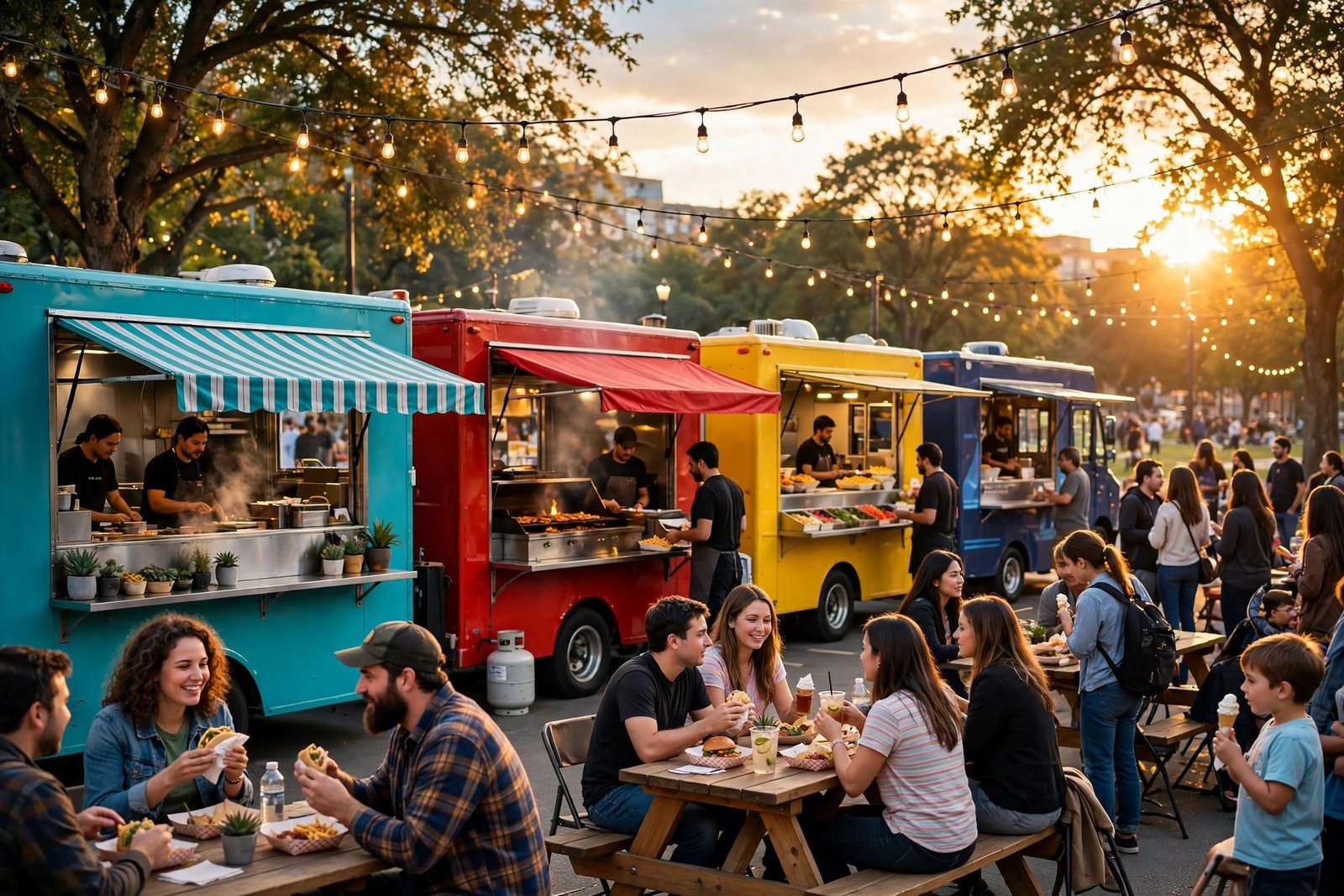
There is something unmistakably American about eating great food from a truck. No white tablecloths, no reservations, just a line of hungry people, the smell of something delicious, and a cook who clearly loves what they do. American food truck culture has grown from humble lunch wagons into a nationwide movement, shaping how cities eat, how small businesses start, and how neighborhoods gather. From taco trucks in Los Angeles to lobster rolls in Maine, food trucks have become one of the most democratic and delicious parts of American life.
This guide explores where food trucks came from, why they took off, which cities do them best, and how to enjoy them like a local. Whether you are a curious traveler or a future truck owner, you will find the flavors, the history, and the practical tips here. If you enjoy this taste of American culture, you may also like our guides to classic American diners and regional barbecue styles.
How American Food Truck Culture Got Rolling
The roots of American food truck culture go back much further than most people realize. In the years after the Civil War, cattle drives across the American West needed a way to feed cowboys on the trail. The chuck wagon, a wagon fitted with a cook’s workspace and supplies, is often credited to Charles Goodnight, a Texas rancher, in the 1860s. Chuck wagons served simple, hearty food like beans, biscuits, and coffee, and they became a beloved symbol of the frontier.
By the late 1800s, horse-drawn lunch wagons were appearing in cities in the Northeast. In Providence, Rhode Island, a man named Walter Scott began selling sandwiches and coffee from a wagon in 1872, serving workers who needed a quick, affordable meal at night. These early wagons were the ancestors of the modern food truck, and they proved a simple truth that still holds today: good food, served where people already are, will always find customers.
Through the twentieth century, mobile food kept evolving. Ice cream trucks brought treats to neighborhoods, canteen trucks served factory workers, and taco trucks served growing Latino communities in California and Texas. Each wave added new flavors and new customers, laying the groundwork for the gourmet food truck boom that would arrive in the 2000s.
From Chuck Wagons to Taco Trucks: A Short History
The modern food truck story really takes off in Los Angeles. In 1974, Raul Martinez opened King Taco in East Los Angeles, starting with a converted ice cream truck and building it into a beloved local institution. Taco trucks became a fixture of Los Angeles street life, serving authentic Mexican food late into the night and proving that a truck could be a serious restaurant, not just a snack stop.
Then came 2008. In Los Angeles, the Kogi BBQ truck began serving Korean-Mexican fusion tacos, like short rib tacos with kimchi, and used social media to tell customers where the truck would be each day. The idea caught fire. Lines formed, food writers took notice, and soon gourmet trucks were opening in cities across the country, serving everything from lobster rolls to Belgian waffles to wood-fired pizza.
The timing mattered. The economic downturn of the late 2000s made traditional restaurants harder to open, while a truck offered a cheaper way for talented cooks to start a business. At the same time, smartphones and social media made it easy for trucks to announce locations and build a loyal following. The result was a creative explosion that changed American street food forever.
What Makes a Great Food Truck City
Not every city treats food trucks the same way, and local rules make a big difference. The best food truck cities tend to share a few traits: reasonable permits and fees, plenty of public gathering spots, and a culture that celebrates street food rather than restricting it. Portland, Oregon, is famous for its food cart pods, clusters of carts with shared seating that feel like open-air food halls. Austin, Texas, built a reputation around its trailer parks and late-night taco scene. Los Angeles remains the spiritual home of the taco truck.
New York City has its own long tradition, from halal carts to hot dog stands, and its dense streets mean a good cart can serve thousands of people a day. In the Southeast, cities like Atlanta and Charleston mix Southern cooking with food truck creativity, serving shrimp and grits, fried chicken sandwiches, and low-country flavors from mobile kitchens. Wherever you travel in America, the local truck scene is a shortcut to understanding what a city actually eats.
If you are visiting a new city, a little research goes a long way. Look for trucks with long lines of locals, check recent reviews, and ask residents where they eat. The best trucks are often not the flashiest ones. They are the ones with a short menu, a clear specialty, and a cook who has been perfecting one dish for years.
American Food Truck Culture on the Festival Circuit
Food trucks have also become stars of the American festival circuit. Music festivals, farmers markets, county fairs, and food truck rallies now feature rows of trucks as a central attraction. At a rally, dozens of trucks gather in one place, giving visitors the chance to sample many cuisines in a single afternoon, from Thai noodles to gourmet grilled cheese.
Farmers markets deserve a special mention. Many markets now welcome food trucks alongside produce stalls, creating a full morning outing where visitors can shop for local vegetables and then eat breakfast or lunch on the spot. For more on that world, see our guide to farmers markets across America. The combination of fresh local ingredients and mobile cooking is a natural fit, and many trucks proudly source from the same farms that sell at the market.
Festivals also give new trucks a chance to prove themselves. A truck that wins over a festival crowd can build a following fast, and many successful brick-and-mortar restaurants started as festival favorites. For visitors, festivals are the easiest way to taste a city’s food truck scene in one place, with live music, family activities, and plenty of seating.
Regional Flavors Worth Chasing
One of the joys of food truck travel is how regional the flavors are. In New England, look for lobster rolls, clam chowder, and fried seafood. In the Southwest, green chile, breakfast burritos, and Sonoran hot dogs rule the streets. In the Pacific Northwest, expect fresh salmon, Dungeness crab, and inventive vegetarian options.
The South brings its own comfort: barbecue, fried chicken, biscuits, and sweet tea, often served with a modern twist. The Midwest offers hearty fare, from cheese curds in Wisconsin to pork tenderloin sandwiches in Indiana and Iowa. And in Hawaii, plate lunches and shave ice from trucks are an essential part of island life.
This regional variety is what keeps food truck culture exciting. Unlike chain restaurants, which taste the same everywhere, trucks reflect their neighborhoods. A truck in Houston will not taste like a truck in Boston, and that is exactly the point. Eating your way across America by truck is one of the tastiest road trips you can take.
How to Eat Like a Local at a Food Truck
Enjoying a food truck is easy, but a few tips will make the experience better. First, order the specialty. Most great trucks do one thing brilliantly, and that signature dish is usually the reason for the line. Second, bring cash as a backup, even though most trucks now accept cards. Third, be patient and friendly. Small kitchens mean slower service during rushes, and a little kindness goes a long way.
- Check the truck’s social media for the day’s location and hours before you go.
- Order the house specialty first, then explore the rest of the menu on later visits.
- Look for seating nearby, and be ready to eat standing up like a local.
- Try one new flavor you have never had before at every truck you visit.
- Leave a review or tag the truck online to support a small business.
Families will find food trucks especially convenient. Kids can pick their own meals from different trucks, portions are often generous, and outdoor seating means nobody worries about noise. Many truck gatherings are dog-friendly too, so the whole family, pets included, can enjoy the outing.
Starting Your Own Truck: The Honest Realities
For many cooks, a food truck looks like the perfect way to start a restaurant business. The startup costs are lower than a traditional restaurant, the menu can be small and focused, and the truck can move to where the customers are. Those advantages are real, and they explain why so many talented chefs chose trucks over storefronts.
But the realities are demanding. Truck owners deal with permits that vary by city, maintenance on a vehicle that doubles as a kitchen, long hours in hot and cramped conditions, and weather that can wipe out a day’s sales. Finding good locations, managing supplies, and building a loyal following all take time and persistence. Anyone considering this path should research local rules carefully, talk to existing owners, and start with a clear business plan. The U.S. Small Business Administration offers general guidance for new businesses at sba.gov.
Despite the challenges, the success stories keep coming. Trucks that start small, serve one great dish, and treat customers well can grow into catering businesses, multiple trucks, or full restaurants. The food truck is not a shortcut to success, but for the right cook, it is a genuine path into American small business ownership.
The Future of Food Trucks in America
Food trucks continue to evolve. Ghost kitchens, online ordering, and delivery apps have changed how trucks reach customers. Some trucks now focus on catering and private events, while others partner with breweries, wineries, and office parks for regular stops. Sustainability is also growing in importance, with more trucks using compostable packaging, sourcing locally, and reducing food waste.
What has not changed is the core appeal. A food truck offers good food, honest prices, and a direct connection between cook and customer. In a country where dining can feel impersonal, that connection matters. Food trucks remind us that great meals do not need fancy dining rooms, just fresh ingredients, real skill, and a willingness to meet people where they are.
Conclusion: Hit the Road and Taste America
American food truck culture is really a story about America itself: inventive, diverse, hardworking, and always hungry for something new. From a chuck wagon on the Texas plains to a fusion taco truck in Los Angeles, the journey shows how food follows people, and how people build community around a shared meal.
Your next food adventure is probably closer than you think. Find a truck gathering near you this weekend, bring friends, try something new, and share your favorites online. Support the small businesses that make your city delicious, and if this guide inspired you, share it with someone who loves great food. The road is open, the grill is hot, and America is serving.