
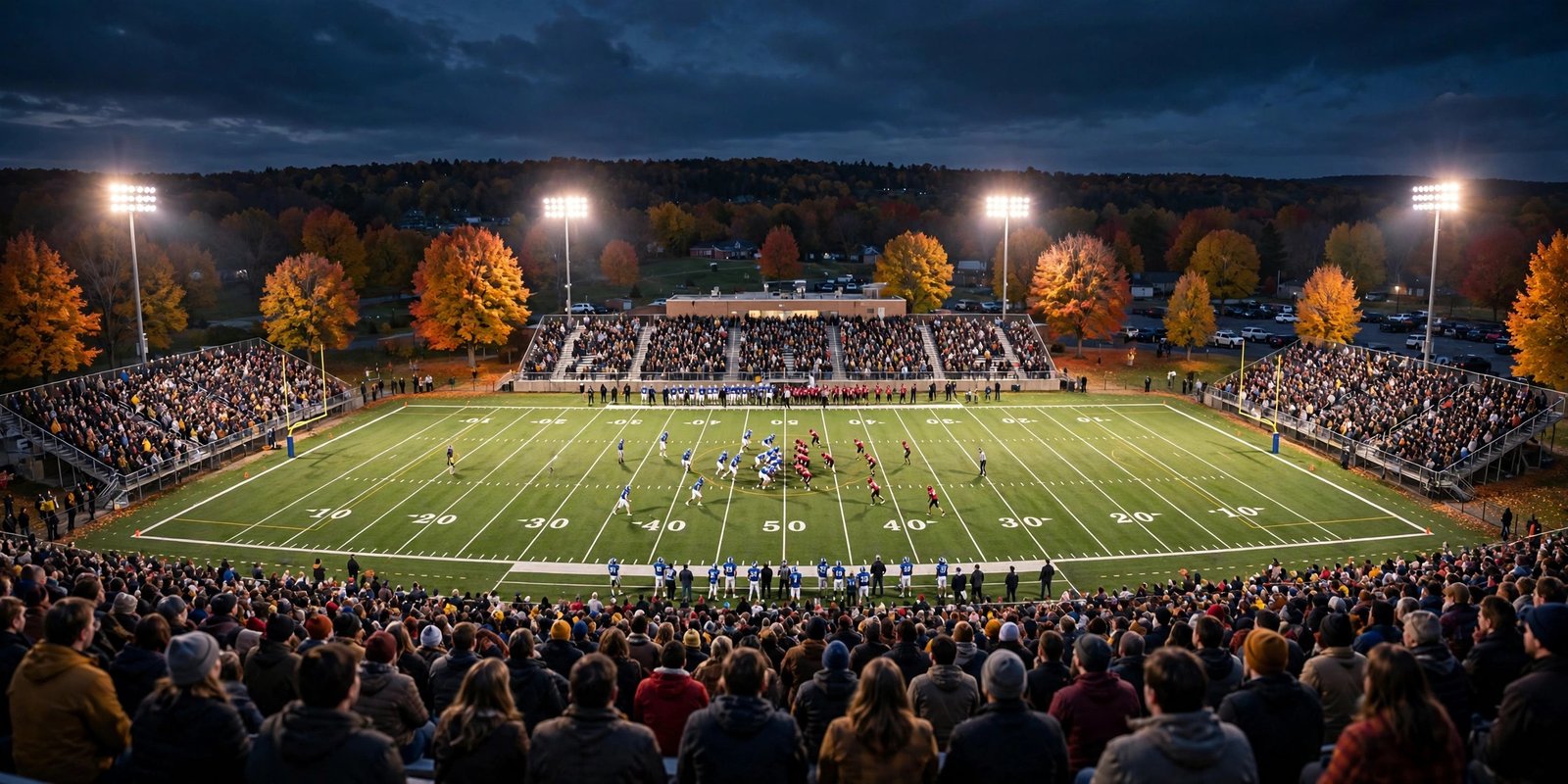
When the sun goes down on a Friday night in autumn, thousands of small towns across America light up in the same way. Stadium lights buzz on, marching bands warm up, and crowds stream through the gates wearing school colors. This is the heart of american high school football culture, a tradition that turns a school game into the biggest event of the week and brings whole communities together under one set of lights.
For many Americans, Friday night football is not just a sport. It is a reunion, a rite of passage, and a shared memory that lasts long after graduation. Parents return to the same bleachers where they once sat as students. Alumni fly home for big rivalry games. Local businesses close early so everyone can make kickoff. In this article, we explore what makes this culture so powerful, how it grew, and why it still matters today.
What Is American High School Football Culture?
American high school football culture is the collection of traditions, rituals, and community habits that surround high school football in the United States. It includes the games themselves, but also the marching bands, cheerleaders, pep rallies, homecoming dances, tailgate parties, and local pride that come with them. In many towns, the football team is a symbol of local identity in the same way a professional team represents a big city.
The season usually runs from late August through November, with playoff games extending into December in some states. Games are most often played on Friday nights, which is why the phrase Friday night lights has become shorthand for the entire tradition. Students, teachers, families, and neighbors all take part, whether they are on the field, in the band, or simply cheering from the stands.
What sets this culture apart from other school sports is its scale. Some high school stadiums seat tens of thousands of fans, and rivalry games can draw crowds that rival small college games. Local newspapers preview the matchups, radio stations broadcast the games, and social media buzzes with highlights all weekend long.
American High School Football Culture in Small Towns
Nowhere is american high school football culture stronger than in small towns. In places where the high school is the center of community life, the football team gives everyone something to share. The quarterback might also work at the local grocery store. The head coach might be a former player who came back to teach. The whole town knows the roster, and the whole town feels the wins and losses.
In Texas, where high school football is famously intense, some school districts have built enormous stadiums and entire communities plan their autumn weekends around the schedule. In Ohio and Pennsylvania, historic rivalries stretch back generations, with families supporting the same school for decades. In the South and Midwest, Friday night games are social events where neighbors catch up, students meet friends, and newcomers are welcomed into town life.
This small-town connection is one reason the culture endures. When a team wins a state championship, it is not just a school achievement; it is a town achievement. Banners hang in diners, trophies sit in school display cases, and the memory of that season becomes part of local folklore, passed down from parents to children.
- Entire towns turn out for games, with local shops closing early on Friday nights.
- Alumni return for homecoming and rivalry games, sometimes traveling long distances.
- Local businesses sponsor teams, print schedules, and display team colors in their windows.
- Students who never play still take part through band, cheer, student sections, and volunteering.
Friday Night Lights: From Book to National Obsession
The phrase Friday Night Lights became famous nationwide through the 1990 book by H. G. Bissinger, which followed the Permian High School Panthers of Odessa, Texas, through a season. The book showed both the excitement and the pressure of high school football in a town where the sport meant everything. It later inspired a popular film and a television series that introduced the tradition to audiences around the world.
The stories in Friday Night Lights struck a chord because they were about more than football. They were about community expectations, teenage dreams, family pressure, and the search for identity in a small town. Viewers and readers who had never been to Texas recognized their own hometowns in the story, because the rituals were familiar: the pep rally, the pregame nerves, the roar of the crowd, and the quiet bus ride home after a tough loss.
Today, the phrase is used far beyond Texas. Schools across the country describe their own traditions as Friday night lights, and the idea has become a symbol of American youth, community, and autumn itself.
The Rituals: Bands, Cheerleaders, and Tailgates
A Friday night game is much more than sixty minutes of football. The rituals around it are what make the night feel special, and they often start long before kickoff.
The marching band is a centerpiece of the evening. Bands rehearse for weeks to perfect halftime shows filled with music, formations, and color guard routines. For many band members, halftime is their moment in the spotlight, and crowds often stay in their seats specifically to watch the performance. Cheerleaders lead chants, pump up the student section, and keep energy high through all four quarters.
Before the game, many families gather for tailgate parties in the parking lot, grilling food and catching up with friends. This is closely related to the wider tradition of American tailgating culture, which turns sporting events into social celebrations. Inside the stadium, the student section brings noise and color, with themed dress nights, face paint, and coordinated chants.
Homecoming week adds another layer of tradition: a parade, a bonfire or pep rally, the crowning of a homecoming court, and a dance after the game. In Texas, students exchange elaborate homecoming mums, large decorated corsages that have become a tradition of their own. These rituals give every student a way to belong, whether or not they ever touch a football.
American High School Football Culture and the Players
For the players, american high school football culture means early morning workouts, summer practice in the heat, film study, and the discipline of balancing schoolwork with a demanding schedule. Coaches often serve as mentors, teaching teamwork, responsibility, and resilience alongside blocking and tackling. Many former players say the lessons they learned on the field, like showing up on time, supporting teammates, and handling defeat, stayed with them long after their playing days ended.
The dream of playing in college motivates many athletes, but only a small share of high school players go on to play at the college level, and fewer still reach the professional ranks. For most, the Friday night experience itself is the reward: the feeling of running onto the field, hearing the band play the fight song, and representing their school in front of friends and family.
Safety has also become a bigger part of the conversation in recent years. Schools have improved helmet standards, concussion protocols, and training methods, and coaches are trained to recognize injuries. Parents, schools, and medical experts continue to work on making the game safer while keeping the traditions that make it special.
Rivalries, Memories, and Life After Graduation
Every great football culture has rivalries, and high school football has some of the oldest and fiercest in American sports. Rival schools, sometimes separated by only a few miles, meet once a year in games that can define an entire season. Trophies, bragging rights, and sometimes decades of history are on the line. In some states, rivalry games are played on Thanksgiving morning, a tradition that brings families together before the holiday meal.
For graduates, the memories of Friday nights often last a lifetime. Alumni talk about the big win, the muddy field, the bus rides, and the friends they made in the locker room. Reunions are planned around homecoming games, and old letterman jackets come out of closets for one more night in the stands. Like the American state fair culture that marks the end of summer, Friday night football marks the rhythm of autumn for millions of families.
The culture also shapes towns in lasting ways. Stadiums become landmarks, coaches become local legends, and championship teams become part of a community’s story. Even people who move away carry their school colors with them, and a Friday night score from back home can still spark a text message or a phone call across the country.
Conclusion: Why Friday Nights Still Matter
American high school football culture endures because it is about much more than a game. It is about belonging to something bigger than yourself, whether you are a player, a band member, a cheerleader, or a fan in the stands. It gives towns a gathering place, gives students a stage, and gives families a tradition to share across generations.
If you grew up with Friday night lights, share this article with an old teammate or classmate and relive your favorite game. If you are new to the tradition, find a local high school game this autumn, arrive early for the tailgate, stay for the halftime show, and experience one of America’s most beloved community rituals for yourself. You may leave the stadium understanding exactly why Friday nights matter so much.