
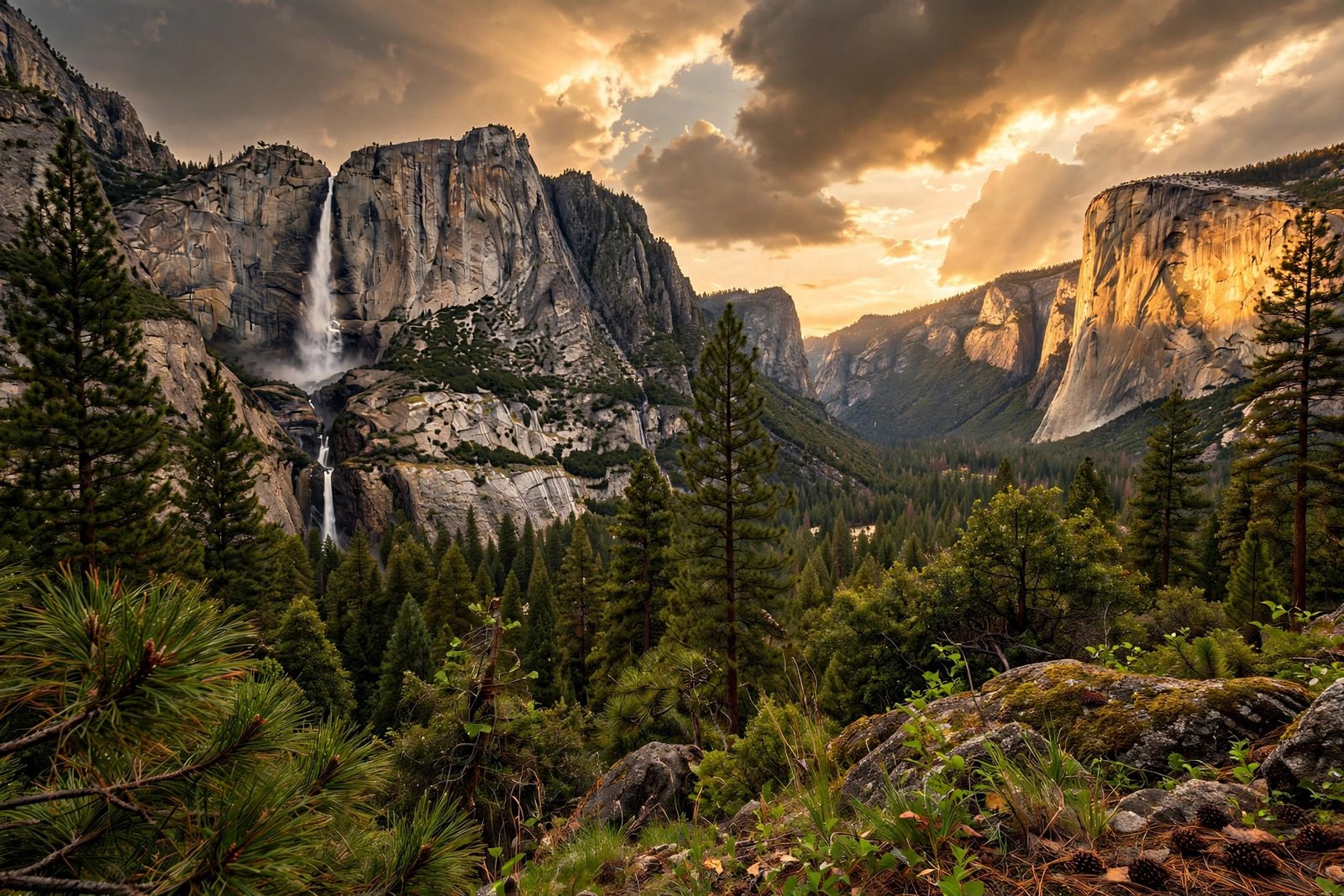
America invented the very idea of a national park, and more than a century later, the country’s protected landscapes remain among the most spectacular on Earth. Choosing the best national parks in the USA is no small task, because every region offers something unforgettable, from steaming geyser basins and granite cathedrals to misty coastlines and desert arches. Whether you are planning your first big road trip or your fiftieth, these parks deliver the kind of experiences that stay with you for a lifetime. This guide walks you through fifteen remarkable parks, what makes each one special, and how to plan a visit you will never forget.
Why Visit the Best National Parks in the USA
The national park system protects some of the most extraordinary scenery in North America, and visiting these places connects you with the country’s natural and cultural heritage in a way nothing else can. The best national parks in the USA offer far more than pretty views. They are living classrooms where you can watch geysers erupt on a predictable schedule, spot grizzly bears fishing for salmon, hike through ancient rainforests, and stand at the edge of canyons carved over millions of years. Many parks also preserve important human history, from ancestral Puebloan dwellings to pioneer homesteads. Best of all, the parks belong to everyone. With a little planning, you can experience world-class wilderness on a modest budget, making a national park trip one of the greatest travel values in America.
1. Yellowstone National Park (Wyoming, Montana, Idaho)
Established in 1872, Yellowstone was the first national park in the world, and it still sets the standard. The park sits atop a massive volcanic caldera, which fuels its famous geothermal wonders, including the Old Faithful geyser, the rainbow-colored Grand Prismatic Spring, and bubbling mud pots. Beyond the thermal features, Yellowstone is one of the best places in the lower 48 states to see large wildlife in its natural habitat. Bison herds roam the Lamar and Hayden valleys, elk bugle in the fall, and with patience you may spot wolves, grizzly bears, or a moose. The Grand Canyon of the Yellowstone, with its dramatic Lower Falls, adds even more grandeur. Plan at least three full days, arrive early to beat the crowds at popular sights, and never approach wildlife.
2. Yosemite National Park (California)
Yosemite Valley is one of the most beautiful places on the planet, a glacially carved wonderland of towering granite cliffs, thundering waterfalls, and giant sequoia groves. El Capitan and Half Dome rise thousands of feet above the valley floor, drawing rock climbers and photographers from around the world. In spring, snowmelt turns Yosemite Falls, Bridalveil Fall, and Vernal Fall into roaring spectacles. Summer brings wildflower meadows at Tuolumne, while fall paints the black oaks gold. Do not miss Glacier Point for the classic valley panorama, and take time to walk among the ancient sequoias in Mariposa Grove. Yosemite rewards slow travel, so build in time for at least one long hike above the valley rim.
3. Grand Canyon National Park (Arizona)
No photograph prepares you for the first sight of the Grand Canyon. Standing at the rim, you look across a chasm roughly a mile deep and up to eighteen miles wide, banded in layers of red, orange, and gold rock that record nearly two billion years of Earth’s history. The South Rim stays open year-round and offers the classic viewpoints, historic lodges, and the famous Bright Angel Trail descending into the canyon. The quieter North Rim, open seasonally, sits a thousand feet higher with cooler temperatures and aspen forests. For the adventurous, hiking partway down or rafting the Colorado River reveals the canyon’s hidden side. Sunrise and sunset transform the canyon walls into glowing walls of color.
4. Zion National Park (Utah)
Zion is Utah’s first national park and one of its most beloved, centered on a canyon of cream, pink, and red Navajo sandstone carved by the Virgin River. The park’s two signature adventures are The Narrows, where you wade upstream through a slot canyon with walls a thousand feet tall, and Angels Landing, a thrilling chain-assisted climb to a narrow summit with dizzying views. Zion Canyon Scenic Drive is closed to private vehicles most of the year, so the free shuttle system keeps traffic flowing and the canyon peaceful. Spring and fall offer the best weather. Nearby, the park’s Kolob Canyons section provides solitude and striking red rock without the crowds.
5. Acadia National Park (Maine)
Acadia is where the mountains meet the sea, a rugged coastal park on Mount Desert Island that showcases the wild beauty of Down East Maine. Cadillac Mountain is famously among the first places in the United States to see the sunrise, and watching dawn break over the Atlantic from its summit is a rite of passage. The Park Loop Road winds past thundering surf at Thunder Hole, the serene waters of Jordan Pond, and the dramatic cliffs of Otter Point. Acadia’s historic carriage roads, built for horse-drawn carriages, now offer 45 miles of car-free paths perfect for biking. Fall foliage season turns the park into a blaze of red and gold reflected in still ponds.
6. Olympic National Park (Washington)
Olympic packs three completely different worlds into one park: glacier-capped mountains, temperate rainforest, and wild Pacific coastline. The Hoh Rainforest receives enormous amounts of rain each year, creating a moss-draped, otherworldly landscape of giant Sitka spruce and nurse logs. Hurricane Ridge offers sweeping alpine views and summer wildflower meadows. On the coast, beaches like Rialto and Ruby are strewn with driftwood and sea stacks, perfect for tidepooling at low tide. Few parks in America offer such variety in a single visit, and Olympic’s rainforest is one of the finest examples of its kind anywhere in the temperate world. If you love dramatic landscapes, you will also enjoy our guide to the most beautiful places in America.
7. Great Smoky Mountains National Park (Tennessee, North Carolina)
Straddling the border of Tennessee and North Carolina, Great Smoky Mountains is the most visited national park in America, and for good reason. The park protects the largest remaining stand of old-growth forest in the eastern United States, along with remarkable biodiversity, including black bears, elk, and synchronous fireflies that light up the summer nights in unison. Cades Cove, a broad valley ringed by mountains, preserves historic cabins, churches, and a working grist mill. The famous blue haze that gives the Smokies their name drifts over ridge after ridge of forested peaks. Fall color here is legendary, and spring brings spectacular wildflower displays. For travelers who love discovering under-the-radar spots, check out these hidden gems in the USA to pair with your Smokies trip.
8. Glacier National Park (Montana)
Glacier is called the Crown of the Continent, and the name fits. This northern Montana park holds jagged peaks, turquoise alpine lakes, and valleys carved by ancient ice. The Going-to-the-Sun Road is one of the great scenic drives in the world, winding fifty miles over Logan Pass with waterfalls cascading beside the road. Hiking trails lead to places like Grinnell Glacier, Iceberg Lake, and Hidden Lake Overlook, where mountain goats often pose for photos. The park shares an ecosystem with Canada’s Waterton Lakes, forming the world’s first International Peace Park. Visit between late June and mid-September for full road access, and book lodging early, as this is one of the hardest parks to visit on short notice.
9. Rocky Mountain National Park (Colorado)
Rocky Mountain National Park showcases the very best of the Colorado Rockies, with towering peaks, alpine lakes, and meadows full of wildflowers and elk. Trail Ridge Road, the highest continuous paved road in the United States, climbs above 12,000 feet and offers tundra landscapes that feel like the Arctic. In autumn, the elk rut fills the valleys with haunting bugles as bulls gather their harems, a wildlife spectacle that draws visitors from across the country. Hikes range from easy strolls around Bear Lake to challenging climbs like Longs Peak, one of Colorado’s famous fourteeners. Summer thunderstorms build quickly at altitude, so start hikes early and be below treeline by afternoon. The park’s timed-entry system means you should reserve ahead in peak season.
10. Arches National Park (Utah)
Arches protects the densest concentration of natural stone arches in the world, with more than 2,000 documented spans sculpted from red Entrada sandstone. Delicate Arch, the park’s most famous formation, stands alone on the edge of a canyon and has become an icon of Utah itself. The Windows Section, Balanced Rock, and the Devils Garden trail, which passes Landscape Arch, one of the longest natural arches on Earth, are all essential stops. Sunrise at Delicate Arch and sunset at the Windows are unforgettable. The park’s desert environment is fragile, so stay on marked trails and carry plenty of water. Timed-entry reservations are typically required during the busy season, so plan ahead.
11. Denali National Park (Alaska)
Denali is Alaska on a grand scale, a six-million-acre wilderness dominated by North America’s tallest peak. Denali itself rises 20,310 feet above sea level, and on clear days it dominates the horizon from a hundred miles away. The park road stretches 92 miles into the wilderness, traveled mainly by narrated buses that double as wildlife safaris. Grizzly bears, caribou, Dall sheep, wolves, and moose roam the tundra, and seeing the mountain emerge from the clouds is a moment you will never forget. Only one road enters the park, so the experience feels genuinely wild. Summer is short but glorious, with nearly round-the-clock daylight. Denali is remote and weather-dependent, but it rewards the journey like few places on Earth.
12. Everglades National Park (Florida)
The Everglades is unlike any other national park, a slow-moving river of grass that stretches across southern Florida and shelters an astonishing array of wildlife. Alligators sun themselves beside boardwalks, roseate spoonbills flash pink over the marshes, and manatees drift through warm winter waters. The Anhinga Trail offers close-up wildlife viewing, while a boat tour through the mangrove tunnels of the Ten Thousand Islands reveals the park’s watery wilderness. Winter, the dry season, is the best time to visit, when mosquitoes retreat and wildlife concentrates around remaining water. The Everglades is also a story of conservation, protecting a fragile ecosystem found nowhere else in the United States. If you are fascinated by creatures that seem almost unreal, read about American animals you won’t believe are real.
13. Grand Teton National Park (Wyoming)
Just south of Yellowstone, the Tetons rise abruptly from the valley floor in one of the most dramatic mountain skylines in America. The jagged granite peaks reflect perfectly in the still waters of Jenny Lake and Jackson Lake at sunrise, a sight that has launched a thousand photographs. Grand Teton National Park offers superb hiking, from the easy Jenny Lake loop to the challenging climb into Cascade Canyon. Wildlife is abundant, with moose browsing in willow thickets, elk crossing meadows, and bears foraging on berry-covered slopes. The historic Mormon Row barns, framed by the peaks, are among the most photographed homesteads in the West. Pair it with Yellowstone for the ultimate Wyoming mountain adventure.
14. Joshua Tree National Park (California)
Where the Mojave and Colorado deserts meet, Joshua Tree National Park protects a surreal landscape of twisted Joshua trees, massive granite boulders, and star-filled night skies. The park’s rock formations make it one of the best climbing and bouldering destinations in the country, while trails like Hidden Valley and Barker Dam wind through otherworldly scenery. Spring can bring spectacular wildflower blooms after wet winters. At night, Joshua Tree’s dark skies reveal the Milky Way in stunning detail, making it a favorite for astrophotographers. The quirky desert towns of Joshua Tree and Twentynine Palms add art galleries, vintage shops, and great food to the experience. Visit in fall, winter, or spring, as summer temperatures can be extreme.
15. Bryce Canyon National Park (Utah)
Bryce Canyon is not actually a canyon at all, but a series of giant natural amphitheaters carved into the edge of a high plateau, filled with thousands of hoodoos, tall thin spires of orange and pink rock. Sunrise Point and Sunset Point offer the classic views down into the Bryce Amphitheater, where the hoodoos glow like embers in the morning light. The Navajo Loop and Queen’s Garden trails descend among the formations, letting you walk through a stone forest. At over 8,000 feet elevation, Bryce stays cool even in summer and offers some of the darkest night skies in the national park system. In winter, snow dusts the red hoodoos for a truly magical contrast. It is a smaller park that punches far above its weight.
How to Choose Among the Best National Parks in the USA
With so many incredible options, how do you pick? Start with the season. Desert parks like Zion, Arches, and Joshua Tree shine in spring and fall, while mountain parks like Glacier, Rocky Mountain, and Denali are best in summer. Coastal Acadia peaks in fall, and the Everglades is ideal in winter. Next, consider your travel style. Road trippers can link several Utah parks, known as the Mighty Five, into one epic loop, and a classic Route 66 road trip pairs beautifully with Grand Canyon and other southwestern parks. Hikers should head for Glacier, Olympic, or Yosemite, while wildlife lovers will find Yellowstone, Denali, and the Smokies hard to beat. Finally, book early. Popular parks now use timed-entry reservations and lodges fill up months ahead. No matter which of the best national parks in the USA you choose, you are in for an unforgettable adventure.
Plan Your Visit: Tips for the Best National Parks in the USA
- Book lodging early: In-park lodges and nearby gateway towns fill up months in advance for summer and fall.
- Check reservation requirements: Many popular parks now require timed-entry permits during peak season.
- Arrive early or stay late: Beat the midday crowds and catch the best light for photography.
- Pack for changing weather: Mountain and desert parks can swing 40 degrees between day and night.
- Respect wildlife: Stay at least 100 yards from bears and wolves and 25 yards from other animals.
- Leave no trace: Pack out everything you bring in and stay on designated trails.
No single list can capture every wonder in the national park system, but these fifteen parks represent the very finest America has to offer. From the steaming geysers of Yellowstone to the silent hoodoos of Bryce Canyon, the best national parks in the USA remind us why these landscapes were protected in the first place. Start planning your trip today, pick the park that calls to you, and get ready for an adventure you will talk about for years. Which park will you visit first? Share this guide with your travel buddies and start mapping your route now.
[…] wild. That is why a visit to a great lake often pairs naturally with a visit to one of the best national parks in the USA. Plan ahead, arrive early, and give yourself time to see the lake in morning light, when the water […]
[…] because the afterglow can be just as beautiful. If you are planning a longer trip, our guide to the best national parks in the USA to visit is a good place to […]