
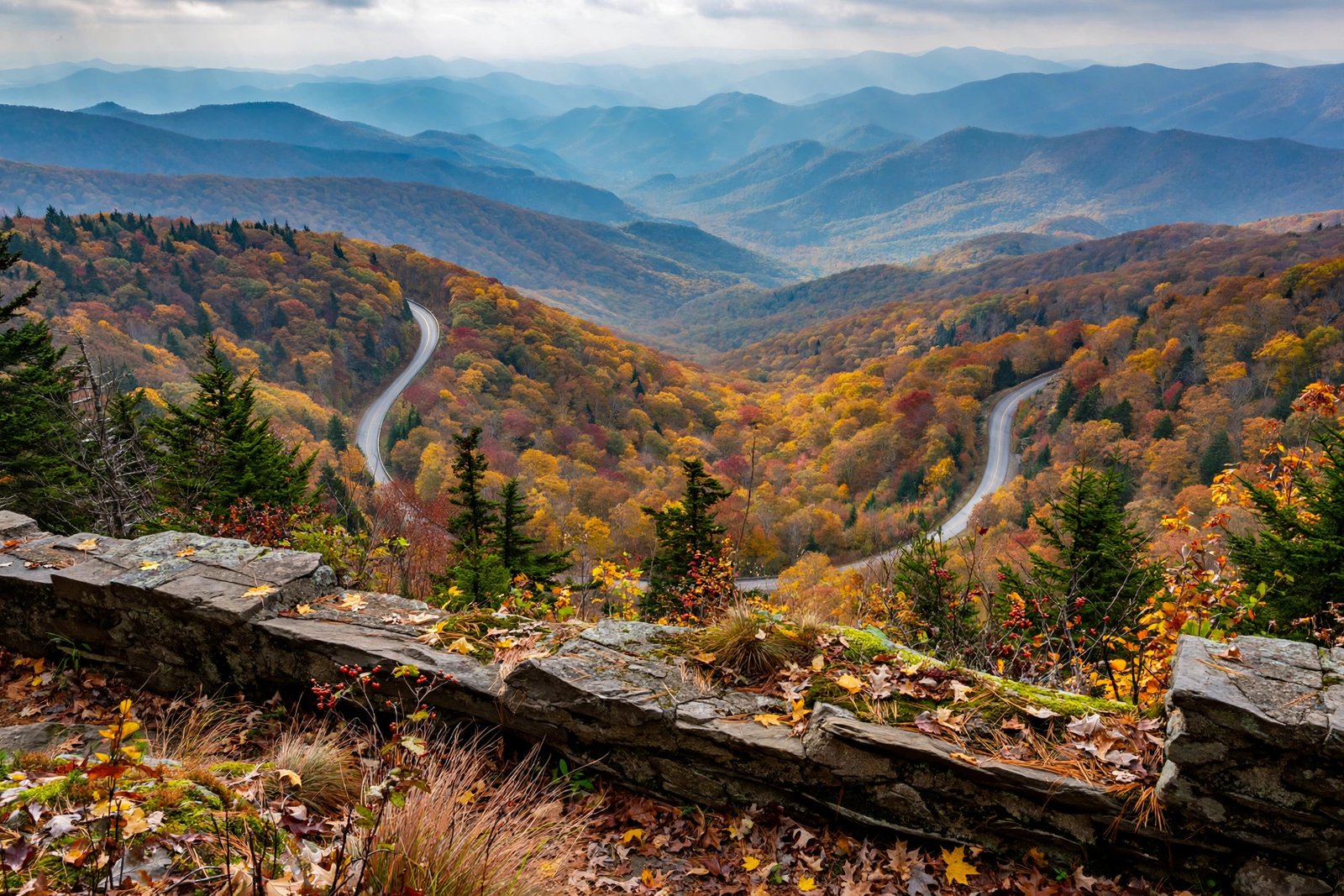
The best overlooks Blue Ridge Parkway travelers remember are not just places to pull over for a photo. They are quiet pauses in a long mountain drive, where the road drops away and ridge after ridge rolls toward the horizon in shades of blue and green. The Blue Ridge Parkway runs for 469 miles through Virginia and North Carolina, linking Shenandoah National Park in the north with Great Smoky Mountains National Park in the south, and along the way it offers hundreds of signed overlooks. Choosing well matters, because some stops reward you with a sweeping panorama, others with a close look at a waterfall, a historic mill, or a wildflower meadow, and the light changes everything from hour to hour.
This guide focuses on overlooks that are easy to reach from the road, rewarding in different seasons, and varied enough to shape a full day or a full week of driving. You do not need to hike for miles to enjoy most of them, though a short walk often turns a good view into a great one. Bring patience, arrive early or stay late when you can, and let the Parkway set the pace. The road was designed for slow travel, with a low speed limit and frequent curves, so the overlooks are part of the journey itself, not a detour from it.
How to Choose the Best Overlooks Blue Ridge Parkway Visitors Love
Start by thinking about what kind of view you want. Sunrise lovers should look east, where the sun climbs over layered ridges and morning mist settles in the valleys below. Sunset fans should favour west-facing stops, where the sky warms over the mountains and the ridges darken one by one. Photographers often prefer overlooks with a clear foreground, such as a stone wall, a split-rail fence, a lone tree, or a bend in the road, because that detail gives the wide view a sense of depth and scale.
Season matters too. Spring brings wildflowers and fresh green leaves, summer brings lush forests and long evenings, autumn brings the famous fall colour that draws crowds from across the country, and winter, when the leaves are down, can reveal distant ridges and rock faces that summer foliage hides. Weather matters even more than season on a mountain road. A clear morning after rain often gives the sharpest views, while low cloud can sit right on the ridge and hide everything. If one overlook is fogged in, drive on a few miles and try again, because conditions can change quickly from one gap to the next.
It also helps to mix your stops. Pair a high, open panorama with a lower, wooded overlook, a historic site, and a place to walk. That variety keeps a long drive from feeling repetitive, even when the views are all beautiful. The stops below do exactly that, moving from north to south in a loose order you can follow, skip, or rearrange to fit your own trip.
Peaks of Otter and the Classic Virginia Views
In Virginia, the area around Peaks of Otter is one of the most satisfying places to begin. The peaks themselves rise above a small lake, and the surrounding overlooks frame the water, the forest, and the distant ridges in a way that feels both grand and intimate. Early morning is especially rewarding here, when mist can linger over the lake and the light is soft. A short walk around the lake or up to a viewpoint adds to the experience without requiring a strenuous hike, and the visitor facilities nearby make it a natural break for a meal or a rest.
Farther south in Virginia, the overlooks near Roanoke and along the Roanoke Valley give you a different kind of view, where mountain ridges meet a settled valley. These stops are good reminders that the Parkway is not wilderness alone. It passes through a lived-in landscape of farms, small towns, and forests that have been worked and cared for over generations. Look for the way fields, woodland, and ridgelines fit together, and you will start to see the Parkway as a story about people and place, not just scenery.
- Arrive before mid-morning for quieter parking and softer light.
- Look for stone walls and fences that frame a photograph naturally.
- Pair a high overlook with a lakeside walk for contrast.
Mabry Mill and the Best Overlooks Blue Ridge Parkway History Lovers Enjoy
Mabry Mill is one of the most photographed places on the entire Parkway, and for good reason. The mill, its pond, and the surrounding meadow create a scene that looks almost painted, especially in autumn when the trees turn colour. It is not a high mountain panorama, and that is precisely its charm. Here the view is close and human, a reminder of the mills, farms, and craftspeople who once shaped these mountains. Take time to walk around the pond, notice the reflections, and imagine the mill at work.
Nearby overlooks return you to the wide views, with long looks across forested slopes and farmland. This contrast is one of the pleasures of the Parkway in Virginia. You can move in a few miles from an open ridge to a sheltered valley, from a distant horizon to a single historic building, and each change of scale makes the next view feel fresh. If you are travelling in autumn, expect Mabry Mill to be busy, and consider an early visit so you can enjoy the scene before the crowds arrive.
History lovers should also watch for interpretive signs at overlooks and visitor centres along the route. They explain how the Parkway was built, how the land was shaped, and how mountain communities lived and worked. Reading even one or two signs at each stop turns a scenic drive into a deeper understanding of the Blue Ridge, and it gives children and first-time visitors something to look for at the next stop.
Linn Cove Viaduct and the Engineering Marvel
Crossing into North Carolina, the Linn Cove Viaduct is one of the most remarkable sights on the Parkway. The road curves around the side of Grandfather Mountain on a graceful concrete bridge, seeming to float above the forested slope. The best way to appreciate it is not only to drive across it, but to stop at a nearby overlook and look back at the structure itself, with the mountain rising behind it and the valley falling away below.
The viaduct was designed to protect the fragile mountainside, and its story is worth knowing before you visit. Instead of cutting deeply into the slope, engineers built the road outward, preserving the natural landscape as much as possible. That care is visible in the way the bridge follows the contour of the mountain. Photographers often visit in the soft light of morning or late afternoon, when shadows define the curve of the bridge and the texture of the rock. Even if you are not a photographer, the scale of the engineering against the wild mountainside is impressive.
Nearby, the area around Grandfather Mountain and the town of Blowing Rock offers additional overlooks, trails, and visitor facilities. This is a good place to slow down for half a day, combining a Parkway drive with a walk, a picnic, and a visit to a mountain town. The combination of natural beauty and small-town charm is part of what makes this section so popular with returning visitors.
Craggy Gardens and High Mountain Wildflowers
Craggy Gardens, at high elevation near Asheville, feels different from the lower overlooks. The air is cooler, the trees are shorter and more windswept, and the views open in several directions across rugged ridges. In late spring and early summer, rhododendron blooms can transform the area, with pink and purple flowers lining the trails and overlooks. Even outside bloom season, the rocky outcrops and twisted trees give the place a wild, windswept character that is unlike anywhere else on the Parkway.
A short trail from the parking area leads to a rocky summit with a panoramic view, and it is well worth the walk if you are able. The path is not long, but it is uneven in places, so wear sturdy shoes and take your time. From the top, you can see layers of mountains stretching in every direction, and on a clear day the sense of height and space is exhilarating. This is also a good place to watch clouds moving across the ridges, changing the light from minute to minute.
Because Craggy Gardens sits at high elevation, weather can change quickly. Bring a layer even in summer, and be prepared for wind. If clouds roll in, wait a while if you can, because the mist often lifts to reveal a view that is even more dramatic than the one you first hoped for. For more ideas on planning scenic routes across the country, see our guide to the Route 66 road trip guide and our roundup of the best national parks in the USA to visit.
Waterrock Knob and the Southern High Country
Toward the southern end of the Parkway, Waterrock Knob offers one of the highest and most expansive viewpoints on the route. A trail leads from the parking area to a rocky summit, where the view stretches across the Great Smoky Mountains and the surrounding high country. Sunrise and sunset are both spectacular here, and many visitors make a special trip just for the light at either end of the day.
The walk to the summit is short but steep, so pace yourself and bring water. The reward is a 360-degree sense of the mountains, with ridges falling away in every direction and, on a clear day, a horizon that seems to go on forever. This is a place to sit quietly for a while rather than rushing for a photo and leaving. Watch how the light moves across the ridges, listen for birds, and notice how the temperature and wind change as you climb.
The southern Parkway also passes through landscapes shaped by Cherokee history and mountain culture, and nearby towns offer a chance to learn more about the region. Combining a visit to Waterrock Knob with a stop in a nearby town, a local meal, or a cultural site turns a scenic overlook into a fuller day of discovery. It is a fitting finale to a Parkway journey, or a strong starting point if you are travelling north.
Planning Tips for a Parkway Overlook Road Trip
Practical planning makes the difference between a pleasant drive and a frustrating one. When you are choosing the best overlooks Blue Ridge Parkway guides recommend, mark two or three must-see stops and leave the rest open, because the best overlooks Blue Ridge Parkway travellers stumble upon are often the unplanned ones. The Parkway has a low speed limit, no commercial traffic, and limited services directly on the road, so fill your fuel tank before you start, carry water and snacks, and know where the next town or visitor centre is. Cell service can be patchy in the mountains, so download maps in advance and carry a paper map as a backup. Check for road closures before you set out, especially in winter, when sections can close for weather.
- Drive slowly and use the overlooks often, rather than trying to cover too many miles in one day.
- Keep to marked overlooks and trails, and never stop in the travel lane for a photo.
- Carry layers, rain gear, water, and sun protection in every season.
- Respect wildlife by keeping your distance and never feeding animals.
- Leave no trace, taking all rubbish with you and staying on marked paths.
Families, couples, and solo travellers can all enjoy the Parkway at their own pace. If you are travelling with children, mix overlooks with short walks, picnics, and visitor centres so the drive stays engaging. If you are travelling alone, the overlooks are wonderful places to pause, journal, or simply watch the mountains. And if you love waterfalls, pair this drive with our guide to the most beautiful waterfalls in the USA for your next trip.
Conclusion: Let the Overlooks Slow You Down
The best overlooks Blue Ridge Parkway drivers discover are rarely the ones they rush to tick off a list. They are the ones where they stopped, stepped out of the car, and let the mountains do their quiet work. Whether you choose a high summit at sunrise, a historic mill in autumn colour, a graceful bridge curving around a mountainside, or a windswept garden of wildflowers, each overlook offers a different way of seeing the same ancient range.
Plan your route loosely, leave room for spontaneous stops, and return in a different season if you can. The Parkway rewards repeat visits, because the same overlook can feel entirely new in spring green, summer haze, autumn fire, or winter clarity. Start planning your drive today, share this guide with a fellow road-trip lover, and tell us in your own travels which overlook stopped you in your tracks.