
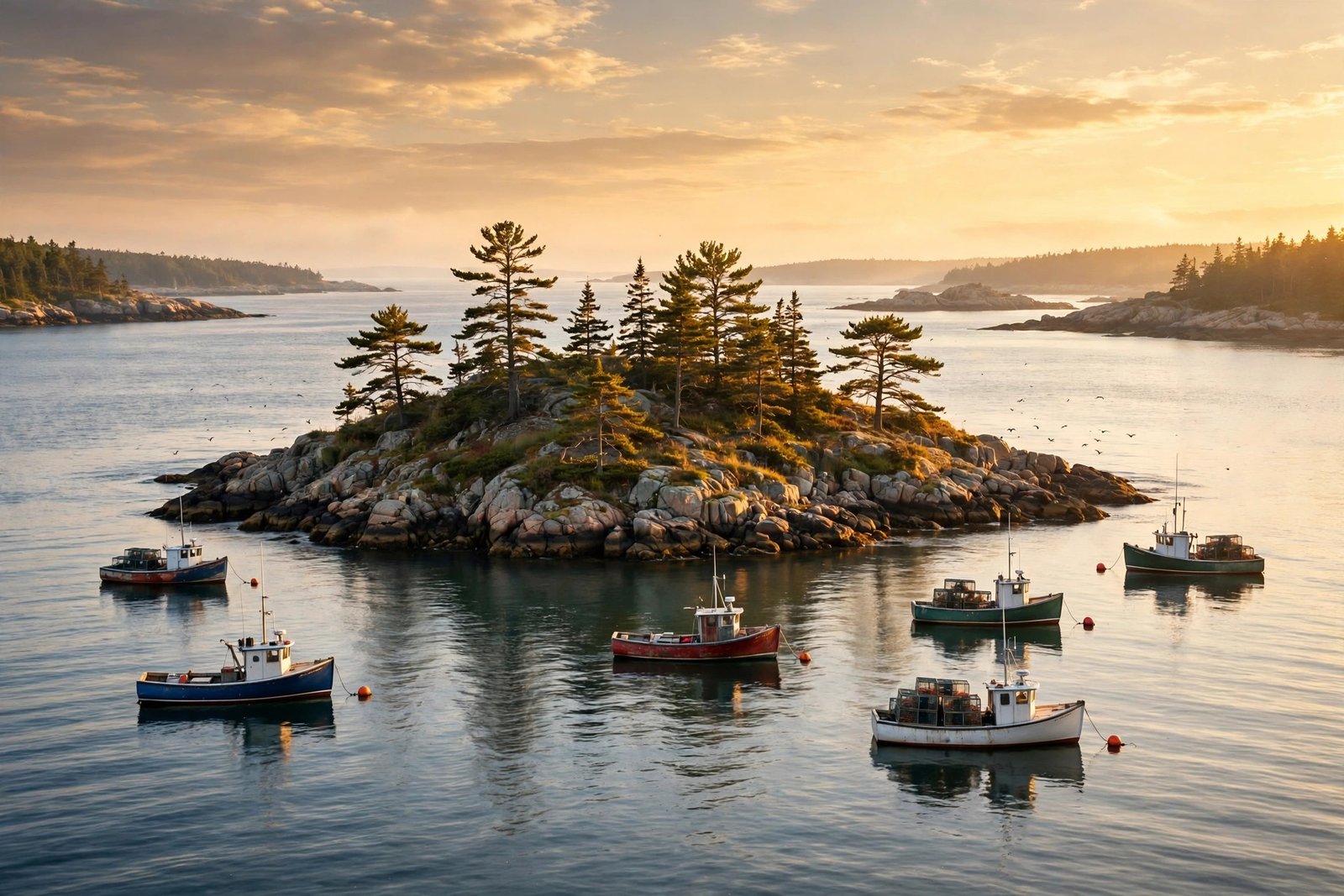
The secret islands Maine coast travellers dream about are not the busy resort islands with long queues and crowded harbours. They are the smaller, quieter places reached by a short ferry ride or a working boat, where the pace slows, the harbour smells of salt and spruce, and the loudest sounds are gulls, waves, and wind in the trees. Maine has thousands of coastal islands, from tiny ledges that disappear at high tide to larger islands with year-round communities, schools, and fishing fleets. The secret is not that these islands are hidden on a map. It is that most visitors never make the extra step to get there.
This guide introduces the kind of islands that reward that extra step. Some have a village and a general store, others have little more than trails, a lighthouse view, and a quiet beach of smooth stones. All of them share a feeling that is hard to find on the mainland: a sense of being apart, even when you are only a few miles offshore. If you love coastal walks, working harbours, fresh seafood, and evenings without traffic, these islands are worth planning a trip around.
What Makes Secret Islands Maine Coast Visitors Love So Special
Maine islands feel different because life there is shaped by the sea. Ferries and boats set the schedule, weather can change plans, and supplies arrive by water. That dependence creates communities that are resourceful, welcoming, and closely connected. When you step off a ferry, you are not just arriving at a destination. You are entering a small world where people know each other, where the post office, the store, and the dock are social places as much as practical ones, and where a conversation with a local can shape your whole day.
The landscape adds to that feeling. Spruce forests grow right down to rocky shores, granite ledges rise out of cold blue water, and tidal pools appear and disappear with the tide. You may see osprey fishing in a cove, seals resting on a ledge at low tide, or a lobster boat heading out before dawn. These are everyday sights for islanders, but for visitors they feel like discoveries. The islands also tend to be quieter than mainland coastal towns, especially outside the peak summer weeks, because reaching them takes intention.
It is worth noting that not every island is open to visitors in the same way. Some are privately owned, some have fragile bird nesting areas with seasonal closures, and some have no public facilities at all. Always check ferry schedules, landing rules, and local guidance before you go, and respect private land and wildlife closures. The best island visits are the ones that leave the place as you found it.
Monhegan: Art, Trails, and a Car-Free Escape
Monhegan Island, about twelve miles off the midcoast, is one of Maine best-known island escapes, yet it still feels secret because there are almost no cars and no paved roads. Visitors arrive by ferry, walk everywhere on foot, and spend their days on cliff trails, in small galleries, and at quiet coves. The island has a long association with artists, who have been drawn for generations to its dramatic headlands, its light, and its working fishing village.
The cliff trails on the island are the main attraction for walkers. They follow the edge of high headlands, with views across open ocean and back toward the village and harbour. The terrain can be uneven and exposed to wind, so sturdy shoes, water, and a layer for weather are essential. Inland trails through spruce forest offer a gentler alternative, and the village itself is a pleasure to explore slowly, with its small shops, studios, and places to eat.
Monhegan is best enjoyed as an overnight or multi-day stay rather than a rushed day trip, because the ferry schedule limits how much time you have ashore. Staying overnight lets you watch the light change over the harbour, walk the trails in the quiet of early morning, and experience the island after the day visitors have left. Book accommodation well ahead in summer, as the island has limited places to stay.
Vinalhaven and the Working Island Way of Life
Vinalhaven, in Penobscot Bay, is one of the larger inhabited islands off the Maine coast, and it offers a different kind of secret. It is not a resort island, but a working community where fishing and granite quarrying have shaped life for generations. Visitors who come here find a real town, with a main street, a library, galleries, and places to eat, alongside quiet roads, forested trails, and a rocky coastline that invites exploration.
One of the pleasures of Vinalhaven is cycling or driving its quiet roads, stopping at granite quarries filled with clear water, at small beaches, and at viewpoints over the bay. The quarries, now flooded, are striking places, with deep green water surrounded by granite walls, though swimming and access rules should always be checked locally, as some quarries are on private land or have safety restrictions. Walking the shore, watching lobster boats, and visiting local studios and shops are equally rewarding ways to spend a day.
Because Vinalhaven has a year-round community, it also has services that smaller islands lack, including a ferry that carries cars. That makes it a good choice for a first island trip, especially for families or travellers who want island quiet without giving up the comfort of a town. It is also a good base for exploring nearby islands and the wider Penobscot Bay region, where hidden coves and coastal villages are part of everyday travel.
Secret Islands Maine Coast Explorers Reach by Small Ferry
Beyond the larger islands, Maine has many smaller islands served by small ferries, mail boats, or water taxis. Isle au Haut, part of Acadia National Park, is a fine example. Much of the island is park land, with trails through forest and along a rugged shore, while a small village at the landing offers a quiet base. Visitors come for walking, for the sense of remoteness, and for views across the bay toward the mountains of Acadia, without the crowds of the mainland park.
Matinicus Island, farther offshore, is even more remote. It has a tiny year-round community, no regular car ferry in the usual sense, and a landscape of open fields, rocky shores, and wide ocean views. It is not a destination for everyone, and it requires careful planning, but for travellers who want to experience the far edge of Maine island life, it is unforgettable. Weather, boat schedules, and limited services mean you should plan thoroughly and travel with flexibility.
- Check ferry and boat schedules in advance, and arrive early for boarding.
- Pack food, water, and layers, as island shops may have limited hours.
- Respect private land, nesting areas, and working waterfronts.
- Carry cash as well as cards, as some small businesses may prefer it.
Smaller islands closer to shore can be just as rewarding. Some are connected to the mainland by causeway at low tide, others are a short boat ride from a coastal village, and many have a single trail, a beach, or a viewpoint that makes the trip worthwhile. Asking at a local harbour, visitor centre, or general store is often the best way to learn about these places, because island knowledge is local knowledge. For other quiet coastal escapes, see our guide to hidden beaches in the USA and our roundup of the most beautiful small towns in America.
Isle au Haut, Acadia, and Island Trails
Isle au Haut deserves a closer look because it combines park trails with a living island community. The park portion of the island offers a network of trails through spruce forest, along rocky shores, and up to viewpoints over the surrounding water. The trails are quieter than those on the mainland part of Acadia, and they give walkers a chance to experience the park at a slower pace, with time to notice tide pools, seabirds, and the changing light on the water.
Visitors should plan their day around the ferry, which has limited capacity and a set schedule. Day trips are possible, but an overnight stay in the village or at a campground, where available, gives more time to walk and explore. Because services are limited, bring what you need for the day, including water, food, and sun protection, and be prepared for weather to change quickly on the coast.
The island also illustrates an important point about Maine islands generally. They are not theme parks or resorts, but places where people live and work. Visiting respectfully, supporting local businesses, following trail and landing rules, and leaving no trace are part of being a good guest. In return, the island offers a kind of quiet and beauty that is increasingly rare on the coast.
Planning a Secret Islands Maine Coast Trip
Planning is the key to enjoying Maine islands. Start with the ferry, not the accommodation, because ferry times determine when you can arrive and leave. Some ferries run year-round, others only in summer, and some have limited capacity for cars or even for foot passengers on busy days. Book ahead where possible, especially in July and August, and build flexibility into your plans in case weather delays a sailing.
Accommodation also needs early booking on smaller islands, where there may be only a handful of inns, rental cottages, or campgrounds. If you cannot stay overnight, a day trip can still be wonderful, but choose an island with enough to do within the ferry window, and arrive with a simple plan for walking, eating, and exploring. On larger islands, you will have more options for lodging, food, and transport, including bikes and, in some cases, cars.
Packing for an island trip is different from packing for a mainland coastal town. Bring layers for wind and cool evenings, even in summer, sturdy shoes for rocky and uneven trails, water and snacks, and a small daypack for walks. Sunscreen and insect protection are useful, especially on forest trails. And bring a sense of patience. Island time moves at its own pace, and that is precisely the point. If you love scenic drives as well as island escapes, our Route 66 road trip guide offers a very different kind of American road adventure.
When to Visit and What to Expect by Season
Summer is the most popular season for Maine islands, with the warmest weather, the most ferry sailings, and the most open businesses. It is also the busiest, especially on weekends and around holidays. Late spring and early autumn can be wonderful alternatives, with cooler air, fewer visitors, and beautiful light, though some businesses may have shorter hours and ferry schedules may be reduced. Winter visits are possible on islands with year-round ferries, but they require serious planning, as weather, limited services, and short days change the experience completely.
Wildlife watching varies by season too. Summer brings nesting seabirds, seals on ledges, and the chance to see whales offshore on a boat trip, though sightings are never guaranteed. Autumn brings migrating birds and quieter shores. Whatever the season, keep a respectful distance from wildlife, especially seals and nesting birds, and use binoculars rather than approaching closely.
Food is another pleasure of island travel. Many islands have at least one place serving fresh seafood, often caught nearby, and some have small markets selling local produce and baked goods. Eating locally is a simple way to support island communities, and a lobster roll, a bowl of chowder, or a simple picnic of local bread and cheese eaten on a rocky shore can be a highlight of the trip.
Conclusion: Take the Extra Boat Ride
The secret islands Maine coast visitors remember are the ones that asked a little more of them. A ferry timetable to check, a bag to pack, a walk instead of a drive, a night in a small inn instead of a quick stop. In return, those islands offer something the mainland cannot quite match: quiet harbours, working waterfronts, cliff trails, spruce forests, and the feeling of being at the edge of the map, even when home is only a short sail away.
Start with one island that fits your style, whether that is art-filled Monhegan, working Vinalhaven, or trail-rich Isle au Haut, and give it a full day or more. Talk to locals, walk the shore, watch the boats, and let the island set the pace. Then, when you return to the mainland, you will understand why so many travellers keep coming back to Maine islands year after year. Plan your trip, book your ferry early, and share this guide with someone who needs a quiet coastal escape.