
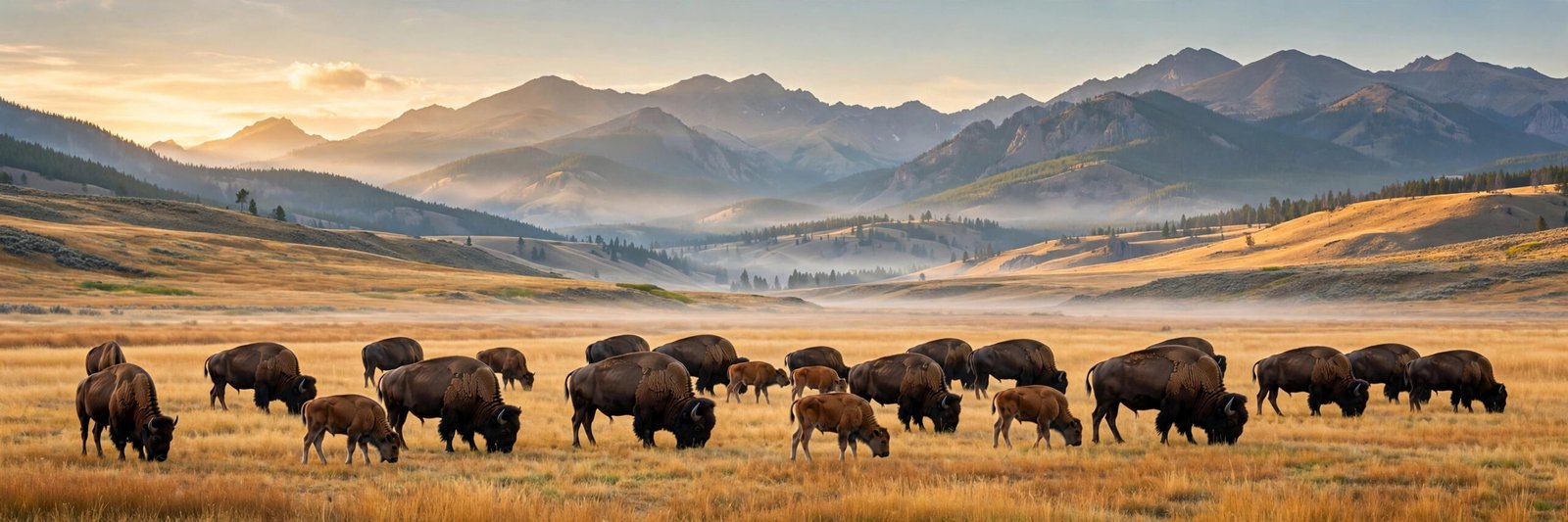
If you are wondering where to see bison in USA, you are in for one of the great wildlife experiences North America still offers. Bison are the largest land mammals on the continent, and watching a herd move across an open plain feels like stepping into an older America. The good news is that you do not need luck alone. Bison now live in national parks, state parks, and preserves across the country, and with a little planning you can see them safely and up close.
This guide covers the ten best places to see bison in the United States, plus the best seasons, safety rules, and photography tips. Whether you are planning a Yellowstone road trip or a weekend drive to a state park, you will find a herd worth the journey below.
Where to See Bison in USA: Yellowstone National Park
Yellowstone National Park, spanning Wyoming, Montana, and Idaho, is the single best place to see wild bison in the United States. The park is home to one of the largest free-roaming herds in the country, and bison can be spotted in many of its open valleys. The most reliable viewing areas are Lamar Valley in the northeast and Hayden Valley in the center of the park. Both are wide, grassy valleys where herds graze in the open, often visible from the road.
Lamar Valley is the classic choice. Early in the morning, herds move across the valley floor, sometimes crossing the road itself, while wolves, bears, and pronghorn share the same landscape. Hayden Valley offers similar viewing with a river running through it, and bison often gather near the water. Bring binoculars, arrive early, and be patient: a herd that is invisible at dawn may be standing in the middle of the road by mid-morning.
Yellowstone’s bison are truly wild, descended from the animals that survived the near-extinction of the 1800s. They are not fed, fenced, or managed like livestock. That wildness is exactly what makes the experience special, and it is why the park’s safety rules matter so much. For more on the park itself, see our guide to Yellowstone National Park facts.
Where to See Bison in USA Beyond Yellowstone
Yellowstone gets the headlines, but plenty of other parks and preserves offer excellent bison viewing, often with smaller crowds. Here are nine more places worth the trip.
Grand Teton National Park, Wyoming. Just south of Yellowstone, Grand Teton has its own bison herds, often seen around Antelope Flats and the Mormon Row barns. The combination of bison, historic barns, and the Teton peaks makes this one of the most photographed wildlife scenes in America.
Badlands National Park, South Dakota. The rugged, eroded landscape of the Badlands is home to a thriving bison herd. The Sage Creek Rim Road is a good bet for sightings, and the park’s open grasslands make bison easy to spot from a distance.
Theodore Roosevelt National Park, North Dakota. This park in the North Dakota badlands protects bison, wild horses, and prairie dogs in a landscape of painted hills and winding rivers. Both the North and South Units hold herds, and the scenic drives offer frequent viewing.
Wind Cave National Park, South Dakota. One of the oldest national parks in the system, Wind Cave protects a mixed-grass prairie above ground and a maze of cave passages below. Bison graze the prairie, and the park’s relatively small size makes sightings common.
Custer State Park, South Dakota. Custer State Park manages one of the largest publicly owned bison herds in the world, and its annual buffalo roundup draws visitors from across the country. The Wildlife Loop Road is the best drive for sightings, with herds often grazing near the road.
Antelope Island State Park, Utah. On an island in the Great Salt Lake, Antelope Island is home to a free-roaming bison herd introduced more than a century ago. The island’s open grasslands and lake views make it a unique bison-watching destination, and it is an easy day trip from Salt Lake City.
Tallgrass Prairie Preserve, Oklahoma. The Nature Conservancy’s Tallgrass Prairie Preserve in Osage County protects one of the last large tracts of tallgrass prairie in America, and a free-roaming bison herd grazes it. The preserve’s scenic turnouts and hiking trails offer some of the most peaceful bison viewing anywhere.
National Bison Range, Montana. Now managed as part of the National Bison Range complex in western Montana, this historic range was established in the early 1900s as a refuge for the species. The Red Sleep Mountain Drive offers a scenic loop through bison habitat with mountain views.
Catalina Island, California. A small herd of bison lives on Catalina Island off the Southern California coast, descendants of animals brought over for a film production in the 1920s. Seeing bison with the Pacific Ocean behind them is one of the strangest and most memorable wildlife sights in the country.
Best Time of Year to See Bison
When you plan where to see bison in USA, timing matters almost as much as location. Bison are visible year-round in most of these parks, but each season offers something different.
Late spring, from April through May, is calving season. Newborn calves are a rusty orange color and stay close to their mothers, which makes them easy to spot and delightful to watch. Spring also brings green grass, active herds, and fewer crowds than summer in most parks.
Summer, from June through August, is peak visitor season and also the rut, or mating season, for bison. Bulls are at their most active, wallowing in dust, bellowing, and competing for dominance. It is dramatic to watch from a safe distance, and the long daylight hours give you more time in the field. The trade-off is crowds: arrive early in the morning for the quietest viewing.
Fall brings golden grass, crisp air, and thinning crowds. Herds are still active, and the light is beautiful for photography. Winter is the most challenging season but also the most rewarding for patient visitors. Bison in snow, their breath steaming in cold air, is an unforgettable sight, especially in Yellowstone and the northern parks. Just be ready for road closures and winter driving conditions.
Safety Rules Around Bison
Bison look slow and sleepy. They are neither. A bison can run about 35 miles per hour, change direction quickly, and weigh up to 2,000 pounds. They have injured more visitors than any other animal in Yellowstone, almost always because someone got too close. The rules are simple, and they are not optional.
- Stay at least 25 yards away from bison, as the National Park Service requires. That is about the length of two school buses.
- Never approach a bison for a photo, a selfie, or a closer look. Use a telephoto lens or binoculars instead.
- Stay in your vehicle if a herd is near the road. Bison often cross roads, and they have the right of way.
- Give mothers with calves extra space. A mother bison is fiercely protective, and calves attract predators as well as photographers.
- If a bison raises its tail, paws the ground, or starts moving toward you, you are too close. Back away calmly and put distance or a barrier between you and the animal.
- Keep dogs leashed and away from bison at all times.
These rules protect you and the animals. Bison that become used to people are more likely to be involved in dangerous encounters, and stressed animals change their natural behavior. The best wildlife viewing leaves no trace.
Bison Conservation: A Comeback Story
The bison you see today are the survivors of one of the most dramatic near-extinctions in American history. Before European settlement, tens of millions of bison roamed North America, from the Great Plains to the eastern forests. By the late 1800s, commercial hunting, habitat loss, and government policy had reduced the population to only a few hundred animals. The species stood on the edge of disappearing forever.
The comeback began with a small group of ranchers, conservationists, and Native American tribes who protected the remaining herds. Early refuges, including what is now the National Bison Range, gave the species a foothold. National parks, tribal lands, and private preserves built on that foundation, and today bison numbers have recovered into the hundreds of thousands across conservation herds, commercial herds, and tribal herds.
In 2016, the bison was officially named the national mammal of the United States, a recognition of its role in American history, ecology, and culture. Native American nations have also led major bison restoration efforts, returning herds to tribal lands where the animals hold deep cultural and spiritual meaning. When you watch a herd graze, you are watching a conservation success story that is still being written.
Tips for Photographing Bison
Bison are generous photography subjects, but a few habits will make your shots better and keep you safe. First, use a telephoto lens. A 200mm lens or longer lets you fill the frame without leaving the safe viewing distance. Second, shoot in the golden hours: early morning and late afternoon light flatters the bison’s shaggy coat and the landscape around it. Third, get low when you can. A photo taken from a kneeling position, with grass in the foreground, feels far more immersive than one shot from standing height.
Pay attention to behavior. A bison wallowing in a dust bath, a calf nuzzling its mother, or two bulls facing off tells a story that a grazing portrait does not. Wait for the moment rather than chasing it. And remember that the animal’s welfare comes first: if your presence is changing its behavior, you are too close, no matter what the lens says.
Planning Your Bison-Watching Trip
If you are deciding where to see bison in USA on a road trip, think in clusters. Yellowstone and Grand Teton pair naturally, and you can add the National Bison Range in Montana on the same loop. In the Black Hills, Badlands, Wind Cave, Custer State Park, and Theodore Roosevelt National Park can be combined into one unforgettable week. For a shorter trip, Antelope Island near Salt Lake City or the Tallgrass Prairie Preserve in Oklahoma both work as weekend destinations.
Pack binoculars, a spotting scope if you have one, layers for changing weather, and plenty of water. Book lodging early for summer trips to Yellowstone and Custer State Park, where rooms and campsites fill months ahead. Check park websites before you go for road closures, construction, and seasonal alerts. And if you are heading into bear country, as you will be in Yellowstone and Grand Teton, read our guide on where to see bears in the USA so you are prepared for the whole cast of wildlife.
Finally, give yourself time. Bison do not perform on a schedule. The best sightings often come after an hour of patient scanning, when a distant brown shape resolves into a herd moving through the grass. That patience is part of the experience, and it is rewarded more often than not.
Conclusion
From the valleys of Yellowstone to a windswept island in the Great Salt Lake, bison are waiting in some of the most beautiful landscapes in America. Now you know where to see bison in USA, when to go, and how to watch safely. Pick a park, pack your binoculars, and give yourself a morning to do nothing but watch a herd move across the plains. It is a sight that connects you to an older America, and it is one you will not forget.
Have a favorite bison sighting? Tell us about it in the comments, and keep exploring Beauty of USA for more wildlife guides, national park stories, and hidden gems across the country.
[…] more American wildlife adventures, check out our guide to where to see bison in the USA and our guide to where to see bears in the USA. If you love surprising wildlife facts, do not miss […]