
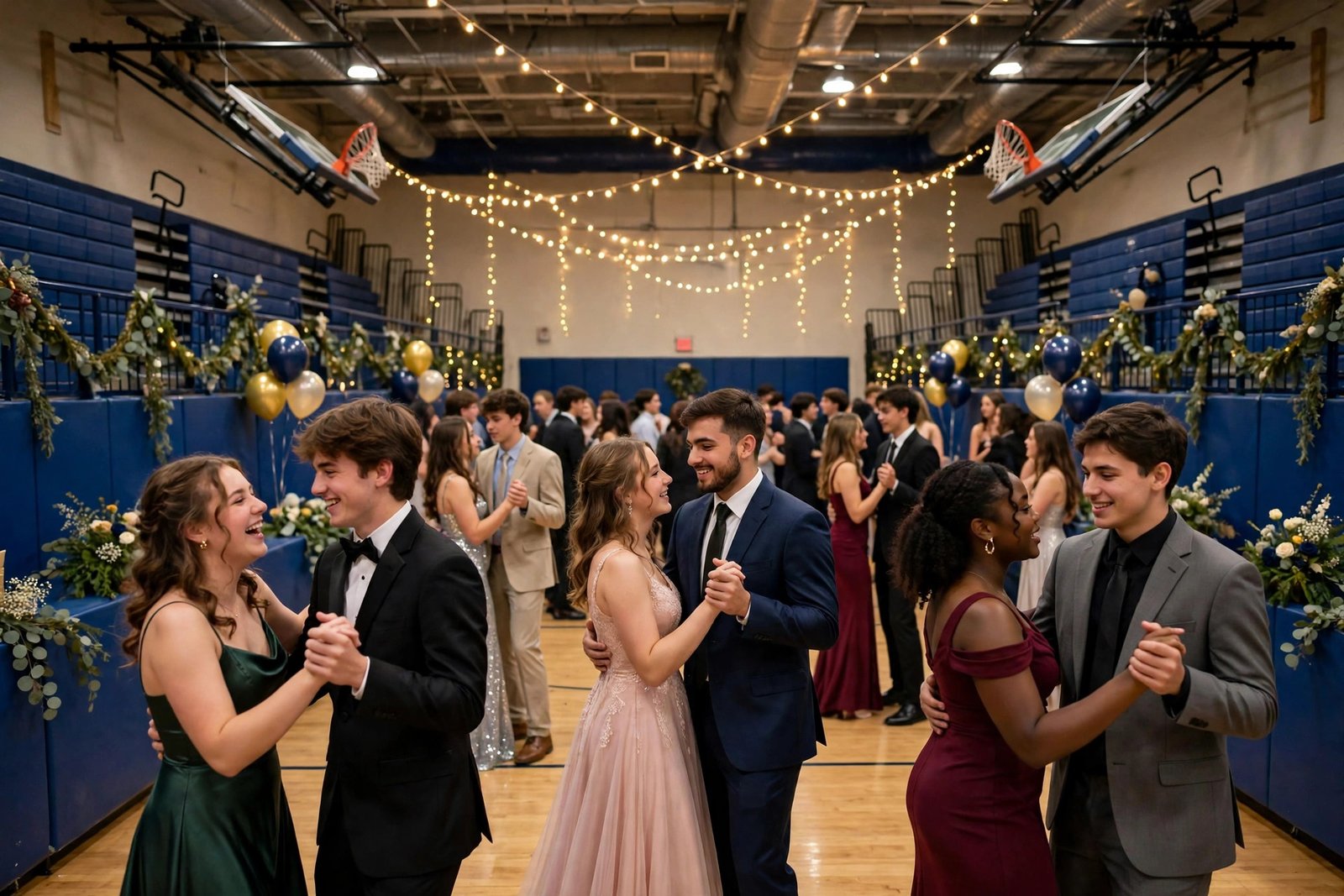
Every spring, millions of American teenagers get dressed up, pose for photos, and dance the night away at one of the most beloved rites of passage in the United States. American prom traditions have been evolving for nearly a century, yet the heart of prom night has stayed the same: a formal celebration that marks the end of high school and the beginning of adult life. Whether you remember your own prom or are getting ready for your first one, the story of how prom became an American institution is as fun as the dance itself.
Prom is short for promenade, a word that once described a formal walk or march at a ball. In the nineteenth century, American colleges held formal dances, and debutante balls introduced young women to society. By the early twentieth century, high schools had adopted the idea, and prom as we know it today began to take shape. Over the decades, it grew from a simple school dance in a gymnasium into a full evening of dinner, dancing, photographs, and memories that last a lifetime.
American Prom Traditions: How Prom Night Began
The earliest prom traditions grew out of college formals and debutante balls of the 1800s, where young people dressed formally and danced to live music. In the 1920s and 1930s, high schools began hosting their own proms, usually in the school gym, decorated by students with crepe paper, balloons, and handmade banners. These early proms were modest affairs, but they carried a sense of occasion that students treasured.
After World War II, prom became a bigger deal. The postwar boom brought new prosperity, and teenagers had more money to spend on clothes, corsages, and cars. By the 1950s, prom had become a fixture of American high school life, complete with formal dresses, tuxedos, and the crowning of a prom king and queen. Movies and television shows of the era helped spread the image of prom night across the country, and for many families, prom became a milestone as important as graduation itself.
The decades that followed each added their own flavor. The 1970s brought disco and colorful fashion. The 1980s brought big hair, bold colors, and the prom scenes of beloved teen movies. The 1990s and 2000s brought more relaxed dress codes in some schools and more elaborate celebrations in others. Through it all, the core of prom traditions remained: dress up, bring someone special (or go with friends), and celebrate the end of high school in style.
American Prom Traditions: Getting Ready for the Big Night
For many students, prom traditions begin weeks before the dance, with the search for the perfect outfit. Prom dresses have their own culture, with trends shifting every year. Some students shop at local boutiques, some order online, and some find vintage dresses at thrift stores. Tuxedos and suits are rented or bought, and the finishing touches matter: shoes, jewelry, hairstyles, and, of course, the corsage and boutonniere.
The corsage tradition is one of the oldest American prom traditions. Traditionally, a date gives their partner a wrist corsage, and receives a boutonniere in return. Flowers are chosen to match the dress or the theme, and the exchange itself has become a small ceremony, often captured in photos before the group heads out. In recent years, some students have replaced flowers with alternatives like keepsake bracelets, but the gesture of giving something to your date remains.
Group photos are another beloved ritual. Before the dance, friends and dates gather at someone’s home, in a park, or at a scenic spot for pictures. Parents, grandparents, and neighbors often come to watch, and the photo session has become a celebration in its own right. These photos end up framed on mantels, shared on social media, and revisited at reunions years later. It is a reminder that prom is not just a dance. It is a family event too.
The Promposal: A Modern Addition to American Prom Traditions
One of the newest prom traditions is the promposal, an elaborate and often creative way of asking someone to prom. The idea took off in the 2010s, helped along by social media, where students shared videos of their promposals. Some are simple and sweet, like a handwritten sign or a favorite song. Others are over the top, involving flash mobs, scavenger hunts, or themed surprises.
Promposals reflect a broader change in prom culture. Where once asking someone to prom was a quick question in the hallway, today it can be a small production. Schools and parents have mixed feelings about the trend. Some love the creativity and romance. Others worry about the pressure to outdo everyone else. Either way, promposals have become part of the modern prom story, and they show how traditions keep evolving with each new generation.
It is worth noting that not everyone goes to prom with a date. Going with a group of friends, or even going solo, has become more common and more accepted. Many students say the best part of prom is dancing with friends, not the formalities of a date. This shift reflects a healthy change: prom is for everyone, however they choose to enjoy it.
Prom Night Itself: Dinner, Dancing, and the Grand March
On prom night, prom traditions follow a familiar rhythm. Many groups start with dinner at a restaurant, where everyone shows off their outfits and takes more photos. Then comes the dance itself, held in a school gym, a banquet hall, a hotel ballroom, or another rented venue, decorated to match the year’s theme. Themes range from classic ideas like A Night Under the Stars to creative concepts chosen by the student planning committee.
Music is the heart of the evening. A DJ or live band plays a mix of current hits and throwback favorites, and the dance floor fills up fast. Slow dances still have their moment, and the tradition of the last dance, a slow song that brings everyone together before the night ends, remains a favorite. Some schools also include a grand march, in which couples are announced and walk through the venue while families and guests watch and applaud.
The crowning of the prom king and queen is another classic moment. Students vote for their favorites, and the winners are announced during the dance, often with a special dance of their own. In recent years, many schools have updated this tradition, allowing gender-neutral titles or celebrating a prom court that reflects the whole student body. Like other prom traditions, the prom court has evolved to include more students and more kinds of celebration.
- Plan early: dresses, suits, and tickets sell out fast, so start shopping weeks ahead.
- Set a budget: decide in advance what you will spend on outfits, dinner, and photos.
- Coordinate with your group: matching colors or themes make photos look great.
- Comfort matters: bring a second pair of shoes for dancing, and check the venue’s rules.
- Enjoy the moment: prom night goes by fast, so put the phone down and dance.
After-Prom and Safe Celebrations
Many schools now host after-prom events, which have become an important part of prom traditions. These are supervised, alcohol-free parties held after the dance, often with games, prizes, food, and entertainment that run late into the night. The goal is simple: give students a fun, safe place to keep celebrating after prom ends.
Parents and community groups often organize after-prom events, and local businesses donate prizes. These events have grown in popularity because they address a real concern. Prom night has historically been associated with risky behavior, and after-prom parties offer a positive alternative. For many students, after-prom is just as memorable as the dance itself, with casino nights, movie screenings, and prize drawings that keep the energy going.
Safety planning is now part of prom culture in a good way. Families talk about transportation, curfews, and plans for the night. Many groups arrange rides in advance, and some schools partner with local organizations to offer safe ride programs. These conversations are not the glamorous part of prom, but they are part of what makes the night a happy memory instead of a cautionary tale.
American Prom Traditions Across the Country
Prom traditions are not identical everywhere, and regional differences make prom even more interesting. In the South, prom season often comes with elaborate group traditions and a strong emphasis on formal dress. In the Midwest, small-town proms can be community-wide events, where the whole town turns out to see students off. If you enjoy small-town American life, you may also like our look at small-town life in America.
In big cities, proms may be held in grand venues, with students arriving by limousine or party bus. In rural areas, students may drive themselves, decorate the gym by hand, and celebrate with a potluck dinner before the dance. Some schools hold junior-senior proms, open to two classes, while others limit prom to seniors only. Some schools have both a prom and a homecoming dance, giving students two formal nights a year.
Cost is a real consideration, and schools and communities have responded with creative solutions. Dress swaps, thrift shopping, and donated gowns help make prom accessible. Some organizations run prom dress drives, collecting formal wear for students who need it. These efforts reflect an important value behind prom traditions: everyone deserves to feel celebrated on prom night, regardless of budget.
Why Prom Still Matters
In an age of social media and constant connection, some people wonder whether prom still matters. The answer, for most students, is yes. Prom is one of the few moments when an entire class comes together, dressed up, to mark a shared milestone. It is a night of music, laughter, and photographs, but it is also a goodbye. For seniors, prom is often the last big school event before graduation, and that gives it emotional weight.
Prom also connects generations. Parents remember their own proms and share stories with their children. Grandparents pull out old photographs. Teachers who chaperone watch students they have known for years step into adulthood. These connections are part of why American prom traditions endure. They are not just about dresses and dancing. They are about marking a passage, together.
For a taste of other beloved American celebrations, check out our guide to American barbecue culture and our exploration of the best lakes in the USA, both perfect for summer gatherings after prom season ends.
Conclusion: Make Your Prom Night Unforgettable
Prom traditions have changed a lot since the first high school gym dances of the 1920s, but the spirit has stayed the same. Prom is a celebration of youth, friendship, and the end of one chapter and the start of another. Whether your prom is a grand ballroom affair or a decorated gym, what matters most is the people you share it with.
If you are planning for prom, start early, set a budget, and focus on the fun. Take lots of photos, dance to every song you love, and enjoy the night with your friends. And if your prom days are behind you, share this article with someone getting ready for theirs, and tell them your own prom story. Traditions live on because we pass them down. Happy prom night, America.