
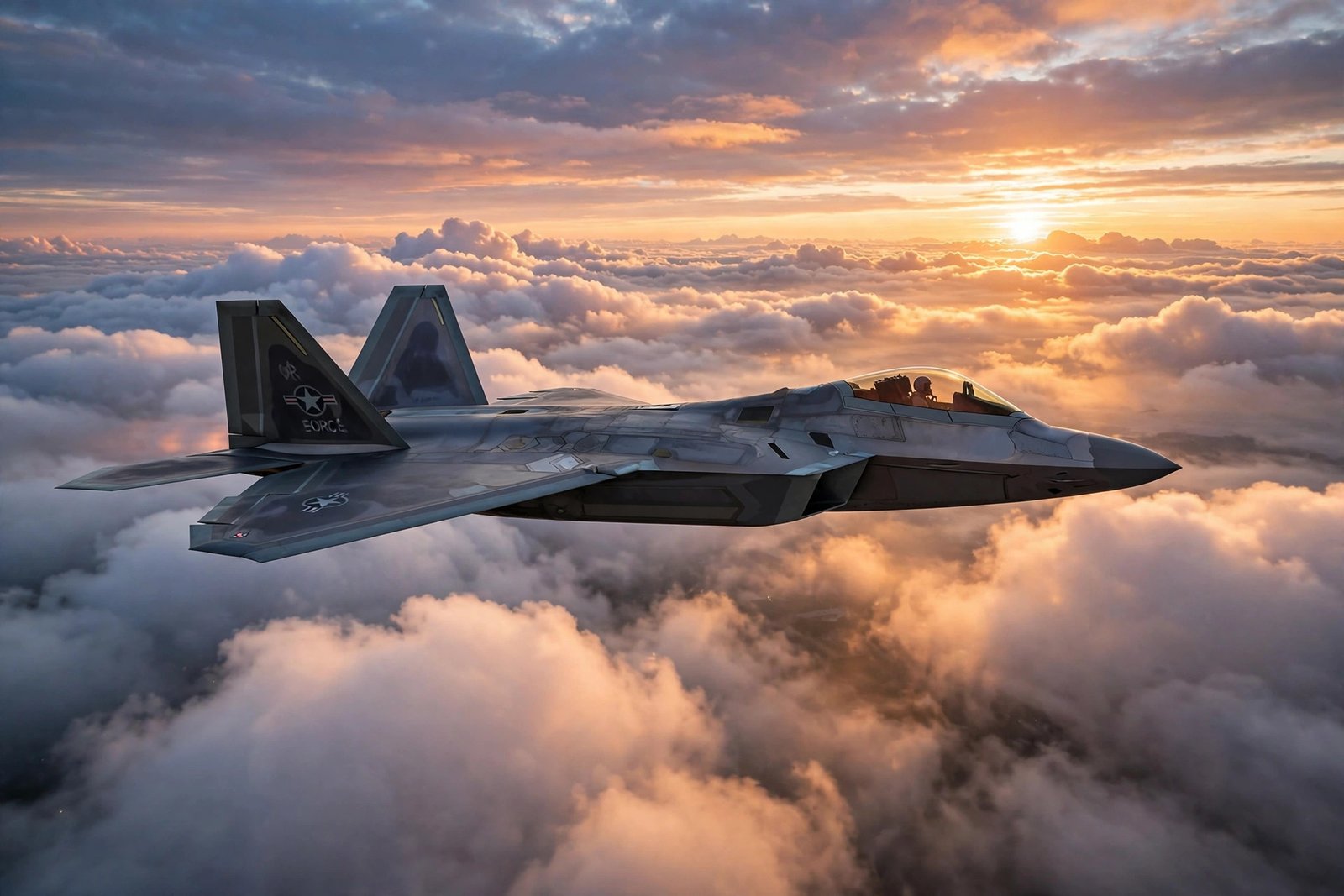
Some of the most gripping US Air Force pilots true stories do not come from movies. They come from real cockpits, real danger, and real decisions made in seconds. These are the men and women who flew into harm’s way, tested the limits of new machines, and refused to leave a fellow pilot behind. Their stories remind us that courage is not the absence of fear, but the choice to act anyway.
The United States Air Force became an independent service in 1947, but its pilots had already been flying in combat for years as part of the Army Air Forces. Since then, Air Force aviators have flown in every major American conflict of the modern era, from the skies over Korea and Vietnam to the deserts of Iraq and the mountains of Afghanistan. Each generation has produced its own legends, and many of their stories are now part of the public record, preserved in museums, official histories, and the memories of the people who served alongside them.
US Air Force Pilots True Stories: Breaking the Sound Barrier
One of the most famous US Air Force pilots true stories begins not in combat, but in a test program in the California desert. On October 14, 1947, Captain Chuck Yeager climbed into the Bell X-1, a rocket-powered experimental aircraft, and became the first person to fly faster than the speed of sound in level flight. The aircraft was nicknamed Glamorous Glennis, after his wife.
What makes Yeager’s story so remarkable is what happened the night before. He had broken two ribs in a horseback riding accident and kept it a secret, fearing he would be removed from the flight. With the help of a local veterinarian, he managed to get through the flight, using a broom handle to close the cockpit door. The next day, he pushed the X-1 past Mach 1, opening the door to supersonic flight and changing aviation forever.
Yeager went on to a long and distinguished career, flying combat missions in World War II before his test pilot days, and later commanding fighter wings in Vietnam. His story is a reminder that the Air Force’s history is not only about war. It is also about pushing the boundaries of what machines and people can do. You can read more about other documented wartime experiences in our collection of true stories from American service members.
Operation Bolo: A Trap in the Skies Over Vietnam
Among Air Force pilot stories from the Vietnam War, few are as clever as Operation Bolo. By late 1966, North Vietnamese MiG fighters were ambushing American strike aircraft, using hit-and-run tactics and then disappearing before American fighters could respond. Colonel Robin Olds, commander of the 8th Tactical Fighter Wing, devised a plan to turn the tables.
On January 2, 1967, Olds led a force of F-4 Phantom fighters that disguised themselves as slower, more vulnerable F-105 Thunderchief bombers, flying the same routes and formations the bombers used. When the MiGs rose to attack what they believed were easy targets, they found themselves facing some of the best fighter pilots in the Air Force. In a matter of minutes, American pilots shot down seven MiGs, with no American losses in the engagement.
Olds himself was a larger-than-life figure, a World War II fighter ace who had become a legend among his own pilots. His leadership style was famously hands-on. He flew combat missions with his wing, shared the risks his pilots faced, and insisted on tactics built around discipline and teamwork rather than individual glory. Operation Bolo did not end the air war in Vietnam, but it blunted the MiG threat and gave American aircrews a much-needed boost in confidence.
Pardo’s Push: Refusing to Leave a Wingman Behind
Some Air Force pilot stories are defined by a single act of loyalty. On March 10, 1967, during a mission over North Vietnam, Captain Bob Pardo and his wingman, Lieutenant Earl Aman, were flying F-4 Phantoms when both aircraft were hit by anti-aircraft fire. Aman’s plane was losing fuel fast and would not make it to safety.
Rather than leave his wingman to eject over enemy territory, Pardo maneuvered his own aircraft behind Aman’s and gently pushed it forward with the nose of his jet against Aman’s tailhook. It was a maneuver no one had trained for, and it risked both aircraft. When the first attempt did not hold, Pardo tried again. The push gave Aman’s plane enough extra distance to reach friendly territory in Laos, where both pilots ejected and were rescued.
For decades, Pardo’s actions were not officially recognized, in part because the maneuver had violated regulations about risking an aircraft. But in 1989, the Air Force awarded both Pardo and Aman the Silver Star, acknowledging what their fellow pilots had long known: Pardo’s Push was one of the great acts of airmanship and loyalty in Air Force history. It remains a lesson taught to young pilots about what it means to never leave a wingman behind.
US Air Force Pilots True Stories From Iraq and Afghanistan
The tradition of courage continued into the twenty-first century. During the Iraq War, Captain Kim Campbell was flying an A-10 Thunderbolt II, the rugged close air support aircraft nicknamed the Warthog, on a mission over Baghdad in April 2003 when her aircraft was struck by enemy ground fire. The damage was severe. One engine was lost, the hydraulics failed, and the aircraft became extremely difficult to control.
Campbell switched the aircraft to manual reversion, a backup mechanical control system that pilots train for but rarely need to use in combat, and flew the damaged A-10 back to base, landing it safely. Her calm under pressure saved both her life and a valuable aircraft, and her story became one of the most widely shared examples of modern Air Force heroism. She later became an instructor, passing on the lessons of that day to a new generation of pilots.
Another modern story comes from Bosnia in 1995. Captain Scott O’Grady was flying an F-16 over Bosnia when his aircraft was hit by a surface-to-air missile. He ejected and spent six days evading capture on the ground, eating leaves and grass and hiding from search parties, before a Marine rescue force reached him. His rescue, carried out under the threat of enemy fire, was one of the most dramatic of the decade and a reminder that the Air Force never stops looking for its own.
What These Stories Teach Us About Courage
Looked at together, US Air Force pilots true stories share a few common threads. The first is preparation. Yeager, Olds, Pardo, and Campbell were all products of long, demanding training, and when the moment came, they fell back on skills they had practiced hundreds of times. Courage in the cockpit is rarely improvised. It is built, flight by flight, in simulators, classrooms, and training sorties.
The second thread is teamwork. None of these pilots acted alone. Yeager depended on ground crews and engineers. Olds depended on his wing. Pardo’s story is literally a story about two pilots working together. Campbell depended on her squadron and her maintainers. The Air Force motto is often summed up in the idea that no one flies alone, and these stories prove it.
The third thread is humility. Many of the pilots in these stories were reluctant to call themselves heroes. They pointed to their crews, their wingmen, and the people who did not come home. That humility is part of why their stories endure. They are not tales of superhuman perfection, but of ordinary people who, in extraordinary moments, did their jobs and looked out for one another.
- Training matters: every hero in these stories relied on skills built through years of practice.
- Teamwork saves lives: wingmen, ground crews, and rescue forces are part of every success.
- Calm under pressure is a skill, not just a trait, and it can be trained.
- History is best learned from documented records, museums, and official accounts.
How to Explore These Stories Further
If these Air Force pilot stories sparked your interest, there are many ways to learn more. The National Museum of the United States Air Force in Dayton, Ohio, preserves aircraft from every era described here, including the X-1 program and Vietnam-era fighters. The Smithsonian’s National Air and Space Museum also holds aircraft and artifacts that bring these missions to life.
Books and documentaries based on official histories and firsthand accounts offer deeper detail, and many veterans’ organizations publish oral histories that capture the voices of the pilots themselves. For readers who enjoy military history more broadly, our article on true stories from the Battle of the Bulge offers another chapter of American service and sacrifice, while our guide to how American power works explores a different kind of national strength.
Conclusion: Why These Stories Still Matter
US Air Force pilots true stories matter because they are about more than airplanes. They are about people who accepted risk for a cause larger than themselves, who trusted their training and their teammates, and who came home to build families, communities, and careers after their service ended. In a time when headlines move fast and heroes are often invented, these documented stories offer something real.
Share this article with someone who loves aviation or military history, and take a moment to thank a veteran in your life. Their stories deserve to be told accurately, remembered honestly, and passed on to the next generation. Explore more American stories on Beauty of USA, and keep learning about the people who shaped this country’s skies.