
Most Americans can name their own state capital, but very few can name all fifty, and even fewer know the stories behind them. That is what makes facts about US state capitals so much fun to explore: behind every capital city sits a story of ambition, geography, politics, and sometimes pure chance. Some capitals are tiny towns tucked into mountain valleys, while others are huge desert metropolises. Some were chosen for their central location, some were named to honour a president, and some only became capitals after long and bitter rivalries. In this guide, we travel from the oldest capital in the nation to the highest, the smallest, and the most surprising, and we show why these cities matter far beyond the government buildings at their centres.
State capitals are more than dots on a map. They are where laws are made, where history was argued over, and where ordinary people built communities around courthouses, colleges, and train stations. Understanding them is a shortcut to understanding America itself, because each capital reflects the character of its state. A New England capital feels very different from a capital on the Great Plains, and a capital in the desert Southwest has little in common with one on the Pacific coast. If you love American trivia, road trips, or history, state capitals are a perfect place to start.
Why Facts About US State Capitals Surprise Even Americans
Ask a group of adults to name the capital of every state and most will stumble somewhere in the middle. Many people guess that the largest city must be the capital, but that is true in only a minority of states. New York City is not the capital of New York, Chicago is not the capital of Illinois, and Los Angeles is not the capital of California. The capitals are Albany, Springfield, and Sacramento, and each was chosen for reasons that made sense at a particular moment in history, even if those reasons are not obvious today. That mismatch between size and status is one of the first surprises for anyone digging into this topic.
Another surprise is how small some capitals are. Montpelier, the capital of Vermont, is the smallest state capital by population, with only around eight thousand residents, which makes it smaller than many suburbs. At the other end of the scale, Phoenix, the capital of Arizona, is home to well over a million people and is one of the largest cities in the entire country. Between those two extremes sits an enormous range of cities, from Juneau, which is reachable only by air or sea, to Honolulu, which sits in the middle of the Pacific Ocean. No two capitals are alike, and that variety is exactly the point.
Capitals also surprise people because of where they sit, and facts about US state capitals often turn on that geography. Some were placed in the geographic centre of a state so that lawmakers from every corner could reach them. Others were placed on rivers, because rivers were the highways of the nineteenth century. Still others were chosen as compromises, when two rival cities both wanted the honour and neither would accept losing to the other. In a few cases, the capital moved several times before settling in its current home, as settlers pushed westward and the centre of population shifted with them. Learning those backstories turns a dull list of names into a map of how America grew.
Facts About US State Capitals: Size, Population, and Geography
Geography explains a great deal about state capitals. Juneau, Alaska, is the largest state capital by land area, covering a vast stretch of mountains, forests, glaciers, and waterways in the Alaskan panhandle. It is also one of the most isolated capitals, because no road connects it to the rest of Alaska or to the rest of the United States. Visitors and residents arrive by plane or by ferry, which gives the city a character unlike any other capital. Juneau began as a gold-mining camp, and gold is still part of its story, even though government is now its main business.
At the other geographic extreme, consider Santa Fe, New Mexico, which sits high in the foothills of the Sangre de Cristo Mountains. Santa Fe is the highest state capital in the nation, at more than seven thousand feet above sea level, and its thin air, adobe architecture, and long history make it feel like a different world from the lowland capitals of the East. Santa Fe is also the oldest state capital in the United States, founded as a Spanish colonial settlement in the early seventeenth century, long before the United States existed. Walking its historic plaza is like walking through layers of Spanish, Mexican, and American history all at once.
Population tells another part of the story, and facts about US state capitals are often clearest when size and growth are compared side by side. Phoenix grew from a desert farming settlement into a sprawling modern metropolis, and its growth mirrors the rise of the American Southwest in the twentieth century. Air conditioning, highways, and new industries turned a hot desert valley into a place where millions of people wanted to live. Denver, Colorado, known as the Mile High City because its elevation is almost exactly one mile above sea level, grew for a different reason: it was a supply centre for miners heading into the Rocky Mountains, and it kept growing as railroads, agriculture, and later technology and aerospace arrived. Boston, Massachusetts, by contrast, was already an important city before independence, and its capital status reflects its role as a centre of trade, learning, and revolutionary politics.
Here are a few geographic contrasts worth remembering when you plan a capital-city road trip:
- Juneau, Alaska: vast, remote, and reachable only by air or water.
- Santa Fe, New Mexico: the highest and oldest state capital in the country.
- Honolulu, Hawaii: the only state capital located on an island chain in the middle of the Pacific.
- Denver, Colorado: the Mile High City, sitting exactly a mile above sea level.
- Montpelier, Vermont: the smallest state capital by population, with a small-town feel and a gold-domed capitol building.
- Phoenix, Arizona: the most populous state capital, a desert city that keeps growing.
These contrasts matter because they shape daily life. A lawmaker in Juneau deals with ferry schedules and winter darkness. A lawmaker in Phoenix deals with desert heat and water supply. A lawmaker in Honolulu deals with island geography and Pacific trade. The job title is the same, but the world around the job could hardly be more different.
Capitals Named for People and Places
Many state capitals carry the names of people who shaped American history, and spotting those names is a fun way to learn history without opening a textbook. Jackson, Mississippi, was named for Andrew Jackson, the general who became the seventh president. Lincoln, Nebraska, was named for Abraham Lincoln, and it was renamed from Lancaster after his assassination, as a tribute. Madison, Wisconsin, was named for James Madison, the fourth president and a key author of the Constitution. Jefferson City, Missouri, was named for Thomas Jefferson, the third president and author of the Declaration of Independence. Each of those names is a reminder of which leaders mattered most when the city was founded or renamed.
Other capitals were named for places rather than people. Columbia, South Carolina, was named as a poetic name for America itself, derived from Christopher Columbus, and it was one of the first planned cities in the United States, laid out specifically to be a capital. Raleigh, North Carolina, was named for Sir Walter Raleigh, the English explorer who sponsored early attempts to settle the region. Charleston, West Virginia, took its name from Charles Clendenin, an early settler whose family helped found the town. Frankfort, Kentucky, is said to take its name from a crossing point on the Kentucky River, a reminder that rivers, not highways, decided where many early towns grew.
Some names tell a story about nature. Little Rock, Arkansas, was named for a small rock formation on the Arkansas River that served as a landmark for river travellers. Salt Lake City, Utah, was named for the Great Salt Lake nearby. Boise, Idaho, comes from a French word meaning wooded, because early French explorers were struck by the trees along the Boise River in an otherwise dry landscape. Bismarck, North Dakota, was named for the German chancellor Otto von Bismarck, in a bid to attract German investment in railroads, which shows how practical, and sometimes cheeky, city naming could be. If you enjoy this kind of name detective work, you will also enjoy our guide to USA state nicknames, where many of these stories connect to the nicknames states still use today.
The Oldest, the Highest, and the Most Unusual Capitals
Santa Fe deserves a second mention, because it is unusual in more than one way. Founded in 1610 as the capital of the Spanish province of Nuevo Mexico, it has served as a capital under Spanish, Mexican, and American rule. That long run makes it older than many famous American cities, and its adobe buildings, historic churches, and plaza preserve that layered past. Visitors often say Santa Fe feels less like a typical state capital and more like a living museum, and in many ways they are right. Its Palace of the Governors, on the plaza, is one of the oldest continuously occupied public buildings in the United States.
Boston is another capital with an outsized history. Founded in 1630 by Puritan settlers, Boston became a centre of trade, education, and revolutionary activity. The Boston Tea Party, the Boston Massacre, and the battles of Lexington and Concord all happened in or near Boston, and the city still wears that history proudly, with a Freedom Trail that guides visitors past churches, meeting houses, and burial grounds. Boston is also a modern centre of universities, medicine, and technology, which shows how a capital can honour its past while building a very different future. For more on the people behind places like Boston, see our collection of fascinating facts about US presidents.
Then there are the capitals that break the usual pattern. Annapolis, Maryland, is a sailing city on Chesapeake Bay, and it briefly served as the capital of the entire United States under the Articles of Confederation, when Congress met there in the 1780s. Dover, Delaware, the capital of the first state to ratify the Constitution, is a small city with a big historic district and a strong connection to early American government. Honolulu, Hawaii, is the only capital with a royal palace on American soil, Iolani Palace, built for Hawaiian monarchs before Hawaii became a state. Each of these cities reminds us that capitals are not interchangeable: they each carry a different chapter of the national story.
Trenton, New Jersey, also holds a special place in the story. It was the site of a crucial Revolutionary War victory, when George Washington crossed the Delaware River and surprised Hessian troops on the morning after Christmas in 1776. That victory revived a struggling revolution and gave Trenton a permanent place in American memory. Harrisburg, Pennsylvania, sits on the Susquehanna River and grew as a transportation hub, first for river traffic, then for canals, then for railroads. Springfield, Illinois, is closely tied to Abraham Lincoln, who lived and worked there before becoming president, and his home and tomb still draw visitors from around the world. These are not just government towns; they are places where the course of history actually changed.
Capitals That Moved, and Why They Moved
Many capitals have not always been where they are now. In the early years of a state, the capital often followed the population, moving west as settlers arrived, or moving to a more central location as new counties were added. Alabama, for example, had several capitals before Montgomery became the permanent capital, and Georgia had a string of capitals, including Savannah and Augusta, before Atlanta took the role. Oklahoma City became the capital of Oklahoma only after statehood, replacing Guthrie, and that change followed a political struggle that is still talked about in the state today.
Sometimes a capital moved because of war, fire, or disaster. Richmond, Virginia, was the capital of the Confederacy during the Civil War, and the city suffered greatly in that conflict, yet it remained the state capital after the war, a sign of continuity even after defeat. Atlanta, Georgia, was famously burned during the Civil War, yet it rebuilt and grew into the economic centre of the Southeast, which helps explain why it eventually became the capital. Sacramento, California, became the capital during the Gold Rush era, when California was growing so fast that its government needed a stable home near the centre of the new state’s activity.
In other cases, the move was about fairness. Lawmakers wanted a capital that was not dominated by one big commercial city, so they chose a smaller, more central town instead. That is part of why Albany, not New York City, is the capital of New York, and why Springfield, not Chicago, is the capital of Illinois. The idea was that government should be accessible to farmers and small-town residents, not just to merchants in the biggest port. That principle still shapes debates today, whenever someone suggests moving a capital or building a new capitol complex. The history of these moves is a history of compromise, and compromise is a very American story.
State Capitals and the Bigger American Story
State capitals are also excellent starting points for learning about wider American themes. If you want to understand westward expansion, follow the capitals westward: from Boston and Richmond in the East, through Columbus and Indianapolis in the Midwest, to Denver and Salt Lake City in the mountains, and finally to Sacramento, Salem, and Olympia on the West Coast. Each step west tells you where settlers were heading and what they hoped to find. If you want to understand the Civil War, look at capitals like Richmond, Montgomery, and Columbia, and at border capitals like Frankfort and Dover, where loyalties were divided and history was fiercely contested.
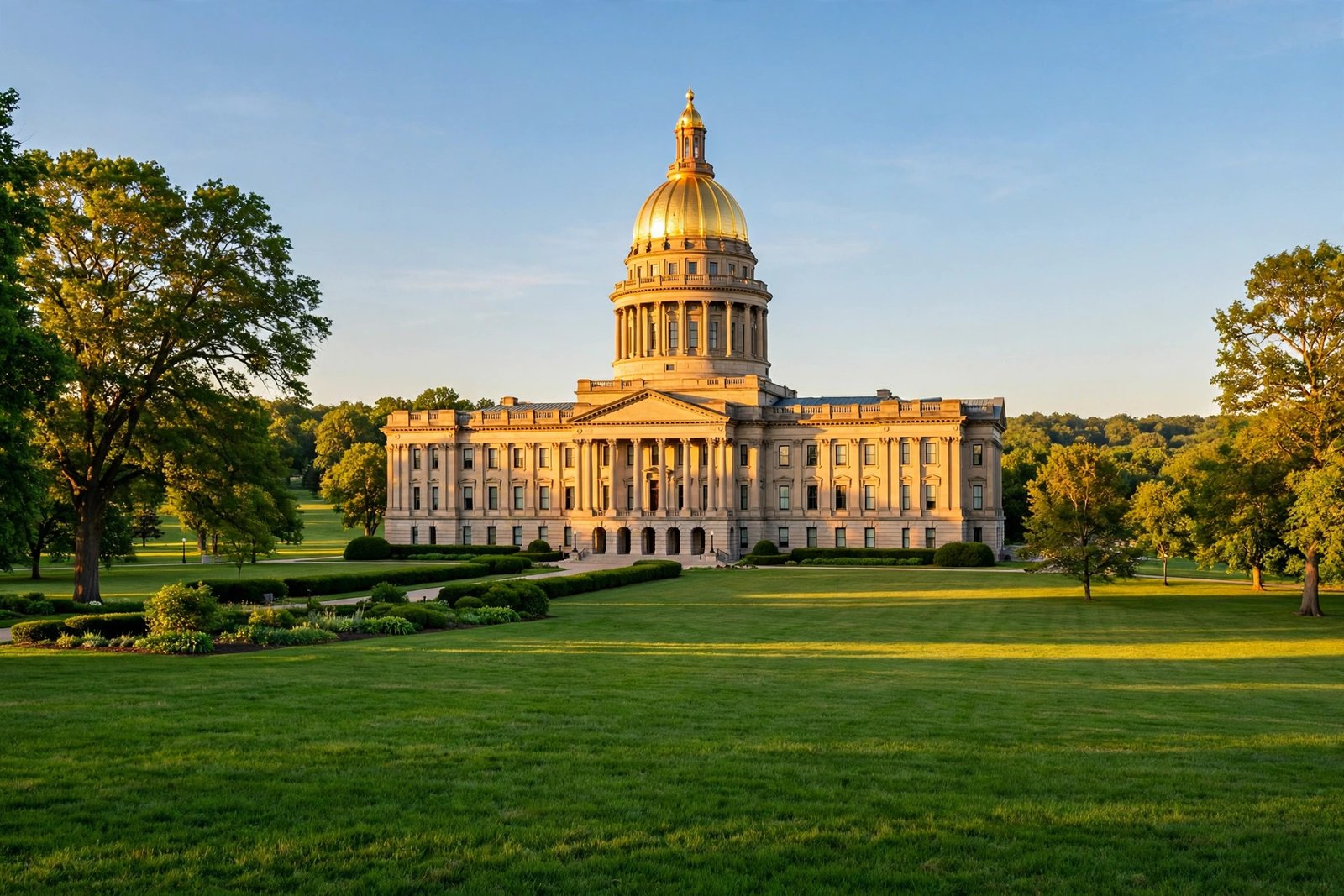
Capitals also reflect American ideals about government itself. Most state capitol buildings were designed to look impressive, with domes, columns, and grand staircases inspired by the United States Capitol in Washington, D.C. The message was clear: state government mattered, and it deserved a building that showed it. Some capitols, like the Texas State Capitol in Austin, are even taller than the national Capitol, a fact Texans are happy to point out. Others, like the Vermont State House in Montpelier, are smaller and more modest, which suits a state that values simplicity and local control. Architecture, in other words, is another way capitals tell you about their states. For a broader look at how states differ, read our surprising facts about US states.
Today, capitals are also centres of education, culture, and tourism, and facts about US state capitals make great starting points for planning visits to them. Many host state museums, historic homes, universities, and festivals that celebrate local food, music, and history. Visiting a capital is often the fastest way to get a feel for a whole state, because the museums and historic sites in the capital are designed to tell the state’s story in one place. If you are planning a road trip, consider building it around capitals: you can see a gold-domed capitol in one city, a Spanish plaza in the next, and a harbour city in the one after that, all in a single journey across America.
Planning Your Own State Capital Adventure
If this guide has sparked your curiosity, here is a simple way to start exploring. Pick a region, not the whole country, and visit three or four capitals in one trip. New England is perfect for beginners, because Boston, Providence, Hartford, Concord, Montpelier, and Augusta are all within a few hours of each other and each offers a very different experience. The Southeast offers another great route, from Richmond through Raleigh and Columbia to Atlanta and Tallahassee, with history, food, and music at every stop.
- Start with the capitol building: most offer free guided tours, and the tours are the best introduction to a state’s history.
- Visit the state museum nearby: it will explain the exhibits you saw in the capitol in more depth.
- Walk the historic district: look for old homes, churches, and main streets that show how the city grew.
- Try the local food: capitals often have farmers markets and local restaurants that reflect the state’s agriculture and culture.
- Take a photo at the city sign or the capitol steps: it is a fun way to track your progress toward all fifty.
For more inspiration, the list of capitals in the United States on Wikipedia is a handy reference, and the Britannica guide to state capitals offers helpful background on how capitals are chosen and what they do. Both are good places to check facts before you set out.
In the end, the most surprising thing about state capitals may be how much they reward curiosity, which is why facts about US state capitals are worth collecting one capital at a time. They are not just places where politicians work. They are small cities with big stories, quiet streets with loud histories, and ordinary places that once decided extraordinary things. Whether you visit one capital or all fifty, you will come away with a richer sense of what America is and how it became that way. So pick a capital, plan a visit, and start your own collection of stories. Which capital will you explore first? Share your pick in the comments, and tell us which capital surprised you the most.