
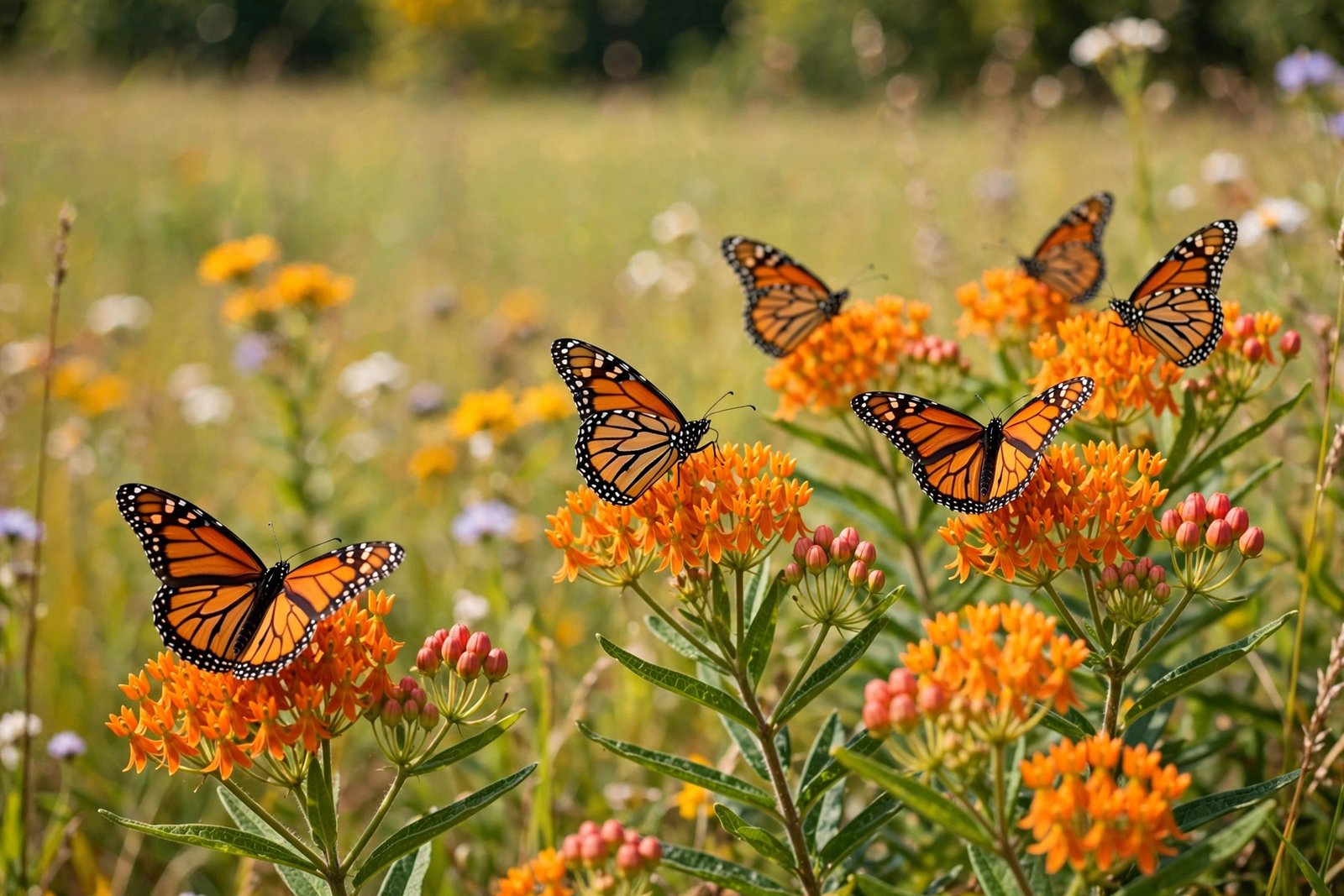
Every fall, one of nature’s greatest spectacles unfolds above America: millions of monarch butterflies, each weighing less than a paperclip, take to the skies on a migration of up to 3,000 miles. If you have ever wondered where to see monarch butterflies usa travelers can witness this orange-and-black river of wings, the answer is happier than you might think — from California’s misty coastal groves to Texas hill country to the shores of New Jersey, the USA offers some of the finest monarch viewing on the planet.
Monarchs are North America’s most famous butterfly, and their migration is genuinely one of the great wildlife events in the world. Eastern monarchs funnel through the heartland toward Mexico, while a separate western population winters along the California coast. Knowing where to see monarch butterflies usa style — the right place at the right season — turns a casual walk into an unforgettable encounter with thousands of butterflies clustered like autumn leaves on a single branch.
This guide covers the best times to go, the top overwintering groves and migration corridors across the country, how to find monarchs near your own home, and simple viewing etiquette that keeps these fragile travelers safe. Grab your binoculars — the butterflies are waiting.
When to See Monarch Butterflies in the USA
Timing is everything with monarchs, because the butterflies you see depend entirely on the season. The western population, which overwinters along the California coast, is best viewed from roughly October through February, with peak clustering in November through January. The eastern population passes through the USA in two great waves: northbound in spring (roughly March through May, depending on latitude) and southbound in late summer and fall (August through October).
In Texas, the migration funnel state, spring brings the northbound wave in March and April, while the southbound journey peaks in September and October. Across the Midwest and Northeast, late August through September is prime time to watch southbound monarchs nectaring in gardens and gathering at staging areas before the long flight to Mexico. Florida hosts monarchs nearly year-round in its southern reaches, with winter clusters at places like St. Marks National Wildlife Refuge in the panhandle.
A good rule of thumb: visit overwintering sites on calm, sunny afternoons. Monarchs cluster tightly in cool shade to conserve energy, but when the sun warms the air they burst into shimmering flight — the moment every butterfly watcher dreams of.
Where to See Monarch Butterflies USA: California’s Overwintering Groves
The western monarch population spends the winter clinging to eucalyptus, pine, and cypress trees along the California coast, and several groves have become beloved public viewing sites. The single best answer to where to see monarch butterflies usa in winter is the California coast between October and February.
Pacific Grove, proudly calling itself “Butterfly Town, USA,” is the classic destination. Its Monarch Grove Sanctuary sits in the middle of a residential neighborhood, where docents greet visitors from late fall through winter. Nearby, the Monarch Grove at Pismo State Beach protects one of the largest overwintering colonies on the coast, with an easy boardwalk trail and viewing telescopes. Farther north, Natural Bridges State Beach in Santa Cruz hosts thousands of monarchs in a eucalyptus grove just steps from the ocean — the butterflies arrive in mid-October and the park celebrates with a “Welcome Back Monarchs” event.
Other reliable California spots include the groves at Goleta and Carpinteria near Santa Barbara, Andrew Molera State Park in Big Sur, and the eucalyptus stands of San Leandro and the East Bay. Mornings can be foggy and the butterflies sluggish, so plan for midday visits when the sun breaks through. Entry to most groves is free or included with state park admission, making this one of America’s most affordable wildlife spectacles.
Where to See Monarch Butterflies USA on the Eastern Flyway
East of the Rockies, monarchs follow a grand corridor that funnels through Texas twice a year. In spring, the first generation pushes north from Mexico into Texas hill country and beyond; in fall, the famous “super generation” — the long-lived butterflies that will make the entire journey south — streams back through the state. Any list of where to see monarch butterflies usa migration hotspots starts here.
The National Butterfly Center in Mission, Texas, in the Rio Grande Valley, is a must-visit: more than 100 acres of gardens along the border that host migrating monarchs and dozens of other butterfly species. Throughout central Texas, from Austin’s Zilker Botanical Garden to the wildflower meadows of the Hill Country, fall brings waves of southbound monarchs stopping to fuel up on nectar.
Farther north, the migration spreads across the Great Plains and Midwest. The University of Kansas runs Monarch Watch, the continent’s best-known tagging program, and its home state offers superb late-summer viewing. In the Northeast, Cape May, New Jersey, is a legendary fall staging area where southbound monarchs gather before crossing Delaware Bay — the Cape May Monarch Monitoring Project has tracked them there for decades. Pair a Cape May butterfly trip with birding, and you have one of the East Coast’s great autumn wildlife weekends. For more winged wonders closer to home, see our guide on where to see fireflies in the USA — another magical warm-season light show.
10 Best Places to See Monarchs in America
Here is a coast-to-coast shortlist for planning your trip:
- Monarch Grove Sanctuary, Pacific Grove, California — the iconic “Butterfly Town, USA” grove, October to February.
- Pismo State Beach Monarch Grove, California — huge coastal colony with boardwalk viewing, November to February.
- Natural Bridges State Beach, Santa Cruz, California — eucalyptus grove by the sea, mid-October through January.
- National Butterfly Center, Mission, Texas — 100+ acres of Rio Grande Valley gardens on the migration flyway.
- Texas Hill Country wildflower meadows — peak southbound migration in September and October.
- Cape May Point, New Jersey — famous fall staging area before the Delaware Bay crossing.
- St. Marks National Wildlife Refuge, Florida — wintering monarchs along the Gulf Coast.
- Monarch Waystations nationwide — thousands of certified gardens; find one near you through Monarch Watch.
- Great Lakes shoreline gardens — late-summer nectaring stops in Michigan, Ohio, and Wisconsin.
- Your own backyard — with native milkweed and nectar flowers, you can host monarchs almost anywhere east of the Rockies.
Butterfly lovers who enjoy gentle wildlife encounters will also love our guide on where to see manatees in the USA — another slow-moving, unforgettable American animal experience.
How to Find Monarchs Near You
You do not need to travel to California or Texas to see monarchs. Across the eastern two-thirds of the country, monarchs visit any garden with the right plants during migration season. The single most important plant is milkweed (Asclepias) — it is the only plant monarch caterpillars can eat, so females lay their eggs exclusively on its leaves. Plant native milkweed species for your region, add nectar flowers like coneflowers, zinnias, and goldenrod for the adults, and skip the pesticides.
To track the migration in real time, visit Journey North, the citizen-science project that maps monarch sightings, first milkweed emergence, and roost locations across North America each spring and fall. You can report your own sightings and watch the migration wave approach your town. Monarch Watch at the University of Kansas also runs a tagging program — volunteers place tiny stickers on butterflies’ wings, and recoveries in Mexico have revealed astonishing details about individual journeys.
Local nature centers, botanical gardens, and national wildlife refuges often host monarch festivals in September and October, with tagging demonstrations that are wonderful for kids. Check your state’s park events calendar as fall approaches.
Viewing Tips for a Perfect Monarch Encounter
Monarchs are delicate, and the best viewing experiences protect them. Keep these simple rules in mind:
- Visit at midday on sunny days. Cool, cloudy mornings keep butterflies clustered and still; sunshine brings the spectacular flights.
- Stay on trails and behind viewing ropes. Overwintering clusters hang low in some groves — never shake branches or try to wake them.
- Never touch or catch a monarch. Their wings are covered in microscopic scales that rub off with handling.
- No flash photography. It startles clustered butterflies; natural light is kinder and looks better anyway.
- Keep voices low near roosts. Groves are quiet places — part of their magic is the hush.
- Leave the milkweed standing. In gardens and roadsides, those “weeds” may hold the next generation.
Binoculars help at groves where clusters hang high, and a field guide to butterflies turns a pretty sighting into a learning adventure. Kids especially love the challenge of spotting a chrysalis — that jade-green jewel with gold dots hanging beneath a milkweed leaf.
Why Monarchs Need Our Help
There is an urgent reason to see monarchs now and to help them. Both North American populations have declined sharply. Western monarch counts, run by volunteers with the Xerces Society, have swung dramatically, and the winter of 2024–25 saw fewer than 10,000 butterflies counted — a steep drop that alarmed scientists. In Mexico, the forest area occupied by eastern monarchs has also shrunk far below historic levels in recent seasons.
In December 2024, the U.S. Fish and Wildlife Service proposed listing the monarch butterfly as threatened under the Endangered Species Act — a landmark acknowledgment of its decline. The main drivers are habitat loss (especially milkweed wiped out by herbicides and development), climate shifts, and pesticide exposure. The good news: monarchs respond quickly when habitat returns, and backyard milkweed plantings genuinely help.
America’s wildlife is full of comeback stories and strange wonders — from the oddballs in our roundup of American animals you won’t believe are real to the gentle giants of the springs. Adding your yard to the monarch’s habitat network is one of the simplest conservation acts a family can take.
Knowing where to see monarch butterflies usa travelers go each season is the first step; the second is making sure the butterflies keep coming. Plan your visit to a grove or migration hotspot this year, plant a patch of native milkweed at home, and share what you saw — every sighting reported to a citizen-science project helps researchers protect this migration. The monarchs have flown this route for millennia. With a little help, they will fly it for millennia more. Share this guide with a fellow nature lover and start planning your butterfly trip today.