
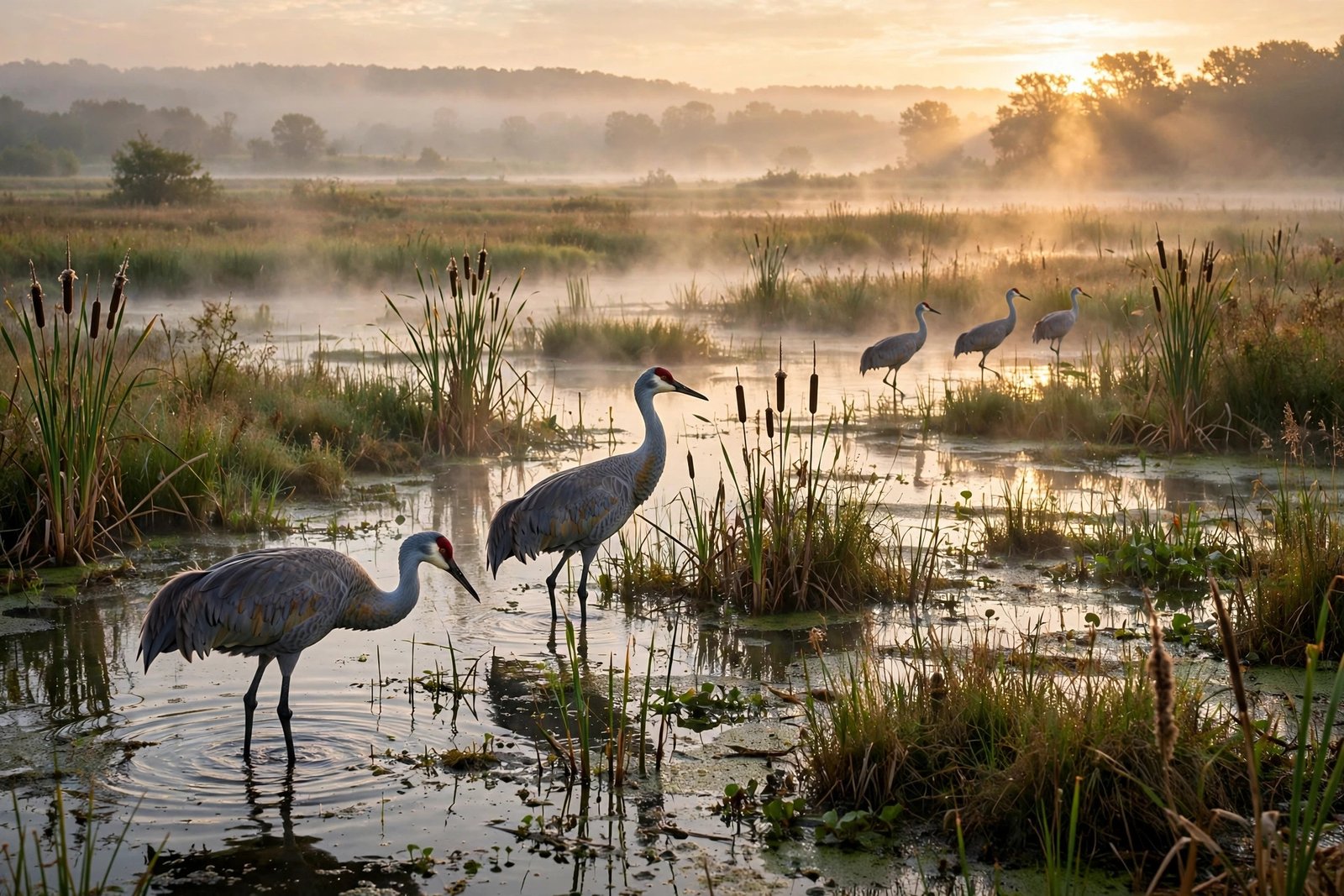
If you have ever dreamed of standing in a cold dawn field while thousands of bugling cranes lift into a pink sky, learning where to see sandhill cranes USA should be at the top of your travel list. Sandhill cranes are among North America’s most spectacular migrants: tall, gray, bugling birds whose lineage stretches back millions of years, and whose annual journeys still gather in numbers that stop even seasoned birdwatchers in their tracks. The good news is that you do not need to be an expert to enjoy them. You need the right place, the right season, and an early alarm clock.
Unlike many rare birds, sandhill cranes are widespread and, in the right season, astonishingly easy to find. Hundreds of thousands of them funnel through a handful of famous staging and wintering areas, and several wildlife refuges have built viewing platforms, driving tours, and festivals around the spectacle. This guide covers the best of those places, season by season, so you can plan a trip that matches the birds’ calendar rather than fighting it.
Where to See Sandhill Cranes USA in Spring
The single greatest crane spectacle in North America happens along Nebraska’s Platte River every March. As winter loosens its grip, hundreds of thousands of sandhill cranes pause in the shallow river channels and surrounding fields to rest and feed on their way north. At dawn, the birds rise from the river in waves, bugling as they head out to nearby grain fields; at dusk, they return to the safety of the water. The stretch of river between Grand Island and Kearny is the heart of the action, and local organizations run guided viewing blinds that put you close to the action without disturbing the birds.
Spring crane watching is not limited to Nebraska. In Colorado’s San Luis Valley, the Monte Vista National Wildlife Refuge hosts large numbers of cranes each March, and the town of Monte Vista celebrates with an annual crane festival featuring guided tours, talks, and sunrise viewing trips. If Nebraska feels crowded, the San Luis Valley offers a quieter, high-desert alternative with mountain views as a bonus. Either way, book lodging early: crane season fills small towns fast.
Where to See Sandhill Cranes USA in Winter
When autumn turns to winter, many cranes head south, and one of the finest places to greet them is Bosque del Apache National Wildlife Refuge in New Mexico. From November through February, the refuge’s wetlands and fields host large wintering flocks, and the daily rhythm is pure theater: at dawn, thousands of cranes and geese lift off the ponds in a noisy, glorious rush, and at sunset they pour back in. Photographers prize the low desert light, and the refuge’s driving tour loops make it easy to watch from your car on cold mornings.
Farther west, Whitewater Draw Wildlife Area near Willcox in southeastern Arizona draws impressive winter flocks of its own, with evening fly-ins that rival the famous refuges. Winter is also a fine time for crane watching in the southern states, where milder weather makes long mornings outdoors comfortable. Wherever you go in winter, arrive before sunrise, dress in warm layers, and let the birds set the schedule: the best shows happen in the first hour of light.
Fall Staging Areas Worth the Trip
Autumn has its own crane hotspots, led by Jasper-Pulaski Fish and Wildlife Area in northwestern Indiana. Tens of thousands of cranes gather there in October and November before pushing south, and the property’s observation platform gives visitors a front-row seat to the evening fly-in. It is one of the easiest crane spectacles in the eastern half of the country to reach, and a fine excuse for a fall road trip.
Other fall options include Horicon Marsh in Wisconsin, where cranes join the autumn waterfowl migration, and the Lodi area of California’s Central Valley, which celebrates its visiting cranes with an annual festival in November. If you are wondering where to see sandhill cranes USA in autumn without flying across the country, start with the staging area nearest you and build outward from there: the birds’ flyways cover much of the nation, and a regional trip can be just as rewarding as a famous one.
Summer and Year-Round Encounters
Not every sandhill crane migrates. Florida is home to a non-migratory population that lives in the state all year, and places such as Paynes Prairie Preserve State Park near Gainesville offer reliable chances to spot these resident birds in open prairie and wetland edges. Summer visitors to Florida can pair crane watching with the state’s other wildlife, from wading birds to alligators, though the cranes themselves are the quiet stars of the prairie.
Summer also brings cranes to the far north. At Creamer’s Field Migratory Waterfowl Refuge in Fairbanks, Alaska, cranes spend the breeding season in the open fields, and summer visitors can watch them feeding and calling under the long northern daylight. In Idaho, Grays Lake National Wildlife Refuge is another important breeding and staging area, best visited in spring and early summer. These northern sites reward travelers who want cranes without crowds, and they pair beautifully with wider explorations of the country’s wild places, such as the best national parks in the USA to visit and the most beautiful waterfalls in the USA.
Getting to Know the Birds Before You Go
A little identification knowledge makes the spectacle richer. Adult sandhill cranes stand nearly four feet tall, with slate-gray plumage, a distinctive patch of red skin on the forehead, and a long, straight bill. In flight, they hold their necks straight out, unlike herons, which tuck their necks back, and their wings stretch impressively wide, giving them a slow, powerful wingbeat that is easy to recognize even at a distance. Their call is the real signature, though: a deep, rolling bugle that carries for miles across open fields and wetlands, produced by an unusually long windpipe that coils inside the chest. Once you have heard a thousand cranes calling at dawn, you will never mistake the sound for anything else.
Sandhill cranes are also famous for their dancing. Pairs and family groups leap into the air, flap their wings, toss sticks or tufts of grass, and bow to one another, especially in spring. The dancing strengthens pair bonds and entertains young birds, and it is one of the most joyful sights in American birdwatching. Cranes generally mate for life and return to the same breeding and wintering areas year after year, which is why the famous viewing sites stay reliable: the birds themselves are creatures of habit, and local guides know their routines well.
On the ground, cranes feed by probing and picking through fields and shallow wetlands for grain, seeds, roots, insects, and other small food items left after harvest. That diet is why farm country matters so much to them: the waste grain in harvested fields along the Platte River and other staging areas provides the fuel for the next leg of migration. When you watch cranes in a field, you are watching a working landscape do double duty as a wildlife refuge, and that partnership between farmers, conservation groups, and public refuges is a big part of why crane numbers remain healthy today.
Beginners sometimes confuse sandhill cranes with herons or whooping cranes. Herons fly with folded necks and are usually solitary hunters in shallow water, while sandhills travel and feed in flocks. Whooping cranes are taller and white, with black wingtips, and they are far rarer, wintering mainly along the Texas Gulf Coast. If you see a big gray bird bugling in a Nebraska field in March, you can be confident it is a sandhill.
Tips for Watching Cranes Responsibly
Cranes are sensitive to disturbance, especially when they are resting or feeding, so a little etiquette goes a long way:
- Arrive before dawn and stay quiet: the fly-out is the highlight, and loud groups push birds away.
- Use viewing blinds, platforms, or your car as a hide rather than walking into fields.
- Keep a respectful distance and use binoculars or a spotting scope for close views.
- Never use drones near flocks, and never play recorded calls to lure birds closer.
- Check refuge websites for closures, tour schedules, and seasonal rules before you travel.
Responsible watching also protects the experience for everyone else. A single careless approach can flush thousands of birds, ending the morning’s show for an entire platform of watchers. The cranes were here long before us; the least we can do is watch them on their terms.
Planning Your Crane Trip
No single destination answers where to see sandhill cranes USA for every season, so match your trip to the calendar. March belongs to Nebraska’s Platte River and Colorado’s Monte Vista. Late autumn belongs to Indiana’s Jasper-Pulaski and California’s Lodi. Winter belongs to Bosque del Apache in New Mexico and Whitewater Draw in Arizona. Summer belongs to Florida’s resident birds and Alaska’s breeding grounds. Pick one season, book early, and build in an extra morning: weather and bird movements vary, and a second dawn doubles your chances of a perfect fly-out.
Festivals can make a first crane trip easier, since they bundle guided tours, expert talks, and local lodging tips into one weekend. Monte Vista’s crane festival in March, Lodi’s festival in November, and Nebraska’s spring crane season events all welcome beginners, and refuge staff are famously generous with advice. For a longer American nature road trip, combine your crane stop with the most beautiful small towns in America for a journey that mixes wildlife with scenery.
Now that you know where to see sandhill cranes USA in every season, the only thing left is to pick your dates. Set the alarm, pack the binoculars, and head out before dawn. When the first wave of cranes rises bugling into the morning light, you will understand why people cross the country for this sound, and why they come back year after year. Share your crane photos with friends, leave the fields as you found them, and start planning next year’s trip before this one is even over.