
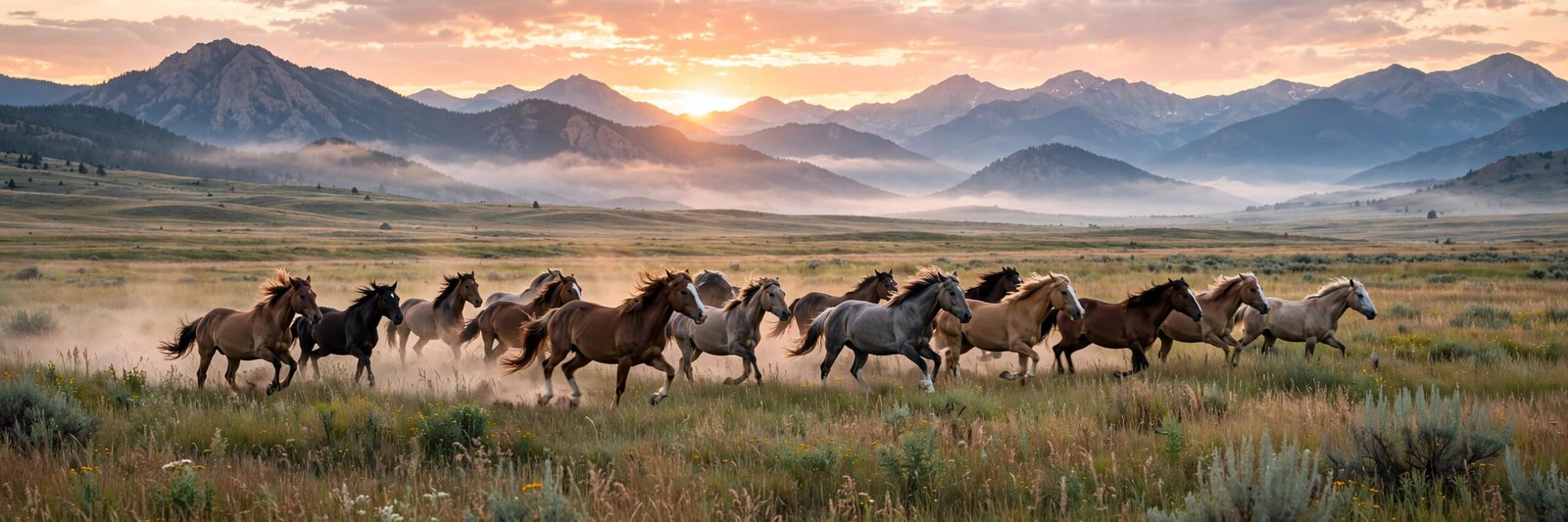
There are few sights in American nature more stirring than a band of wild horses cresting a ridge at dawn, manes flying and hooves drumming on the earth. If you have ever wondered where to see wild horses in the USA, the good news is that you have remarkable options from coast to coast. From the wind-scoured barrier islands of North Carolina to the painted badlands of North Dakota, free-roaming herds still live the way horses have for centuries. This guide covers the best, most reliable places to see them, plus the etiquette that keeps both you and the horses safe.
Where to See Wild Horses in the USA: The Mustangs of the American West
When most people picture wild horses in America, they imagine mustangs running across the open West — and for good reason. Mustangs, descended from horses brought to the Americas centuries ago, roam public lands across several western states. The Bureau of Land Management oversees many of these herd areas, and several offer some of the most dependable wild horse viewing anywhere in the country.
Nevada is the heart of mustang country. Vast stretches of the state’s high desert support herds that visitors can often spot from scenic byways and overlooks. One of the most accessible places is the Virginia Range near Reno and Carson City, where a large population of free-roaming horses lives surprisingly close to suburban neighborhoods and highways. Drive slowly along the roads through the range in the early morning, and your chances of a sighting are excellent. Remember that these are wild animals sharing space with traffic — never stop in the road, and never approach a horse that wanders near your car.
Wyoming and Montana also hold famous mustang ranges. The Pryor Mountain Wild Horse Range, straddling the Montana-Wyoming border, is one of the most celebrated places to watch wild horses in America. The drive into the range is rugged — a high-clearance vehicle is strongly recommended — but the reward is watching sure-footed horses pick their way across rocky slopes with sweeping views behind them. Summer and early fall offer the best road conditions here, while spring brings foals that stay close to their mothers’ sides.
Utah’s wild horse areas, including the Onaqui herd area southwest of Salt Lake City, have become favorites with photographers. The open desert terrain makes the horses relatively easy to find, especially around water sources at dawn. Because the landscape is so exposed, bring more water than you think you need, sun protection, and a full tank of gas — services are few and far between.
A few practical tips apply everywhere in the West. Go early: horses are most active in the cool hours around sunrise and sunset, and midday heat sends them to shade and water where they are harder to spot. Bring binoculars or a telephoto lens so you can enjoy them without crowding them. And keep a respectful distance of at least 100 feet — these animals can kick, bite, and charge when they feel cornered, and a stressed horse may abandon a water source it depends on.
Outer Banks Wild Horses in North Carolina
On the opposite side of the country, the Outer Banks of North Carolina host one of the most beloved wild horse populations in America. The wild horses of Corolla, on the northern Outer Banks, are descendants of Spanish colonial horses, and they roam the beaches and maritime forests of the Currituck Outer Banks. Watching these horses trot along the surf at sunrise is genuinely unforgettable — it feels like stepping into another century.
The Corolla herd lives on protected land where only four-wheel-drive vehicles are allowed on the beach. The most common — and safest — way to see them is with a licensed wild horse tour. Local tour companies run open-air excursions with guides who know the herd’s habits, the terrain, and the rules that protect the horses. This is strongly recommended over driving yourself: the sand is treacherous for inexperienced drivers, getting stuck is common, and the guides dramatically increase your odds of a sighting while keeping you at a legal, safe distance.
Farther south, Shackleford Banks — part of the Cape Lookout National Seashore — is home to another herd of wild horses descended from Spanish stock. Reaching Shackleford requires a passenger ferry from Beaufort or Harkers Island, which makes the trip feel like a true expedition. Once there, you can walk the island’s trails and beaches watching horses graze among the dunes. There are no services on the island, so pack everything in and everything out.
North Carolina law protects these horses, and the rules are strict for good reason: stay at least 50 feet away, never feed them, and never try to touch one. Feeding wild horses is dangerous for the animals — human food can make them seriously ill — and horses that learn to approach people for food are far more likely to be hit by vehicles. If you love wildlife watching in the Southeast, pair this trip with our guide on where to see alligators in the USA for another unforgettable encounter.
Theodore Roosevelt National Park: Wild Horses in North Dakota
For many travelers, the single most reliable place to see wild horses in a national park setting is Theodore Roosevelt National Park in the badlands of North Dakota. A herd of wild horses roams the park’s South Unit, set against a backdrop of painted canyons, prairie dog towns, and winding badlands formations that glow at golden hour. It is one of the great wildlife spectacles of the northern plains.
The park’s scenic loop drive offers frequent pullouts, and horses are often visible grazing on the hillsides near the road — sometimes remarkably close. Early morning and late evening are prime viewing times. The park is also outstanding for other wildlife: bison herds, prairie dogs, mule deer, and wild turkeys all share the landscape, so bring binoculars and plan to spend a full day. Our companion guide on where to see bison in the USA pairs perfectly with a badlands road trip.
What makes Theodore Roosevelt special is the setting. The badlands are starkly beautiful — layered rock in bands of red, ochre, and ash gray — and the horses seem to belong to the landscape in a way that is hard to describe until you have seen it. Visit in late spring for wildflowers and newborn foals, or in September and October for crisp air, golden cottonwoods, and fewer crowds. Winters here are brutally cold, and much of the park becomes difficult to access, so plan accordingly.
Park rules require visitors to stay at least 25 yards from all large wildlife, including horses. Stallions can be aggressive, especially during breeding season, and mares with foals are fiercely protective. Enjoy the sight, take your photos, and give them room.
Assateague Island: Wild Horses on the Atlantic Coast
Straddling the Maryland-Virginia border, Assateague Island is famous for its wild horses — sturdy, shaggy ponies that roam the beaches, marshes, and pine forests of this long barrier island. According to local legend, the horses are descendants of animals that swam ashore from a wrecked Spanish galleon centuries ago. Whether or not the legend is literally true, the horses have lived wild on the island for a very long time, and they are the stars of one of America’s most distinctive wildlife experiences.
The Maryland side of the island is managed as Assateague Island National Seashore, while the Virginia side falls within Chincoteague National Wildlife Refuge. Both offer excellent viewing. Horses wander freely through campgrounds, across roads, and along the beach — you do not have to work hard to find them here. That accessibility is part of the magic, but it also means the safety rules matter enormously: the horses bite and kick, and every year visitors are injured by getting too close. Maintain at least 40 feet of distance, secure all food, and never feed them.
The island is also a superb birding destination and a lovely beach in its own right, making it an easy weekend trip from Washington, D.C., Baltimore, or Philadelphia. Late spring and early fall bring the best weather and thinnest crowds; summer is beautiful but busy, and biting insects can be fierce in the marshes — bring repellent.
If Assateague sparks your interest in coastal wildlife, you may also enjoy reading about where to see bald eagles, another iconic American species with strongholds along the Atlantic flyway.
Where to See Wild Horses in the USA Safely: Etiquette and Viewing Tips
No matter which destination you choose, the same principles govern responsible wild horse viewing. These are not tame animals. They are powerful, unpredictable, and fully capable of seriously injuring a person who crowds them. The following guidelines will keep your trip safe and protect the herds for future visitors.
- Keep your distance. Stay at least 100 feet from horses on open range, and follow posted park minimums everywhere else. Use binoculars or a zoom lens to close the gap optically, not physically.
- Never feed wild horses. Human food can cause colic and other life-threatening digestive problems in horses. Fed horses also lose their wariness of roads and people, which gets them killed.
- Stay on roads and trails. Cutting across habitat to get closer stresses the animals and damages fragile terrain, especially in desert herd areas.
- Keep dogs leashed or leave them home. Dogs trigger a prey-predator response in horses and can scatter a herd or provoke a stallion.
- Go at dawn or dusk. Horses are most active in the cool hours, the light is best for photography, and you will avoid the midday crowds.
- Be patient. Wild horse viewing is wildlife viewing — sightings are never guaranteed. Build flexibility into your schedule and enjoy the landscape while you wait.
- Respect closures. Herd areas sometimes close for roundups, foaling season, or habitat restoration. Check with the managing agency before you go.
Best Time of Year for Wild Horse Viewing
Spring is arguably the finest season for wild horse watching across the country. It is also the season when the question of where to see wild horses in the USA comes up most often — and the honest answer is that dawn patrols at any of the destinations above will reward you. Foals arrive in spring, and watching a wobbly-legged newborn stay glued to its mother’s side is pure joy. Wildflowers carpet the desert ranges, the Outer Banks are mild before summer crowds arrive, and the badlands turn green. Late spring can still bring muddy roads in mountain herd areas, so check conditions.
Summer offers the longest days and the most reliable road access, especially in high-elevation western ranges. The trade-off is heat: horses retreat to shade and water during midday, so plan your viewing for the first and last hours of daylight. In the Southeast, summer means humidity, insects, and crowds at places like Assateague — beautiful, but go prepared.
Fall is a connoisseur’s choice. Crowds thin, temperatures moderate, and the horses are in peak condition after a summer of grazing. In the badlands, autumn cottonwoods turn gold against the red rock. In the West, fall storms can close back roads quickly, so watch the forecast and carry emergency supplies.
Winter viewing is for the hardy. Desert ranges stay accessible in the Southwest, and horses against snow in the northern plains are stunning — but roads, weather, and short days make it a serious undertaking. If you go, tell someone your route and expected return time.
Planning Your Wild Horse Trip
With so many strong options for where to see wild horses in the USA, how do you choose? Think about the experience you want. For the classic mustang-on-the-open-range feeling, head west to Nevada, Wyoming, or Utah. For horses on the beach with an easy weekend-trip format, the Outer Banks or Assateague are unbeatable. For a national park setting with bison, prairie dogs, and badlands scenery in the same frame, Theodore Roosevelt National Park is the pick. Many dedicated wildlife watchers eventually visit several — each herd and landscape has its own character.
Budget-wise, wild horse viewing is one of America’s great affordable adventures. Most herd areas charge little or nothing beyond park entrance fees, and the main costs are travel, lodging, and a good pair of binoculars. Guided tours, where available, are worth the price for first-timers: local guides know where the herds have been feeding and how to read the land.
Photographers should plan around the golden hours and bring the longest lens they own — 400mm or more is ideal for frame-filling shots without crowding the animals. A tripod or monopod helps in low light. And whatever camera you carry, take a few minutes to simply watch. The thunder of hooves, the squeals of sparring colts, the quiet grazing at dusk — these are the moments that stay with you long after the photos fade.
For more inspiration on America’s great wildlife destinations, explore our guide to the best national parks in the USA to visit and start planning a trip built around the wild things that make this country extraordinary.
Ready to plan your trip? Now that you know where to see wild horses in the USA, pick one destination from this guide, check road and weather conditions with the managing agency, pack your binoculars, and go witness one of America’s most stirring wildlife spectacles. Share this guide with a fellow animal lover — and tell us in the comments which herd you most want to see!