
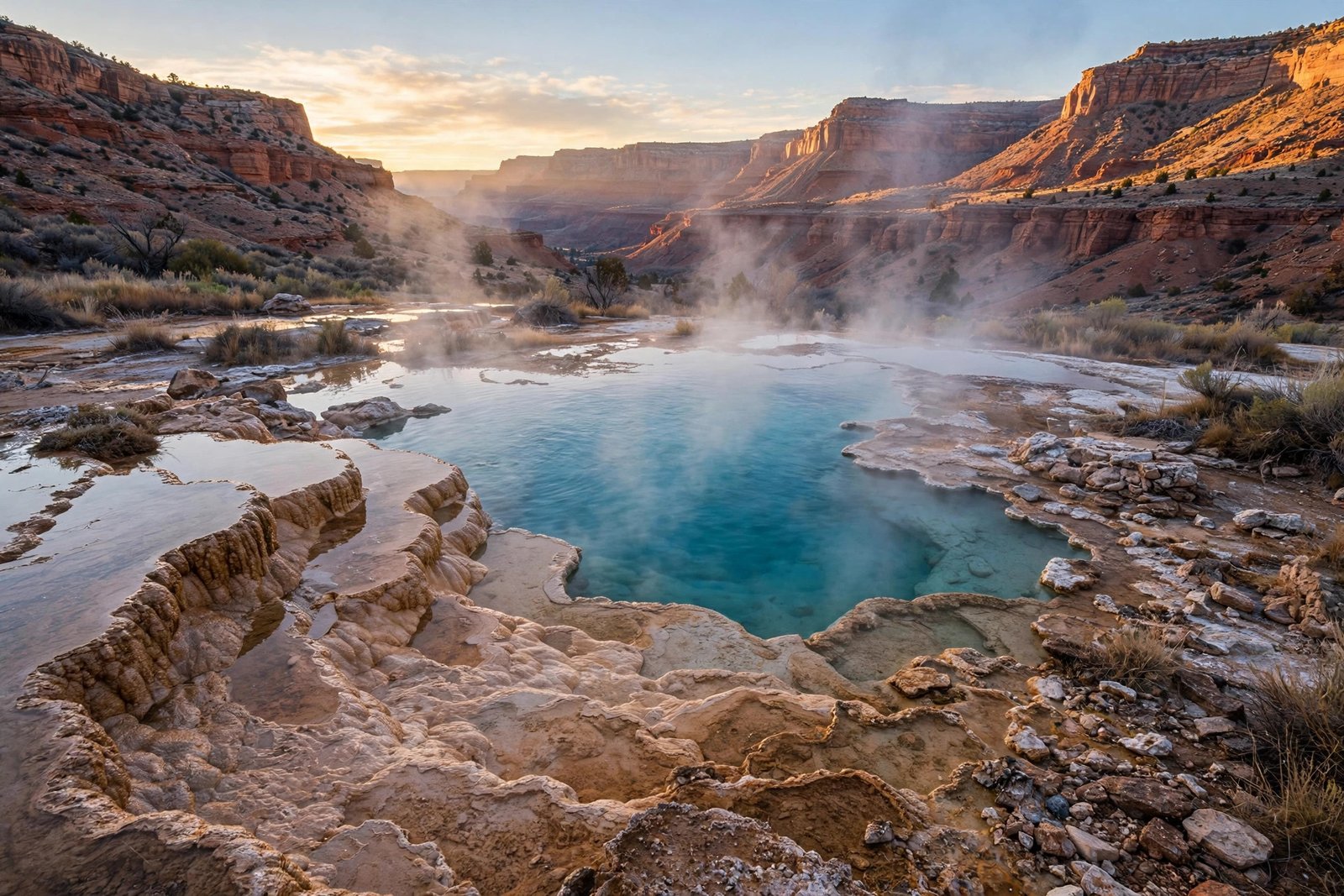
Imagine hiking through pine forest for an hour, following a faint trail, and then rounding a bend to find a steaming pool of clear, warm water tucked into a mountainside. No crowds, no ticket booth, no concrete deck. Just you, the mountains, and water warmed by the Earth itself. That is the magic of hidden hot springs USA travelers dream about, and America has more of them than most people realize. From Idaho’s high desert canyons to Oregon’s old-growth forests, natural hot springs hide in some of the country’s wildest corners, waiting for hikers willing to earn the soak.
This guide covers eight hidden hot springs across the American West, plus the safety and etiquette rules that keep these fragile places open. Some require a long hike or a permit. Some sit near small towns with local cafés and cabins. All of them reward the effort with one of the most relaxing experiences in the outdoors.
What Makes Hidden Hot Springs USA Worth the Hike
A hot spring is a natural pool warmed by geothermal heat, water that has seeped deep underground, heated by the Earth, and risen back to the surface. The United States, especially the West, sits on some of the most geothermally active ground in the world, which is why hidden hot springs USA explorers seek out are concentrated in states like Idaho, Oregon, Colorado, Nevada, and New Mexico.
What makes a spring feel “hidden” is not secrecy so much as effort. The best pools are not on the main road. They sit at the end of a trail, behind a forest gate, or down a dirt road that keeps casual visitors away. That effort is part of the reward. You trade convenience for solitude, birdsong, and a soak under open sky. Many of these springs sit near the same wild landscapes as the secret waterfalls hidden across the USA, so a hot springs trip often pairs beautifully with a waterfall hike.
Goldbug Hot Springs, Idaho
Goldbug Hot Springs, near the small town of Salmon in eastern Idaho, is one of the best-known hidden springs in the West, and still feels like a discovery. A hike of roughly two miles climbs through sagebrush and juniper into a narrow canyon, where a series of pools cascade down the hillside. Each pool is a slightly different temperature, so you can move downhill to cool off or uphill to warm up.
The setting is classic Idaho high desert: steep canyon walls, a creek rushing below, and big views of the surrounding mountains. The hike is moderately steep, so bring plenty of water and wear sturdy shoes. The springs are on public land managed by the Bureau of Land Management, and the area is day-use only, with no camping at the pools. Go on a weekday or early in the morning for the best chance at having a pool to yourself.
Conundrum Hot Springs, Colorado
Conundrum Hot Springs, near Aspen in Colorado’s Elk Mountains, is one of the highest-elevation hot springs in North America, sitting at more than 11,000 feet. Getting there takes a hike of about eight and a half miles each way, climbing through aspen groves and alpine meadows with views of the Maroon Bells-Snowmass Wilderness. An overnight permit is required, and permits are limited, so plan months ahead.
The reward is a large, crystal-clear pool with a stone surround, set in a high alpine basin. At night, the stars are extraordinary. Because the site is so popular and so fragile, rangers ask visitors to follow strict rules: camp only in designated sites, pack out all trash, and keep the pool clean. Conundrum is a true bucket-list soak, and the permit system is what keeps it beautiful.
- Distance: about 8.5 miles each way, with significant elevation gain.
- Permit: overnight permit required, reserved in advance; day hiking is a very long day.
- Season: typically July through September, once snow has melted from the trail.
Umpqua Hot Springs, Oregon
Umpqua Hot Springs, in the Umpqua National Forest near Roseburg, Oregon, is a set of tiered pools built into a hillside above the North Umpqua River. A short hike of less than a mile leads through old-growth forest to the springs, where warm water fills a series of rock pools with views over the river valley. The top pool is the hottest, and the lower pools cool as the water flows down.
The forest setting makes Umpqua feel like a hidden world. Moss, ferns, and towering Douglas firs surround the pools, and the river roars far below. The springs are managed by the Forest Service, and a day-use fee applies. Note that clothing is optional at these springs by local custom, so visitors who prefer a more family-friendly setting may want to visit early in the morning or choose another spring on this list.
Dunton Hot Springs, Colorado
Dunton Hot Springs, near Dolores in southwest Colorado, is a different kind of hidden spring. It began as a mining town in the late 1800s, and today the restored cabins, saloon, and bathhouse sit in a quiet valley in the San Juan Mountains. The town’s hot springs feed a bathhouse, a pool, and a small waterfall-fed soaking spot along the West Dolores River.
Because Dunton is a private resort, it is not a free roadside soak. Guests stay in historic cabins and enjoy the springs as part of the experience, and day visits are limited. For travelers who want the romance of a ghost town with the comfort of a hot bath, good food, and a real bed, it is hard to beat. The surrounding mountains offer hiking, horseback riding, and some of the darkest night skies in Colorado.
Buckeye Hot Springs, California
Buckeye Hot Springs, near Bridgeport in California’s Eastern Sierra, sits along Buckeye Creek, below a hillside of sagebrush and Jeffrey pines. A short, easy walk from the trailhead leads to a large, creekside pool where hot spring water mixes with cold creek water, so the temperature varies across the pool. On a clear day, the views stretch across the valley to the Sierra Nevada crest.
Buckeye is free and on public land, which makes it popular with road-trippers exploring the Eastern Sierra. The best times to visit are early morning and weekdays, when you may have the pool to yourself. The water in the main pool can be very hot near the source, so test it before getting in, and keep small children close. Combine Buckeye with a visit to nearby Mono Lake or Bodie ghost town for a classic Eastern Sierra day.
Spencer Hot Springs, Nevada
Spencer Hot Springs, near the tiny town of Austin in central Nevada, is a favorite of desert travelers. The springs sit on public land managed by the Bureau of Land Management, with a few metal stock-tank tubs and natural pools set on a hillside overlooking a broad desert valley. The views at sunset are spectacular, with the Toiyabe Range glowing pink and gold.
What makes Spencer special is the solitude. Central Nevada is some of the least crowded country in the Lower 48, and you may have the springs entirely to yourself, especially on a weeknight. The site is free, and there is a small area for primitive camping nearby. Bring everything you need, because the nearest services are miles away, and leave the tubs as clean as you found them. The wide-open desert around Spencer is a reminder of how much wild America still exists between the mountain towns, including the underrated mountain towns of the USA that make great bases for trips like this.
Mystic Hot Springs, Utah
Mystic Hot Springs, in the small town of Monroe in central Utah, has been welcoming soakers for more than a century. The resort’s mineral water, rich in calcium carbonate, has built up natural rock formations around the pools, including terraces that look like a miniature version of a travertine terrace. The water stays comfortably warm year-round.
Mystic offers something rare among hidden springs: a place to stay overnight. Visitors can rent a cabin, park a van, or pitch a tent, and soak in the pools under the stars. The vibe is relaxed and artistic, with colorful cabins and a small concert venue. It is a good choice for first-time hot springs travelers who want a natural soak without a long hike or a complicated permit.
Gila Hot Springs, New Mexico
Gila Hot Springs, near Silver City in southwestern New Mexico, sits at the edge of the Gila National Forest, one of the oldest wilderness areas in the country. The springs here feed several small pools and soaking spots along the Gila River, surrounded by cottonwood trees, canyon walls, and the kind of quiet you only find far from highways.
The Gila region is also one of the best places in the Southwest for wildlife watching, from mule deer and javelinas to black bears and mountain lions in the deeper backcountry. If you are planning a trip here, read up on the animals you might meet, including our guide on where to see bears in the USA, so you can enjoy the wilderness safely. The nearby Gila Cliff Dwellings, built by the Mogollon people hundreds of years ago, add a fascinating history stop to any hot springs trip.
How to Find Hidden Hot Springs USA Safely
Finding hidden hot springs USA adventurers recommend takes a little research. Start with official sources: Forest Service, Bureau of Land Management, and National Park Service pages list legal springs, fees, closures, and permit rules. Guidebooks and local ranger stations are also reliable. Be cautious with social media posts and crowd-sourced maps, which sometimes show springs on private land or in closed areas. If a spring is on private property, do not trespass.
Safety matters more at hot springs than at most outdoor destinations. Always test the water temperature before getting in. Water above about 104 degrees Fahrenheit can cause burns and heat illness, and some natural springs are far hotter than that, even near boiling. Never soak in a spring that is cloudy, has a strong sulfur or chemical smell you cannot identify, or has no other visitors or local information to confirm it is safe. Do not put your head underwater, and avoid soaking alone. Pregnant women, young children, and people with heart conditions should talk to a doctor before soaking.
- Test first: dip a hand or foot and wait before getting in; move slowly toward the source, where water is hottest.
- Hydrate: drink water before and after soaking; alcohol and hot springs do not mix.
- Limit your soak: 15 to 20 minutes is plenty, then cool off before getting back in.
- Check the rules: some springs require permits, fees, or day-use-only visits; check before you go.
Etiquette: Leave Every Spring Better Than You Found It
Hot springs are fragile. The minerals that build their terraces, the plants that grow around them, and the animals that drink from them all depend on visitors behaving well. The rules are simple: pack out everything you bring, including food scraps and micro-trash. Do not use soap, shampoo, or lotion in a natural spring. Stay out of closed pools and restoration areas. Keep noise low, especially at night, and give other soakers space.
Popular springs have been damaged or closed because of litter, vandalism, and overuse. If you see trash at a spring, picking it up is a small act that helps keep the place open. If a spring is crowded, consider coming back another time rather than squeezing in. The best hot springs trips leave nothing behind but footprints, and the best souvenir is the memory of warm water under open sky.
Conclusion: Earn Your Soak
Hidden hot springs USA travelers love are not about luxury. They are about the journey: the trail, the canyon, the quiet, and then the moment you slide into warm water and the mountains do the rest. Whether you choose a high alpine pool like Conundrum, a desert tub like Spencer, or a historic resort like Mystic, the effort is what makes the soak unforgettable.
Which spring would you hike to first? Tell us in the comments, share this guide with a friend who loves the outdoors, and keep exploring Beauty of USA for more wild places worth finding.
[…] you enjoy uncovering places most travelers miss, you will also like our guide to hidden hot springs in the USA, another way to experience America’s secret natural […]