
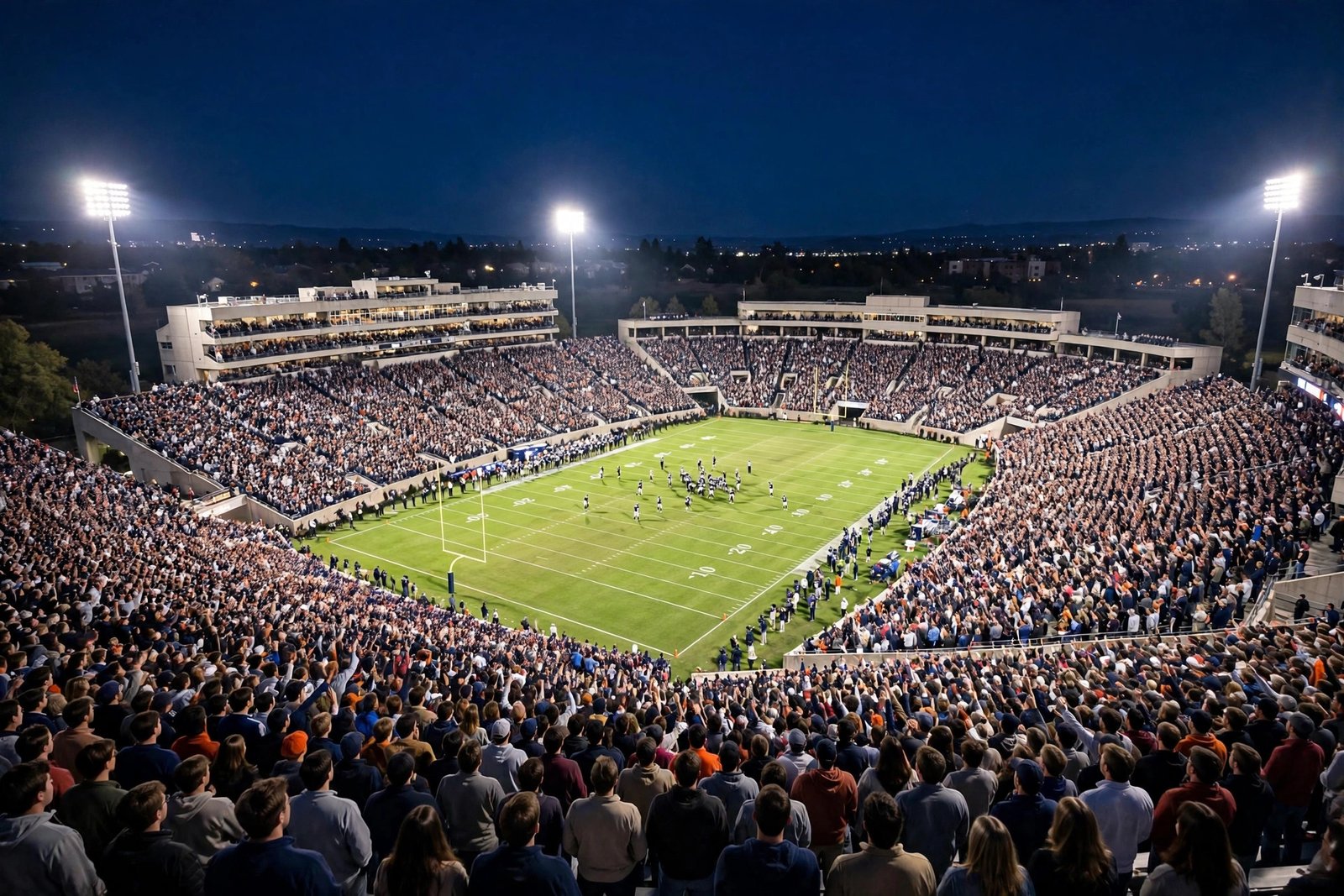
College football is about to get a lot bigger, at least if the latest reports turn out to be true. The college football playoff 24 teams expansion has become one of the hottest topics in American sports after reports emerged in October 2026 that a deal is in place to grow the field to 24 teams starting with the 2027 season. Fans, coaches, players, and media voices have been debating the idea ever since, and social media has exploded with reactions, memes, and hot takes.
Before you get too excited, here is the important caveat: this is REPORTED, not yet finalized. According to coverage of the reports, ESPN’s Pete Thamel reported that a deal is in place, while the College Football Playoff itself has said discussions continue and updates will come. In other words, the direction looks clear, but the final details, the official announcement, and the formal approval still matter. This article explains what has been reported, what the format would reportedly look like, why so many people care, and why one joke about USC went viral.
College football has always been about more than the games. It is about marching bands, tailgates, rivalries that go back a century, and Saturdays that feel like holidays in towns like Tuscaloosa, Ann Arbor, Athens, and Eugene. Any change to the playoff touches all of that. A bigger field means more teams with hope in November, more meaningful games in December, and more arguments about who deserves in and who got left out.
What the College Football Playoff 24 Teams Plan Reportedly Includes
So what would the reported format actually look like? Based on the October 2026 reports, the field would grow to 24 teams for the 2027 season. The reported structure includes automatic spots for the champions of the Power 4 conferences, a spot for the highest-ranked Group of 6 team, and 19 at-large bids. Those at-large bids would be chosen by a selection committee, much like the current system.
That mix matters. The automatic bids reward winning a conference championship, which keeps those title games meaningful. The Group of 6 spot gives a path to a team outside the biggest leagues, which fans of underdog programs have wanted for years. And the large number of at-large bids means a team that loses a close game in October or drops its conference title game would not automatically see its season end.
The college football playoff 24 teams plan would also likely change how the early rounds work. While exact dates, seeding, and home-site details have not been officially confirmed, a 24-team bracket generally means top seeds get a bye or a home game, while lower seeds face a longer road. That structure rewards a great regular season while still giving Cinderella teams a chance to make a run.
It is worth remembering how fast this has evolved. For decades, college football used polls and bowls to crown a champion. Then came the Bowl Championship Series, then a four-team playoff, and then the expanded 12-team format. Each step brought more games, more debate, and more money. A move to 24 teams would be the biggest jump yet, and it would make the sport look much more like the NCAA basketball tournament in terms of access, even if the number of rounds stays smaller.
Why a College Football Playoff 24 Teams Field Changes Everything
A bigger playoff changes incentives for everyone. For top teams, the regular season still matters, because seeding and byes would be valuable. But one loss would no longer feel like a death sentence. A team could lose a rivalry game in September, win out, and still have a real path to a title.
For middle-tier programs, the change is even bigger. Teams that used to be eliminated by mid-October would stay alive into November. A nine-win team from a strong conference, a ten-win Group of 6 team, or a program that upset a ranked opponent late in the season could suddenly be in the conversation. That keeps fan interest high across the country, not just in a handful of powerhouse towns.
Coaches would also feel the shift. Recruiting pitches would change. Instead of promising a shot at a four-team field that only a few programs ever reached, coaches could promise a real chance to make a 24-team bracket. That could help spread talent more evenly, because a top recruit might choose a rising program knowing the playoff door is open.
Television and money are part of the story too. More playoff games mean more broadcasts, more advertising, and more revenue for conferences and schools. That money can fund facilities, scholarships, and other sports, but it also raises questions about player health, academic calendars, and how long a season should last. A team that plays a conference title game and then four playoff games could be playing 16 or 17 games, which is close to an NFL schedule.
Fans are divided, and that is part of the fun. Some love the idea of more football and more underdog stories. Others worry that a huge field waters down the regular season, which has always been college football’s special magic. In the old system, every Saturday felt like a playoff game. In a 24-team world, a September loss might feel less dramatic. Supporters answer that more teams, more drama, and more Cinderella runs are worth the trade-off.
The Viral Joke That Took Over Social Media
No big sports story is complete without a viral moment, and this one delivered. After the expansion reports spread, an Oregon fan’s joke about a so-called Lincoln Riley Act went viral on social media. The joke, as paraphrased by fans online, was that college football needed a special rule to make sure USC still missed the field even with 24 spots available.
Fans ran with it. Memes, reaction posts, and playful jabs flooded timelines. Oregon and USC have one of the newer but fiercer rivalries in the expanded Big Ten, and the joke tapped into years of back-and-forth between the fan bases. It was not a real rule, not a real proposal, and not a quote from any official. It was classic college football humor: exaggerated, a little mean, and instantly shareable.
The joke also revealed something real about how fans feel. Even with a much larger field, supporters still love to tease rivals about missing out. Expansion may make it harder to miss the playoff, but it will never end the bragging rights battles that make the sport fun. If anything, a bigger bracket gives fans more to argue about: seeding, byes, snubs, and which conference got too many teams in.
Social media reactions also showed how quickly sports news travels now. Within hours of the reports, fan accounts, podcasts, and message boards were breaking down the format, ranking which teams would have made a 24-team field in past seasons, and debating whether the change helps or hurts the sport. That instant conversation is now part of every major college football story.
For a taste of the culture around the games themselves, check out our guide to American tailgating culture. Tailgates are where rivalries, food, music, and family traditions come together, and a longer playoff season would mean even more weekends of that celebration.
What Is Confirmed and What Is Still Reported
It is important to separate what has been reported from what has been officially confirmed. As of the October 2026 reports, here is the careful version: reports say a deal is in place for expansion to 24 teams for the 2027 season, with the format described above. The College Football Playoff has indicated that discussions continue and updates will come. That means fans should treat the structure as the reported plan, not as a final signed announcement with every detail locked in.
Why does that distinction matter? Because big changes in college sports often go through rounds of negotiation. Conferences, bowls, television partners, campus leaders, and the playoff organizers all have interests to balance. Dates, seeding rules, bye rules, home-site rules, revenue sharing, and player welfare protections all need to be worked out. A reported agreement is a strong signal, but the official announcement is what makes it real.
That uncertainty has not stopped fans from imagining the possibilities. Would a 24-team field have changed past champions? Which snubs from the four-team and 12-team eras would have gotten in? Would a Group of 6 team have made a magical run? Those what-if debates are part of why college football stays so popular in the offseason as well as during the season.
Who Benefits Most From a Bigger Field
If the reported format holds, several groups stand to benefit. First, the Power 4 conference champions get a guaranteed path, which keeps conference title games high-stakes. Second, the highest-ranked Group of 6 team gets a clear doorway, which rewards a great season outside the power leagues. Third, strong teams that do not win their conference still get in through the 19 at-large bids, which is a huge change from the old days when one loss could end a title dream.
Players benefit too, at least in terms of opportunity. More playoff games mean more chances to shine on a national stage, more exposure for NFL scouts, and more memorable moments. The downside is more hits, more travel, and a longer season during the school year. How organizers balance opportunity with health and academics will be one of the key questions to watch.
Smaller programs and their communities could also benefit. A playoff appearance brings national television, donations, applications, and local pride. A town that rarely gets national attention could suddenly host a playoff game or send its team across the country for a big matchup. That is the Cinderella magic that makes March Madness so beloved, and college football fans hope a bigger bracket brings some of that same energy to December and January.
Television networks and sponsors will also welcome more games. College football is one of the most valuable properties in American sports media. A longer playoff means more premium inventory, more weekend windows, and more storylines to promote. That economic pull is a major reason expansion keeps happening.
What Critics Are Worried About
Not everyone is cheering. Critics raise several fair concerns. The first is player safety. A longer season means more collisions and more wear on young bodies. Even with modern training and medical care, football is a physical sport, and adding games is not free.
The second concern is the regular season. College football has long prided itself on a regular season where every game matters. If a team can lose two or even three games and still make the field, does a September upset still feel the same? Supporters say yes, because seeding and byes still reward excellence. Critics say the magic will fade a little.
The third concern is academics and logistics. December is finals season on many campuses. January is the start of a new semester. A longer playoff means more travel, more missed class time, and more stress for student-athletes who are supposed to be students first.
The fourth concern is fairness. With 19 at-large bids, the selection committee’s choices become even more important. Which metrics matter most? How much should strength of schedule count? How do you compare a two-loss team from a tough league with an undefeated team from a weaker league? Those debates will not go away. They will just move to a bigger bracket.
Despite those concerns, the momentum toward expansion has been strong for years. Each round of expansion has brought similar worries, and each time the sport has adapted, grown, and kept its audience. Whether 24 teams is the right final number or just another step toward an even bigger field is a question fans will debate for years.
How This Fits Into America’s Viral Sports Culture
College football does not live in a vacuum. It is part of a wider American sports culture where a single play, a funny sign, a sideline moment, or a fan joke can become a national story overnight. The playoff expansion reports landed in that culture and immediately became content: podcasts, reaction videos, memes, and threads breaking down what it all means.
That viral cycle is now a normal part of sports. A report breaks, fans react, jokes spread, and by the next morning everyone has an opinion. The Lincoln Riley joke is a perfect example. It was not news in the traditional sense, but it captured how fans felt and gave them a funny shorthand for the rivalry and the debate.
Other viral sports moments work the same way. For another recent example of how fast a sports clip can take over timelines, see our story on Mike Evans and the viral moment from the 49ers-Seahawks game. One play, one reaction, and suddenly millions of people are talking about it.
Sports entertainment crosses over too. College football Saturdays and big wrestling events both thrive on drama, characters, and surprise. For a look at how scripted sports entertainment builds viral moments of its own, check out our piece on Roman Reigns at WWE Money in the Bank 2026. Different sports, same viral playbook: big moments, big reactions, and fans who cannot wait to share them.
What to Watch Next
If you are following this story, here are the key things to watch in the coming weeks and months. First, look for an official announcement from the College Football Playoff. That will confirm the field size, the start season, and the format details. Until then, treat everything as reported.
Second, watch for details on seeding, byes, and home games. Those rules will decide how much the regular season still matters and which teams get the easiest path. Third, watch for reaction from conferences and coaches. Some will praise the access. Others will raise concerns about schedule length and player welfare.
Fourth, watch the 2026 season itself. The college football playoff 24 teams debate will be shaped by how the current season plays out, because every controversy and every great game will be used as evidence for or against a bigger field. If the 12-team field produces great games and a deserving champion, some will ask why change it. If it produces controversy and snubs, others will say 24 teams cannot come soon enough.
Finally, watch the fans. College football belongs to the people who fill stadiums, host tailgates, wear the colors, and argue about rankings all week. Their excitement, skepticism, and humor will shape how this expansion is remembered, whether it becomes a beloved new era or just another step in the sport’s long evolution.
Conclusion
The reported move to a 24-team playoff for 2027 could be one of the biggest changes in college football history. The college football playoff 24 teams proposal promises more access, more games, more underdog stories, and more drama, along with real questions about health, academics, and the value of the regular season. The reports point in a clear direction, but the official word is still to come.
One thing is already certain: fans are talking, joking, and dreaming about what a bigger bracket could mean. That passion is what makes college football special, and it will only grow as the playoff grows. Stay tuned, keep an eye out for the official announcement, and get ready for even more Saturdays that matter.
Love college football and American sports culture? Explore more stories here on Beauty of USA, share this article with a fellow fan, and tell us in the comments: is 24 teams the right number, or is it too many?