
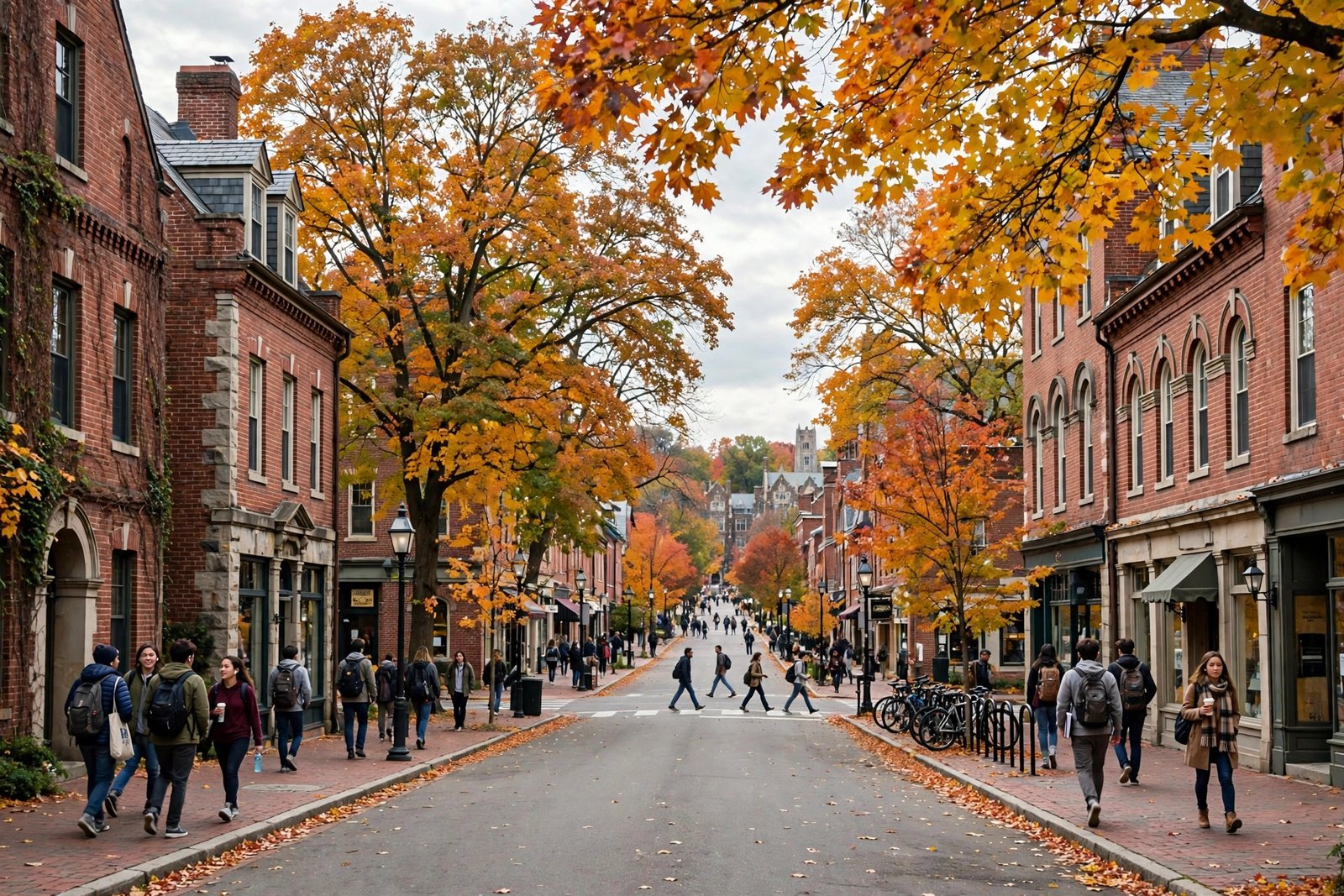
There is a particular kind of magic in a town where the whole place seems to run on the rhythm of a university. American college towns life means Saturday mornings at the farmers market, evenings in a packed stadium, and a Main Street where the coffee shop, the bookstore, and the pizza place have all been there for decades. Whether you are a student, a young professional, a family, or a retiree, life in these towns feels both energetic and deeply rooted, and that combination is hard to find anywhere else in America.
From Ann Arbor to Athens, from Boulder to Burlington, college towns share a spirit that goes far beyond the campus gates. They are places where ideas matter, where neighbors actually know each other, and where a Tuesday night can feel as alive as a Friday. In this guide, we explore what American college towns life really looks like, day by day and season by season, and why so many people fall in love with it and never leave.
What Defines American College Towns Life
At its heart, college town life is shaped by the university itself. The school is usually the largest employer, the cultural center, and the social hub all at once. Professors, students, staff, and longtime residents mix in the same grocery stores, parks, and restaurants, creating a community that is younger, more diverse, and more curious than a typical town of the same size.
College towns also tend to punch above their weight culturally. A town of 50,000 people might have a symphony orchestra, an art museum, a performing arts center, and a calendar full of free lectures, concerts, and film screenings. Much of it is open to the public, which means residents enjoy big-city culture without big-city prices or traffic. That access is one of the biggest draws of campus-town living.
Morning in an American College Town: Coffee, Books, and Bicycles
A typical morning in a college town starts early and moves at a human pace. Students walk or cycle to class along tree-lined streets, while professors stop for coffee at the same cafe they have visited for twenty years. Bicycles are everywhere, and many towns have invested in bike lanes and greenways that make it easy to get around without a car.
The local bookstore is often a town institution, and so is the diner where the pancakes have not changed since the 1970s. Farmers markets are a weekly ritual, drawing local growers, bakers, and craftspeople to the town square. For newcomers, the market is the fastest way to feel like a local: buy something, ask a question, and you will have a conversation before you reach the next stall.
- Walkable downtowns with independent shops, cafes, and bookstores.
- Bike-friendly streets and greenways connecting campus and neighborhoods.
- Weekly farmers markets that double as the town social hour.
- Free or low-cost lectures, concerts, and exhibitions open to everyone.
American College Towns Life on Game Day
Nothing captures the spirit of a college town quite like game day. In towns like State College, Pennsylvania, or Ann Arbor, Michigan, tens of thousands of fans fill the stadium on autumn Saturdays, and the whole town seems to dress in the school colors. Tailgating starts hours before kickoff, with grills, music, and old friends reuniting in parking lots and front yards.
Even for people who do not follow sports, game day is a community event. Local businesses boom, alumni return from across the country, and the energy is contagious. Basketball towns like Lawrence, Kansas, and Chapel Hill, North Carolina, bring the same passion indoors through the winter. In a college town, the team is not just a team: it is a shared identity that binds generations together.
Food, Music, and Main Street
Food is a big part of college town living, and the variety often surprises visitors. A single Main Street might offer a Thai restaurant run by a former graduate student, a barbecue joint beloved by locals, a vegan cafe, and a late-night slice shop that has fed generations of students after exams. Because students come from all over the world, college towns tend to have more international food than towns of similar size.
Music follows the same pattern. Small venues host indie bands, jazz quartets, and touring acts passing between bigger cities. Athens, Georgia, famously built a music scene that launched nationally known bands, and towns like Austin, Texas, grew from college roots into music capitals. Open mic nights, record stores, and student radio stations keep the scene fresh year after year.
Housing, Cost, and Everyday Rhythms
One practical appeal of living in a college town is affordability. Compared with major cities, housing in many college towns costs less, and the presence of students keeps rents in some neighborhoods competitive. That said, the best neighborhoods near campus can be pricey, and game-day weekends can send hotel prices soaring. Families often settle a few minutes from campus, where streets are quieter but the town’s amenities are still close.
Everyday life in a college town follows the academic calendar in ways residents barely notice until they leave. Late August brings a wave of new students and a burst of energy. December quiets down as exams end and students head home. Summer is calmer but far from empty, with camps, conferences, and outdoor concerts filling the gap. Longtime residents often say they love this rhythm: the town renews itself every year, yet its core never changes.
Four Seasons in a College Town
Each season gives a college town a different flavor. Autumn is the classic season, with football, falling leaves, and homecoming parades. Winter brings basketball, holiday lights on Main Street, and cozy evenings in coffee shops. Spring means graduation ceremonies, blooming quads, and outdoor festivals, while summer opens up hiking trails, lake days, and farmers market mornings without the crowds.
For outdoor lovers, college towns are often surrounded by natural beauty, and weekends are made for exploring. Residents of Boulder hike the Flatirons, students in Ithaca chase waterfalls in the Finger Lakes, and families in Charlottesville head to the Blue Ridge Mountains. If you love that kind of weekend, our guide to the best national parks in the USA and the most beautiful waterfalls in the USA are perfect next reads, and a classic Route 66 road trip can connect several great college towns in one adventure.
Why Retirees and Families Choose American College Towns Life
It is not only students who love college towns. Retirees increasingly choose them for the same reasons: walkable streets, good health care through university hospitals, lifelong learning classes, and a calendar full of things to do. Many universities offer programs that let older residents audit classes, attend lectures, and join campus events, keeping minds active and social circles wide.
Families are drawn by strong schools, safe neighborhoods, parks, and libraries, plus the simple fact that children grow up around learning. Kids in college towns attend science nights at the university, watch theater productions, and play in youth leagues coached by students. It is an environment where education is not just something that happens in school: it is the air the whole town breathes.
Working Remotely from a College Town
Remote work has given college towns a new boost in recent years. Professionals who once had to live in expensive cities can now work from a town with a university library, fast internet, good coffee, and a calendar full of evening events. Coworking spaces have opened near many campuses, and former students are returning to the towns where they studied, this time with salaries earned online and roots they actually want to put down.
That trend is reshaping Main Street too. Empty storefronts are becoming bookshops, breweries, and studios, and local leaders are welcoming newcomers who bring both income and energy. For the towns, it is a virtuous circle: the more people who choose the lifestyle, the richer the community becomes, and the more attractive it looks to the next person thinking about a move.
If you have ever dreamed of a slower, friendlier, more curious way of living, a college town might be exactly what you are looking for. Plan a visit during the school year, when the town is at its liveliest, and spend a day the way locals do: coffee on Main Street, a walk across the quad, lunch at a local favorite, and an evening event on campus. You may arrive as a visitor, but do not be surprised if you start checking real estate listings before you leave. That is the quiet power of American college towns life, and it has been winning people over for generations.