
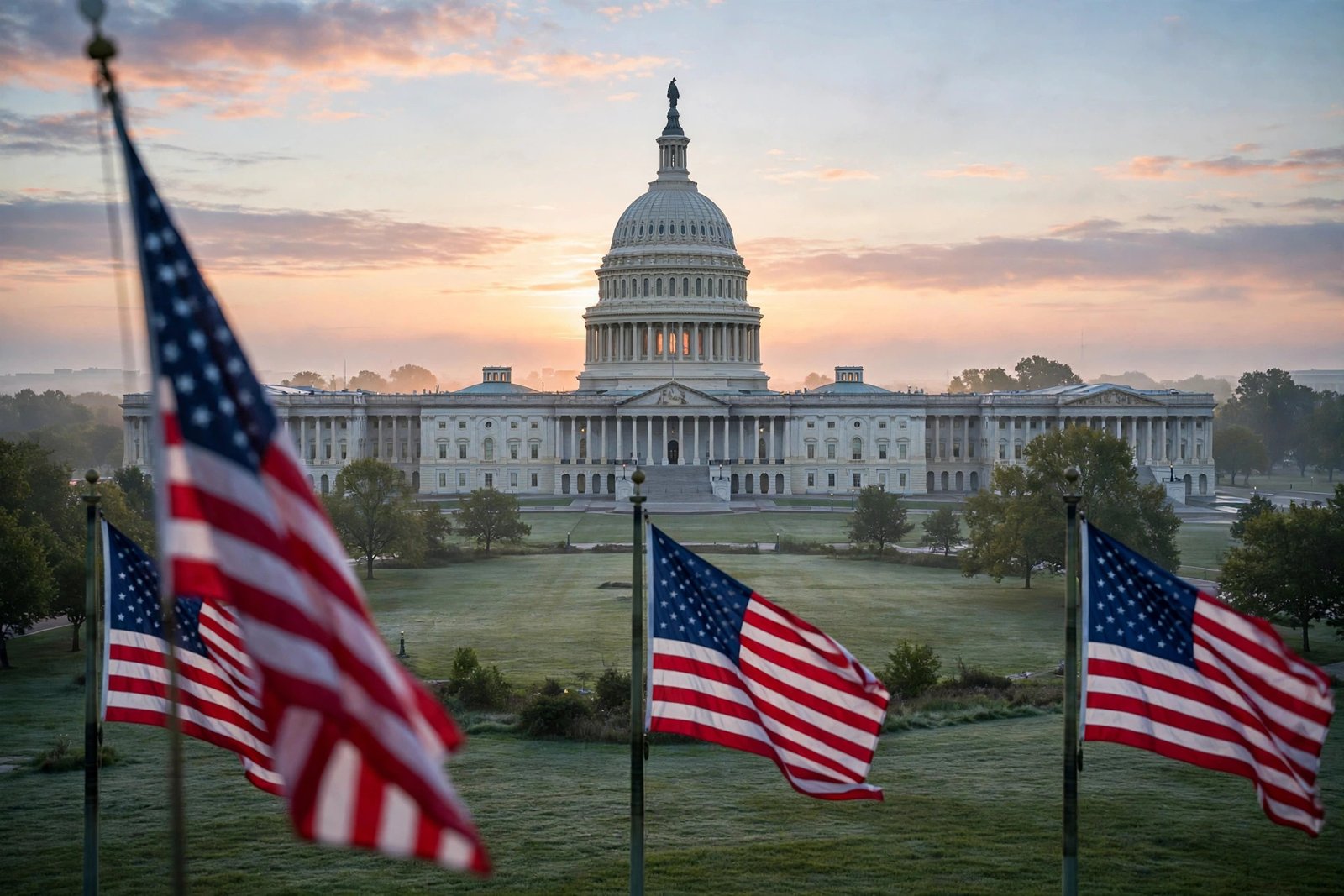
The most fascinating facts about US presidents are not the ones carved into marble. They are the messy, funny, and sometimes tragic human stories that textbooks skip. Everyone has heard that George Washington had wooden teeth (he did not), that Abraham Lincoln wrestled in his youth (he did), and that two presidents died on the same Fourth of July (that part is gloriously true). Behind every portrait hanging in the White House is a person who made mistakes, kept strange habits, survived assassination attempts, and occasionally changed the country almost by accident.
This collection of fascinating facts about US presidents separates the real stories from the myths. The twist is that the true stories are almost always better than the legends — and in a few famous cases, the legend turns out to be the interesting part all by itself. Let us start with the biggest myth of all.
Fascinating Facts About US Presidents: Washington’s Teeth Were Never Wood
Let us get the most famous myth in American presidential history out of the way first. George Washington did not have wooden teeth. He did, however, suffer terrible dental problems for most of his adult life. By the time he took the oath of office at age 57, Washington had only one natural tooth left, according to his own diary entries and the records kept at Mount Vernon.
So what were his famous dentures actually made of? Historians at Mount Vernon have studied his surviving dentures closely. They were crafted from hippopotamus ivory, lead, brass, gold wire, and both human and animal teeth, held together with springs that forced his mouth open and shut. They were painful to wear, they stained and decayed in his mouth, and they distorted the shape of his face — which is why Washington often looks stern and tight-lipped in portraits. The wooden-teeth story probably grew out of the brownish, wood-like staining of old ivory, combined with 19th-century storytellers who preferred a colorful tale to a dental record.
Washington’s real story needs no embellishment. He remains the only president ever chosen by a unanimous vote of the Electoral College — and he did it twice. He could have held power indefinitely, yet he voluntarily stepped down after two terms, setting a precedent that lasted until Franklin Roosevelt and was later written into the Constitution as the 22nd Amendment. His 1796 Farewell Address warned Americans against permanent foreign alliances and the spirit of political parties, advice the country is still arguing about more than two centuries later.
Abraham Lincoln: The Wrestling Champion in a Stovepipe Hat
At six feet four inches tall, Abraham Lincoln remains the tallest president in American history, and his height was only part of what made him physically remarkable. As a young man in New Salem, Illinois, Lincoln was a celebrated local wrestler. Neighbors’ accounts describe him as the county’s champion grappler, and his most famous bout — against Jack Armstrong, the leader of a rowdy local gang called the Clary’s Grove Boys — ended with the two men becoming lifelong friends. The strong, rail-splitting frontier image was not campaign invention; it was the young Lincoln’s actual life.
Lincoln’s iconic beard has its own wonderful origin story, and this one is fully documented. In October 1860, an 11-year-old girl named Grace Bedell from Westfield, New York, wrote to the presidential candidate suggesting that whiskers would improve his appearance, because as she put it, ladies liked whiskers and would encourage their husbands and brothers to vote for him. Lincoln wrote back politely, saying he had never worn whiskers and asking whether people would call it a silly affectation if he started now. He grew the beard anyway, becoming the first bearded president in American history.
The tall stovepipe hat was more than a fashion statement. Lincoln used it as a kind of portable filing cabinet, tucking speeches, letters, bills, and notes inside the crown. The hat in the Smithsonian’s collection is a reminder that this was a president who governed from what he carried on his head. Lincoln issued the Emancipation Proclamation on January 1, 1863, delivered the Gettysburg Address — just 272 words — on November 19, 1863, and became the first American president to be assassinated when John Wilkes Booth shot him at Ford’s Theatre on April 14, 1865. He died the following morning.
Thomas Jefferson and John Adams: Rivals United by the Fourth of July
Thomas Jefferson’s proudest achievements, at least in his own eyes, are carved on his tombstone at Monticello: author of the Declaration of American Independence, author of the Statute of Virginia for Religious Freedom, and father of the University of Virginia. Notice what is missing — the presidency. Jefferson considered founding the university his legacy project. He designed its buildings, including the famous Rotunda, secured its charter from Virginia in 1819, and saw it open its doors in 1825, just a year before his death.
Jefferson’s relationship with John Adams is one of the great friendships in American history, precisely because it almost did not survive. The two men were allies in the Revolution, then became bitter political enemies. The election of 1800, in which Jefferson defeated the incumbent Adams, was one of the nastiest campaigns ever waged in America — a contest historians call the Revolution of 1800. They did not speak for years until mutual friends, including the physician Benjamin Rush, helped broker a reconciliation in 1812. What followed was one of the most remarkable correspondences in history, with the two old founders exchanging dozens of letters about philosophy, religion, and the republic they had built.
Then came the coincidence that still gives historians chills. Both men died on July 4, 1826 — the 50th anniversary of the adoption of the Declaration of Independence they had both signed. According to accounts passed down by those at his bedside, Adams’s last words were Thomas Jefferson survives, unaware that Jefferson had died hours earlier at Monticello. And in a final eerie footnote, James Monroe — the fifth president — also died on the Fourth of July, in 1831. If you ever want more stories from the founding era, our collection of fascinating facts about the US Constitution continues the tale of the remarkable generation that built the republic.
Theodore Roosevelt: The Rough Rider Who Could Not Slow Down
Few fascinating facts about US presidents are more action-packed than the life of Theodore Roosevelt. As Assistant Secretary of the Navy in 1898, he resigned his comfortable office job to form the 1st United States Volunteer Cavalry — the Rough Riders — when the Spanish-American War broke out. Leading his men up Kettle Hill and the San Juan Heights in Cuba on July 1, 1898, Roosevelt became a national hero overnight. A century later, in 2001, he was posthumously awarded the Medal of Honor for that charge, making him the only president to receive America’s highest military decoration.
Roosevelt became president at 42 after the assassination of William McKinley in 1901, making him the youngest president in American history — younger than John F. Kennedy, who at 43 was the youngest ever elected. His energy was legendary, and so was his luck. In 1912, while campaigning for a third-party comeback, Roosevelt was shot in the chest by an assassin in Milwaukee. The bullet passed through his folded 50-page speech and his steel eyeglass case before lodging in his chest muscle. Roosevelt correctly deduced that since he was not coughing blood, the bullet had missed his lung — and he delivered his full 90-minute speech before going to the hospital, opening with the line that it takes more than that to kill a Bull Moose.
As president, Roosevelt set aside roughly 230 million acres of public land for conservation, signed the Antiquities Act of 1906, and established five national parks. He won the Nobel Peace Prize in 1906 for mediating the end of the Russo-Japanese War, and he pushed the Panama Canal project forward with his famous maxim to speak softly and carry a big stick. Few presidents have packed more living into a single lifetime.
William Henry Harrison: The 31-Day Presidency
The shortest presidency in American history belonged to William Henry Harrison, and the story of how it ended is a perfect example of why fascinating facts about US presidents require a closer look. Harrison was inaugurated on March 4, 1841, delivering an inaugural address that ran nearly two hours in cold, wet weather. Thirty-one days later, on April 4, 1841, he was dead — the first president to die in office.
The popular version of the story blames the long speech in the freezing rain for giving Harrison fatal pneumonia. Modern medical historians have questioned that tidy explanation, noting that the timeline does not quite fit pneumonia and suggesting that contaminated drinking water at the White House — Washington’s water supply was notoriously unsanitary at the time — may have given him a fatal intestinal infection instead. Either way, the constitutional crisis his death triggered was real: nobody was sure whether Vice President John Tyler was truly president or merely an acting caretaker. Tyler’s insistence that he was the full president set the Tyler Precedent that governed every later succession.
Harrison’s family story did not end there. His grandson, Benjamin Harrison, became the 23rd president in 1889 — the only grandfather-grandson pair in the office. And for a record on the opposite end of the scale, John Adams lived to age 90, a longevity record for presidents that stood until Ronald Reagan reached 93.
Legends, Quirks, and Verifiable Firsts: More Fascinating Facts About US Presidents
Some presidential stories are true, some are legends, and the most fascinating facts about US presidents include knowing which is which. Take the tale that John Quincy Adams kept an alligator in a White House bathtub. The story goes that the Marquis de Lafayette, visiting America in 1824 and 1825, gave Adams an alligator that the president then delighted in showing to startled guests. It is a wonderful story — but historians have found no contemporary documentation for it, and the White House Historical Association treats it as unverified. File it under charming legend, not fact.
These, however, are solidly documented. Grover Cleveland is the only president to serve two non-consecutive terms — the 22nd and 24th presidencies — and he won the popular vote in three straight elections (1884, 1888, and 1892), losing the Electoral College in 1888 despite winning more votes. Rutherford B. Hayes presided over a dry White House: his wife Lucy, known as Lemonade Lucy, supported a ban on alcohol at White House entertaining. The first telephone was installed in the White House during Hayes’s presidency in 1877.
Chester A. Arthur may be the greatest surprise on the list. A product of New York’s corrupt spoils system, he became president after James Garfield’s assassination in 1881 — and then stunned his old political machine by championing the Pendleton Civil Service Reform Act of 1883, which replaced patronage hiring with merit-based appointments. Martin Van Buren was the first president born as a citizen of the United States rather than a British subject, and the first of Dutch rather than British ancestry. Calvin Coolidge, born on July 4, 1872, remains the only president born on Independence Day. Franklin D. Roosevelt was elected four times, a feat that led directly to the 22nd Amendment’s two-term limit in 1951. And George Washington’s unanimous elections remain unmatched — no president before or since has swept the Electoral College. For more stories of the nation’s symbols, explore our American flag facts and history and the remarkable history of the White House itself.
The real lesson of these fascinating facts about US presidents is that the office has always been held by complicated, surprising people. Myths like the wooden teeth remind us to check the story; true stories like the 31-day presidency and the shared death day of Adams and Jefferson remind us that reality needs no improvement. The next time you see a presidential portrait, look past the marble expression — there is almost certainly a better story underneath.
Which presidential fact surprised you most? Share this article with a history lover, and keep exploring America’s story with us — there is always another chapter worth knowing.