
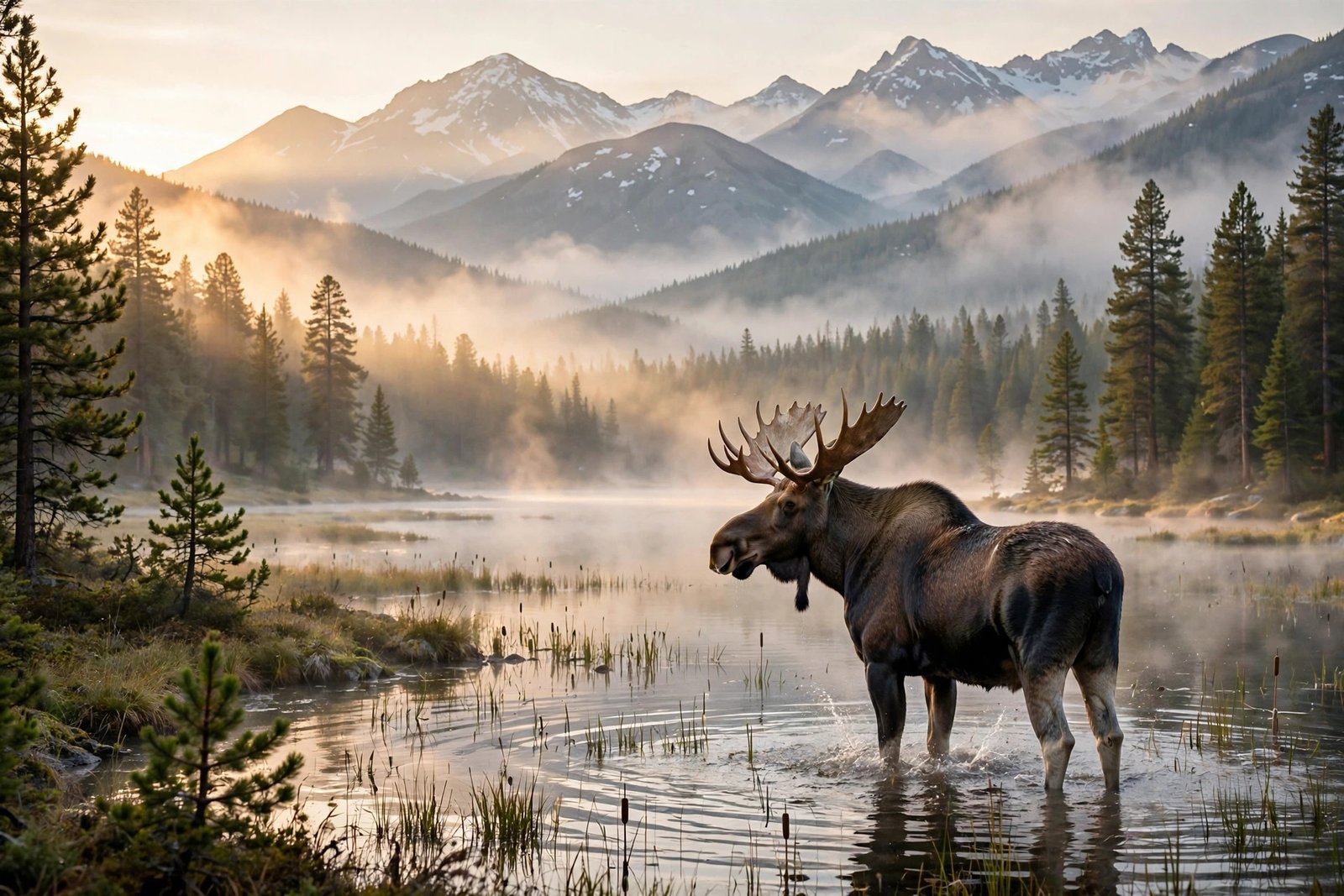
Standing six feet tall at the shoulder, weighing more than half a ton, and crowned with antlers as wide as a doorway, the moose is North America’s most awe-inspiring land animal — and seeing one in the wild is a bucket-list moment for wildlife lovers everywhere. If you’re wondering where to see moose in the USA, you’re in luck: from the muskeg bogs of Alaska to the misty valleys of Yellowstone, these gentle giants roam some of the most beautiful landscapes in the country, and with a little planning, your chances of spotting one are excellent.
Moose are far more widespread — and far easier to find — than most people realize. They live in at least a dozen states, from New England to the Pacific Northwest, and several national parks offer almost reliable sightings in the right season. This guide covers the best states and parks for moose watching, the seasons and times of day that give you the best odds, essential safety tips, and a few fascinating facts to impress your travel companions. Let’s go find a moose.
Why Alaska Tops Every List of Where to See Moose in the USA
Let’s start with the obvious champion: Alaska. The Last Frontier is home to the largest moose population in the United States by an enormous margin — wildlife officials estimate the statewide population in the hundreds of thousands — and the animals here belong to the Alaska-Yukon subspecies, the largest moose on Earth. A big bull in Alaska can stand over seven feet tall at the shoulder and weigh well over a thousand pounds, with antlers spanning six feet or more.
The single best place in Alaska to see moose is Denali National Park. The park’s vast open tundra makes wildlife unusually visible, and moose are regularly spotted along the park road, especially in the wetter lowland areas where they feed on willow and aquatic plants. Summer visitors taking the park’s bus tours into the interior have excellent odds of a sighting, often with the Alaska Range as a backdrop.
But you don’t even need to go deep into the wilderness. The Kenai Peninsula, just a few hours’ drive from Anchorage, offers superb moose viewing in the Kenai National Wildlife Refuge and along the Sterling Highway, particularly at dawn. And Anchorage itself is famous for its urban moose — these enormous animals wander through parks, greenbelts, and even neighborhoods in Alaska’s largest city. Locals treat them with a healthy respect, and visitors should too: an urban moose is still a wild, thousand-pound animal.
If Alaska is on your bucket list anyway, timing your trip for late May through June gives you long daylight hours, active feeding, and the chance to see cows with gangly newborn calves. Just remember that Alaska is enormous — distances are vast, weather is unpredictable, and the best moose country is often a long drive from the cruise ports. Plan accordingly, and the payoff can be the wildlife encounter of a lifetime.
Where to See Moose in the USA: The Best National Parks
Not everyone can make it to Alaska, and the good news is you don’t have to. Several national parks in the Lower 48 offer genuinely world-class moose watching, and in some of them, sightings are close to a sure thing in the right season.
Yellowstone National Park is a top pick. While the park is more famous for its bears and wolves, its moose population hangs out in very predictable places: the willow flats and marshy meadows of Hayden Valley and the Lamar Valley, especially in the early morning. The park’s moose belong to the smaller Shiras subspecies, but a bull Shiras is still an enormous, magnificent animal. Scan the willow thickets near slow-moving water at dawn, and keep your binoculars ready.
Right next door, Grand Teton National Park might be the most reliable moose spot in the entire Lower 48. The Moose-Wilson Road — yes, it’s actually called that — winds through prime moose habitat, and the Willow Flats near Jackson Lake are famous for dawn sightings. Rangers in the park will tell you that summer mornings along this road produce moose sightings so regularly that locals barely slow down anymore. Visitors, of course, absolutely should.
Isle Royale National Park in Michigan offers something no other park can: an island where moose are the undisputed giants. This remote island in Lake Superior is home to a famous long-running study of the relationship between moose and wolves, and the island’s moose are famously approachable by boat-based visitors — though “approachable” never means “approach.” Getting there requires a ferry or seaplane, which makes it an adventure in itself.
Don’t overlook Glacier National Park in Montana, where moose frequent the ponds and wetlands around Fishercap Lake and the Swiftcurrent Valley, or Rocky Mountain National Park in Colorado, where the Kawuneeche Valley on the park’s quieter west side is prime moose country. Both parks reward early risers: be at the water’s edge at first light, stay quiet, and let the moose come to you.
The Best States for Moose Beyond the Parks
National parks get the glory, but some of the best moose watching in America happens on state land, in national forests, and along quiet country highways. If you’re asking where to see moose in the USA on a road trip, these states deserve a spot on your route.
Maine is the heavyweight of the Lower 48. The Pine Tree State hosts the largest moose population in the contiguous United States — numbering in the tens of thousands — and the vast North Woods region is prime moose country. Baxter State Park, home of Mount Katahdin, offers spectacular wilderness viewing, and the logging roads north of Greenville are famous among wildlife watchers. Early morning drives along these remote roads in June are about as close to a guaranteed moose sighting as the East Coast gets.
New Hampshire punches far above its weight. The town of Pittsburg, in the state’s remote Great North Woods, sits on a stretch of Route 3 so famous for moose that locals call it “Moose Alley” — and the nickname is earned. Dawn patrols along this road in early summer routinely produce sightings. Nearby Vermont’s Northeast Kingdom, especially around Island Pond, is another excellent bet.
Out west, Colorado has become a surprising moose hotspot. Moose were reintroduced to the state in the late 1970s, and the population has thrived — State Forest State Park near Walden is often called the moose viewing capital of Colorado. Wyoming (beyond the Tetons), Montana, Idaho, and Utah’s Uinta Mountains all hold healthy populations, and Minnesota’s north woods and Washington’s remote northeast corner round out the list. In all of these places, the formula is the same: wetlands, willows, and dawn.
When to Go: The Best Season to See Moose
Timing matters enormously in moose watching. The two best windows are late spring and early fall, and they offer very different experiences.
Late May through June is the sweet spot for most visitors. Moose emerge from winter hungry and spend hours each day feeding on fresh aquatic vegetation in ponds, marshes, and slow streams. Cows are accompanied by adorable, gangly calves born that spring. The long daylight hours of northern latitudes give you extended viewing time, and insects — while annoying — actually help, because moose wade into water partly to escape biting flies, making them easier to spot in the open.
Late September through October brings the rut — mating season — and with it the most dramatic moose behavior you’ll ever witness. Bulls, normally solitary and quiet, become vocal and territorial, thrashing trees with their antlers and calling for mates with deep, guttural grunts. It’s thrilling to watch, but this is also when moose are at their most dangerous. Give rutting bulls an extremely wide berth, and never position yourself between a bull and a cow.
As for time of day: dawn and dusk, always. Moose are crepuscular, meaning they’re most active in the low light around sunrise and sunset. Plan to be at your viewing spot before first light, stay quiet, and be patient. Midday moose are usually bedded down in deep cover, invisible to even sharp eyes.
Moose Watching Safety: Respect the Giant
Here’s something many first-time moose watchers don’t realize: moose injure more people each year in North America than bears do. Not because moose are aggressive by nature — they’re generally peaceful — but because people underestimate them. A moose is a wild animal the size of a small car, and it deserves serious respect. Part of knowing where to see moose in the USA is knowing how to watch them safely once you do.
- Keep your distance. Stay at least 25 yards (about 75 feet) away — farther is better. If the moose changes its behavior because of you, you’re too close. Use binoculars or a zoom lens instead of your feet.
- Never approach a cow with calves. A mother moose is fiercely protective, and cows with young calves are responsible for most moose charges. If you see a calf, assume mom is nearby and give the area a wide berth.
- Give rutting bulls extra space. During the fall rut, bulls are unpredictable and aggressive. Never get between a bull and a cow, and back away calmly if a bull notices you.
- Learn the warning signs. A moose that lays its ears back, raises the hair on its hump, licks its lips, or sways is telling you to leave. Take the hint immediately.
- Never feed a moose. Fed moose lose their fear of people and become dangerous — and feeding wildlife is illegal in national parks.
- Know what to do if charged. Get behind something solid — a tree, a boulder, your vehicle. Unlike with bears, running and putting an obstacle between you and the moose is the right move.
For more wildlife safety wisdom, check out our guides to where to see bears in the USA and where to see wolves in the USA — many of the same principles apply, and the viewing spots often overlap.
Fascinating Moose Facts for Your Trip
A little moose trivia will make your sighting even sweeter. Moose are the largest members of the deer family — and the word “moose” comes from an Algonquian word meaning “twig-eater,” which is wonderfully accurate. Bulls shed and regrow their massive antlers every single year, growing them back in just a few months of spring and summer.
Despite their bulk, moose are excellent swimmers — they can swim for miles and even dive underwater to feed on aquatic plants, holding their breath while they graze the lake bottom. They’re also surprisingly fast on land when they need to be. A moose calf can outrun a human within days of being born, and adults can move through dense forest with eerie silence for an animal that size.
And here’s one for the “believe it or not” file: a bull moose’s antlers are among the fastest-growing tissues of any mammal on Earth. If that kind of wild fact delights you, don’t miss our roundup of American animals you won’t believe are real.
Your Moose Adventure Awaits
So, where to see moose in the USA? The honest answer is: almost anywhere there’s wild northern country — but Alaska, Maine, Yellowstone, and the Tetons sit at the very top of the list. Pick your season, rise before dawn, bring binoculars and patience, and keep a respectful distance, and you’ll likely be rewarded with one of the great wildlife encounters North America has to offer.
There’s a moment every moose watcher remembers: the stillness of a northern morning, mist rising off the water, and then — impossibly large, impossibly quiet — a moose steps out of the willows. It’s a moment that stays with you forever. Start planning your trip today, and explore more of America’s incredible wildlife here on Beauty of USA. The wild is waiting.