
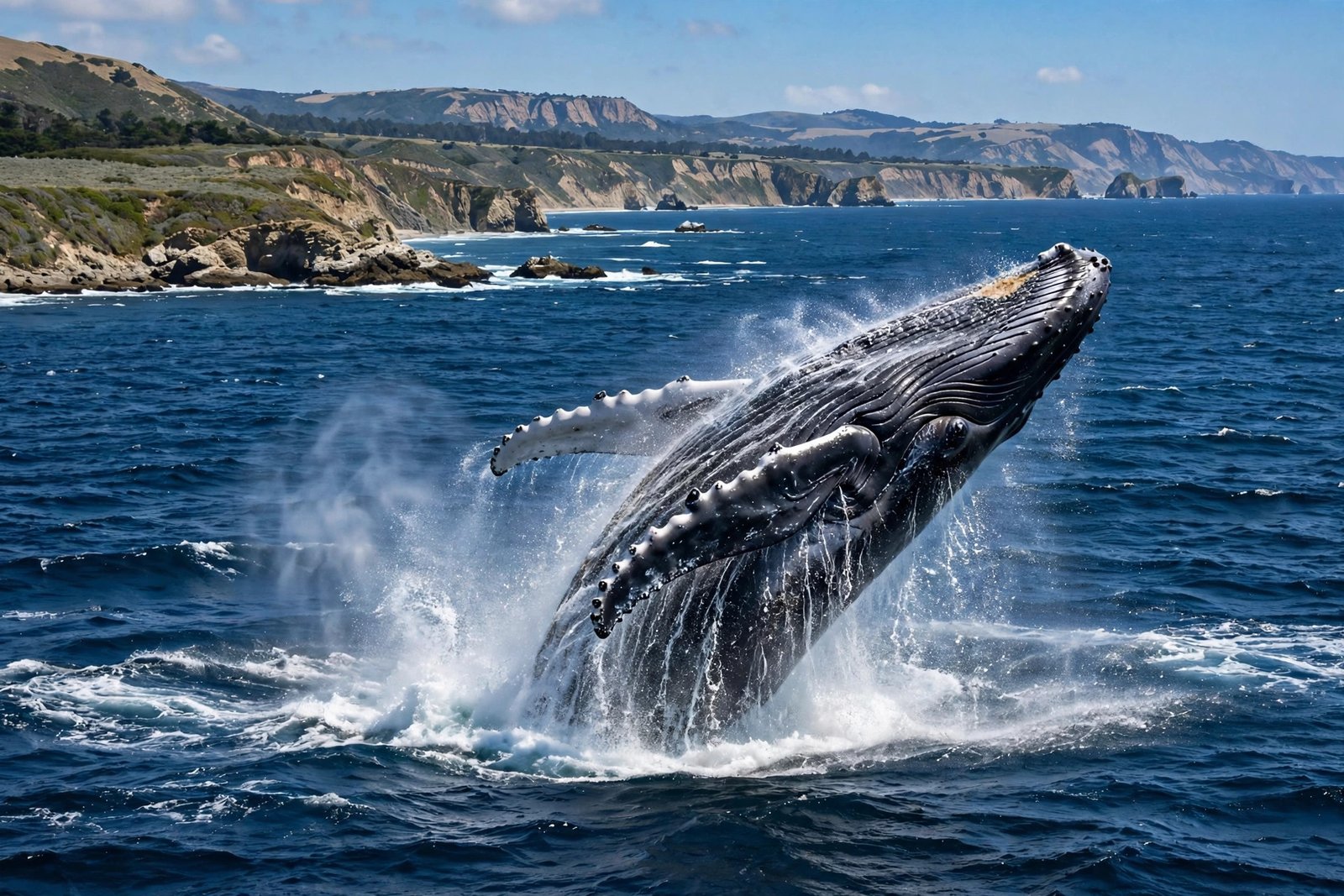
Few experiences in nature compare to watching a whale break the surface of the ocean, exhale a plume of mist, and slide back beneath the waves. If you have ever dreamed of seeing one with your own eyes, the good news is that you do not need to cross the globe to do it. Knowing where to see whales USA travelers can reach is simply a matter of picking the right coastline, the right season, and the right kind of trip. From the gray whale migration off California to humpback whales in Hawaii and Alaska, the United States offers some of the best whale watching on the planet.
Whale watching in America is also one of the most accessible wildlife experiences you can plan. Many of the best spots are a short drive from major cities, and guided boat tours run from dozens of harbor towns on both coasts. You can watch from a boat, from a kayak, or even from shore at certain headlands and cliffs where whales pass close to land. Whether you want a family-friendly day trip or a once-in-a-lifetime expedition, there is a whale watching destination in the USA that fits.
In this guide, we will cover the top places to see whales across the United States, organized by coast, plus the best seasons for each destination, tips for choosing a responsible tour, and what to bring. By the end, you will know exactly where to go, when to go, and how to make the most of your trip.
Where to See Whales USA: The West Coast
The West Coast is the heart of American whale watching, with a long coastline, rich ocean currents, and several species that pass close to shore each year. For travelers deciding where to see whales USA on the Pacific side, California is the natural starting point. The state offers year-round whale watching in some locations, plus two of the most famous whale migrations in the world.
Monterey Bay, California, is widely regarded as one of the best whale watching spots in the country. The bay sits above a deep underwater canyon that brings nutrient-rich water close to shore, attracting humpback whales, blue whales, gray whales, orcas, and dolphins at different times of year. Tour boats leave daily from Monterey and nearby Moss Landing, and the bay is one of the few places where you can realistically see multiple whale species on a single trip. Summer and fall are especially good for humpbacks and blue whales, while winter and spring bring migrating gray whales.
Farther south, San Diego is another classic whale watching destination. Each winter, gray whales migrate past San Diego on their journey between their feeding grounds in the north and their breeding lagoons to the south. Tour boats run from San Diego Bay during the migration season, and on a good day you can also spot humpbacks, fin whales, and large pods of dolphins. The city’s mild winter weather makes it an easy and comfortable trip, even for first-time whale watchers.
Up the coast, the San Juan Islands in Washington State are one of the best places in the world to see orcas, also known as killer whales. These black-and-white whales are actually the largest members of the dolphin family, and the fish-eating resident orcas of the Salish Sea spend much of the summer hunting salmon in the waters around the islands. Boat tours depart from Friday Harbor and Anacortes, and the islands also offer excellent kayaking, with the chance to see whales, seals, bald eagles, and porpoises. If you love the Pacific Northwest, pair your whale trip with the region’s other wildlife; you can find more ideas in our guide to where to see bears in the USA for a full wildlife itinerary.
Other West Coast highlights include Depoe Bay and Newport in Oregon, where gray whales can be seen from shore and from tour boats, and the Channel Islands off Southern California, where blue whales, the largest animals on Earth, visit in summer. The Olympic Peninsula and the outer coast of Washington also offer dramatic shore-based whale watching in spring, when gray whales pass close to the cliffs. Wherever you go on the West Coast, the combination of whales, sea lions, seabirds, and rugged coastline makes for an unforgettable trip.
Where to See Whales USA: The East Coast
The Atlantic coast offers whale watching that rivals the Pacific, with several world-class destinations from New England to the Mid-Atlantic. On the Atlantic side, where to see whales USA depends on the season, because different species visit different stretches of coastline as they follow food and migration routes up and down the coast.
Stellwagen Bank, off the coast of Massachusetts, is one of the best whale watching destinations on the East Coast. This underwater plateau sits about 25 miles east of Boston, and its shallow, food-rich waters attract humpback whales, fin whales, minke whales, and the occasional North Atlantic right whale. Tour boats depart from Boston, Gloucester, and Provincetown from spring through fall, and humpbacks are the stars of the show, famous for their breaching, tail slaps, and bubble-net feeding. A day trip from Boston makes this one of the easiest whale watching adventures in America.
Farther north, Bar Harbor and the coast of Maine offer whale watching in some of the most scenic waters in the country. Tours from Bar Harbor head into the Gulf of Maine, where humpbacks, fin whales, and minkes feed during the summer, and where you can also see puffins, seals, and porpoises. The combination of whales and Acadia National Park makes this a superb two-in-one trip: watch whales in the morning, hike the park’s coastal trails in the afternoon.
On the Mid-Atlantic coast, Cape May, New Jersey, is a favorite for families. Dolphin and whale watching tours run from Cape May harbor, with humpback whales increasingly seen in the area in recent years, along with large pods of bottlenose dolphins. Virginia Beach and the Outer Banks of North Carolina also offer seasonal whale watching, with humpback whales visiting the Chesapeake Bay mouth and the waters off Virginia in winter and early spring. These trips are shorter and calmer than many New England tours, which can make them a good choice for families with young children or anyone prone to seasickness.
Farther south, the coast of Florida offers a different whale watching story. Each winter, critically endangered North Atlantic right whales travel to the warm, shallow waters off Florida and Georgia to give birth. Seeing one is rare and never guaranteed, but the region is important as a calving ground, and shore-based whale spotting programs run by conservation groups help visitors learn about these whales. If you are planning a beach trip, combine it with wildlife watching using our guide to the best beaches in the USA to plan a coastline itinerary.
Alaska: Whale Watching on a Grand Scale
For sheer scale and drama, Alaska is in a class of its own. The Inside Passage, a maze of islands, fjords, and channels in Southeast Alaska, is one of the best places in the world to see humpback whales. During the summer feeding season, humpbacks gather in places like Juneau, Icy Strait, and Glacier Bay, where they lunge-feed on schools of herring and krill. Many visitors see whales from the deck of a cruise ship, but small-group day tours from Juneau offer closer, more personal encounters.
What makes Alaska special is the sheer abundance of wildlife beyond whales. On a single day trip, you may see humpbacks breaching, orcas hunting, Steller sea lions hauled out on rocks, bald eagles overhead, and brown bears fishing along the shore. The backdrop of glaciers, snowcapped mountains, and deep fjords makes every sighting feel epic. If you want to combine whale watching with glacier viewing, Juneau and Seward are both excellent bases.
The best season for whale watching in Alaska is roughly May through September, with peak humpback activity in mid-summer. Tours book up quickly in the summer months, so reserve well in advance, especially if you want a small-group tour. Dress in warm, waterproof layers, and bring binoculars: Alaska’s weather can change fast, and whales can surface far from the boat.
Alaska is also a place where responsible whale watching matters most. Humpback whales are protected, and tour operators must follow strict approach rules. Choose operators who respect distance limits, avoid chasing whales, and have naturalists on board who explain the science behind what you are seeing. A good Alaska whale tour is not just a sightseeing trip; it is a lesson in marine ecology.
Hawaii: Humpback Whales in Warm, Clear Water
Every winter, thousands of humpback whales migrate to the warm, shallow waters around Hawaii to breed and give birth. The main Hawaiian Islands, especially Maui, are one of the best places in the world to see humpbacks in their winter breeding grounds. Whale season in Hawaii generally runs from December through April, with peak sightings in February and March.
Maui is the center of Hawaii’s whale watching, and the channel between Maui, Molokai, and Lanai is a prime humpback habitat. Tour boats depart from Lahaina and Maalaea harbors, and on a good day you can see mothers with calves, males competing for mates, and the spectacular breaching that humpbacks are famous for. If you are lucky, you may hear whale song through a hydrophone, an eerie, beautiful sound that carries for miles underwater.
Hawaii’s whale watching is also unusually accessible. You can see humpbacks from shore at many coastal lookouts on Maui, especially along the west coast, and the whales often come close enough to spot with the naked eye. That makes Hawaii a great choice for travelers who prefer to stay on land, or for families who want a low-key whale watching experience between beach days.
Remember that humpback whales in Hawaii are protected under federal law, and there are strict rules about how close boats and swimmers can approach them. Choose tour operators who follow the rules and who include education about whale behavior and conservation. The whales come to Hawaii to raise their calves in safety; giving them space is part of the privilege of watching them.
When Is the Best Time to See Whales?
The best time to see whales in the USA depends entirely on where you go and which species you hope to see. There is no single best month for the whole country, because whale activity follows migration and feeding patterns that vary by region. The good news is that some part of the United States offers excellent whale watching in every season.
Here is a simple seasonal guide to the main destinations:
- California, Monterey Bay: year-round, with gray whales in winter and spring and humpbacks and blue whales in summer and fall.
- San Diego: gray whale migration season in winter, roughly December through April.
- Washington, San Juan Islands: orcas and humpbacks from late spring through early fall, with peak orca activity in summer.
- New England, Stellwagen Bank: humpbacks, fin whales, and minkes from spring through fall.
- Maine: humpbacks and fin whales in summer, roughly June through September.
- Alaska, Inside Passage: humpbacks from May through September, peaking in mid-summer.
- Hawaii, Maui: humpback whales from December through April, peaking in February and March.
- Mid-Atlantic, Cape May and Virginia: humpbacks and dolphins in spring and fall, with winter sightings off Virginia.
If you are flexible, plan your trip around the peak season for your chosen destination, and book tours early for the most popular months. If you are not flexible, do not worry: most major whale watching destinations have a long season, and even a shoulder-season trip can produce wonderful sightings. Whales are wild animals, so no sighting is ever guaranteed, but going in peak season gives you the best odds.
How to Choose a Responsible Whale Watching Tour
Not all whale watching tours are equal. Choosing a responsible operator makes a real difference, both for your experience and for the whales. A good operator follows the law, respects the animals, and employs knowledgeable guides who can explain what you are seeing. A poor operator chases whales, crowds them, and treats the trip as a thrill ride rather than a wildlife encounter.
Look for operators who are members of recognized whale watching associations, who employ trained naturalists, and who publish their approach policies. Responsible operators keep a legal distance from whales, limit the number of boats around a single group of whales, and never chase, encircle, or cut off a whale’s path. They also educate passengers about whale behavior, conservation, and the local ecosystem.
Smaller boats often offer a better experience than large, crowded vessels. With fewer passengers, you get better views, more time with the naturalist, and a quieter trip that is less disruptive to the whales. That said, larger boats can be more stable and more comfortable for people prone to seasickness, and they often have indoor cabins and restrooms. Choose the size that fits your comfort level, but prioritize operators with strong conservation practices over the cheapest ticket.
Finally, be wary of any operator that guarantees sightings by chasing whales or that advertises swimming with whales in areas where it is illegal or harmful. In Hawaii, for example, swimming with humpback whales is prohibited. A guarantee of sightings usually means the operator will pressure the whales to perform, which is bad for the animals and bad for the long-term health of the whale watching industry. The best operators promise a great trip and honest effort, not a guaranteed breach.
What to Bring and How to Prepare
A little preparation goes a long way on a whale watching trip. The ocean is almost always cooler and windier than land, even in summer, so dress in layers and bring a windproof, waterproof jacket. On Alaska and New England trips, warm hats and gloves are a good idea even in July. On Hawaii and Southern California trips, sun protection matters just as much: bring sunscreen, sunglasses, and a hat.
Binoculars are one of the most useful things you can bring. Whales often surface at a distance, and binoculars let you watch their behavior in detail, from spouts and tail flukes to breaching. Many tour operators provide binoculars, but bringing your own ensures you have a pair when you need it. A camera with a zoom lens is also helpful, but do not spend the whole trip behind the lens. Take a few photos, then put the camera down and watch the whales with your own eyes.
If you are prone to motion sickness, take precautions. Choose a larger, more stable boat, sit in the middle of the vessel where motion is least, and keep your eyes on the horizon. Many experienced whale watchers recommend taking motion sickness medication before boarding, following the package directions, rather than waiting until you feel ill. Ginger candies and wristbands help some people, but medication is the most reliable option for those who are sensitive.
Finally, bring patience and curiosity. Whale watching involves waiting, scanning the horizon, and sharing excitement with strangers when a spout appears. The waiting is part of the experience. Talk to the naturalist, ask questions, and learn about the ocean ecosystem while you watch. The more you understand about what you are seeing, the more memorable the trip will be. For more island and coastal adventure ideas, see our guide to hidden islands in the USA to extend your ocean itinerary.
From the gray whale migration off California to the humpback whales of Hawaii and Alaska, the United States offers whale watching for every kind of traveler. Pick a destination that fits your travel style, go in peak season, choose a responsible operator, and bring your patience and your sense of wonder. The moment a whale surfaces near your boat, spouts, and dives with a slow roll of its tail, you will understand why so many people call whale watching one of the greatest wildlife experiences in America. Book your trip, grab your binoculars, and get ready to meet the ocean’s most magnificent giants.