
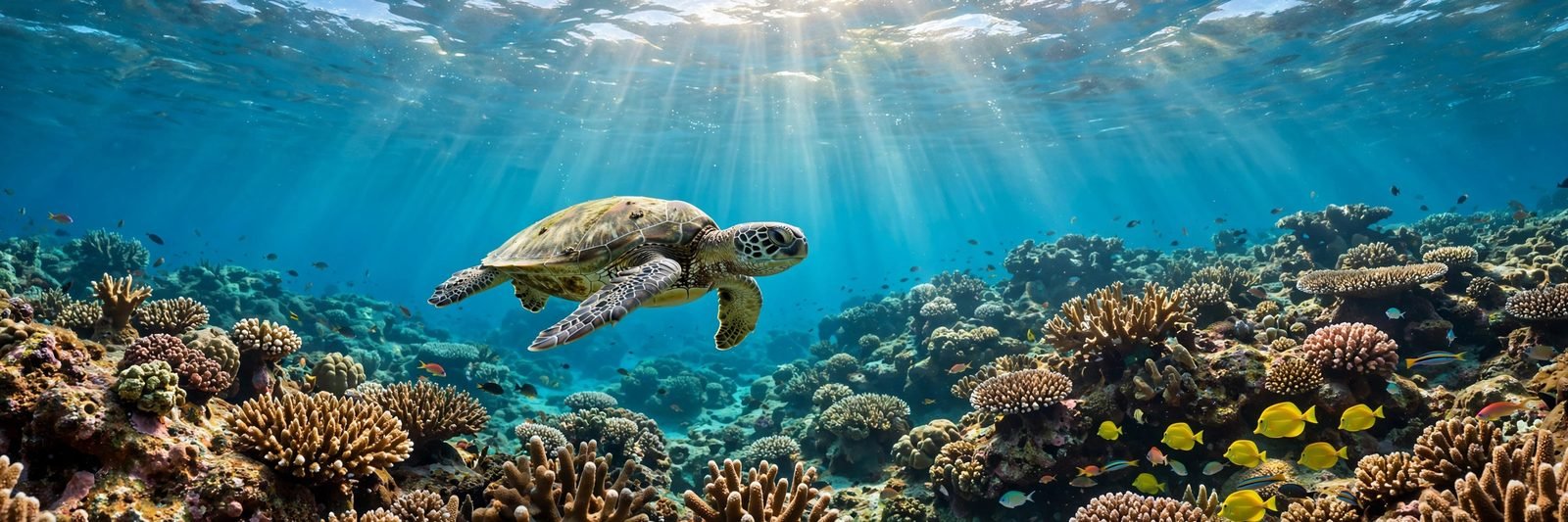
If you are wondering where to see sea turtles USA, you are in for a treat. From the nesting beaches of Florida to the black-sand shores of Hawaii, the United States offers some of the best sea turtle watching in the world. Six of the world’s seven sea turtle species can be found in American waters, and during nesting season, lucky visitors can watch giant females crawl ashore at night to lay their eggs, or cheer on tiny hatchlings as they scramble toward the sea. This guide covers the best places to watch sea turtles across the country, the best times to go, and how to enjoy these ancient animals without disturbing them.
Sea turtles have been swimming the world’s oceans for more than 100 million years, outliving the dinosaurs. Today, every species found in United States waters is protected by law, which means watching them comes with responsibilities. The good news is that responsible turtle watching is easy. Keep your distance, skip the flash photography, and let the turtles come to you. The sections below will show you how.
Where to See Sea Turtles USA: Florida’s Atlantic Coast
For many travelers asking where to see sea turtles USA, Florida is the first answer, and for good reason. Florida hosts more nesting sea turtles than any other state, and its long Atlantic coastline is a hotspot for loggerhead turtles in particular. Nesting season generally runs from March through October, with the busiest months in the summer. During those months, female turtles come ashore at night to dig nests and lay their eggs, and guided walks give visitors a chance to watch this remarkable event.
One of the most important nesting areas in the country is the Archie Carr National Wildlife Refuge, which stretches along the coast between Melbourne and Wabasso in Brevard County. The refuge is considered one of the most significant nesting areas for loggerhead turtles in the Western Hemisphere, and green turtles and leatherbacks nest there too. Nearby Melbourne Beach is one of the best-known nesting beaches in Florida, and local organizations offer guided nighttime turtle walks during the summer. These walks are led by trained guides who know how to watch nesting turtles without disturbing them, and they are the best way for first-time visitors to see a nesting female.
Farther south, Juno Beach is home to the Loggerhead Marinelife Center, a sea turtle hospital and education center that rehabilitates injured turtles and releases them back into the ocean. Visitors can tour the center, see patients in their tanks, and learn about sea turtle conservation. During nesting season, the center also runs guided turtle walks. Just to the north, Canaveral National Seashore protects miles of undeveloped barrier-island beach where turtles nest in a natural setting, and the seashore’s quiet beaches are a wonderful place for daytime beach walks during turtle season.
If you are planning a Florida turtle trip, a few practical tips help. Book guided walks well in advance, because they fill up quickly in summer. Wear dark clothing and leave white flashlights at home, since bright lights can disorient nesting turtles and hatchlings. Many programs provide red-filtered lights, which are gentler on the turtles. And remember that nesting beaches are protected: stay out of marked nesting areas, keep dogs leashed or leave them home, and never touch a turtle, nest, or hatchling.
Where to See Sea Turtles USA: Hawaii and the Gulf Coast
Anyone researching where to see sea turtles USA with kids should put Hawaii high on the list. The Hawaiian green sea turtle, known locally as honu, is a beloved symbol of the islands, and Hawaii offers some of the easiest turtle watching in the country. On Oahu, Laniakea Beach on the North Shore is famous for the honu that haul out onto the sand to rest. Volunteers are often on hand to answer questions and make sure visitors keep a respectful distance. On the Big Island, Punaluu Black Sand Beach is another classic spot, where green turtles rest on the black volcanic sand and graze on algae in the shallows.
Hawaii’s turtles can be seen year-round, which makes the islands a great choice outside the summer nesting season. Snorkelers often spot honu gliding over coral reefs on Maui, Kauai, and the Big Island. The key rule in Hawaii is the same as everywhere else: keep your distance. Local guidance asks visitors to stay at least 10 feet away from resting turtles, and never chase, touch, or feed them. A turtle resting on the beach is not stranded. It is doing what turtles do, and it will return to the water when it is ready.
The Gulf Coast offers a very different turtle experience, centered on one of the rarest sea turtles in the world. Padre Island National Seashore in Texas protects a long stretch of undeveloped barrier-island beach and is an important nesting area for the Kemp’s ridley turtle, the smallest and most endangered sea turtle species. Kemp’s ridleys are famous for their daytime nesting behavior, which is unusual among sea turtles. Nesting season on Padre Island generally runs from April through July, and the national seashore runs a sea turtle patrol that finds and protects nests. When hatchlings are ready, the seashore sometimes holds public releases, where visitors can watch tiny Kemp’s ridley hatchlings make their dash to the Gulf of Mexico.
Elsewhere on the Gulf Coast, the Gulf Islands National Seashore in Florida and Mississippi protects island beaches where loggerhead and green turtles nest. The warm Gulf waters are also feeding grounds for several species. If you visit the Gulf Coast in summer, check with the local national seashore or wildlife refuge for turtle programs, beach walks, and volunteer opportunities.
More Great Places: Georgia, the Carolinas, and California
Florida and Hawaii get most of the attention, but sea turtle watching stretches up and down both coasts. Jekyll Island in Georgia is one of the best family turtle destinations in the Southeast. The island is home to the Georgia Sea Turtle Center, a rehabilitation and education facility where visitors can meet recovering turtles, learn about tracking and research, and join programs during nesting season. Cumberland Island, Georgia’s largest barrier island, is a wilder nesting beach, reachable only by ferry, and its quiet shores are a favorite of loggerheads.
South Carolina’s beaches, including Hilton Head Island, Edisto Beach, and the Isle of Palms, host nesting loggerheads each summer. Local turtle patrols mark and monitor nests, and several communities have adopted turtle-friendly lighting rules to protect hatchlings. North Carolina’s Outer Banks also see nesting loggerheads, and the area’s long, windswept beaches offer a dramatic setting for a turtle walk. In both states, the best approach is to join a guided program run by a local turtle group, since guides know the beaches, the rules, and the turtles.
On the West Coast, California offers a different kind of turtle watching. Leatherback turtles, the largest sea turtles in the world, visit the California coast to feed on jellyfish, especially in the fall. They are rarely seen from shore, but whale-watching boats out of Monterey Bay and other California harbors sometimes spot them. Leatherbacks are enormous, deep-diving animals, and seeing one surface beside a boat is a once-in-a-lifetime moment. California also has green turtles in the warm waters off San Diego Bay, where a small resident population feeds in the shallows near the coast.
If you love wildlife watching in general, you may also enjoy our guide on where to see whales in the USA. Many of the same coastal areas that host sea turtles also offer whale watching, and a combined trip can be a spectacular wildlife adventure.
When to Go: Nesting and Hatching Seasons
Timing is everything in sea turtle watching. In Florida and the Southeast, nesting season generally runs from March through October, with peak nesting in June and July. Hatchlings typically begin emerging about two months after the eggs are laid, so late summer and early fall are the best times to see baby turtles. If you want to see a nesting female, a guided night walk in June or July is your best bet. If you want to see hatchlings, look for programs in August and September.
Texas follows a slightly earlier calendar. Kemp’s ridley nesting on Padre Island generally peaks from April through July, with hatchling releases in the summer months. Hawaii is the most flexible destination, since honu can be seen resting and feeding year-round. On the West Coast, fall is the best window for leatherback sightings off California.
Wherever you go, check local conditions before you book. Sea turtle programs depend on the turtles, not on a fixed schedule, and a walk may be canceled if no turtles appear. That unpredictability is part of the magic. Wild animals do not perform on command, and a night spent on a quiet beach under the stars, waiting for a turtle, is a memorable experience even before the turtle arrives.
How to Watch Sea Turtles Responsibly
Every sea turtle species in United States waters is protected under the Endangered Species Act, and it is illegal to touch, harass, or disturb them. Responsible watching is simple, and it protects both the turtles and your experience. Follow these guidelines on every turtle trip:
- Keep your distance. Stay well back from nesting turtles, resting turtles, and hatchlings. In Hawaii, the recommended viewing distance is at least 10 feet. On nesting beaches, stay behind the turtle so you do not block her path to the sea.
- No touching, ever. Never touch a turtle, a nest, or a hatchling, even to help. Hatchlings need to make the crawl to the sea on their own, and human contact can harm them.
- Skip the white light. Bright lights, camera flashes, and phone screens can disorient turtles. Use red-filtered lights only, and only when a guide says it is okay.
- Keep beaches dark and clean. Turn off beachfront lights at night during nesting season, fill in holes, and take down beach furniture, since obstacles can trap turtles. Pick up trash, especially plastic, which turtles can mistake for food.
- Leave nests alone. If you find a marked nest, stay away from it. If you find an unmarked nest or a stranded turtle, contact the local sea turtle stranding network or wildlife authorities instead of handling it yourself.
- Go with a guide. Guided walks and programs run by national seashores, wildlife refuges, and turtle centers are the safest and most rewarding way to see nesting turtles.
These rules apply to photographers too. A long lens and patience will get you far better photos than a flash ever will, and the turtles will behave naturally if you give them space. If you are lucky enough to witness a nesting female or a hatchling emergence, remember that you are a guest on the turtle’s beach. Quiet, patience, and respect will make the moment unforgettable.
Planning Your Turtle Watching Trip
When you plan where to see sea turtles USA, timing matters as much as location. Start by picking a destination that fits your season. Florida and the Southeast are best in summer. Texas is best in late spring and early summer. Hawaii works year-round. California’s leatherbacks are a fall highlight. Then look for guided programs, because a good guide turns a beach walk into a real education. National seashores, wildlife refuges, and turtle hospitals all run programs, and many are free or low-cost.
Sea turtle rehabilitation centers deserve a special mention. Places like the Loggerhead Marinelife Center in Juno Beach, the Georgia Sea Turtle Center on Jekyll Island, and the Sea Turtle Hospital at the South Carolina Aquarium in Charleston let visitors meet turtles that are recovering from injuries and learn about the threats turtles face, including boat strikes, plastic pollution, and habitat loss. For families, these centers are often more rewarding than a night walk, because the turtles are guaranteed, the exhibits are hands-on, and the visit supports conservation directly.
Pack for the beach at night. Bring dark clothing, insect repellent, water, and a red-filtered flashlight if the program allows it. Leave the camera flash off, and check whether photography is permitted on your walk. If you are visiting with children, talk through the rules before you go: whisper voices, no running, and no touching. Kids who understand the rules often become the best turtle ambassadors on the beach.
Finally, consider giving back. Many turtle programs welcome volunteers to help patrol beaches, monitor nests, and educate visitors. Even a single morning of volunteering can deepen your appreciation for these animals. And if you fall in love with sea turtles on your trip, you can support the organizations that protect them long after you go home.
Sea turtles are one of America’s great wildlife treasures, and watching them in the wild is an experience you will never forget. Whether you choose the nesting beaches of Florida, the honu of Hawaii, the Kemp’s ridleys of Padre Island, or a quiet beach in Georgia or the Carolinas, you are stepping into a story that has been unfolding for millions of years. Plan well, watch respectfully, and let the turtles do the rest. For more wildlife adventures across the country, check out our guide to where to see bald eagles and our roundup of American animals you won’t believe are real.